Can England finally crack the Springboks code?

By Adnaan Mohamed

England have been here before. Close enough to see victory. Close enough to believe. Close enough to feel the Springboks wobble.

Then South Africa find another gear.

It has become a familiar script in one of rugby’s richest rivalries. England ask difficult questions, the Springboks absorb the pressure and somehow emerge with the answer that matters most.

Saturday’s opening Nations Championship Test at Ellis Park offers Steve Borthwick’s side another opportunity to prove they have bridged that stubborn gap. They could hardly have picked a sterner examination.

Johannesburg does not welcome visitors with open arms. The altitude drains lungs, the crowd feeds every collision and the Springboks have turned Ellis Park into one of world rugby’s least hospitable addresses.

Rassie Erasmus’ side arrive riding a nine-match winning streak and carrying the confidence of back-to-back Rugby Championship titles. Momentum has become their travelling companion and complacency remains unwelcome.

“The goal is to win,” Erasmus said this week.

Simple words. Typical Springboks.

His selection reflects a squad built for every occasion. Damian Willemse and Cheslin Kolbe celebrate their 50th Tests in a backline packed with proven match winners. Jesse Kriel and Damian de Allende remain one of international rugby’s most reliable midfield pairings, while Manie Libbok gets another chance to orchestrate an attack that can shift from controlled to chaotic in a heartbeat.

Up front, the Springboks possess enough muscle to move mountains.

Ox Nche, Malcolm Marx and Thomas du Toit anchor a front row that thrives on confrontation, with Eben Etzebeth, Siya Kolisi and Jasper Wiese providing the relentless edge that has become South Africa’s trademark.

Then comes the Bomb Squad.

Fresh legs. Fresh power. Fresh problems.

England know exactly what awaits.

George Martin has welcomed the physical battle after returning from injury, while Fin Smith shoulders the responsibility of steering England around one of rugby’s toughest venues. Immanuel Feyi-Waboso’s return offers genuine attacking spark, Tommy Freeman arrives in outstanding form and Henry Pollock is expected to inject his trademark energy from the bench after already making himself public enemy number one among many South African supporters.

Borthwick believes his squad is ready.

“Playing South Africa at Ellis Park is one of the great Tests in world rugby,” he said.

He is right.

England have enough quality to ask questions of the world champions. Their backline carries pace, their forwards have embraced the challenge and their confidence has steadily grown despite an underwhelming Six Nations campaign.

The problem is that Ellis Park rarely rewards promise.

The Springboks know exactly how they want to play. Dominate the set piece. Win the gain line. Squeeze territory. Turn pressure into points.

It is an approach forged through experience and sharpened by success.

England may remain within touching distance for long stretches, much like they have in recent meetings. History suggests that when the contest reaches its defining moments, South Africa usually discover another level.

Prediction: Springboks by 12.

Teams:

South Africa: 15 Damian Willemse, 14 Cheslin Kolbe, 13 Jesse Kriel, 12 Damian De Allende, 11 Kurt-Lee Arendse, 10 Manie Libbok, 9 Grant Williams, 8 Jasper Wiese, 7 Pieter-Steph Du Toit, 6 Siya Kolisi (captain), 5 Ruan Nortje, 4 Eben Etzebeth, 3 Thomas Du Toit, 2 Malcolm Marx, 1 Ox Nche.
Replacements: 16 Jan-Hendrik Wessels, 17 Gerhard Steenekamp, 18 Zachary Porthen, 19 Marco van Staden, 20 Cameron Hanekom, 21 Cobus Reinach, 22 Andre Esterhuizen, 23 Canan Moodie.

England: 15 George Furbank, 14 Immanuel Feyi-Waboso, 13 Tommy Freeman, 12 Seb Atkinson, 11 Cadan Murley, 10 Fin Smith, 9 Jack van Poortvliet, 8 Ben Earl, 7 Tom Curry, 6 Ollie Chessum, 5 George Martin, 4 Alex Coles, 3 Joe Heyes, 2 Jamie George (captain), 1 Ellis Genge.
Replacements: 16 Luke Cowan-Dickie,17 Beno Obano, 18 Asher Opoku-Fordjour, 19 Charlie Ewels, 20 Guy Pepper, 21 Henry Pollock, 22 Alex Mitchell, 23 Marcus Smith.

Date: Saturday, July 4
Venue: Ellis Park, Johannesburg
Kick-off: 17.40
Referee: James Doleman (New Zealand)
Assistant referees: Andrew Brace (Ireland) & Pierre Brousset (France)
TMO: Richard Kelly (New Zealand)
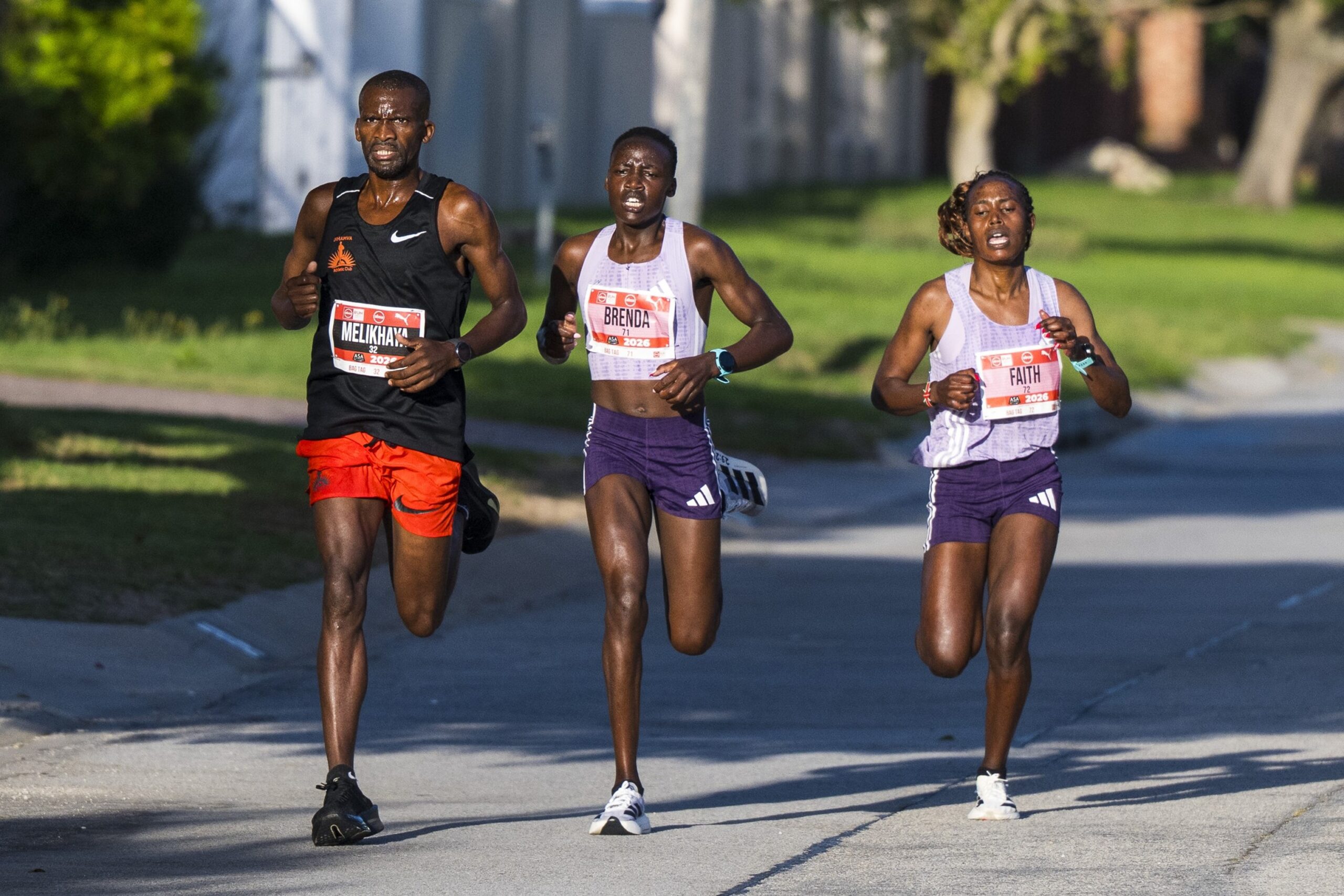
Images: x.com/Springboks

Can Durban 10K deliver sub 27 and sub 30 double?

By Adnaan Mohamed

For years, African road running has waited for two stubborn barriers to fall. On 12 July, the sold-out Absa RUN YOUR CITY DURBAN 10K could become the stage where both finally surrender.

The prospect of the first men’s sub-27-minute 10km and the first women’s sub-30-minute performance on African soil has transformed the Durban race from another elite road event into a genuine date with history.

At the centre of the men’s assault stands Ugandan superstar Joshua Cheptegei. The Olympic champion and world record holder over 5 000m and 10 000m owns a personal best of 26:38, making him the obvious favourite to shatter the long-standing continental milestone.

Yet the stopwatch will not be chasing Cheptegei alone.

Kenya’s Felix Masai, who claimed victory at this year’s Totalsports Two Oceans Half Marathon, brings a 27:24 lifetime best, while Gilbert Kiprotich believes he has already crossed the psychological finish line.

After producing a blistering 27:01 split during the Lisbon Half Marathon, Kiprotich is convinced Durban’s flat course and fast pace can carry him into the exclusive sub-27 club.

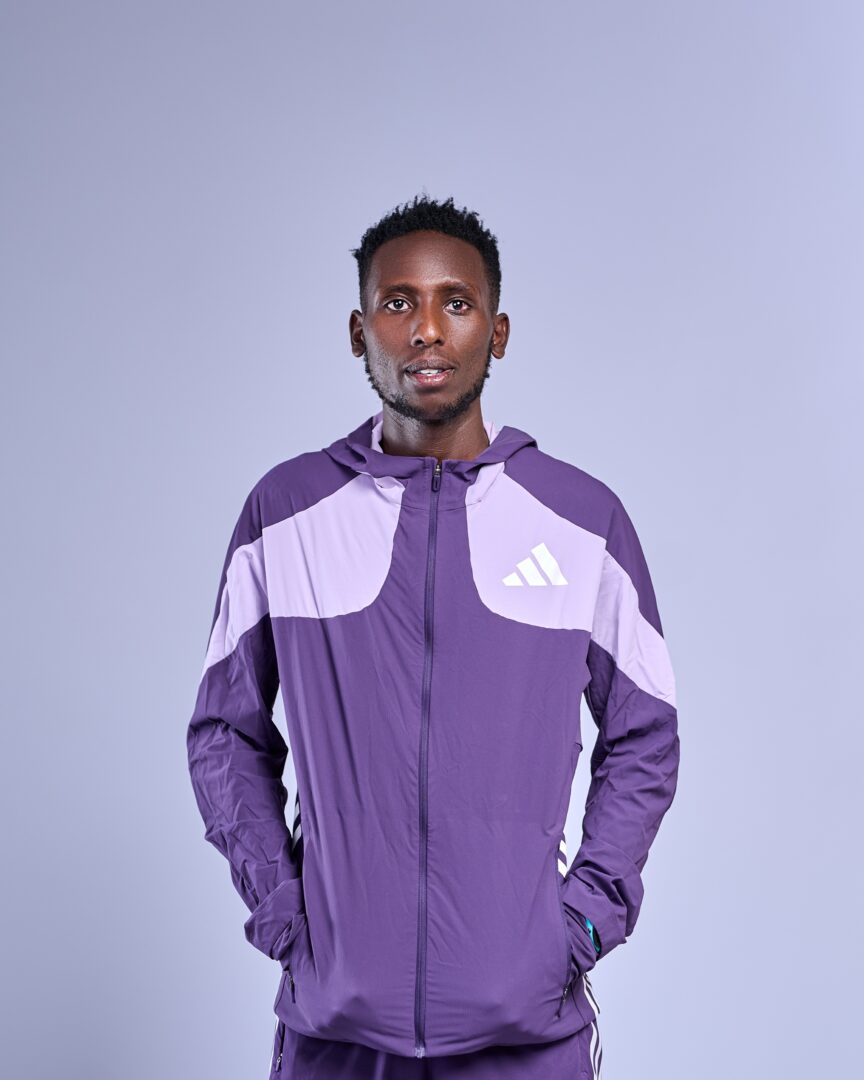
Gilbert Kiprotich Photo Supplied

“I believe I am capable of running comfortably under 27:00 in Durban,” said Kiprotich.

“We are hoping for favourable weather conditions and strong pacing on race day.”

Cheptegei is refusing to become consumed by the numbers, even though they continue to follow him like a determined shadow.

“It would be an honour for the record to be broken on African soil,” he said.

“I think that would be great for African athletics.”

The women’s race carries an equally compelling storyline.

Brenda Jepchirchir returns to South Africa with unfinished business after strong winds denied her a realistic opportunity of breaking 30 minutes in Gqeberha earlier this year. Since then, the Kenyan has reinforced her credentials by clocking 29:25, making her the second fastest woman in the world in 2026 and the joint fourth fastest in history.

“If the conditions are favourable and the race unfolds well, I would love to run under 30 minutes,” Jepchirchir said.

“It would be a significant milestone in my career, and I believe it is possible.”

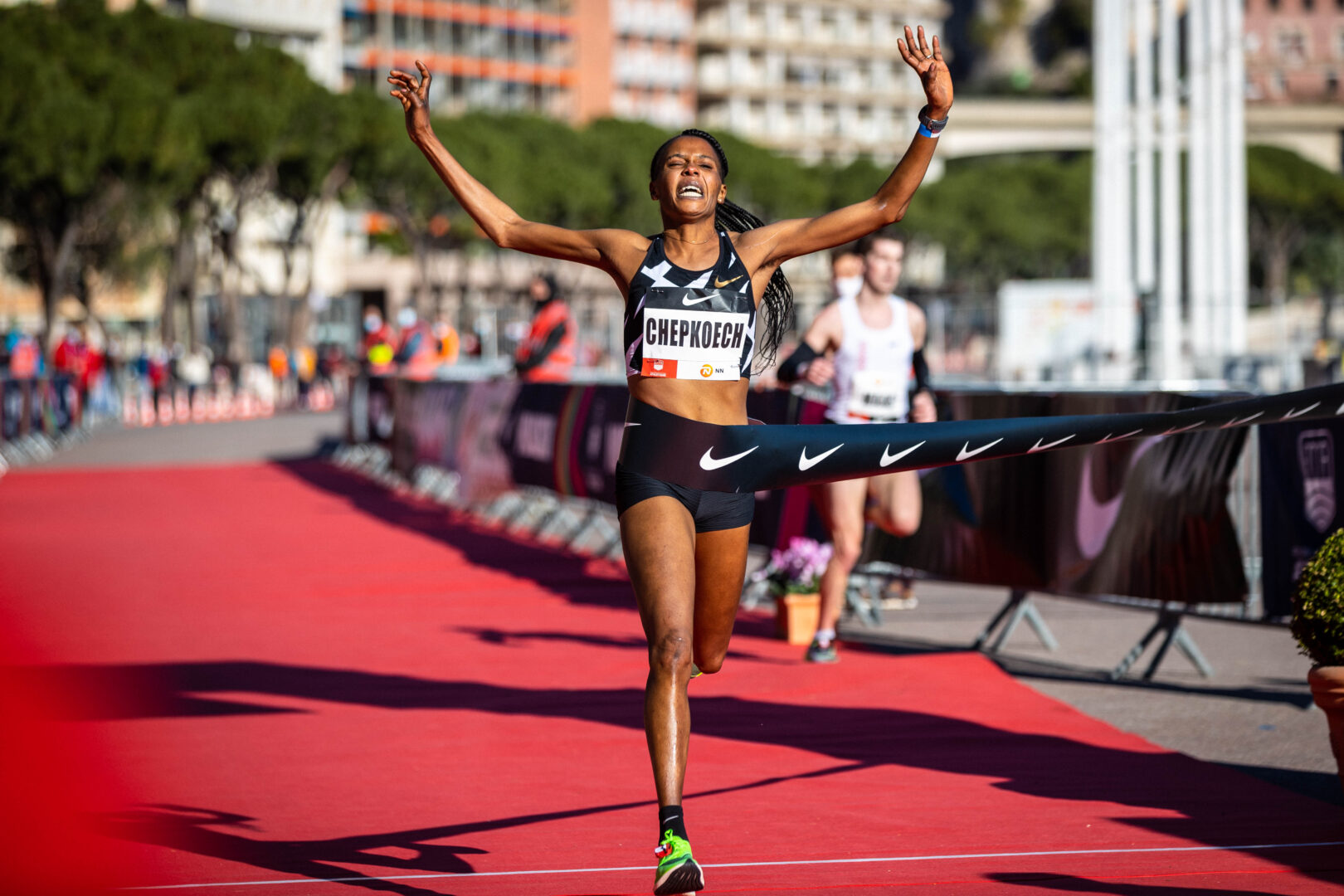
Beatrice Chepkoech by GSC Media House

Standing alongside her is world steeplechase record holder Beatrice Chepkoech, whose presence deepens an already formidable field. Although the Kenyan is continuing her return after giving birth, the 2019 world champion believes Durban offers the perfect setting to be part of something memorable.

“This is what every athlete dreams of, building a legacy that will endure in the world of athletics,” said Chepkoech.

Stillwater Sports founder Michael Meyer believes the stars have aligned.

“The prospect of witnessing the first sub-27-minute men’s 10km and the first sub-30-minute women’s 10km on African soil at a single event is incredibly exciting,” Meyer said.

Elite athletes, favourable winter conditions and one of the continent’s quickest road courses have combined to create a rare opportunity.

Records rarely wave a white flag willingly. The DURBAN 10K now has the chance to force their surrender, twice, in the space of one unforgettable morning.

Rassie Erasmus thanks Bok faithful with Christmas Walk

By Adnaan Mohamed

If Christmas had a team talk, Rassie Erasmus delivered it in takkies, not a tracksuit. And instead of white lines and whistles, he used a seaside promenade and the gentle rhythm of footsteps.

On Christmas morning, the Springboks head coach once again became Cape Town’s most followed pedestrian, drawing hundreds of supporters to the Blouberg coastline after issuing an open invitation on social media.

This is to thank you for your passionate support and the way you carry us,” Erasmus wrote. “Hulle weet nie wat ons weet nie” (They don’t know what we know).”

At precisely 06:00, because even festive strolling runs on Bok-standard time, the six-kilometre walk rolled out from outside Doodles Beachfront Restaurant.

The route was simple, symmetrical and suspiciously well conditioned: three kilometres out, three kilometres back, with Table View as the turning point and Christmas breakfast waiting at full-time.

The tradition, now in its second year, began the way most good ideas do: accidentally.

Merry Christmas to you guys as well. We just started last year, I think it was the night before Christmas and a few friends said let’s go for a walk, and a few guys in the neighborhood (joined us),” said Erasmus.

We sent messages on What’s App and told people whose maybe lonely or family that wants to join and this year, I think it doubled (in size) or something like that.

There were no bibs, no briefings and mercifully no shuttle runs.

So, no rules we just get together, walk three kilometres out, three kilometres back, sign a few things, give a photo or so and everybody goes and do their thing,” said Erasmus, effectively unveiling the most relaxed Springbok camp session ever staged.

Beneath the humour and flip-flops sat a serious point. This was Erasmus’ way of tipping his cap to the supporters who fill stadiums, timelines and living rooms.

It means everything. If they weren’t there, we would be playing in front of nobody and for nobody,” he said.

I live here in Blouberg and I know most of the people here. I know a lot (of them) are not from Blouberg, who drove here.

But it’s just a small little thank you to them and (a chance) to mingle with them on the ground. We sometimes don’t get a chance to do that so it’s wonderful.

While the Springboks continue to march relentlessly at the top of World Rugby, their head coach chose, just for one morning, to slow the tempo. No trophies, no tactics.

He just a shared walk, a few selfies and the quiet reminder that even world champions occasionally win simply by putting one foot in front of the other.

World Relay Championshipa

Trust key to the SA men’s 4x100m relay team being world champions!

The South African men’s 4x100m relay team dared to dream full well, knowing they will face obstacles, make mistakes and be criticised, but in the end, trust trumps all. That is why they are world champions.

On Sunday the 2nd of May, 2021, Thando Dlodlo, Gift Leotlela, Clarence Munyai and Akani Simbine won the gold medal at the World Relay Championships in Poland. The heroics can be described with one word. Guts! Simbine’s run over the last 100 metres coming from behind to pip Brazil’s Paulo de Oliveira on the finish line gave new meaning to making every centimetre count.

The Tuks based Leotlela attributed their heroics to hard work, belief, confidence and trust. “If a team has got that, there are no limits. Throughout the championships, the weather was atrocious. During our final, the temperature was 7 degrees. It drizzled as well. But we knew the weather is as it is. There is nothing we can do about it. All we had to do is trust each other. I think that is what got us through the race. The speed was there. Our challenge was to pass the baton without making mistakes.”

An ecstatic Simbine described it as doing the “job”. “We came to Poland with the idea to win a medal. And we did.” As to his duel over the last 100 metres, Simbine said, “I knew it was going to be tough. The thing I had going for me was being confident. I knew I could catch up.”

The Tuks based South African 100 metres champion certainly did not lack motivation. During Saturday’s heats, Italy’s Filippo Tortu outsprinted Simbine. He did not take too kindly to it as he was not racing to finish second. Especially when he represents his country. He vowed it was not going to happen again. Simbine’s split in yesterday’s final was 9.08s.

According to the Tuks based Dlodlo, he can become used to the idea of being part of a world champions team. “I won’t mind if we can do so at every championship. But we also need to be realistic. Our race was far from perfect. There are things we need to improve on.”

It is the first time the South African 4x100m men’s relay team medalled at the World Relays. Morné Nagel, Corné du Plessis, Lee-Roy Newton and Matthew Quinn did get gold during the 2001 World Championships in Edmonton, Canada, but only after the USA got disqualified. Tim Montgomery tested positive for a banned substance.

Unfortunately, according to Quinn, their heroics did not ignite a relay culture in South Africa. “We now have that. It is because of Paul Gorries (national relay coach)’s passion. He is building a great culture. The athletes have bought into his vision. “Last night’s win was incredible for the team. It was about creating that winning culture. It is essential going into the Tokyo Games.”

Quinn does not doubt the team will continue to be a force in world relays. “At the moment, I think only Akani and Gift are in shape. Clarence has just recovered from an injury. Luxolo Adams and Henricho Bruintjies are injured. Emile Erasmus has yet to reach his best form, as has Thando. The competition for places is going to bring out the best in our athletes.”

Watch how the team raced to victory below, courtesy of the World Athletics YouTube Channel