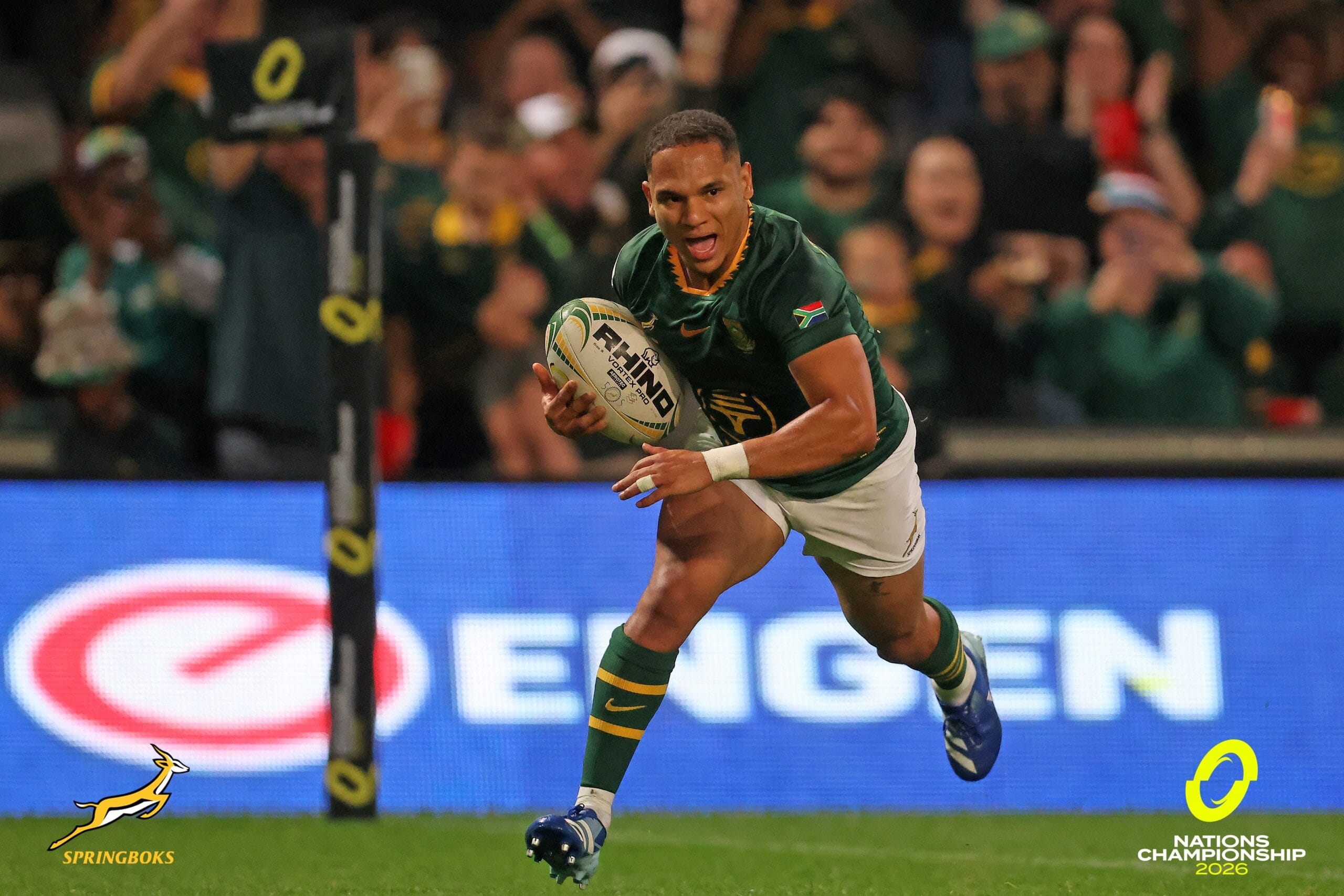



There are few better storytellers than rugby. Eight years after making his first Springbok start against Scotland on a wet Murrayfield evening, Embrose Papier is preparing to face the same opponents again. This time, the stage is Loftus Versfeld. The jersey still carries the same weight. The man wearing it has changed completely.
The Clanwilliam-born scrumhalf returns to the Springbok starting line-up carrying far more than seven Test caps. He brings eight seasons of perseverance, frustration and relentless self-belief after watching South Africa conquer the rugby world from the outside.
When Papier burst onto the international scene in 2018 as a fearless 21-year-old, he appeared destined to become the Boks’ long-term No 9. Rugby, however, had other ideas.
A conveyor belt of elite scrumhalves, including Faf de Klerk, Cobus Reinach and Jaden Hendrikse, kept the Bulls playmaker waiting while the Springboks collected back-to-back Rugby World Cup titles.
Instead of fading into the background, Papier rebuilt his game.
His outstanding United Rugby Championship campaign left Rassie Erasmus with little choice. Twelve tries, six assists, 15 clean breaks, 27 defenders beaten and more than 500 metres gained transformed him from an outside contender into an irresistible selection.
The timing could hardly be more fitting.
Papier will reunite with Handre Pollard, his halfback partner on that memorable Murrayfield night when South Africa defeated Scotland 26-20.
Handre Pollard and Embrose Papier will start for the Boks against Scotland again on Saturday at Loftus after eight years. Photo: Springboks
“I think there are always nerves before a Test match, but I’m super excited for the opportunity,” Papier said this week.
“We all know Handre has a lot of experience. We’ve spent a lot of time together on the pitch and I’m excited to go into this game with him.
“We need to pitch up on the day and give it everything.”
His familiarity with Scotland stretches beyond international rugby.
After five United Rugby Championship seasons with the Bulls, Papier knows many of Scotland’s players through bruising encounters with Glasgow Warriors and Edinburgh. He even crossed for a crucial try against Glasgow in last season’s URC semi-final.
For Erasmus, the recall is built on form rather than sentiment.
“Firstly, I thought he played really well this season,” the Springbok coach said.
“Sometimes it’s not because the player is not playing well enough or is not Springbok class. There are other players performing really well.
“He gathered form and now gets the opportunity at home with Handre, where they’ve played a lot of rugby.”
Paper occasionally writes the perfect ending.
Papier still has to do that himself.
Saturday offers more than another Test appearance. It is an opportunity to show that careers are rarely defined by the doors that close, but by the courage to keep knocking until one opens again.
It has become a familiar script in one of rugby’s richest rivalries. England ask difficult questions, the Springboks absorb the pressure and somehow emerge with the answer that matters most.
Saturday’s opening Nations Championship Test at Ellis Park offers Steve Borthwick’s side another opportunity to prove they have bridged that stubborn gap. They could hardly have picked a sterner examination.
Johannesburg does not welcome visitors with open arms. The altitude drains lungs, the crowd feeds every collision and the Springboks have turned Ellis Park into one of world rugby’s least hospitable addresses.
Rassie Erasmus’ side arrive riding a nine-match winning streak and carrying the confidence of back-to-back Rugby Championship titles. Momentum has become their travelling companion and complacency remains unwelcome.
“The goal is to win,” Erasmus said this week.
Simple words. Typical Springboks.
His selection reflects a squad built for every occasion. Damian Willemse and Cheslin Kolbe celebrate their 50th Tests in a backline packed with proven match winners. Jesse Kriel and Damian de Allende remain one of international rugby’s most reliable midfield pairings, while Manie Libbok gets another chance to orchestrate an attack that can shift from controlled to chaotic in a heartbeat.
Up front, the Springboks possess enough muscle to move mountains.
Ox Nche, Malcolm Marx and Thomas du Toit anchor a front row that thrives on confrontation, with Eben Etzebeth, Siya Kolisi and Jasper Wiese providing the relentless edge that has become South Africa’s trademark.
Then comes the Bomb Squad.
Fresh legs. Fresh power. Fresh problems.
England know exactly what awaits.
Ready to go 💪
Steve Borthwick has named his team for our Nations Championship opener against South Africa on Saturday, July 4 at 16:40 BST.@O2 | #WearTheRose
George Martin has welcomed the physical battle after returning from injury, while Fin Smith shoulders the responsibility of steering England around one of rugby’s toughest venues. Immanuel Feyi-Waboso’s return offers genuine attacking spark, Tommy Freeman arrives in outstanding form and Henry Pollock is expected to inject his trademark energy from the bench after already making himself public enemy number one among many South African supporters.
Borthwick believes his squad is ready.
“Playing South Africa at Ellis Park is one of the great Tests in world rugby,” he said.
He is right.
England have enough quality to ask questions of the world champions. Their backline carries pace, their forwards have embraced the challenge and their confidence has steadily grown despite an underwhelming Six Nations campaign.
The problem is that Ellis Park rarely rewards promise.
The Springboks know exactly how they want to play. Dominate the set piece. Win the gain line. Squeeze territory. Turn pressure into points.
It is an approach forged through experience and sharpened by success.
England may remain within touching distance for long stretches, much like they have in recent meetings. History suggests that when the contest reaches its defining moments, South Africa usually discover another level.
Prediction: Springboks by 12.
Teams:
South Africa: 15 Damian Willemse, 14 Cheslin Kolbe, 13 Jesse Kriel, 12 Damian De Allende, 11 Kurt-Lee Arendse, 10 Manie Libbok, 9 Grant Williams, 8 Jasper Wiese, 7 Pieter-Steph Du Toit, 6 Siya Kolisi (captain), 5 Ruan Nortje, 4 Eben Etzebeth, 3 Thomas Du Toit, 2 Malcolm Marx, 1 Ox Nche. Replacements: 16 Jan-Hendrik Wessels, 17 Gerhard Steenekamp, 18 Zachary Porthen, 19 Marco van Staden, 20 Cameron Hanekom, 21 Cobus Reinach, 22 Andre Esterhuizen, 23 Canan Moodie.
England: 15 George Furbank, 14 Immanuel Feyi-Waboso, 13 Tommy Freeman, 12 Seb Atkinson, 11 Cadan Murley, 10 Fin Smith, 9 Jack van Poortvliet, 8 Ben Earl, 7 Tom Curry, 6 Ollie Chessum, 5 George Martin, 4 Alex Coles, 3 Joe Heyes, 2 Jamie George (captain), 1 Ellis Genge. Replacements: 16 Luke Cowan-Dickie,17 Beno Obano, 18 Asher Opoku-Fordjour, 19 Charlie Ewels, 20 Guy Pepper, 21 Henry Pollock, 22 Alex Mitchell, 23 Marcus Smith.
Date: Saturday, July 4 Venue: Ellis Park, Johannesburg Kick-off: 17.40 Referee: James Doleman (New Zealand) Assistant referees: Andrew Brace (Ireland) & Pierre Brousset (France) TMO: Richard Kelly (New Zealand)
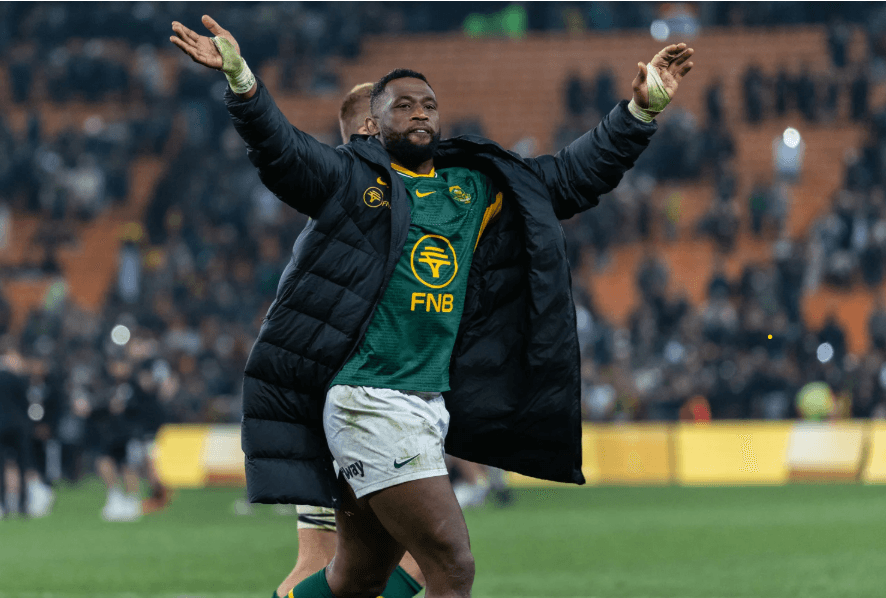
Siya Kolisi has spent his rugby career breaking tackles and barriers.
Last week in London, the Springbok captain helped break another significant milestone as Steadfast Africa‘s annual fundraising gala generated R2.5 million (£108,000) for the Kolisi Foundation and the Good Work Foundation.
Hosted at the historic Chelsea Physic Garden on 16 June, the event brought together philanthropists, business leaders and supporters committed to backing community initiatives in South Africa. With an online auction and raffle remaining open until 8 July, organisers expect the total to grow further.
For Kolisi, the evening was about something far greater than the impressive figure on the fundraising scoreboard.
“I am not a self-made man,” said Kolisi.
“I am here because people invested in me. They saw something in me, opened doors for me, and gave me opportunities I could never have created on my own.
“Today, through the Kolisi Foundation, we want to do the same for others. Partnerships like this one with Steadfast Africa and the Good Work Foundation remind us that lasting change is never the work of one person or one organisation. It is built by people who choose to invest in the potential of others.”
While his achievements on the rugby field have become part of Springbok folklore, his foundation has quietly built a growing footprint in communities across the country. Guided by the values of dignity, hope and unity, the organisation focuses on food security, education, youth empowerment, sport and raising awareness around gender-based violence.
The gala’s fundraising auction proved one of the evening’s biggest attractions, with guests competing for luxury safari experiences, exclusive travel packages and premium hospitality offerings from across Southern Africa.
The Good Work Foundation, Steadfast Africa’s other long-standing beneficiary, continues to bridge the digital divide in rural communities through education and skills development programmes.
Chief executive Kate Groch said the success of the event highlighted the strength of collaboration.
“Good Work Foundation is able to serve the communities we work in and do the work we do because of the support of our partners; they are an integral part of our Pink family.
“This was again shown at the amazing Steadfast event held in London. Thank you from myself and the entire GWF family. Thank you to everyone who organised, attended, donated and made the event so successful.
“We are grateful for our partnership with Steadfast and how it continues to grow. Together we will continue to do Good Work and reimagine education and opportunity for young rural South Africans.”
In rugby, captains are often judged by the trophies they lift.
Yet evenings such as this suggest his most enduring legacy may be measured not by silverware, but by the opportunities created for others long after the final whistle has sounded.
The scoreboards at Nelson Mandela Bay Stadium painted a picture of dominance on Saturday, but Springbok coach Rassie Erasmus and SA A coachMzwandile Stick were far more interested in the details hidden beneath the numbers.
The Springboks opened their season with an emphatic 80-31 victory over the Barbarians, while SA A brushed aside Zimbabwe 40-0. Despite the convincing results, both coaches identified areas requiring urgent attention before the Nations Championship begins in two weeks.
Erasmus praised the Springboks’ attacking output but admitted their discipline and defensive consistency left room for improvement.
“Our discipline wasn’t great, and they (the Barbarians) scored tries in quick succession, so yellow cards were not ideal,” said Erasmus.
The Bok coach pointed to the realities of a squad reconnecting after several months apart.
“But we have to remind ourselves that it’s been six or seven months since we’ve played together, and some guys were new in the mix, while we also didn’t know when the DHL Stormers or Vodacom Bulls players would be available at some stage, which are all aspects we have to keep in mind.
“To score 80 points is nice, but the Barbarians were thrown together quite late, and had only three training sessions, which makes them difficult to analyse. They scored four or five great tries, so we need to eliminate those defensive lapses and be better as a unit when we play against England.”
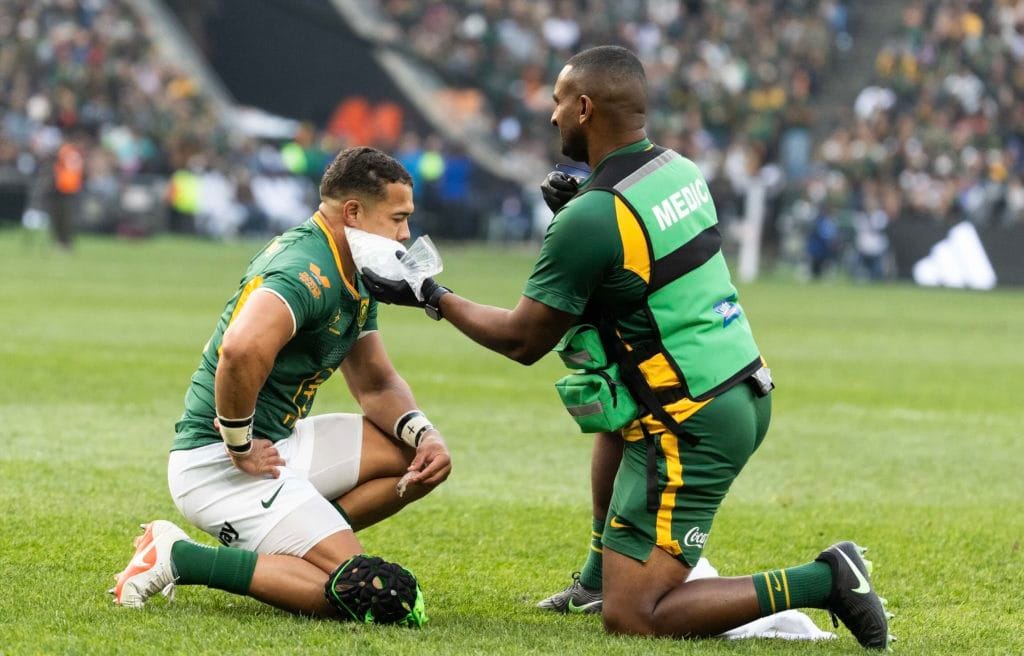
One concern for Erasmus was the injury suffered by experienced lock Franco Mostert, who was forced from the field.
“I’m worried about his ankle. He’ll go for scans tomorrow, so hopefully it’s not too bad.”
Springbok captain Siya Kolisi echoed his coach’s assessment, saying the match provided valuable evidence of what is working and what still needs attention.
“I thought a lot of what we wanted to get through, we did, but also, when things didn’t work, and we went against the plan, we learned lessons there,” said Kolisi.
“I always have to watch the game again to get a good assessment about things, but I already know some of the mistakes we made and the areas we need to fix. There were opportunities where I thought we could have controlled things better.”
Earlier in the day, SA A delivered a disciplined defensive display against a determined Zimbabwe side preparing for the 2027 Rugby World Cup in Australia.
Stick admitted the performance was not without frustration despite the clean-sheet victory.
“We knew it was going to be a big challenge because the majority of our players have never played together, so it was a new team, and Zimbabwe tried to challenge us by keeping ball in hand and playing direct rugby. I enjoyed the way they played.
“That said, for us, the goal was to see whether the players could execute what we’ve been working on over the past two weeks, and it was sometimes frustrating when the points weren’t coming.
“In the first half, we were unlucky, with two tries disallowed – once where a player went into touch, and another when a player was slightly in front of the kick. But from my side, the way the guys stayed in the fight, even when we were under pressure, was great, and we managed to keep a clean sheet.”
SA A captain Vincent Tshituka paid tribute to Zimbabwe’s intensity and ambition.
“We played against a desperate side, and we expected that. We knew the Zimbabwe players would be motivated and would want to prove a point against world-class opposition, and it showed.”
South Africa’s opening victories delivered plenty of encouragement. Erasmus and Stick know tougher examinations await, and both coaches left Gqeberha with a notebook full of positives and a to-do list that remains far from complete.
Springbok coach Rassie Erasmushas never been shy about planning several moves ahead. His latest squad announcement, featuring 21 uncapped players among a 51-man training group for the Gqeberha double-header later this month, offers another glimpse into how South Africa intends to sustain its dominance beyond the current generation.
Among the newcomers, the inclusion of DHL Stormersbacks Yaqeen AhmedandImad Khan stands out as more than a reward for impressive domestic performances. It is a reflection of South Africa’s determination to broaden its depth in two of the most influential positions on the field.
Ahmed, capable of operating at flyhalf and centre, and scrumhalf Khan are among a youthful contingent called into the national setup ahead of the Springboks’ clash against the Barbarians and the SA ‘A’ fixture against Zimbabwe on 20 June.
Their elevation comes at a significant moment.
With star playmaker Sacha Feinberg-Mngomezulu and scrumhalf Morne van den Berg sidelined through injury, Erasmus has been presented with an opportunity to accelerate the development of players who could feature prominently in future Springbok campaigns.
The injuries have not created vacancies so much as opportunities.
Ahmed’s selection is particularly intriguing. The highly rated Stormers playmaker has long been regarded as one of the country’s most promising attacking talents, combining tactical awareness with the versatility modern international rugby increasingly demands. His ability to cover multiple backline positions makes him a valuable asset in a Springbok environment where adaptability is prized almost as highly as raw talent.
Khan’s call-up carries similar strategic importance. South Africa’s production line of scrumhalves remains one of the healthiest in world rugby, yet Erasmus continues to search for greater depth at a position that often dictates the tempo of a match. Khan joins fellow uncapped scrumhalvesHaashim Pead and Nico Steyn in a competitive group that offers selectors an opportunity to assess emerging talent in a high-performance environment.
The Stormers pair form part of a broader youth movement that includes SA Under-20 players Danie Kruger, Luan Giliomee, Vusi Moyo, Oliver Reid, Liam van Wyk, Junior Springbok captain Riley Norton, Siphosethu Mnebelele, Markus Muller and Zekhethelo Siyaya. All were previously involved in the expanded Springbok alignment camp programme.
The remaining uncapped players are Paul de Villiers, Bathobele Hlekani, Hanro Jacobs, Jurenzo Julius, JJ Kotze, Sibabalwa Mahashe, Emmanuel Tshituka and Jaco Williams.
The composition of the squad has also been shaped by circumstance. Vodacom Bulls players were unavailable after securing a place in the United Rugby Championship final against Leinster, opening the door for several younger prospects to gain exposure to the national environment.
“We named a large group of players as we will be selecting a Springbok and SA ‘A’ team for the season-opening double-header in Gqeberha, and this will be beneficial in the long term as we build the squad, looking forward to next year’s Rugby World Cup and beyond,” he said.
“There is also an exciting mix of experienced campaigners and young players in this squad, and this formula has worked well for us in the past to ensure a clear pathway to build depth within the group.”
The Springbok coach believes the alignment camps held over recent months have prepared many of the newcomers for the demands awaiting them.
“The coaches have been working around the clock to put the systems in place in the last few months, and the in-person and virtual alignment camps have given most of the players a taste of what to expect, so it’s now a matter of implementing what they learned in the boardroom onto the field.”
“We are under no illusions about the challenge ahead this season with two matches against the Barbarians and the SA ‘A’ team against Zimbabwe playing out on the same day, which will be followed by two new competitions in the Nations Championship and Rugby’s Greatest Rivalry, so it will be important for the group to build cohesion as quickly as possible and make the most of our field sessions and team meetings to be as well prepared as possible when we take the field.”
For Ahmed and Khan, the call-up is not a destination. It is an invitation into one of the most competitive environments in world rugby. Whether either player features prominently in the months ahead remains uncertain.
What is clear is that Erasmus is already looking beyond the next Test, the next tournament and even the next season. The world champions are building depth with the same diligence that won them consecutive World Cups, and Ahmed and Khan are the latest names added to that long-term blueprint.
Rassie Erasmus has named a 51-man squad, with 21 uncapped players, for the first training camp of the season and double-header in Gqeberha 🇿🇦🚨
The squad for the Nations Championship in July will be announced on Sunday, 21 June, following the conclusion of the VURC Final. pic.twitter.com/YAgJuCtLGa
DHL Stormers coach John Dobson believes World Rugby should revisit the law governing held-up situations after his side were denied two tries during their 44-21 United Rugby Championship quarterfinal victory over Cardiff in Cape Town on Saturday.
While the Stormers progressed comfortably to the semifinals after scoring six tries, the result did little to ease Dobson’s frustration with a law he feels unfairly rewards the defending team.
The Stormers have been held up over the tryline more than any other side in the URCthis season, with Dobson suggesting it may even have cost them a higher finish on the log and the possibility of hosting a semifinal or final.
Speaking after the match at DHL Stadium, Dobson described the current law as one of rugby’s biggest anomalies.
“It’s our season. It’s our season. It is,” he said when asked byModern Athletehow the held-up and goal-line dropout law affected the Stormers thus far in the 2025/26 URC season.
“It’s the worst. It’s one law in rugby that has to change. I’m not saying because it’s against us. I don’t understand this concept. You do so well, and you’re rewarded with receiving the ball back on your ten-yard.
“The old law was much better. Give it a five-metre scrum. You’ve attacked well, five-metre scrum.”
Under current laws, a defending team receives a goal-line dropout when an attacker is held up in-goal. Previously, the attacking side was awarded a five-metre scrum.
Stormers captain Ruan Nel experienced the frustration first-hand after being denied near the line against Cardiff.
“It sucks, actually,” Nel said.
“The arms were pretty there. When I dotted the ball down, I just put it straight on his knees. So I actually felt him at the bottom of the ruck. Well done. Proper effort there. Obviously, it’s very disappointing.”
Nel admitted the missed opportunities were frustrating, though he viewed them as evidence that the Stormers’ attack is consistently creating scoring chances.
“It’s encouraging because you’re obviously getting to the right spaces.
“It’s disappointing, but obviously over the line, just get the flipping thing down. But it’s encouraging at the same time because we are breaking them down, we are getting the reward in terms of position there.”
The experienced back also noted how frequently the issue has affected the Stormers this season.
“It’s funny. I’ve never been a part of a season where we’ve been held up so many times.”
Dobson’s concerns will take on added significance this week as the Stormers prepare for a semifinal against Leinster in Dublin.
The Irish province underlined their title credentials by demolishing the Lions 59-10 in the quarterfinals, running in nine tries in a clinical display at the Aviva Stadium.
If the Stormers are to challenge Leinsteron their home turf, they will need to make the most of every scoring opportunity. Against a side renowned for converting pressure into points, being held up over the line and conceding a goal-line dropout could prove a costly setback.
For Dobson, the issue extends beyond the Stormers’ campaign. It is a law he believes fails to adequately reward attacking enterprise, and one he hopes World Rugby will eventually reconsider.
In the narrow cobbled lanes of Dorp Street in Bo-Kaap, rugby flows through the neighbourhood like the south-easter whipping around Table Mountain. On Saturdays, the streets empty. Families gather around televisions or pack into club grounds. The game lives in the rhythm of the community.
Now one of its daughters is carrying that heartbeat onto the international stage.
Insaaf Levy is preparing to become the first qualified medical doctor to represent the senior Springbok Women side at the Rugby Africa Women’s Cup in Nairobi.
Insaaf Levy when she is not on the rugby field Image: Instagram
At 23, Levy already moves through life with the composure of a seasoned scrumhalf guiding forwards around the park. In March, she completed her medical degree at the University of Cape Town while continuing to sharpen her craft for DHL Western Province Women.
Balancing medicine and elite rugby is like trying to defend a five-metre scrum with one shoulder. The physical and mental demands rarely leave space to breathe. Yet Levy navigated both worlds with the precision of a long spiral pass fired into the chest of a charging runner.
Her rise to the national squad under headcoach Swys de Bruin feels significant far beyond rugby.
Insaaf Levy in action on the rugby field Image: Instagram
This is a story stitched together by family, community and relentless repetition.
Levy grew up in one of Cape Town’s richest rugby bloodlines. Her father, Labeeb Levy, is a respected Stormersskills coach and current Stormers XXIII head coach. Her maternal grandfather, the late Sedick Sieed, remains a revered figure in Cape rugby circles from the Saru era.
Inside the Levy household, rugby conversations arrive as naturally as dinner.
“We always talking about rugby in our household,” Levy said.
“My dad would go from a normal conversation about literally anything else. He would think about something he saw and then the conversation just switches.”
That constant education shaped her rugby intelligence long before provincial colours arrived.
At seven years old, Levy began playing touch rugby and quickly emerged as one of the country’s brightest talents. She represented South Africa at the Youth Touch World Cup in Malaysia in 2018 and later featured at senior Touch World Cups in Malaysia and England. Her sporting versatility stretched further into netball, where she represented the Western Province U21 side while studying medicine.
Every layer of that journey helped fashion the calm, instinctive scrumhalf now standing on the edge of Springbok selection.
“As a scrumhalf, passing has been my main focus since I was younger,” Levy explained.
“My dad would say come after supper you have to pass 500 balls left and right, then you can go do what you want.”
Those repetitions became the bricks of her game. Her passing now zips across the field like a ball skimming off wet turf under floodlights.
Levy studies the craft obsessively. She admires Antoine Dupont and Aaron Smith for their control of tempo and tactical awareness, while drawing local inspiration from Felicia Jacobs.
Yet rugby in Bo-Kaap is never an individual story.
Haashim Pead and Insaaf levy firing passes on a tennis court in Bo-Kaap as children
The same streets that nurtured Levy also shaped risingJunior Springbok scrumhalf Haashim Pead. Video clips of the pair as children firing passes on a tennis court now feel like snapshots of a community producing talent with assembly-line consistency.
The rugby roots run even deeper through her younger sister, Nuha Levy, a gifted flyhalf already excelling for South Africa Women U18 and DHL Western Province Women U20. Earlier this month, Nuha steered WP to the national U20 Women’s Week title in Alberton.
Together, the sisters carry the tantalising possibility of one day becoming a Springbok halfback pairing forged in Bo-Kaap’s rugby furnace.
Nuha and her sister Insaaf Levy could one day play together for the Springbok Women Image: Instagram
For Levy, however, identity stretches beyond sport.
She speaks proudly about her late grandfathers, Sedick Sieed and Tahir Levy, whose influence grounded her in service and humility.
“Papa [Tahir Levy] selflessly dedicated his entire life to serve his community as an activist and social worker,” she said.
That spirit of service now shapes both halves of her life.
“Studying medicine while playing rugby was tough to manage,” Levy admitted.
“Now that I am qualified and working, I am looking forward to not only serving the ball from the base of a scrum but also being of service to my community as a doctor.”
Swys de Bruin, head coach of the Springbok Women Image: SA Rugby
De Bruin believes those qualities elevate her value within the squad.
“Insaaf earned this opportunity through consistency, game understanding and work ethic,” he said.
“She reads space very well; she has a calm temperament under pressure and her decision-making around the breakdown impressed us throughout the season.”
South Africa’s Rugby Africa Women’s Cup campaign against Madagascar, Uganda and Kenya is another building block ahead of a demanding international season that includes Tests against the USA and the Black Ferns.
The Vodacom United Rugby Championship(URC) playoffs will feature three South African teams after a dramatic final round delivered a cocktail of celebration and frustration for the country’s franchises.
The Vodacom Bulls and DHL Stormers earned prized home URC quarter-finalswith emphatic statements in Pretoria and despite defeat in Cardiff respectively, while the Fidelity SecureDrive Lions scraped into the playoffs after stumbling in Limerick. The Hollywoodbets Sharks ended their campaign with a fireworks display in Durban.
The Bulls charged like a runaway scrum at Loftus Versfeld, flattening Benetton Rugby 45-19 to secure fourth place and a home quarter-final against Munster Rugby. Johan Ackermann’s men crossed for seven tries and stretched their winning streak to six matches.
Sergeal Petersen bagged a brace, while Willie le Roux, Johan Grobbelaar, Cobus Wiese, Celimpilo Gumede and Ruan Nortje also powered over. Handre Pollard added five conversions with the precision of a metronome steering a backline orchestra.
Benetton’s resistance came through Louis Lynagh’s double and a try by Rhyno Smith, though the visitors spent most of the evening chasing shadows across the Highveld turf.
In Wales, Cardiff slammed the brakes on the Stormers’ hopes of a top-two finish with a gritty 22-16 victory at Cardiff Arms Park. The Cape side burst from the blocks like sprinters off the starter’s gun, but Cardiff’s defence became a brick wall around the tryline.
Adre Smith scored early for the Stormers, while Sacha Feinberg-Mngomezulu added a conversion and three penalties. Cardiff struck through Jacob Beetham’s brace, Tom Bowen and Ioan Lloyd to seal a quarter-final rematch in Cape Town.
The Lions, meanwhile, slipped to a 24-17 defeat against Munster in Limerick, leaving them with the daunting challenge of facing defending champions Leinster Rugby in Dublin.
Down in Durban, the Sharks signed off in style by crushing Zebre Parma 54-19. Siya Kolisi produced a captain’s farewell worthy of a stadium ovation with two tries, while Jaco Williams, Zekethelo Siyaya, Vusi Moyo, Emmanuel Tshituka, Le Roux Malan and Ross Braude also crossed the whitewash.
The result secured 10th place for the Sharks and offered a glimpse of a side beginning to sharpen its claws for future campaigns.
The Junior Springboks wrapped up the 2026 U20 Rugby Championship with a game to spare after a commanding 56-17 victory over Australia in Gqeberha on Sunday.
It was a polished, high-tempo display that reflected a side growing in confidence and cohesion under coach Kevin Foote, with game management, attacking variety and squad depth all on show.
Kevin Foote reflects on the performance of the #Juniorboks after Round 2 in the #TRCU20 🗣️
Flyhalf Yaqeen Ahmed nicknamed ‘The Chef’ for his ability to carve open opposition defences again proved central to South Africa’s control of the contest. The playmaker dictated territory and tempo with maturity, mixing tactical kicking with sharp distribution to keep Australia on the back foot throughout.
Foote emphasised the balance within his squad, saying: “Our DNA is physicality, but it’s also skill.” Ahmed has been a key driver of that identity, particularly in victories over Argentina and Australia, where his decision-making under pressure has stood out.“
While Ahmed steered the game,‘The Tank’ Ethan Adams provided the cutting edge. The explosive outside back delivered a series of outstanding individual tries, combining raw power with refined skill. He broke tackles with the force of a runaway train and then showed balance and control in tight spaces, turning half-chances into decisive moments.
Adams’ impact gave South Africa a consistent source of momentum, with his ability to beat defenders shifting the game firmly in the hosts’ favour.
TheJunior Boks also benefited from their depth, with the introduction of last year’s U20 World Cup wining flyhalf Vusi Moyo adding another layer to their attack. The tactical adjustment allowed Ahmed to move into midfield at times, where he remained influential, attacking the line and linking effectively with the outside backs.
This dual-playmaker approach enabled South Africa to stretch the Australian defence and maintain unpredictability across phases. As highlighted within the camp, it allowed the team to “show our hands and our backs” in a more fluid system.
Despite the convincing scoreline, Foote acknowledged there are still areas to improve, particularly at the breakdown. He praised the team’s effort, saying: “We showed a lot of grit… super proud of everybody.”
That grit was evident in the Junior Boks’ discipline and defensive organisation. They applied sustained pressure, forcing errors and yellow cards from Australia while maintaining their own composure.
Captain Riley Norton pointed to the squad’s unity as a key factor: “It’s about character and love… the off-field connections have been unbelievable, and that transfers onto the field.”
The performance underlined the team’s progress across the tournament. The forwards provided a solid platform, the bench added impact, and the backs executed with accuracy.
Preparation has played a role in that development, with a demanding build-up helping to build continuity and sharpness following a slower start in previous campaigns.
Although the title is secured, the Junior Boks remain focused, with a final fixture against New Zealand still to come. The message from within the squad is clear: “We can’t take our foot off the gas.”
With the World Rugby U20 Championship approaching, South Africa’s depth, structure and attacking threat position them as strong contenders, with a dominating pack of forwards ably led by skipper Norton combined with ‘The Chef’s’ control and ‘The Tank’s’ finishing providing a potent combination for the pacy outside backs to flourish.
Junior Boks coach Kevin Foote has made measured changes to his match-23 for Sunday’s U20 Rugby Championship clash against Australia at Nelson Mandela Bay Stadium.
Kick-off is at 16h10, with New Zealand facing Argentina earlier at 14h00.
The South Africans were convincing in their opening win over Argentina and Foote has largely kept faith with that combination, making a single change to the starting pack. Wasi Vyambwera comes in at blindside flank, adding fresh energy to a forward unit that laid a strong platform in the tournament opener.
The backline sees two adjustments, with Khuthadzo Rasivhaga starting on the left wing and Akahluwa Boqwana selected at fullback. Both players will be expected to add attacking edge against an Australian side known for its skill and tempo.
On the bench, Luan van der Berg replaces the injured Kai Pratt, while Gert Kemp and Jade Muller come into the matchday squad to provide loose forward and backline cover.
Foote said the team had taken valuable lessons from their opening performance.
“We had a really good review of our performance against Argentina and, while we are very pleased with the result and the way the players performed on defence and attack for long periods of the match, there are obviously aspects of our game that need improvement,” he said.
The coach stressed the need for consistency across the full match.
“Our focus is playing the full 80 minutes and ensuring that we stay on our game model to meet what will be a huge challenge against an Australian side that is well coached and who boasts strong skill sets across the park.”
The Junior Boks will again run out in front of a passionate Eastern Cape crowd after a strong turnout in the opening round.
“The support we received against Argentina last week was absolutely fantastic, and we are excited to be playing in front of the passionate Eastern Cape rugby fans once again,” Foote said.
South Africa will look to build on their early momentum, with execution and discipline expected to be key against a well-organised Australian outfit.