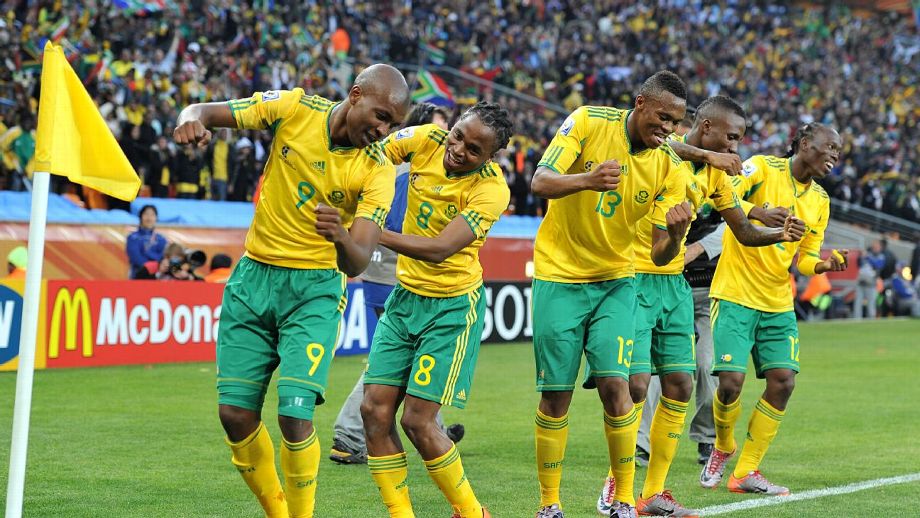


Bafana’s Canada clash worth R66m as Broos plots path to World Cup last 16

By Adnaan Mohamed

Bafana Bafana’s FIFA World Cup campaign has already delivered history. On Sunday, it could deliver another R66 million.

Fresh from a gritty 1-0 victory over South Korea, Hugo Broos’ side take on co-hosts Canada at SoFi Stadium in Los Angeles with a place in the Round of 16 and a significantly bigger FIFA payday at stake.

South Africa have already secured total tournament earnings of $23.5 million (about R390 million) after reaching the knockout phase.

That figure comprises FIFA’s $10 million participation fee, a $2.5 million preparation grant and the $11 million awarded to teams eliminated in the Round of 32.

Victory over Canada would increase the performance bonus to $15 million, adding another $4 million, or approximately R66 million, to Bafana’s World Cup earnings.

The financial rewards also filter down to the dressing room.

Under an agreement between the South African Football Association (SAFA), the players and technical staff receive 30% of FIFA prize money. Having already earned bonuses estimated at around R2 million each after progressing from the group stage, another victory could lift individual payouts to roughly R3.6 million.

While the money is substantial, Broos’ focus will be on another disciplined tactical display against a Canadian side boasting genuine pace in wide areas.

Canada’s biggest threats come from European-based stars Alphonso Davies and Tajon Buchanan, two explosive wingers capable of stretching even the most organised defence.

Rather than matching Canada stride for stride, Broos is expected to rely on the compact defensive structure that frustrated South Korea.

Midfielders Teboho Mokoena and Sphephelo Sithole are likely to operate as a double pivot, shifting across the field to protect the defence and prevent Canada’s wide players from driving into dangerous central areas.

Behind them, full-backs Khuliso Mudau and Aubrey Modiba are expected to hold their defensive shape, limiting space behind the back line rather than committing early to one-on-one battles.

Should Canada’s attacking full-backs push forward, Bafana will look to exploit the space in transition, using quick vertical attacks to turn defence into offence.

That formula served South Africa well against South Korea, where patience, organisation and clinical finishing proved enough to secure a famous victory.

Sunday presents an even sterner examination.

Beat Canada and Bafana will move into the World Cup’s last 16 for the first time in the nation’s history while adding another R66 million to an already remarkable campaign.

The stakes could hardly be higher, both on the pitch and on the balance sheet.

Siya Kolisi’s message of hope powers R2.5m fundraising boost

By Adnaan Mohamed

Siya Kolisi has spent his rugby career breaking tackles and barriers.

Last week in London, the Springbok captain helped break another significant milestone as Steadfast Africa‘s annual fundraising gala generated R2.5 million (£108,000) for the Kolisi Foundation and the Good Work Foundation.

Hosted at the historic Chelsea Physic Garden on 16 June, the event brought together philanthropists, business leaders and supporters committed to backing community initiatives in South Africa. With an online auction and raffle remaining open until 8 July, organisers expect the total to grow further.

For Kolisi, the evening was about something far greater than the impressive figure on the fundraising scoreboard.

“I am not a self-made man,” said Kolisi.

“I am here because people invested in me. They saw something in me, opened doors for me, and gave me opportunities I could never have created on my own.

“Today, through the Kolisi Foundation, we want to do the same for others. Partnerships like this one with Steadfast Africa and the Good Work Foundation remind us that lasting change is never the work of one person or one organisation. It is built by people who choose to invest in the potential of others.”

The words carried the same leadership that has made Kolisi one of South Africa’s most influential sporting figures.

While his achievements on the rugby field have become part of Springbok folklore, his foundation has quietly built a growing footprint in communities across the country. Guided by the values of dignity, hope and unity, the organisation focuses on food security, education, youth empowerment, sport and raising awareness around gender-based violence.

The gala’s fundraising auction proved one of the evening’s biggest attractions, with guests competing for luxury safari experiences, exclusive travel packages and premium hospitality offerings from across Southern Africa.

The Good Work Foundation, Steadfast Africa’s other long-standing beneficiary, continues to bridge the digital divide in rural communities through education and skills development programmes.

Chief executive Kate Groch said the success of the event highlighted the strength of collaboration.

“Good Work Foundation is able to serve the communities we work in and do the work we do because of the support of our partners; they are an integral part of our Pink family.

“This was again shown at the amazing Steadfast event held in London. Thank you from myself and the entire GWF family. Thank you to everyone who organised, attended, donated and made the event so successful.

“We are grateful for our partnership with Steadfast and how it continues to grow. Together we will continue to do Good Work and reimagine education and opportunity for young rural South Africans.”

In rugby, captains are often judged by the trophies they lift.

Kolisi has already lifted the biggest prize in the sport twice.

Yet evenings such as this suggest his most enduring legacy may be measured not by silverware, but by the opportunities created for others long after the final whistle has sounded.

Cape Town races into history as Africa’s first Marathon Major

By Adnaan Mohamed

Cape Town has crossed a finish line decades in the making.

The Sanlam Cape Town Marathon has officially become the first Abbott World Marathon Major on African soil after passing the second and final stage of its assessment process, securing its place among the sport’s most prestigious races.

From 2027, Cape Town will stand alongside Tokyo, Boston, London, Sydney, Berlin, Chicago and New York in what has long been marathon running’s most exclusive club, a landmark moment for a continent that has produced generations of distance-running greats.

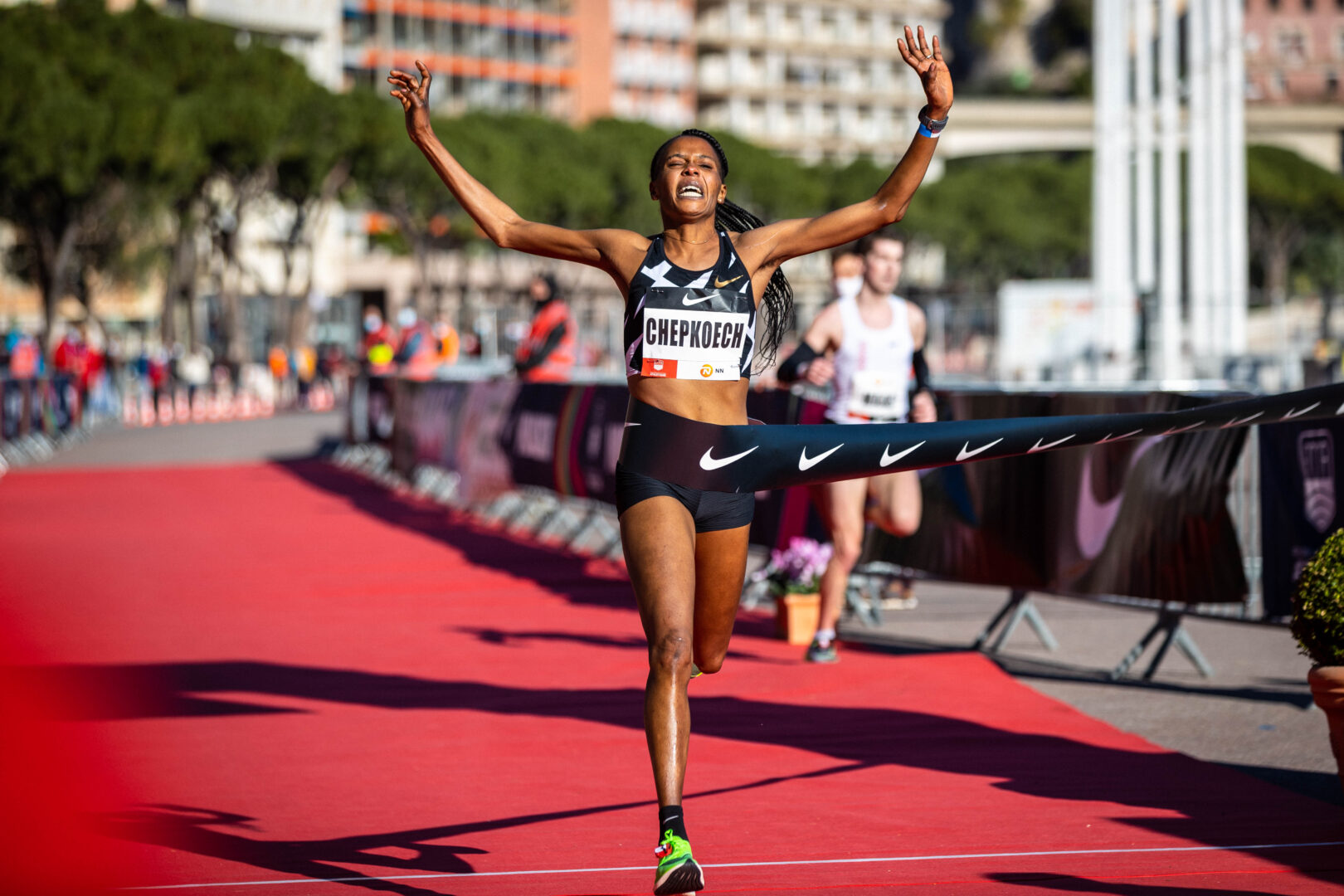
CAPE TOWN MARATHON. 24 MAY 2026.

“It gives me huge pleasure to welcome Cape Town to the family,” said Abbott World Marathon Majors CEO Dawna Stone.

“After watching the race grow in size and stature during its candidacy and also seeing the resilience and dedication of the team lead so wonderfully by Clark Gardner, Africa’s first Major has finally arrived. The unique culture, the welcome from the people of the city and the wonderful setting Cape Town provides will bring a whole new dimension to our series. I know runners in Africa and across the world will have a phenomenal experience at this race.”

The announcement marks the culmination of years of planning and community support, with organisers repeatedly highlighting the role played by runners, volunteers, clubs, sponsors and city partners in helping the event meet the demanding criteria.

“This achievement belongs to every person who believed in and committed to this vision,” said race director and CEO Clark Gardner.

“We could never have reached this moment alone. Our runners carried us to the numbers we needed, our sponsors and partners stood firm beside us even when the 2025 race could not go ahead, and our supporters, club captains, residents and service providers each played their part. The Sanlam Cape Town Marathon stands as proof that when Africa comes together, we can achieve anything. This victory belongs to all of them.”

The significance stretches far beyond one city or one race.

For years, African athletes have dominated the global marathon scene while many recreational runners faced the financial burden of travelling overseas to experience a Major. Cape Town’s elevation changes that equation, with organisers committing to keeping two-thirds of race entries available to African participants.

Sanlam Group CEO Paul Hanratty described the announcement as “a collective victory”.

“For 13 years, Sanlam has been part of this journey, walking alongside the event as a committed partner and supporting its growth into a world-class platform. We hope this moment inspires people across Africa to dream bigger, go further and live with confidence.”

The event also carries significant economic value, with projections suggesting it could contribute around R800 million through tourism, accommodation and related spending.

Cape Town Mayor Geordin Hill-Lewis. Image Fahwaaz Cornelius

“For Cape Town to be the home of an Abbott World Marathon Majors race is an incredible moment for our city,” said Mayor Geordin Hill-Lewis.

“Achieving this milestone will contribute greatly to Cape Town’s economy, inspire future generations of runners, and leave a legacy for the sport across Africa.”

For a continent that has long supplied many of marathon running’s brightest stars, the road has finally curved home. Africa is no longer chasing the world’s biggest races. It now hosts one.

Virgin Active HYROX Cape Town Ignites the CTICC with South Africa’s First Three-DayFitness Spectacle

From 3-5 April 2026, the Cape Town International Convention Centre (CTICC) was transformed into a high-octane arena for the third edition of HYROX Cape Town, and the first edition of Virgin Active HYROX Cape Town. Marking a historic milestone for the sport in Africa, the 2026 event expanded to a three-day format for the first time, welcoming a record-breaking community of athletes and spectators to the “Mother City.” 

The atmosphere inside the CTICC was, as always, electric, fueled by the athletes’ energy and a diverse field of competitors ranging from first-time Open category participants to elite Pro athletes. This year’s event saw 6,520 athletes cross the finish line – maintaining an incredible 99.2% finishing rate – supported by over 12,000 roaring spectators over the three days. 

Virgin Active HYROX Cape Town also marked the most inclusive race in South African history. The event hosted a deaf/hard of hearing relay team, as well as the largest number of adaptive athletes to date. Highlighting the spirit of the competition, the crowd cheered on a visually impaired participant who completed the course twice. First competing in the Adaptive division and the next day returning to the floor for a Mixed Doubles race with a family member. 

“HYROX is more than just a race, it’s a global movement that celebrates the ‘everyday athlete,'” says Mlondi Mashinini, Managing Director of HYROX South Africa. “Seeing the growth from our first event, less than two years ago, to this massive three-day festival at the CTICC proves that South Africans have a massive appetite for functional fitness. The partnership with Virgin Active has been instrumental in preparing our athletes to compete at this level.” 

The reach of the event extended well beyond South African borders, drawing athletes from across the continent, including Botswana, the Democratic Republic of the Congo, the Republic of the Congo, Kenya, Lesotho, Namibia, Zambia, and Zimbabwe. 

The collaboration with Virgin Active was felt throughout the venue, most notably in the Recovery Village. Here, athletes transitioned from the intensity of the race to expert-led recovery sessions, featuring contrast therapy, stretching, and nutritional support from partners like Kauai. 

Following the success in Cape Town, the HYROX tour now looks toward the high-altitude challenge of Johannesburg. With thousands of lives already impacted by the 2026 season kick-off, the momentum for functional fitness in South Africa has never been stronger. 

About HYROX:

HYROX is the Global Fitness Race for Every Body. Launched in 2017, HYROX has become the world’s largest indoor fitness race, hosted in over 30 countries. The standardised format allows athletes of all levels to compete against their own personal bests and a global leaderboard. 

About Virgin Active: 

Virgin Active is South Africa’s leading health and wellness club network. Through its multi-year partnership with HYROX, Virgin Active provides specialised training programmes, accredited trainers, and world-class recovery facilities to support the fitness journey of every South African athlete. 

For more information, race results, or to register for upcoming events, visit www.hyroxsa.com. Media Contact: 

Corlia Meyer 

[email protected]

SA Sport 2025: A Year-in-Review

By Adnaan Mohamed

In South Africa, sport has always been more than results. It is identity, catharsis and connection. In 2025, that truth surged again, from the collective power of the Springboks to the solitary courage of ultra-marathoners chasing dawn. This special edition captures a year when excellence became habit and belief became currency.

RUGBY: THE SPRINGBOKS – A STANDARD THE WORLD STILL CHASES

If global rugby were measured in tectonic plates, the Springboks spent 2025 shifting them.

South Africa’s national side operated with the assurance of champions who know their system is both unforgiving and evolving. They defended trophies, dominated tours and suffocated opponents with a brand of rugby that blended brute force with surgical intelligence.

The crowning individual honour came when Malcolm Marx was named World Rugby Men’s 15s Player of the Year. It was well deserved recognition for a player who plays the game like a controlled demolition. Around him, the emergence of creative talents such as Sacha Feinberg-Mngomezulu ensured the Bok blueprint remained future-proof.

“The Springboks didn’t just win in 2025, they imposed a rhythm the rest of the world struggled to breathe in.”

CRICKET: PROTEAS REWRITE THEIR HISTORY

At Lord’s, cricket’s most sacred address, South Africa finally confronted its past and walked beyond it.

The Proteas’ World Test Championship triumph was more than silverware. It was a release. Decades of near-misses dissolved as a team led by coach Shukri Conrad and led by Temba Bavuma played with clarity, courage and conviction.

Where previous Proteas sides carried scars, this one carried belief. The victory announced South Africa’s return to cricket’s highest table, not as guests, but as equals.

Proteas Women mirrored that excellence, reaching global finals and reinforcing the depth and durability of South African cricket across genders.

ATHLETICS: SPEED, SCIENCE AND STAYING POWER
Akani Simbine : The Constant

In an era of fleeting sprint dominance, Akani Simbine remained the constant, anchoring relay success and delivering world-class performances with metronomic consistency. His longevity at elite speed became its own form of greatness.

ROAD RUNNING: A YEAR THE CLOCK COULDN’T CONTAIN

South Africa’s roads became theatres of defiance in 2025, places where age, expectation and perceived limits were dismantled.

Elroy Gelant : The Marathon Reset

At 38, Elroy Gelant shattered Gert Thys 26-year-old South African marathon record, slicing through time with the precision of a veteran who understood patience as power. His run didn’t just reset a record, it reset belief.

Glenrose Xaba : Queen of the Circuit

Glenrose Xaba ruled the SPAR Grand Prix like royalty, sweeping the series with relentless cadence and tactical control. Her dominance elevated women’s road running into mainstream conversation.

Maxime Chaumeton : Breaking the Mental Barrier

By dipping under 27 minutes for 10km, Maxime Chaumeton didn’t just break a record, he broke a psychological ceiling. The ripple effect will be felt for years.

The Wildschutt Brothers : From Ceres to the World

Adriaan and Nadeel Wildschutt continued to anchor South Africa’s distance legacy. Their performances reinforced a simple truth: endurance excellence is forged through environment, discipline and humility.

ULTRA-DISTANCE RUNNING: WHERE LEGENDS WALK TOWARDS PAIN
Gerda Steyn – The Golden Girl of Endless Roads

In the brutal, beautiful realm of ultra-marathons, Gerda Steyn remained peerless. Victories at both the Totalsports Two Oceans 56km and the Comrades Marathon confirmed her status as South Africa’s undisputed queen of endurance.

Steyn doesn’t race opponents, she negotiates with terrain, climbs mountains with calm authority and descends with fearless precision.

Tete Dijana : Defender of the Down Run

The Comrades Marathon came alive as Tete Dijana successfully defended his Down Run title. His aggressive, fearless approach reminded everyone that Comrades champions are not merely runners, they are architects of suffering and triumph.
“In 2025, South Africa didn’t just win Comrades, it owned the road.”

FOOTBALL: FOUNDATIONS OVER FIREWORKS

For Bafana Bafana, 2025 was about structure and progression rather than spectacle. Key wins, disciplined performances and youth-level success hinted at a system slowly learning consistency, laying bricks rather than chasing shortcuts.

BEYOND THE BIG CODES: DEPTH ACROSS THE BOARD

From hockey triumphs to netball growth, swimming, rowing and youth multisport success, Team South Africa’s broader sporting ecosystem thrived. Medal tables and qualification campaigns confirmed a vital truth: the base of South African sport is wider than ever.

THE BIG PICTURE: WHAT 2025 REALLY MEANT

What unified South Africa’s sporting year was not just success, but sustainability.

  • Rugby showed depth and evolution
  • Cricket conquered its mental frontier
  • Athletics blended speed with staying power
  • Road and ultra-running delivered global relevance
FINAL WHISTLE

If sport is a language, then South Africa spoke it fluently in 2025, sometimes loudly, sometimes quietly, but always with intent. From scrums that bent spines to runners who bent time, this was a year where the nation didn’t wait for greatness. It ran towards it and crossed the line together.

Springboks opponents for third consecutive RWC title defence in Australia revealed

By Adnaan Mohamed

The Springboks pursuit of an unprecedented third consecutive Rugby World Cup title will unfold against familiar opponents after the defending champions were drawn into Pool B with Italy, Georgia and Romania for the 2027 tournament in Australia.

The announcement, made during Wednesday morning’s draw, confirmed that South Africa will face three teams they know well from past World Cup encounters: Romania in 1995 and 1999, Georgia in 2003, and Italy in 2019.

The format, guided by world rankings for the 2025 season, sorted the 24 teams into four bands before randomised placement into six pools. This is the largest RWC structure to date.

Rassie Erasmus: “We are pleased… but this is a World Cup”

Springbok head coach Rassie Erasmus welcomed the draw but emphasised the unpredictability of tournament rugby.

“We are pleased with the pool we have been drawn in, but this is a World Cup, and every team will go out there with great passion and do their utmost to represent their nations with pride,” said Erasmus.

“There have been surprises in the tournament before, so we’ll need to be up mentally and physically for every match.”

Erasmus offered a measured breakdown of each opponent, noting how deceptive world rankings can be.

“Italy may be ranked 10th in the world, but they showed us what they are capable of when they hit their straps earlier this season, even though the scorelines may not have reflected that.

“Georgia and Romania are also extremely physical and passionate teams, and we’ve faced them before, so we know how tough they can be on the day if we give them space and opportunities to play to their potential.”

His remarks frame Pool B as a group where familiarity offers preparation advantages, but no shortcuts — a reminder that even routine fixtures can turn into tactical ambushes if approached casually.

Tournament Format: Six Pools, New Pathways

With the RWC expanding from 20 to 24 teams and the fixture list increasing to 52 matches, 2027 will introduce a modified playoff pathway.

  • Winners of Pools A–D will face the four best third-placed teams.
  • Winners of Pools E and F will meet the runners-up from Pools B and D.
  • Runners-up in Pools A and C draw the second-placed teams from Pools E and F.

This structural shift increases the importance of pool-stage consistency and squad rotation which is a key component of Erasmus’s historically successful World Cup strategies.

The Full 2027 Pools

  • Pool A: New Zealand, Australia, Chile, Hong Kong China
  • Pool B: South Africa, Italy, Georgia, Romania
  • Pool C: Argentina, Fiji, Spain, Canada
  • Pool D: Ireland, Scotland, Uruguay, Portugal
  • Pool E: France, Japan, USA, Samoa
  • Pool F: England, Wales, Tonga, Zimbabwe

Australia will host matches from 1 October to 13 November 2027 across seven cities in Adelaide, Brisbane, Melbourne, Newcastle, Sydney and Townsville.

The full matchday schedule will be released on 3 February 2026, with a two-week presale window for fans opening 18 February 2026.

A Favourable yet Demanding Pool

While South Africa avoided a heavyweight Tier 1 rival in Pool B, the draw offers strategic depth:

  • Italy present a risk profile based on tempo and moments of tactical unpredictability.
  • Georgia bring scrummaging power and collision dominance – a stress test for any forward pack.
  • Romania remain physical and combative, although rebuilding.

For Erasmus, the pool provides space to calibrate combinations, manage player load, and sharpen tactical identity, the essential building blocks for a three-peat campaign. Pool B offers stability, but only if executed with precision.

Eben Etzebeth Red-Card Fury Overshadows Bok Brilliance in Cardiff Rout

By Adnaan Mohamed

The Springboks’ 73–0 evisceration of Wales in Cardiff should have been remembered purely as a victory of ruthless precision, a night when Rassie Erasmus’ men turned the Principality Stadium into a eleven-try scrapyard.

Instead, the Test has been plunged into global debate after Eben Etzebeth, the most-capped Springbok in history, was shown a red card for alleged eye-gouging. This incident that happened just before the final whistle to mercifully end the Welsh carnage, has dominated headlines from Cape Town to Cardiff.

While the Boks celebrated an unbeaten season and a flawless November tour, the image of Etzebeth leaving the field cast a long, uncomfortable shadow. Critics, former internationals, fans and pundits have fired up social platforms, arguing everything from “stone-cold red” to “unintentional and harsh.”

The timing was especially jarring: a night designed to honour Springbok milestones became a night consumed by disciplinary outrage.

Coach Rassie Erasmus did not try to sugar-coat it.

“It didn’t look good, and I thought it was a justified red card,” he admitted.

A rare moment where Erasmus openly conceded a fault on an evening when everything else went right.

Reinach Reaches 50: A Milestone Deserving More Light

Lost beneath the Etzebeth storm was a story that deserved to headline the night: Cobus Reinach finally reaching his 50th Test, a feat 11 years in the making.

The 35-year-old Bok scrumhalf, who buzzed around the breakdown like a hornet with a fresh battery pack, called the honour a dream fulfilled.

“It’s always special just to put on the Springbok jersey… If it’s cap one or cap 140 like Eben, it’s special.

But playing my 50th Test was definitely great,” he said.

“It’s every boy’s dream to play for the Springboks and having done that 50 times is unreal. It’s a privilege and something I’ll always be thankful for.”

That this milestone arrived during a historic win, and in a season where the Boks finished world No.1, made it sweeter.

“It wasn’t just about the end-of-year tour. It was about the whole season,” Reinach reflected.
“We learned and adapted more than previously, and I think we grew immensely as a team.”

The veteran scrumhalf, still as sharp as a new studs-on-soft-ground boot, even dared to dream further.

“I definitely want to play another one or maybe two World Cups,” he smiled.

“I feel good… it’s just my hairline moving back a little, and my beard getting thicker.”

His gratitude extended to the beating heart of Bok rugby: the supporters.

“From London to Wales, France, Ireland… thank you. We are one. We can’t do what we do without you.”

A Night of Dual Narratives: Dominance and Disruption

The Etzebeth incident ignited a worldwide rugby firestorm precisely because the Test was so lopsided. At 73–0, the Springboks were in full command. The back-to-back World Champions were ruthless, clinical, and controlled, suffocating Wales like a python tightening with every carry.

But the red card, shown late in the second half, shifted the conversation from dominance to controversy. Analysts have already begun dissecting angles, freeze-frames and intent, with disciplinary hearings expected to become the next battleground.

Yet, amid the noise, Reinach’s golden milestone, the Boks’ unbeaten tour, and their world No.1 finish remain significant markers of a team still evolving and still hungry. Reinach himself summed it up best:

“The way we work for each other and how tight-knit we are is special. If we keep that, there’s a lot more in the tank.”

Reinach’s Golden Milestone and Rassie’s Clever End-of-Year Chess Move

By Adnaan Mohamed

There’s a reason the Springboks never really feel “under-strength” even when half the squad is scattered across Europe, Japan and club rugby obligations. South Africa, more than any other rugby nation, has turned adversity into opportunity, disruption into design. And this week in Cardiff, as the Boks close out their season against Wales, that philosophy takes centre stage.

Saturday marks more than just the end of the Outgoing Tour. It marks a moment of quiet, powerful significance in a year defined by rotation, regeneration, and ruthless forward-thinking.

Because while the headlines will rightly celebrate Cobus Reinach’s 50th Test, the deeper story is how Rassie Erasmus is using this final match of the year to subtly tighten the screws on South Africa’s long-term blueprint.

Let’s dive in.

1. Reinach at 50: A Triumph of Perseverance Over Spotlight

At 35, Cobus Reinach reaching his milestone half-century is a testament to patience in an era obsessed with instant stardom.

He’s never been the loudest, the flashiest, nor the headline-grabber. Instead, he has been the Springbok who always arrives when needed, slips into the system seamlessly, and changes the tempo with a veteran’s calm.

Rassie’s admiration was heartfelt:

“Cobus is a true team man… he’s grabbed every opportunity with both hands.”

There’s something beautifully poetic about Reinach not starting on the day he reaches 50 caps, but sitting quietly on the bench.

He will be the lone backline reserve among seven hulking forwards. It captures his role perfectly: the dependable firefighter, trusted when the match burns hottest.

This is not just a milestone. It is a tribute.

2. The Selection Puzzle: Rassie Turns Limitations Into Leverage

Test matches outside the international window are usually a nightmare for southern hemisphere coaches. Erasmus lost a dozen frontline stars to club commitments – Handre Pollard, Malcolm Marx, Cheslin Kolbe, Jesse Kriel, and Pieter-Steph du Toit among them. Many coaches would be forced into damage control.

Rassie?
He sees a laboratory.

This is where South African rugby’s conveyor belt gets tested in fire. 49 players have earned Test caps this year alone. It’s a staggering number, but one rooted in planning, not panic.

“We’ve been rotating players all year… many of these combinations are fully settled.”

There is no “second-string Springboks.”

There are only Springboks in different phases of readiness.

3. The 7–1 Split Isn’t a Gamble – It’s a Statement

The rugby world still blinks when seeing a team sheet with seven forwards on the bench. But to the Boks, it’s as natural as breathing.

This week’s 7–1 split is partly forced by availability, but it also reinforces the core of South African Test identity: win the collisions, control the set piece, choke the opponents’ oxygen.

Wales, even in a rebuilding phase, are happiest in the trenches. A weaker team would try to outplay them.
South Africa plan to outmuscle them.

Rassie explained it plainly:

“Our pack has performed incredibly well… and we believe it will be a key area of the match.”

This is Rassie’s selection strategy.

4. Quiet Evolution: The Next Generation of Boks Steps Forward

Gerhard Steenekamp, Johan Grobbelaar, Zachary Porthen, Asenathi Ntlabakanye are not household names yet, but they are seen as the building blocks of South Africa’s post-2027 pack.

Steenekamp starting his first Test is no coincidence. The Boks’ current front-row titans will not be around forever. Rassie is not waiting until 2026 to find their successors.

Erasmus is making changes early, deliberately, and unapologetically.

This Wales Test is seen as an investment.

5. The Bigger Picture: Wales, Rankings and the RWC Draw

Wales arrive with their own headaches and absentees, but they’re dangerous precisely because of it. Young players with everything to prove, veterans trying to hold onto jerseys, and a home crowd hungry for a scalp.

And then there’s the looming Rugby World Cup draw next week.

For both teams, the rankings matter. Momentum matters. Perception matters.

Rassie expects an ambush:

“They’ll come out firing… they’ll give everything to finish on a high note.”

This will not be a polite end-of-year handshake.
It’s a cage fight with diplomatic flags.

6. What This Match Really Represents

This final Test of 2025 can arguably be seen as a microcosm of South African rugby philosophy:

  • Celebrate the unsung (Reinach).
  • Trust the young (Steenekamp, Ntlabakanye, Porthen).
  • Prepare for the future early (49 players used).
  • Double down on identity (the 7–1 split).
  • Stay unpredictable (mixing stalwarts with debutants).
  • Never fear disruption – weaponise it.

If the Boks win, they end the year with a statement.
If they lose, they still walk away with priceless data.

Either way, South Africa wins something.

On Saturday night, as Reinach steps onto the field for the 50th time, he’ll do so as the embodiment of everything this Bok season has stood for: quiet excellence, depth, resilience and relentless preparation for the future.

South Africa are building towards 2027. And Reinach’s milestone, achieved with humility, hunger and heart. It reminds us what really powers the Springbok machine: people who show up, again and again, long after the spotlight has moved on.

Proteas Rise in India: Shukri and Temba leads a masterclass in resilience

By Adnaan Mohamed

For years, touring India has felt like stepping into cricket’s equivalent of the “Death Zone” in brutal conditions, deafening crowds, and a cauldron of pressure where even great teams lose their bearings. South Africa has known that pain too well. Heavy defeats. Broken confidence. Tours remembered for their scars rather than their strides forward.

But this time, something powerful shifted.

In a story worthy of every athlete who has ever been told they’re not enough, the Proteas walked back into the lion’s den, and roared back even louder, sealing a historic 2–0 Test series win, their first in India in 25 years.

The victory was a reset, a reclaiming of identity, and a reminder of what’s possible when belief becomes bigger than fear.

A Captain Who Carries More Than the Badge

Temba Bavuma’s journey mirrors the heartbeat of modern sport in South Africa: resilience, self-discovery, and the courage to keep standing up when the world expects you to stay down.

Twice before he had toured India. Twice he came home with the kind of numbers and memories most athletes try to forget. Thrown into unfamiliar roles, navigating team turmoil, and battling his own form demons, Bavuma could easily have let those failures define him.

But the man who walked out in Guwahati was not the same athlete.

He was calmer. Clearer. Centered. A captain who had found his voice. A leader whose strength lay not in shouting orders, but in empowering others.

“Coming here, I would never have thought 2–0 would be the result,” Bavuma admitted.

“We know how dark it can be, so getting 2–0 here is an incredible achievement. We’ve painted ourselves into history.”

This is the language of someone who understands the trenches and knows what it means to climb out of them.

A Team Built on Trust, Not Ego

Under coach Shukri Conrad, the Proteas have become more than just a squad. They’re a collective built on shared ownership. Conversations are open. Roles are clear. Leadership is distributed like responsibility in a relay race, everyone carries the baton at some point.

“I’m a lot more assured as a person and as a captain,” Bavuma said.

“We have a lot of leaders in the team. Guys who add value in their own space. Guys I bounce ideas off. And I’ve learned to separate Temba the batter from Temba the captain.”

For athletes, this is gold: Identity is not a single performance. Leadership is not a solo act.

Champions Step Up When It Matters

Great teams need great moments. And South Africa found them everywhere.

  • Simon Harmer, returning to the very country where his career once stalled, produced the greatest bowling series by any visiting spinner in India: 17 wickets at 8.94. A statistic and a story built on grit.
  • Marco Jansen was a walking highlights reel: destructive bouncers, crucial runs, and a catch so athletic it bordered on impossible.
  • Aiden Markram reinvented himself as South Africa’s safest pair of hands, plucking a world record nine catches and steadying the mood whenever needed.

This wasn’t a win built on stars. It was built on synergy and those subtle connections athletes feel when the entire team is in rhythm.

Rising Above the Weight of History

India had lost just one series at home in 12 years. Their fans are famously unyielding. Their conditions notoriously unforgiving. And yet, the Proteas showed that history, no matter how intimidating, is only a backdrop, not a destiny.

Their 408-run win in the second Test wasn’t just dominance; it was a message:

This team is evolving. Growing. Believing.

For South African cricket, often weighed down by near misses and what-ifs, this was an emphatic reminder that the future can be bold, bright, and beautifully unpredictable.

What This Means for the Athlete in All of Us

Every athlete, whether you run trails, swim laps, hit gym reps, or chase PBs knows what it feels like to revisit a place of past disappointment. The doubt. The fear. The ghosts.

What the Proteas did in India is what everyone strives for:

  • To return to a place of pain, and rewrite the story.
  • To trust the process even when your stats say you shouldn’t.
  • To lead with humility, not ego.
  • To push through dark moments because the light ahead is worth it.
  • To discover that your greatest breakthroughs often hide behind your greatest failures.

Bavuma and his team won a cricket series and delivered a universal message of courage:

Your past is not a prophecy. Your setbacks are not your ceiling. Your biggest victories often arrive exactly where you once struggled most.

And sometimes, after 25 long years, everything aligns, and you finally conquer your Everest.

Springboks Brace for Brutal Torino Clash With Resurgent Italy

Adnaan Mohamed

Springbok assistant coach Mzwandile Stick has warned that Italy are no side to stroll past, likening Saturday’s showdown in Torino to a scrum where one wrong step can send you skidding backwards.

The Boks face the Azzurri at Allianz Stadium at 14:40 (SA time), live on SuperSport. And Stick made it clear the visitors aren’t treating this as a gentle warm-up jog.

“It’s a tough week because we are facing a team that comes off a good game against Australia,” said Stick.

“A few other players are getting an opportunity to play, and that motivates us immensely.”

Stick said the squad’s hunger runs deeper than selection rotation:

“The players have been working very hard and waiting for their opportunity, such as Handré (Pollard) and Canan (Moodie), among others.

“For us, whoever gets a chance to represent the country, it’s not just about playing for yourself, but close to 60 million South Africans at home. This Test is a massive game for us.”

He also brushed aside whispers that the matchday group lacked bite.

“There’s no such thing as a trial match when it comes to the Springboks,” Stick insisted.

“We need to respect the players who are receiving an opportunity to play. We all know Italy are in a good space as a team, and improving week in and week out.

“In Pretoria, they posed big challenges in the second half, so they are a side you can never underestimate. That said, we’ll be prepared, and the players are excited and looking forward to the match.”

Kolisi: Breakdown will be the battleground

Captain Siya Kolisi who is set to notch his 101st Test cap, expects the breakdown to be the heart of the contest, the place “where matches are won and lost like turnovers at a street fight.”

“It’s been one of the big areas we looked at this week, just as we did when we played against them in South Africa,” said Kolisi.

“We struggled in the first match against them back home, and that was one of the main reasons we had to work so hard to win that match.

“We know how good they are there, so we’ve worked hard this week to ensure we look after the ball properly. The pack will be important this weekend. We know what we have to do, and we have to make sure we are up for it.”

Kolisi dismissed concerns about cohesion within the fresh-faced forward unit:

“We’ve done the work on the field during the week, and that’s where we get to know one another. The coaches have been crucial in that regard. The senior guys obviously need to lead by example, but we feel good as a group in general.”

Van Staden’s hooker switch “a long-term project”

With Marco van Staden named as the reserve hooker, Stick revealed this is no spur-of-the-moment gamble.

“It was always the plan for him to be a backup hooker in the squad,” said Stick.

“At the 2023 World Cup, he was always training and working on extra skills in that position to ensure he was ready when the opportunity arose. So, it’s a project we’ve been working on for the last few years.

“He’s a tough guy who always plays with his heart on his sleeve, and he’s a breakdown specialist, which will be valuable against a side like Italy. It’s great that we can move him to hooker later in the game.”

Italian backline “will punish you” if given space

Stick also flagged Italy’s dangerous midfield and backline, a unit he describes as sharp enough to slice through any defensive line that drifts for even a moment.

“If you look at the Italian centres, they are probably one of the best centre partnerships in the country at the moment, and they have great players all around at the back,” he said. “They are also playing really well, so it’s going to be a tough game with ball in hand.

“If you give the Italian players time and space, their backline players will punish you.”

Teams:

Italy: 15 Ange Capuozzo, 14 Louis Lynagh, 13 Juan Ignacio Brex (captain), 12 Tommaso Menoncello, 11 Monty Ioane, 10 Paolo Garbisi, 9 Stephen Varney, 8 Lorenzo Cannone, 7 Manuel Zuliani, 6 Ross Vintcent, 5 Andrea Zambonin, 4 Niccolò Cannone, 3 Marco Riccioni, 2 Giacomo Nicotera, 1 Danilo Fischetti.
Replacements: 16 Tommaso Di Bartolomeo, 17 Mirco Spagnolo, 18 Simone Ferrari, 19 Federico Ruzza, 20 Riccardo Favretto, 21 David Odiase, 22 Martin Page-Relo, 23 Tommaso Allan.

South Africa: 15 Damian Willemse, 14 Edwill van der Merwe, 13 Canan Moodie, 12 Ethan Hooker, 11 Kurt-Lee Arendse, 10 Handre Pollard, 9 Morne van den Berg, 8 Marco van Staden, 7 Ben-Jason Dixon, 6 Siya Kolisi (captain), 5 Franco Mostert, 4 Jean Kleyn, 3 Zachary Porthen, 2 Johan Grobbelaar, 1 Boan Venter.
Replacements: 16 Gerhard Steenekamp, 17 Wilco Louw, 18 RG Snyman, 19 Ruan Nortje, 20 Andre Esterhuizen, 21 Kwagga Smith, 22 Grant Williams, 23 Manie Libbok.

Date: Saturday, November 15
Venue: Allianz Stadium, Turin
Kick-off: 13.40 (14.40 SAST; 12.40 GMT)
Expected weather: There will be some drizzle and light winds with a temperature around 14°C
Referee: James Doleman (New Zealand)
Assistant referees: Ben O’Keeffe (New Zealand), Jérémy Rozier (France)
TMO: Tual Trainini (France)

SOURCE: SA RUGBY