


Dylan Maart’s Stormers surge has Springbok written all over it

Adnaan Mohamed

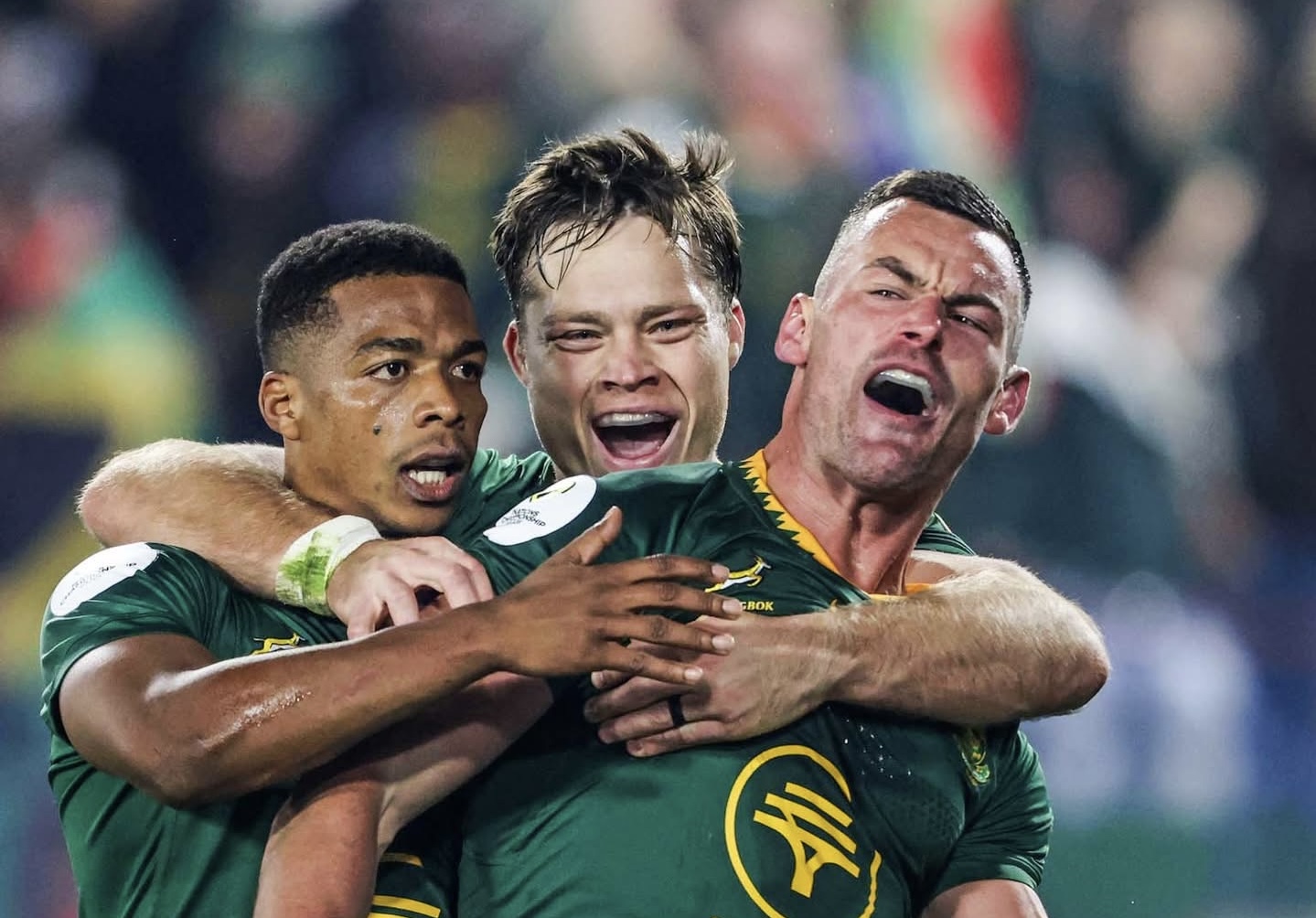
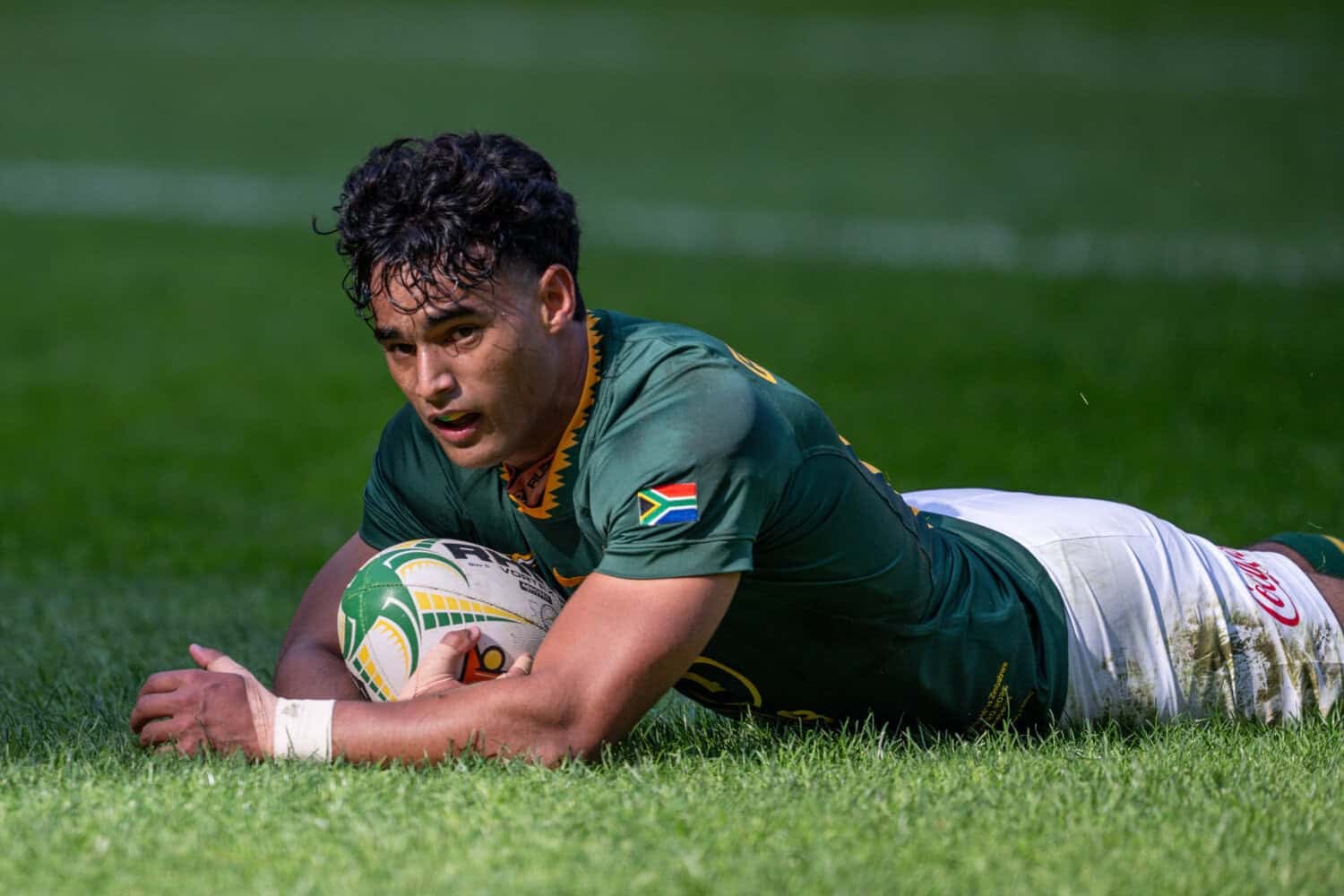
Dylan Maart’s rugby journey is unfolding like a perfectly weighted grubber, unexpected, precise and suddenly impossible to ignore.

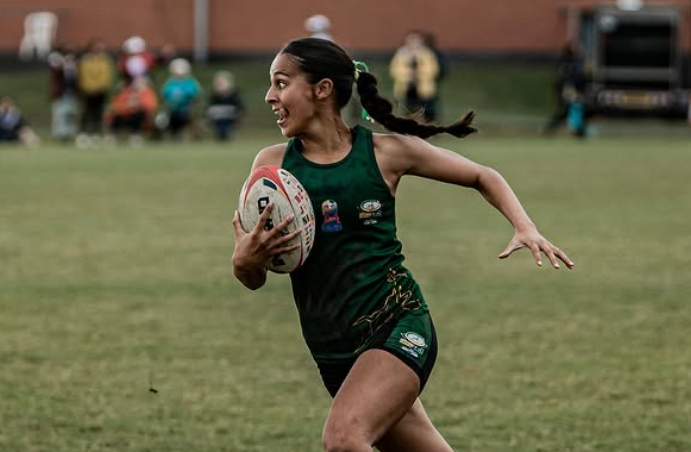
On loan from Currie Cup champions Griquas, Maart is now streaking down the touchline for the Stormers. The Wellington-born speedster is finishing tries under the bright lights of the Investec Champions Cup, leaving defenders clutching at air and selectors sitting up straighter.

Maart wasted no time announcing himself in blue and white. A debut try against Munster in Limerick was followed by a brace against La Rochelle in the Investec Champions Cup, both five-pointers delivered on a silver platter by Springbok fly-half Sacha Feinberg-Mngomezulu.

“Look, to get a try in the first place for the Stormers is always special,” Maart said.

“Two or three, I was very lucky to be in the right place at the right time.

“If you have someone like Sacha, who has all the talent in the world, on your inside and who can find every space, you just have to be in the right place.

“So, yes, it was exciting to get those two tries and to have a say in the team’s victory at the end of the day.”

Those early scores have propelled Maart from squad player to headline act, and now the Wellington-born speedster is preparing for another milestone: his first run-out at DHL Stadium.

“Making my debut, playing overseas for the first time and obviously the results have been going our way,” he said ahead of the Lions derby.

“I’m very excited to play my first game at the DHL Stadium in front of the home crowd … exciting times.”

The rise has been as steep as a midfield chip-and-chase.

“If I think of where I was a year ago to where I am now, I never thought I’d have the opportunity to play here at the Stormers, so I’m very grateful and very excited.

While Maart is carving his own attacking lines, his compass points firmly towards an old friend and local hero, Springbok winger Kurt-Lee Arendse, who also cracked international rugby later than most.

“I actually didn’t play rugby until after high school, but I watched a lot of rugby,” Maart revealed.

“There’s a lot of guys that I can mention. But for me, growing up, it was Bryan Habana.

“Cheslin [Kolbe] now, as well as one of my friends, Kurt-Lee Arendse. He lives in Paarl, I’m from Wellington so he’s a guy I look up to and can always ask if I need some advice.

“He’s also a role model for me. And very inspiring also. To see that he can also make it. So, that’s something for me to look forward to.”

At 29, when many players are settled into predictable careers, Maart rolled the dice. He left his job as a warehouse worker at a bottling plant and bet everything on rugby. The risk was rooted in hardship.

“I played rugby in primary school, but nothing in high school, for various reasons.

“Things weren’t good at home. There were many nights when there was no food and we went to sleep hungry.”

At 13, he worked as a taxi guard, opening doors, collecting fares and carrying bags, just to put food on the table and secure a ride to school in Paarl. Rugby, though distant, never left his heart.

When opportunity finally knocked, Maart smashed the door down. He rose with Boland Cavaliers, became a pillar of a Griquas side that ended a 55-year Currie Cup drought, and is now lighting up the URC and Champions Cup in Stormers colours.

The Stormers’ season mirrors Maart’s surge. They are unbeaten in the Investec Champions Cup, eight wins from eight in all competitions, and positioned to host a last-16 European play-off.

Saturday’s URC clash against the Lions at DHL Stadium, only their third home game of the campaign, offers Maart another stage to sprint his late-blooming dream closer to green and gold.

Like Arendse before him, Maart is proof that in rugby, timing matters less than belief, and that some wings only truly catch the wind when the stakes are highest.

Stormers top pool but Dobson sees derby danger after La Rochelle win

By Adnaan Mohamed

The DHL Stormers may have crossed the whitewash six times, but Director of Rugby John Dobson insists the performance that dismantled a youthful Stade Rochelais outfit would be stopped cold by South African rivals if repeated in the coming weeks.

The 42–21 Investec Champions Cup win at Nelson Mandela Bay Stadium, the Capetonians’ eighth straight victory in all competitions, lifted them to the top of Pool Three, ahead of four-time champions Leinster. Yet beneath the glossy scoreline, Dobson saw cracks that could be ruthlessly exposed in the Vodacom URC derbies that loom next.

The Stormers flew out of the blocks. Wings Dylan Maart and Leolin Zas struck inside the opening seven minutes, the hosts surging ahead as if the contest might be over before it began. Instead, composure ebbed, forced passes crept in, and an understrength La Rochelle, stacked with academy talent, were invited back into the arm-wrestle.

“I thought we were so energised at the start and so good, and it just felt like we got seduced into it being too easy,” said Dobson.

“To produce the intensity that we started that game with was really good for us. However, it was a learning experience, and we had to manage that game better at the 15-to-20-minute mark.”

That window proved pivotal. Infringements and errors disrupted Stormers rhythm, allowing La Rochelle to find a foothold and trail just 16–7 at the break – a reminder that scoreboard pressure means little without territorial and tactical control.

“It was about the outcome in the end, but it wasn’t a great process from us,” Dobson admitted.

“There’s definitely stuff we didn’t get right that we spoke about during the week, and there’s work to do before the local derbies [in the Vodacom URC]. That said, a home win in this competition is non-negotiable.”

Captain Salmaan Moerat echoed the coach’s concerns, praising the intent but demanding more from the engine room.

“But as a pack we know we could have been much better. There’s still a lot for us to improve on,” Moerat said.

He also highlighted the side’s response after prop Neethling Fouché was yellow-carded for a high tackle.

“It’s never ideal to get a yellow card,” he said. “But what was really rewarding was seeing how the group galvanised and worked harder for each other when someone was off the field.”

If the Stormers’ structure wavered, individual brilliance helped steady the ship. Flyhalf Sacha Feinberg-Mngomezulu and Springbok scrumhalf Cobus Reinach pulled the strings, while Man of the Match Paul de Villiers hunted turnovers like a seasoned openside despite his tender years.

“It took some moments from Paul or Sacha [Feinberg-Mngomezulu] to bail us out. That was a little bit frustrating that we got ourselves in that position,” Dobson explained.

“Two years ago, we were just getting cleaned out [at the breakdowns], and now we have Paul, who is like a limpet and his decision-making is so good.

“He is very special.”

Dobson believes the result keeps the Stormers firmly in the European hunt, even as he demands sharper execution.

“We want to be part of this tournament,” he said. “South African teams don’t have a great record in it, and we feel we’ve got an opportunity.

“Performances like this give us belief, but we also know we have to be better. I think we can start to dream about getting deeper into this tournament than we have got before.”

The immediate focus, however, shifts to domestic danger. The Lions arrive in Cape Town next weekend, followed by a clash with the Bulls on January 3 – fixtures where sloppiness will be punished.

“We have to get the stuff right and it is no use just talking about it in the week,” Dobson warned.

“We know that performance [in Gqeberha] doesn’t beat a fired-up Lions team in Cape Town or a Bulls team [on January 3].”

Dobson revealed the Stormers’ coaches have been studying the Lions closely, noting their threats across the park.

“We had a good look at them as coaches,” he said.

“We know that Henco [van Wyk] gets the best contact metres, we know about Quan’s [Horn] line breaks, and we know about their efficacy at the breakdown.

“They made their intentions clear that they want to rest and prepare for this game. I promise we won’t be lacking intensity.”

For the Stormers, the winning streak in Europe and Gqeberha has offered momentum, but the real examination now comes at home, where fast starts mean nothing without the patience to finish the job.

Featured Photo: Cole Cruickshank/Gallo Images

Stormers Reinforced by Nine Springboks for High-Stakes Champions Cup Battle in Gqeberha

Adnaan Mohamed

The DHL Stormers will take the field at Nelson Mandela Bay Stadium on Saturday with a formidable array of national talent, as nine Springboks have been named in the starting lineup for their Investec Champions Cup clash against two-time champions Stade Rochelais.

The match, scheduled for 15:30, is one of the most anticipated fixtures of the pool stage, and the Stormers fresh off a 26–17 away win over Bayonne, are bolstering their ranks with returning stars.

Warrick Gelant’s recovery from illness restores stability and counter-attacking quality to the backfield. He is joined by wings Dylan Maart and Leolin Zas, who continue to offer pace and finishing ability. Damian Willemse has been rested due to a slight hamstring niggle but is expected to return next week.

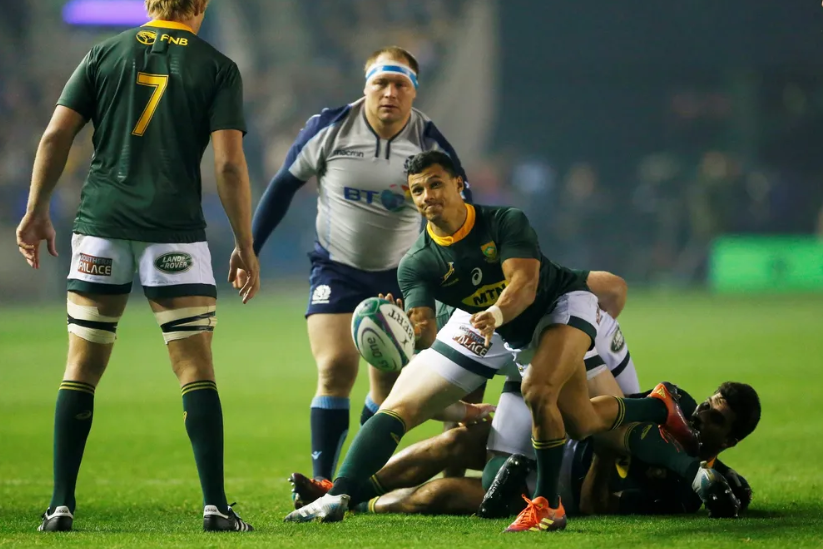
The midfield sees experienced centre Ruhan Nel reunited with Jonathan Roche, while Sacha Feinberg-Mngomezulu and veteran scrumhalf Cobus Reinach form a halfback pairing capable of dictating tempo and territorial pressure.

Evan Roos, influential off the bench last week, returns to the No. 8 jersey. Alongside Ben-Jason Dixon and Paul de Villiers, the loose trio is expected to play a crucial role in both breakdown intensity and defensive organisation.

In the tight five, locks JD Schickerling and captain Salmaan Moerat provide continuity and lineout strength. André-Hugo Venter starts at hooker, flanked by Springbok props Ntuthuko Mchunu and Neethling Fouché.

The bench offers significant depth, with JJ Kotzé, Connor Evans, Ruan Ackermann, Imad Khan and Wandisile Simelane, all starters in Bayonne, joined by experienced forwards Oli Kebble, Sazi Sandi and Marcel Theunissen.

Director of Rugby John Dobson emphasised the challenge ahead:

“It was great to win away from home, but we have to back that up now and we know that it will take a big effort against a highly physical Stade Rochelais team. We always get such fantastic support in Gqeberha… we’re looking forward to a match with Test match intensity.

The final squad list will be officially confirmed by EPCR at 14:00 on Friday, with changes still permitted before the deadline.

DHL Stormers: 15 Warrick Gelant, 14 Dylan Maart, 13 Ruhan Nel, 12 Jonathan Roche, 11 Leolin Zas, 10 Sacha Feinberg-Mngomezulu, 9 Cobus Reinach, 8 Evan Roos, 7 Ben-Jason Dixon, 6 Paul de Villiers, 5 JD Schickerling, 4 Salmaan Moerat, 3 Neethling Fouché, 2 André-Hugo Venter, 1 Ntuthuko Mchunu.
Replacements: 16 JJ Kotzé, 17 Oli Kebble, 18 Sazi Sandi, 19 Connor Evans, 20 Ruan Ackermann, 21 Marcel Theunissen, 22 Imad Khan, 23 Wandisile Simelane.

Blitzboks Defend Cape Town Crown in Sevens Thriller

By Adnaan Mohamed

The Blitzboks needed every ounce of heart, hustle and hard-headed defence to cling onto their HSBC SVNS Cape Town title on Sunday with a 21–19 comeback classic victory over Argentina.

In a match that swung like a loose pass in a gale, South Africa and Argentina traded three tries each, but it was one final defensive stand, the kind that rattles ribcages and rewrites scripts, that lifted a heaving DHL Stadium crowd of 31,941 to its feet.

With time up, Argentina launched one last assault. The Blitzboks didn’t blink. They smashed, scrambled and suffocated until the whistle sounded and the hosts became the first team to defend the Cape Town title.

Blitzboks Roar Back to Stun Argentina in the final

Argentina struck first, slicing from a midfield scrum as Luciano Gonzalez dotted down for 7–0. But the Blitzboks hit straight back: Zain Davids intercepted deep inside the South African 22, the ball was whipped wide, and Donavan Don burned the touchline to level at 7–7 after Ricardo Duarttee’s conversion.

Then came the Marcos Moneta show. The Pumas’ speedster pounced from the restart to make it 14–7, and early in the second half he tore away again for a 19–7 lead that quietened the stadium.

South Africa’s reply? Guts, grit, and the kind of chaos rugby that Cape Town loves.

Debutant Nabo Sokoyi dipped, darted and danced from 50 metres out to drag the Blitzboks within five (19–14), before replacements cranked up the tempo. When a turnover popped loose, Christie Grobbelaar streaked under the uprights to give South Africa a 21–19 lead with just 30 seconds left.

The restart went out on the full handing Argentina one last chance. But the Blitzboks’ defensive wall slammed shut with a series of bruising hits before winning the penalty that sealed a famous, unbeaten home weekend.

“We had to dig deep,” said coach Philip Snyman afterwards.

“But this team thrives when their backs are against the wall, and the crowd carried us. Cape Town was unbelievable.”

Semi-Final: Blitzboks Survive French Scare

Their 22–17 semi-final victory over France earlier on Sunday was a rollercoaster of its own. It was a match rich in momentum swings and sprinkled with individual magic.

Shilton van Wyk continued his hot streak with a first-minute try, before Tristan Leyds showed quick wits and quicker feet with a tap-and-go effort for 10–0.

France hit back through Jordan Sepho, but Van Wyk pounced on a fortunate bounce from the restart to sprint 60 metres for his second, Duarttee converting for 17–5.

The French replied through Josselin Bouhier either side of halftime, levelling at 17–17 as he chased down a bouncing ball reminiscent of Van Wyk’s effort.

But Ryan Oosthuizen produced the decisive blow, crashing over after a turnover in the French 22 to seal the Blitzboks’ place in the final.

“We stayed calm and trusted our system,” said Snyman. “The boys showed great composure when it mattered.”

FULL SCORERS

Semi-final: South Africa 22 (17) – France 17 (12)

Blitzboks tries: Shilton van Wyk (2), Tristan Leyds, Ryan Oosthuizen
Conversion: Ricardo Duarttee
France tries: Jordan Sepho, Josselin Bouhier (2)
Conversion: Stephen Parez Edo Martin

Final: South Africa 21 (7) – Argentina 19 (14)

Blitzboks tries: Donavan Don, Nabo Sokoyi, Christie Grobbelaar
Conversions: Ricardo Duarttee (3)
Argentina tries: Luciano Gonzalez, Marcos Moneta (2)
Conversions: Santiago Vera Feld (2)

Springboks opponents for third consecutive RWC title defence in Australia revealed

By Adnaan Mohamed

The Springboks pursuit of an unprecedented third consecutive Rugby World Cup title will unfold against familiar opponents after the defending champions were drawn into Pool B with Italy, Georgia and Romania for the 2027 tournament in Australia.

The announcement, made during Wednesday morning’s draw, confirmed that South Africa will face three teams they know well from past World Cup encounters: Romania in 1995 and 1999, Georgia in 2003, and Italy in 2019.

The format, guided by world rankings for the 2025 season, sorted the 24 teams into four bands before randomised placement into six pools. This is the largest RWC structure to date.

Rassie Erasmus: “We are pleased… but this is a World Cup”

Springbok head coach Rassie Erasmus welcomed the draw but emphasised the unpredictability of tournament rugby.

“We are pleased with the pool we have been drawn in, but this is a World Cup, and every team will go out there with great passion and do their utmost to represent their nations with pride,” said Erasmus.

“There have been surprises in the tournament before, so we’ll need to be up mentally and physically for every match.”

Erasmus offered a measured breakdown of each opponent, noting how deceptive world rankings can be.

“Italy may be ranked 10th in the world, but they showed us what they are capable of when they hit their straps earlier this season, even though the scorelines may not have reflected that.

“Georgia and Romania are also extremely physical and passionate teams, and we’ve faced them before, so we know how tough they can be on the day if we give them space and opportunities to play to their potential.”

His remarks frame Pool B as a group where familiarity offers preparation advantages, but no shortcuts — a reminder that even routine fixtures can turn into tactical ambushes if approached casually.

Tournament Format: Six Pools, New Pathways

With the RWC expanding from 20 to 24 teams and the fixture list increasing to 52 matches, 2027 will introduce a modified playoff pathway.

  • Winners of Pools A–D will face the four best third-placed teams.
  • Winners of Pools E and F will meet the runners-up from Pools B and D.
  • Runners-up in Pools A and C draw the second-placed teams from Pools E and F.

This structural shift increases the importance of pool-stage consistency and squad rotation which is a key component of Erasmus’s historically successful World Cup strategies.

The Full 2027 Pools

  • Pool A: New Zealand, Australia, Chile, Hong Kong China
  • Pool B: South Africa, Italy, Georgia, Romania
  • Pool C: Argentina, Fiji, Spain, Canada
  • Pool D: Ireland, Scotland, Uruguay, Portugal
  • Pool E: France, Japan, USA, Samoa
  • Pool F: England, Wales, Tonga, Zimbabwe

Australia will host matches from 1 October to 13 November 2027 across seven cities in Adelaide, Brisbane, Melbourne, Newcastle, Sydney and Townsville.

The full matchday schedule will be released on 3 February 2026, with a two-week presale window for fans opening 18 February 2026.

A Favourable yet Demanding Pool

While South Africa avoided a heavyweight Tier 1 rival in Pool B, the draw offers strategic depth:

  • Italy present a risk profile based on tempo and moments of tactical unpredictability.
  • Georgia bring scrummaging power and collision dominance – a stress test for any forward pack.
  • Romania remain physical and combative, although rebuilding.

For Erasmus, the pool provides space to calibrate combinations, manage player load, and sharpen tactical identity, the essential building blocks for a three-peat campaign. Pool B offers stability, but only if executed with precision.

Blitzboks Seek Pride and Payback in Cape Town Sevens Showdown

By Adnaan Mohamed

The early Cape Town light had just begun dissolving the mist over Table Mountain when the Blitzboks filed through the airport doors, the weariness of a long Dubai flight etched into their shoulders. But in the middle of the group, Ricardo Duarttee walked with the quiet intent of a man who’d already circled one date in bold red: Cape Town Sevens weekend.

Dubai may have left them with a fifth-place finish and a few unwelcome scratch marks, but the sweepers and speedsters of South Africa’s Sevens squad are not known for dwelling on bruises. The moment their plane hit the tarmac, the city’s salty summer breeze felt like a second chance.

“We regrouped on Sunday already after the disappointment of Saturday, as one could see on our day two results,” Duarttee explained, the memory of a tough pool still lingering.

“It hurts that we dropped results to Fiji and Argentina in our pool, but we came back on Sunday to get some belief back.”

Belief – South African rugby’s most renewable resource – will matter again this weekend when the Blitzboks step into DHL Stadium, a venue Duarttee speaks of the way some speak of childhood playgrounds.

“Cape Town is just such a special place to play at. There is a massive feeling of excitement for the weekend.”

The Blitzboks hoisted the Cape Town trophy last year, only the second time since the tournament moved south in 2015, and no one in green and gold is in the mood to wait another eight years for the next.

“We certainly do not want to wait that long again, in fact, the squad will be very determined to right the wrongs from Dubai,” he said.

For Duarttee, statistics and score tallies don’t define their mission. Emotion does. Connection does. And the home crowd with the sea of flags, the hum of vuvuzelas, the familiar roar matters more than any number on the scoreboard.

“We play for the love of the game, for the passion we have for it and this weekend, we get to play in front of family, friends and loyal supporters.”

Pool of Death

This year’s pool is ruthless: New Zealand first, then the familiar bruises of Fiji, rounded off by Great Britain. But to Duarttee, that’s the perfect storm.

“What an opportunity this will be for us to rectify the mistakes and show what we are capable of, especially in front of a proper crowd to cheer us on. I cannot wait for Saturday, it is going to be a huge day.”

He didn’t end the conversation so much as issue a call to arms.

“We need to put some pride back in the Springbok Sevens jersey and where better that right here. There is no place like DHL Stadium on the weekend of the Cape Town Sevens.

“We need our supporters to come and celebrate our only opportunity to play at home with us. See you there.”

Source: SA Rugby

Eben Etzebeth Red-Card Fury Overshadows Bok Brilliance in Cardiff Rout

By Adnaan Mohamed

The Springboks’ 73–0 evisceration of Wales in Cardiff should have been remembered purely as a victory of ruthless precision, a night when Rassie Erasmus’ men turned the Principality Stadium into a eleven-try scrapyard.

Instead, the Test has been plunged into global debate after Eben Etzebeth, the most-capped Springbok in history, was shown a red card for alleged eye-gouging. This incident that happened just before the final whistle to mercifully end the Welsh carnage, has dominated headlines from Cape Town to Cardiff.

While the Boks celebrated an unbeaten season and a flawless November tour, the image of Etzebeth leaving the field cast a long, uncomfortable shadow. Critics, former internationals, fans and pundits have fired up social platforms, arguing everything from “stone-cold red” to “unintentional and harsh.”

The timing was especially jarring: a night designed to honour Springbok milestones became a night consumed by disciplinary outrage.

Coach Rassie Erasmus did not try to sugar-coat it.

“It didn’t look good, and I thought it was a justified red card,” he admitted.

A rare moment where Erasmus openly conceded a fault on an evening when everything else went right.

Reinach Reaches 50: A Milestone Deserving More Light

Lost beneath the Etzebeth storm was a story that deserved to headline the night: Cobus Reinach finally reaching his 50th Test, a feat 11 years in the making.

The 35-year-old Bok scrumhalf, who buzzed around the breakdown like a hornet with a fresh battery pack, called the honour a dream fulfilled.

“It’s always special just to put on the Springbok jersey… If it’s cap one or cap 140 like Eben, it’s special.

But playing my 50th Test was definitely great,” he said.

“It’s every boy’s dream to play for the Springboks and having done that 50 times is unreal. It’s a privilege and something I’ll always be thankful for.”

That this milestone arrived during a historic win, and in a season where the Boks finished world No.1, made it sweeter.

“It wasn’t just about the end-of-year tour. It was about the whole season,” Reinach reflected.
“We learned and adapted more than previously, and I think we grew immensely as a team.”

The veteran scrumhalf, still as sharp as a new studs-on-soft-ground boot, even dared to dream further.

“I definitely want to play another one or maybe two World Cups,” he smiled.

“I feel good… it’s just my hairline moving back a little, and my beard getting thicker.”

His gratitude extended to the beating heart of Bok rugby: the supporters.

“From London to Wales, France, Ireland… thank you. We are one. We can’t do what we do without you.”

A Night of Dual Narratives: Dominance and Disruption

The Etzebeth incident ignited a worldwide rugby firestorm precisely because the Test was so lopsided. At 73–0, the Springboks were in full command. The back-to-back World Champions were ruthless, clinical, and controlled, suffocating Wales like a python tightening with every carry.

But the red card, shown late in the second half, shifted the conversation from dominance to controversy. Analysts have already begun dissecting angles, freeze-frames and intent, with disciplinary hearings expected to become the next battleground.

Yet, amid the noise, Reinach’s golden milestone, the Boks’ unbeaten tour, and their world No.1 finish remain significant markers of a team still evolving and still hungry. Reinach himself summed it up best:

“The way we work for each other and how tight-knit we are is special. If we keep that, there’s a lot more in the tank.”

Reinach’s Golden Milestone and Rassie’s Clever End-of-Year Chess Move

By Adnaan Mohamed

There’s a reason the Springboks never really feel “under-strength” even when half the squad is scattered across Europe, Japan and club rugby obligations. South Africa, more than any other rugby nation, has turned adversity into opportunity, disruption into design. And this week in Cardiff, as the Boks close out their season against Wales, that philosophy takes centre stage.

Saturday marks more than just the end of the Outgoing Tour. It marks a moment of quiet, powerful significance in a year defined by rotation, regeneration, and ruthless forward-thinking.

Because while the headlines will rightly celebrate Cobus Reinach’s 50th Test, the deeper story is how Rassie Erasmus is using this final match of the year to subtly tighten the screws on South Africa’s long-term blueprint.

Let’s dive in.

1. Reinach at 50: A Triumph of Perseverance Over Spotlight

At 35, Cobus Reinach reaching his milestone half-century is a testament to patience in an era obsessed with instant stardom.

He’s never been the loudest, the flashiest, nor the headline-grabber. Instead, he has been the Springbok who always arrives when needed, slips into the system seamlessly, and changes the tempo with a veteran’s calm.

Rassie’s admiration was heartfelt:

“Cobus is a true team man… he’s grabbed every opportunity with both hands.”

There’s something beautifully poetic about Reinach not starting on the day he reaches 50 caps, but sitting quietly on the bench.

He will be the lone backline reserve among seven hulking forwards. It captures his role perfectly: the dependable firefighter, trusted when the match burns hottest.

This is not just a milestone. It is a tribute.

2. The Selection Puzzle: Rassie Turns Limitations Into Leverage

Test matches outside the international window are usually a nightmare for southern hemisphere coaches. Erasmus lost a dozen frontline stars to club commitments – Handre Pollard, Malcolm Marx, Cheslin Kolbe, Jesse Kriel, and Pieter-Steph du Toit among them. Many coaches would be forced into damage control.

Rassie?
He sees a laboratory.

This is where South African rugby’s conveyor belt gets tested in fire. 49 players have earned Test caps this year alone. It’s a staggering number, but one rooted in planning, not panic.

“We’ve been rotating players all year… many of these combinations are fully settled.”

There is no “second-string Springboks.”

There are only Springboks in different phases of readiness.

3. The 7–1 Split Isn’t a Gamble – It’s a Statement

The rugby world still blinks when seeing a team sheet with seven forwards on the bench. But to the Boks, it’s as natural as breathing.

This week’s 7–1 split is partly forced by availability, but it also reinforces the core of South African Test identity: win the collisions, control the set piece, choke the opponents’ oxygen.

Wales, even in a rebuilding phase, are happiest in the trenches. A weaker team would try to outplay them.
South Africa plan to outmuscle them.

Rassie explained it plainly:

“Our pack has performed incredibly well… and we believe it will be a key area of the match.”

This is Rassie’s selection strategy.

4. Quiet Evolution: The Next Generation of Boks Steps Forward

Gerhard Steenekamp, Johan Grobbelaar, Zachary Porthen, Asenathi Ntlabakanye are not household names yet, but they are seen as the building blocks of South Africa’s post-2027 pack.

Steenekamp starting his first Test is no coincidence. The Boks’ current front-row titans will not be around forever. Rassie is not waiting until 2026 to find their successors.

Erasmus is making changes early, deliberately, and unapologetically.

This Wales Test is seen as an investment.

5. The Bigger Picture: Wales, Rankings and the RWC Draw

Wales arrive with their own headaches and absentees, but they’re dangerous precisely because of it. Young players with everything to prove, veterans trying to hold onto jerseys, and a home crowd hungry for a scalp.

And then there’s the looming Rugby World Cup draw next week.

For both teams, the rankings matter. Momentum matters. Perception matters.

Rassie expects an ambush:

“They’ll come out firing… they’ll give everything to finish on a high note.”

This will not be a polite end-of-year handshake.
It’s a cage fight with diplomatic flags.

6. What This Match Really Represents

This final Test of 2025 can arguably be seen as a microcosm of South African rugby philosophy:

  • Celebrate the unsung (Reinach).
  • Trust the young (Steenekamp, Ntlabakanye, Porthen).
  • Prepare for the future early (49 players used).
  • Double down on identity (the 7–1 split).
  • Stay unpredictable (mixing stalwarts with debutants).
  • Never fear disruption – weaponise it.

If the Boks win, they end the year with a statement.
If they lose, they still walk away with priceless data.

Either way, South Africa wins something.

On Saturday night, as Reinach steps onto the field for the 50th time, he’ll do so as the embodiment of everything this Bok season has stood for: quiet excellence, depth, resilience and relentless preparation for the future.

South Africa are building towards 2027. And Reinach’s milestone, achieved with humility, hunger and heart. It reminds us what really powers the Springbok machine: people who show up, again and again, long after the spotlight has moved on.

Franco Mostert Cleared as Rugby’s Referees Enter Full Circus Mode

Opinion – Adnaan Mohamed

Welcome to another breathtaking episode of Rugby Officials Gone Wild, where referees improvise, TMOs hallucinate, and World Rugby’s disciplinary panels sweep up the mess like long-suffering parents at a children’s birthday party.

This week’s headliner? Springbok lock Franco Mostert sent off in Turin after referee James Doleman and his French TMO partner squinted at a replay and dramatically declared “clear head contact” and “always illegal”, which we now know was about as accurate as a prop attempting a chip-and-chase.

On Wednesday, actual functioning adults on the disciplinary panel calmly overturned the red card, downgrading it to a yellow and effectively telling the match officials:

“You were wrong. Spectacularly wrong. Please stop embarrassing yourselves at this altitude.”

But wait, the chaos gets better. Not only was Mostert’s dismissal wrong, but Harry Hockings’ red card was ALSO declared incorrect by a separate independent panel.

That’s right: two red cards, two panels, zero functioning officiating moments. Rugby’s governance is starting to feel like a group project where one guy does the work and the rest just show up with snacks.

And Rassie Erasmus? Eddie Jones? Oh, they were THRILLED.
Both stormed into their press conferences like two coaches who’d just watched their debit orders bounce. Steam, fire, smoke signals, everything short of interpretive dance.

Meanwhile, the bunker review system, the expensive technological safety net installed specifically to stop this exact variety of nonsense, was NOT USED.
Not consulted.
Not even glanced at.
They left it sitting there like a lonely gym bike in January.

Instead, Doleman and his TMO opted for the “wing it and pray” method: a bold, innovative approach with a near-perfect failure rate.

The ruling now exposes rugby’s head-contact framework as a full-blown Picasso painting: abstract, confusing, and open to interpretation by anyone with enough confidence and a whistle.

One weekend a player gets red for breathing too aggressively; the next weekend someone performs a WWE finishing move and walks away with a warning.

And through it all, the Springboks just keep winning, like a team powered entirely by spite and trauma.

Two weekends.
Two red cards for the No. 5 jersey.
Two matches with 14 men for ridiculous lengths of time.
Two victories.

France? Beaten with 40+ minutes a man down.
Italy? Smashed with 65+ minutes one man short, AND fielding fringe players.
The message?
“Give us 14, give them 15 – see who cries first.”

Now South Africans are coping the only way they know how:
By laughing at the officiating until it cries back.

With Mostert cleared, he’s available for the showdown in Dublin, a place where the Boks haven’t won since the world last took Blackberry phones seriously.

The last time the Boks were on the winning side in Ireland was 13 years go. The Irish have won four of the last five against South Africa, including that World Cup group-stage arm wrestle in 2023.

The Boks name their team Thursday. And if fate has a sense of humour, the referee will keep his red card in his pocket this weekend, or at least try to.

But with the way things are going in rugby’s officiating universe, expect anything: a red card for tying your boots too slowly; a yellow for “intent to run upright”; a penalty for existing in the wrong postcode.

Sit tight.
The circus continues.
And the clowns, unfortunately, are still in charge.

Springbok Stars Dominate World Rugby Awards Nominations

By Adnaan Mohamed

South Africa’s rugby powerhouse flexed its muscles again this week as four Springboks crashed through the global recognition line like flankers hitting a ruck at full tilt.

Pieter-Steph du Toit, Malcolm Marx, Ox Nche and rising star Ethan Hooker were all shortlisted for major honours at the 2026 World Rugby Awards announced on Tuesday.

Du Toit, already etched in history as the first South African to win the World Men’s 15s Player of the Year twice, is once more in the running for the sport’s highest individual accolade. He is joined by teammates Marx and Nche as well as France’s electric winger Louis Bielle-Biarrey. Marx earns his second career nomination after also being recognised in 2018.

Hooker, meanwhile, finds himself in the global limelight as one of four nominees for World Rugby Men’s 15s Breakthrough Player of the Year, lining up alongside New Zealand’s Fabian Holland, England’s Henry Pollock and Australia’s Joseph-Aukuso Suaalii.

SA Rugby President Mark Alexander praised the quartet’s impact, saying:

“I’d like to congratulate Pieter-Steph, Malcolm, Ox and Ethan for being recognised among the best players in the world.”

He added: “To have three of the four nominees for Men’s 15s Player of the Year from South Africa, as well as Ethan in the Breakthrough category, is a testament to the quality of our players on the global stage.”

Alexander said the recognition reflected the green-and-gold’s consistency and class:
“They have all performed exceptionally well this season and deserve this recognition. On behalf of SA Rugby and the entire country, I want to express how proud we are of them.”

He concluded with a message of encouragement ahead of the final announcement:

“We wish them well ahead of Saturday’s announcement. Regardless of the outcome, being nominated is already a remarkable achievement.”

Only Schalk Burger (2004), Bryan Habana (2007) and Du Toit himself have previously lifted the prestigious World Rugby Player of the Year crown. Other South Africans nominated over the past decade include Willie le Roux, Duane Vermeulen, Faf de Klerk and Lukhanyo Am.

The winners will be announced on Saturday, 22 November, with World Rugby’s Dream Team of the Year set to follow on Tuesday, 25 November.