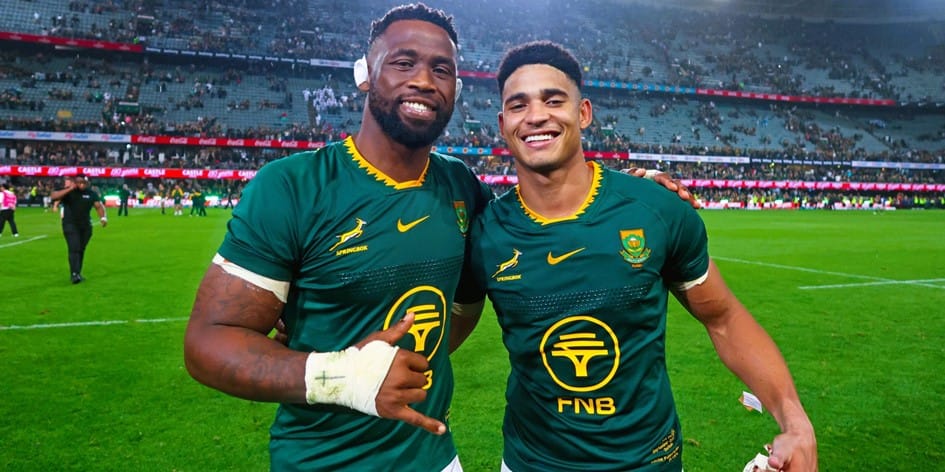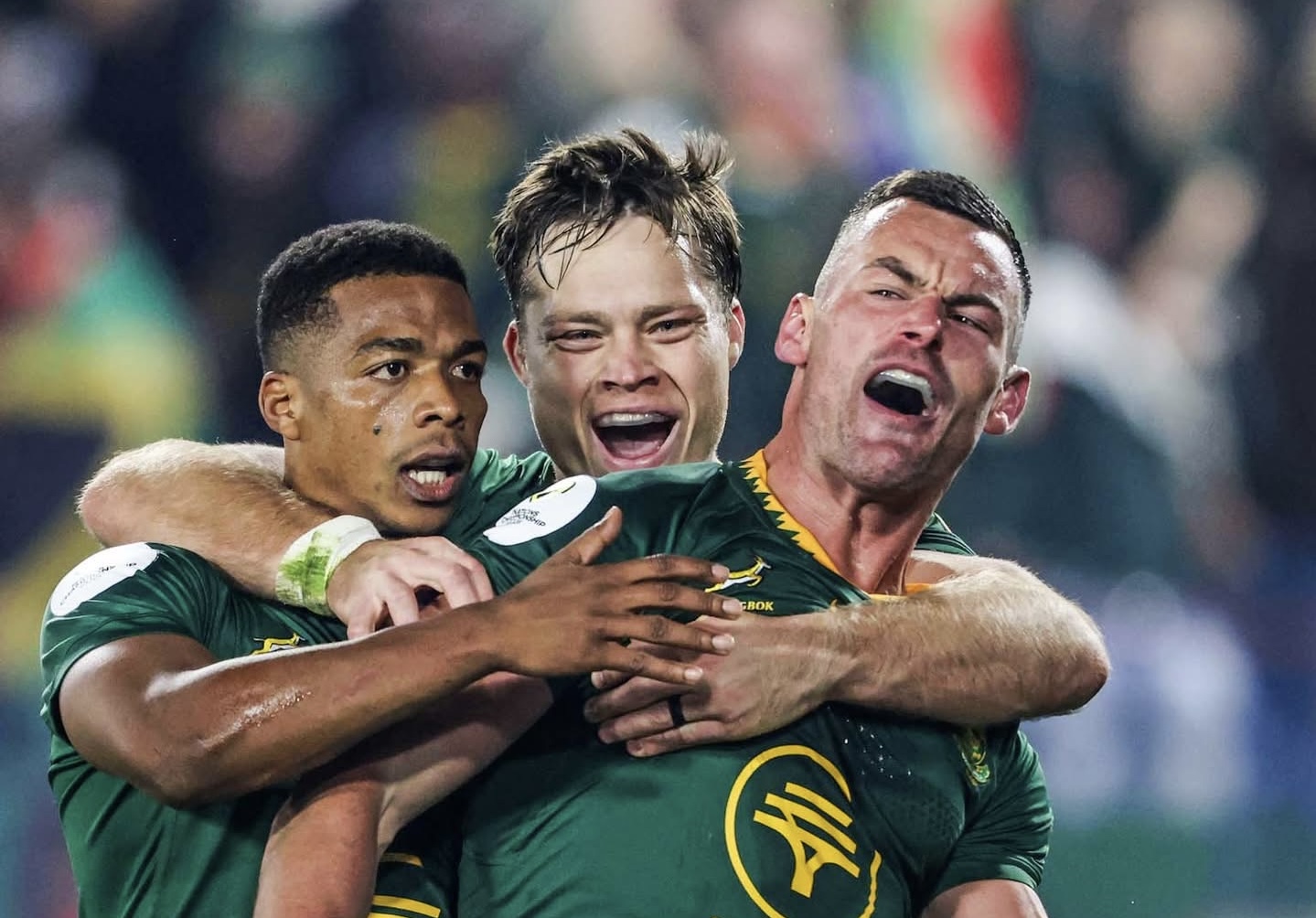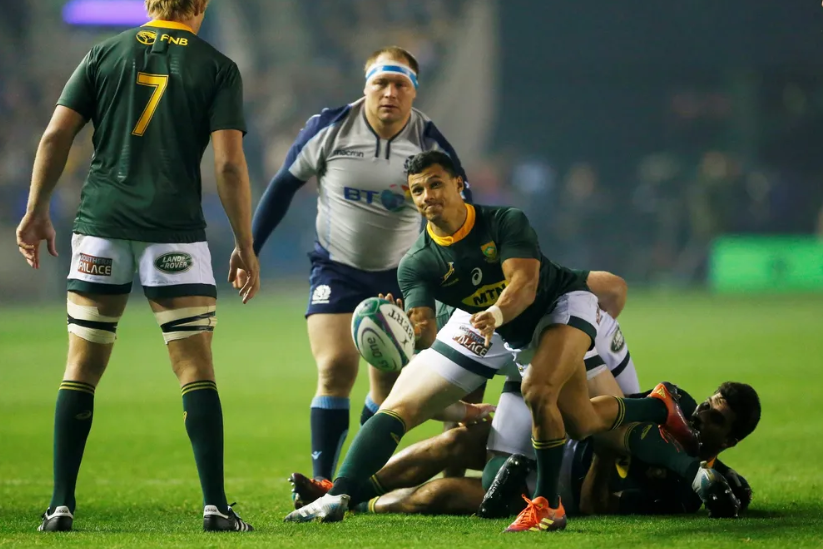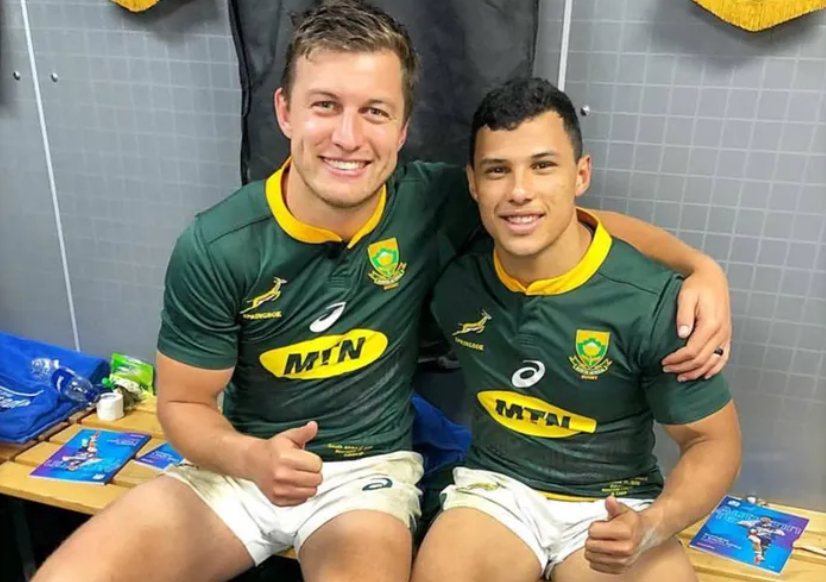
Springboks ready to turn Ellis Park into a rugby war zone

By Adnaan Mohamed

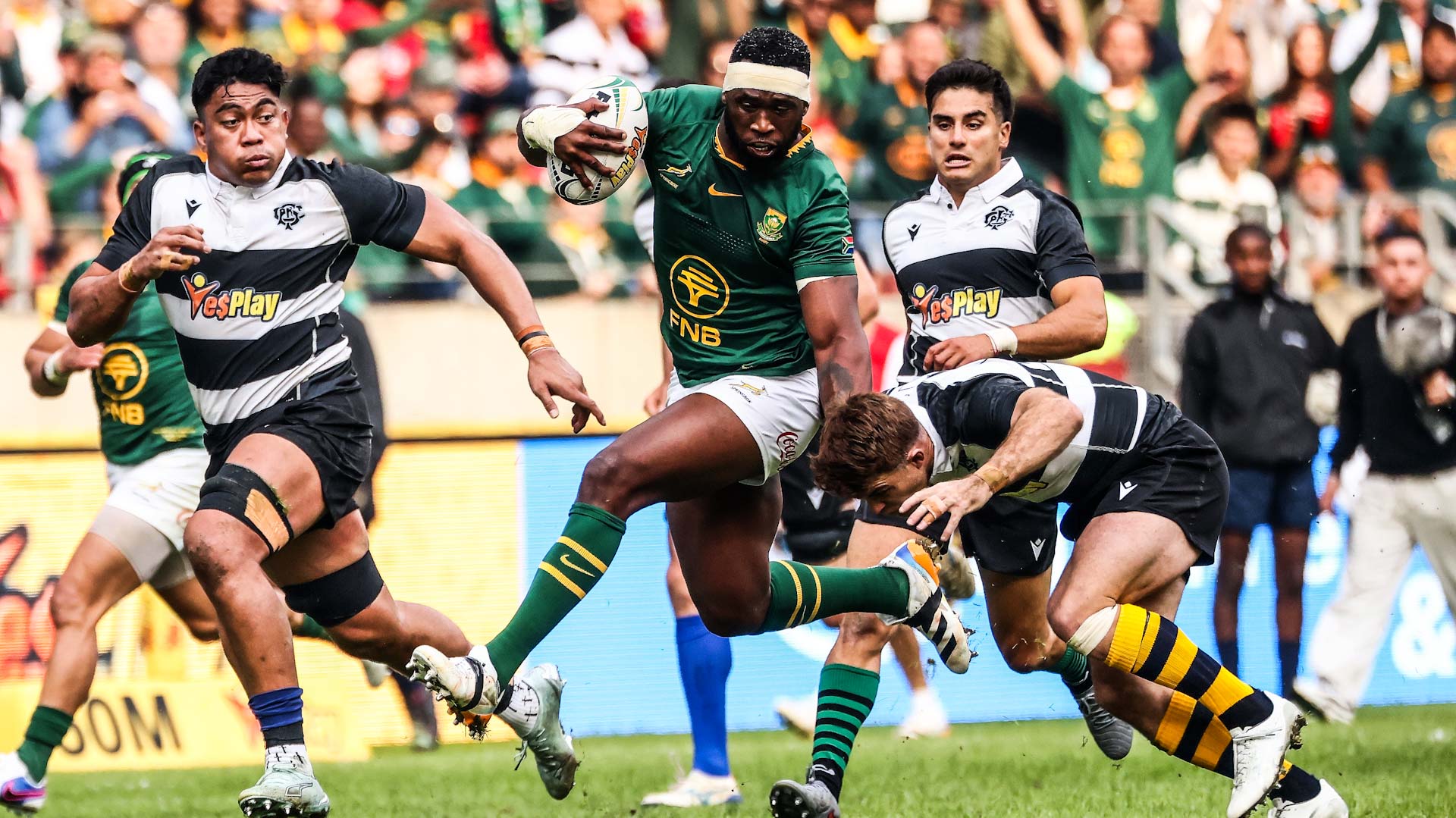
The stage is set. The old enemies are back. And the Springboks are ready to throw everything into the opening punch of the Rugby’s Greatest Rivalry.

When South Africa face New Zealand at 10bet Ellis Park on Saturday, it will be the first of four Tests between the heavyweight rivals in a series that promises enough drama to keep rugby fans glued to their screens.

Springbok assistant coach Mzwandile Stick knows exactly what is coming.

“Playing four games in one season against the All Blacks is always going to be a great challenge,” Stick said.

“These are moments that we live for. The closest thing to the Greatest Rivalry in terms of a series where every game counts is probably the British & Irish Lions series, or the knockout stages of the World Cup, and our mindset for these games will draw on those experiences.”

The Boks are under no illusion about the size of the challenge.

“We know it’s going to be a tough challenge. The All Blacks are in a good space and have been playing very well,” said Stick.

“But from our side, we also want to keep improving and evolving, and we will never be comfortable. It doesn’t get tougher than playing against the All Blacks four weeks in a row, and we are excited about it.”

That is fighting talk from a team preparing to enter a rugby pressure cooker.

Ellis Park brings the emotion

Captain Pieter-Steph du Toit, who will earn his 99th Test cap, is relishing the occasion.

“It’s a very different tournament,” he said. “To be involved in a series like this and have New Zealand play in South Africa, and also playing four games in a row is a massive honour and privilege.”

For Du Toit, Ellis Park carries memories bigger than rugby.

“It’s an awesome stadium for us and it’s close to my heart,” he said.

“When you stand there and sing the anthem and see the supporters behind the Springboks, it’s unbelievable. And of course, the 1995 Rugby World Cup was won there as well, so it’s a very special place for our country.”

Then comes the haka.

Du Toit says the Boks now have a deeper appreciation of what the ritual means to the All Blacks.

“I would never say we’d be relaxed, but it’s a massive honour to face the haka,” he said.

“We’ll face the haka with respect and we’ll accept the challenge.”

De Allende gets his flowers

Saturday will also belong to Damian de Allende, who becomes only the 10th Springbok to reach 100 Tests.

Stick believes the centre’s milestone deserves a standing ovation.

“For a guy like Damian de Allende, who has been with us through the ups and downs, and had to cope with a lot of people saying he wasn’t good enough to play for the Springboks, is amazing,” Stick said.

“He’s one of those guys who does the dirty work without anyone seeing it, so for him to play his 100th Test match is a great achievement for him and his family.”

Du Toit remembers watching De Allende during his Stormers days.

“I just saw this beast in the way he carried the ball and his work on defence,” he said.

“I have so much respect for him, the way he carries himself on and off the field, and how he’s grown as a person. It’s great to see people progress in life.”

Boks know where the battle will be won

Stick expects the All Blacks to bring serious heat at scrum and lineout time.

“We know New Zealand is going to bring it in terms of intensity,” he said.

“They’ll also look for gaps with their skilful players, so I’d say the key would be to stay alert and not get caught out.”

In other words, one defensive nap could become an All Blacks party.

The whistle blows at 17h10, with the match live on SuperSport. Limited tickets remain available.

Ellis Park is ready.

The rivalry is awake.

And the Boks are knocking on the door.

Teams

South Africa: 15 Damian Willemse, 14 Cheslin Kolbe, 13 Jesse Kriel, 12 Damian de Allende, 11 Kurt-Lee Arendse, 10 Sacha Feinberg-Mngomezulu, 9 Grant Williams, 8 Jasper Wiese, 7 Pieter-Steph du Toit (captain), 6 Paul de Villiers, 5 Ruan Nortje, 4 Eben Etzebeth, 3 Wilco Louw, 2 Malcolm Marx, 1 Ox Nche.
Replacements: 16 Jan-Hendrik Wessels, 17 Gerhard Steenekamp, 18 Zachary Porthen, 19 Cobus Wiese, 20 Andre Esterhuizen, 21 Marco van Staden, 22 Cobus Reinach, 23 Manie Libbok.

New Zealand: 15 Damian McKenzie, 14 Will Jordan, 13 Quinn Tupaea, 12 Jordie Barrett, 11 Josh Moorby, 10 Ruben Love, 9 Cam Roigard, 8 Ardie Savea (captain), 7 Luke Jacobson, 6 Tupou Vaa’i, 5 Fabian Holland, 4 Josh Lord, 3 Tyrel Lomax, 2 Codie Taylor, 1 Ethan de Groot.
Replacements: 16 Asafo Aumua, 17 George Bower, 18 Fletcher Newell, 19 Anton Segner, 20 Peter Lakai, 21 Kyle Preston, 22 Anton Lienert-Brown, 23 Leroy Carter.

Date: Saturday, August 22
Venue: 10bet Ellis Park, Johannesburg
Kick-off: 17.10 (Sunday, August 22)
Referee: Matthew Carley (England)
Assistant referees: Karl Dickson (England), Nika Amashukeli (Georgia)
TMO: Mike Adamson (Scotland)
Rassie Erasmus hits back at All Blacks slow-play claims

Adnaan Mohamed

The first Test of Rugby’s Greatest Rivalry Series has already produced its opening skirmish.

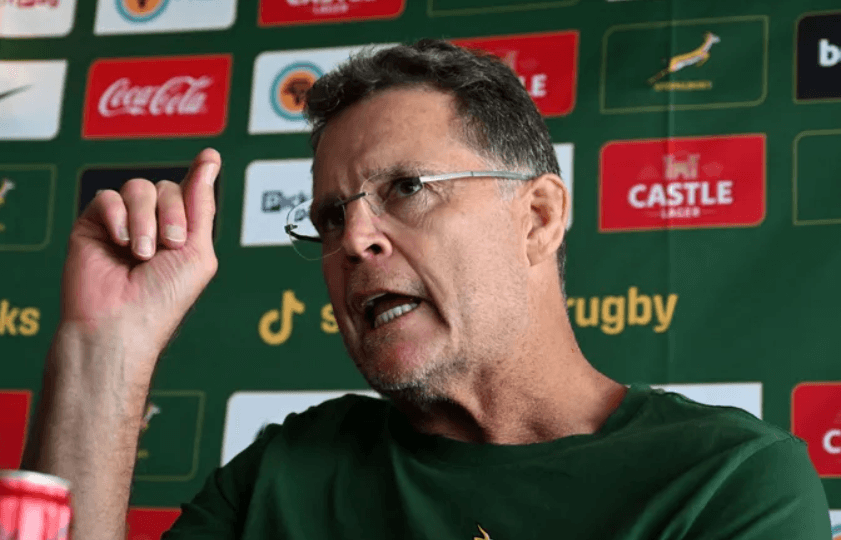
Springbok coach Rassie Erasmus has dismissed suggestions that South Africa deliberately slows the game at set pieces, insisting his team will stick to its systems when the All Blacks arrive at 10bet Ellis Park on Saturday.

“There are always three truths: New Zealand’s truth, the truth people believe, and our truth,” Erasmus said.

The comments come as the pre-Test needle begins to prick. New Zealand has promoted a high-intensity, multi-phase style, with suggestions that the Springboks could seek to disrupt that rhythm.

Erasmus is having none of it.

“In our last two games against New Zealand in Auckland and Wellington, people can go and look at those games and ask were we slowing those down. They beat us in Auckland, and we got a good result in Wellington.”

For Erasmus, Test rugby is not about satisfying outside narratives but more about surviving the furnace when pressure reaches boiling point.

“We believe there’s a certain way to win big games and we think it will be a grind.”

That grind could become the defining feature of Saturday’s opening act.

“When you’re under pressure and you attack, it’s tough to maintain cohesion,” Erasmus said. “We will try to find a balance when games are really tight, but we have a system to fall back on that protects the players.”

Tony Brown’s influence has also helped shape the Boks’ attacking approach.

“Since Tony Brown, former All Black flyhalf and current Springbok assistant coach, has been with us, we feel as though we’ve been on the right track.”

SA Rugby laws advisor Jaco Peyper then entered the fray, offering a technical explanation of the much-discussed 30-second set-piece law.

“The law is very clear. From the moment the referee puts his foot down to mark the spot, not from the whistle, there is 30 seconds to form a lineout or scrum.”

Peyper said teams could manage the moments before the mark is made within the laws, while opponents who are ready to play can apply pressure.

“There’s nothing in the law that says you can’t idle before the mark is given.”

He also pointed out that teams can disrupt tempo through repeated infringements at breakdowns and mauls.

The whistle, in other words, could become a metronome for a Test where every second matters.

Peyper has full confidence in the officials appointed for the four-Test series, particularly England’s Matthew Carley, who will referee Saturday’s opener.

“You’re going to have a firm referee. Someone who deals decisively at the breakdown and is very strong on anything negative or cynical. And he does not get influenced by the home crowd.”

That could be music to the ears of both coaching boxes.

Erasmus expects the All Blacks to bring a blue-chip attacking blueprint to Johannesburg.

“You can see it on social media. They’re advocating a high intensity, running game, with multi-phase attacks. And when you analyse it, it definitely shows in the stats.”

Dave Rennie, who Erasmus previously faced during his Munster days, adds another tactical layer to the contest.

“The big battle is going to be when they have the ball, they’ll have total control of what they do with it, and when we have the ball, we’ll have total control of what we do with it.”

The biggest concern for Erasmus is the All Blacks’ breakdown work.

“What concerns us most is how physical and brutal they are at the breakdown. They take the ball through so many phases and then they put in a well-timed grubber kick. Their attacking kicks are as dangerous as when they have ball-in-hand.”

Away from the tactical chessboard, Erasmus admitted the Springboks are embracing the occasion.

“We all appreciate and respect what this series means,” he said.

“I’d love it if the people at Ellis Park create the same atmosphere as that which the people did in Cape Town. The haka was heard 100%, which makes it something special.”

The Springbok coach also knows the All Blacks remain capable of delivering a sting.

“We know how good the All Blacks are. Since 2018, when they were leading the world, we’ve always wondered when they’re going to beat us again, and they will beat us again in future, but hopefully not this weekend.”

Erasmus will name his team on Thursday, with captain Siya Kolisi and prop Ox Nche the only injury concerns.

“The only two doubtful players are Siya and Ox, who are coming along well,” he said. “I wouldn’t say either is confirmed out, but if they get through training today it could go either way. Apart from those two, everybody else is available.”

The All Blacks are also expected to unveil a few tactical surprises.

“They’ll have plans they didn’t show in the Nations Championship, little things, such as lineout variations, maybe a front peel or back peel move, and there are things that have caught us out before.”

The stage is set.

The talking has started.

Now Ellis Park gets the final word.

South Africa face New Zealand at 17h10 on Saturday, with the match live on SuperSport.

Springboks boosted by returning stars ahead of Los Pumas showdown

By Adnaan Mohamed

The Springboks have arrived in Buenos Aires with several frontline players returning from injury as preparations intensify for Saturday’s Rugby Championship Test against Argentina at Estadio José Amalfitani.

Head coach Rassie Erasmus‘ squad reached the Argentine capital shortly after midnight on Sunday after travelling from Cape Town via São Paulo in two groups. The players will rest on Sunday before resuming training on Monday as they acclimatise to the time difference ahead of the Test.

The Argentina fixture is another important step in South Africa’s season before the four-match Rugby’s Greatest Rivalry series against New Zealand begins on 22 August.

“It’s great to be back in Buenos Aires, and we are looking forward to the challenge of facing the Pumas here once again,” Erasmus said.

“It was a long journey, and there is a fair time difference between the countries, so the players will have time to rest and acclimatise today, and then we’ll return to the training field tomorrow.

“Fortunately, we did most of the groundwork for the match at our training camp in Johannesburg earlier this week, so we have a good base to build on in the next few days.”

The biggest boost for South Africa is the return of flyhalf Sacha Feinberg-Mngomezulu after ankle surgery.

The 24-year-old has not played since suffering the injury during a United Rugby Championship match in May. His inclusion follows a standout performance against Argentina last season when he scored a Springbok record 37 points in Durban.

Erasmus now has four experienced flyhalves available, with Feinberg-Mngomezulu joining Handre Pollard, Manie Libbok and recent debutant Vusi Moyo.

Captain Siya Kolisi, locks Eben Etzebeth and Lood de Jager, together with scrumhalf Morne van den Berg, are also in line to make their first appearances of the season after recovering from injury or concussion.

“We tried to get the balance right in selecting some guys who are returning from injury and who have not had too much game time,” Erasmus said.

“The guys who have recovered from their injuries have been training hard this week and are ready to go, so it will be great for them to get a tough Test match under the belt.”

Several senior players, including Jesse Kriel and Pieter-Steph du Toit, remain in South Africa after featuring in three Tests across 15 days during July. They have resumed preparations for the upcoming New Zealand series.

“We are on track in terms of our preparation for both this match and the New Zealand Tour,” Erasmus said.

South Africa heads into the match in strong form after opening the season with an 80-31 victory over the Barbarians before recording Nations Championship wins over England (45-21), Scotland (42-28) and Wales (43-0).

Argentina’s campaign has been less consistent. Los Pumas defeated Wales 35-21, although they suffered defeats to Scotland and England.

History also favours the Springboks. South Africa has won 14 of its 18 Tests in Argentina since the nations first met there in 1993, losing three and drawing one.

Erasmus is expected to consult with his coaching staff before confirming the matchday squad later this week.

Springbok squad

Forwards: Lood de Jager, Ben-Jason Dixon, Thomas du Toit, Eben Etzebeth, Johan Grobbelaar, Cameron Hanekom, Siya Kolisi (captain), Elrigh Louw, Wilco Louw, Zachary Porthen, Gerhard Steenekamp, Marco van Staden, Boan Venter, Jan-Hendrik Wessels, Cobus Wiese.

Backs: Andre Esterhuizen, Aphelele Fassi, Sacha Feinberg-Mngomezulu, Ethan Hooker, Quan Horn, Herchel Jantjies, Canan Moodie, Handre Pollard, Cobus Reinach, Morne van den Berg, Edwill van der Merwe.

Coach: Rassie Erasmus.

Bomb Squad powers Springboks past spirited Scotland

By Adnaan Mohamed

Championship-winning teams often reveal their true character when momentum hangs in the balance. The Springboks did exactly that on Saturday, producing a clinical second-half display to defeat Scotland 42-28 in a gripping Nations Championship Test at Loftus Versfeld.

With the scores locked at 14-14 at halftime, South Africa leaned on the qualities that have become synonymous with the world champions. Physicality, depth and composure gradually wore down a fearless Scottish outfit that refused to surrender until the final whistle.

The Springboks crossed for six tries to Scotland’s four, although head coach Rassie Erasmus, who marked his record-breaking 55th Test in charge of the national side, will know there is still room for refinement.

South Africa’s defensive system leaked opportunities throughout the contest, allowing Scotland to build confidence with ball in hand. Gregor Townsend’s side arrived intent on playing ambitious rugby, keeping possession through multiple phases while stretching the Springbok defence from touchline to touchline.

Much of that enterprise stemmed from the influential partnership of Finn Russell and captain Sione Tuipulotu. Russell controlled the tempo with trademark vision and precision, while Tuipulotu consistently won the gainline and inspired the visitors with an outstanding all-round display.

The Springboks struck first through scrumhalf Embrose Papier. Making his first Test appearance in eight years, the Bulls playmaker spotted space around the ruck before skipping through for a memorable try in the 17th minute.

South Africa doubled their advantage moments later. Lock Cobus Wiese launched a powerful charge from the restart before No 8 Evan Roos finished the movement with authority. Handré Pollard converted both tries to establish what appeared to be a comfortable 14-0 lead.

Scotland’s response reflected the resilience that has become a hallmark of Townsend’s side.

Tighthead prop Zander Fagerson powered over after sustained pressure close to the line before Russell and Tuipulotu combined brilliantly to create space for fullback Kyle Rowe. Russell’s conversion levelled the scores as the halftime siren sounded.

The turning point arrived shortly after the restart.

Replacement lock Ben-Jason Dixon received a yellow card for dangerous head contact, leaving South Africa temporarily reduced to 14 players. Erasmus responded by introducing his renowned Bomb Squad earlier than anticipated.

The impact was immediate.

The Springbok pack tightened its grip through relentless carries and dominant set-piece play. Replacement loose forward Elrigh Louw crashed over before Damian Willemse finished a flowing attack following excellent interplay with Edwill van der Merwe.

Young prop Zachary Porthen then celebrated a dream Test debut by powering over for his maiden international try, underlining South Africa’s remarkable production line of forward talent.

Scotland continued to fight with admirable determination. Russell sparked another attacking wave that produced quickfire tries from Josh Bayliss and Ben White, briefly reducing the deficit to seven points and ensuring a tense finale.

The Springboks, however, responded like champions.

Centre Jesse Kriel crossed for the decisive sixth try, allowing South Africa to close out another important Test victory in front of an appreciative Pretoria crowd.

Pollard added five conversions before Quan Horn completed the scoring.

The result extended South Africa’s winning momentum while highlighting both the squad’s enviable depth and its appetite for improvement. The Bomb Squad once again demonstrated why it remains one of the most influential tactical weapons in international rugby, transforming a finely balanced contest into another memorable Springbok triumph.

Point Scorers

South Africa 42 (14): Tries: Embrose Papier, Evan Roos, Elrigh Louw, Damian Willemse, Zachary Porthen, Jesse Kriel. Conversions: Handré Pollard (5), Quan Horn.

Scotland 28 (14): Tries: Zander Fagerson, Kyle Rowe, Josh Bayliss, Ben White. Conversions: Finn Russell (4).

Eight years later, Papier gets his Scottish sequel

There are few better storytellers than rugby. Eight years after making his first Springbok start against Scotland on a wet Murrayfield evening, Embrose Papier is preparing to face the same opponents again. This time, the stage is Loftus Versfeld. The jersey still carries the same weight. The man wearing it has changed completely.

The Clanwilliam-born scrumhalf returns to the Springbok starting line-up carrying far more than seven Test caps. He brings eight seasons of perseverance, frustration and relentless self-belief after watching South Africa conquer the rugby world from the outside.

When Papier burst onto the international scene in 2018 as a fearless 21-year-old, he appeared destined to become the Boks’ long-term No 9. Rugby, however, had other ideas.

A conveyor belt of elite scrumhalves, including Faf de Klerk, Cobus Reinach and Jaden Hendrikse, kept the Bulls playmaker waiting while the Springboks collected back-to-back Rugby World Cup titles.

Instead of fading into the background, Papier rebuilt his game.

His outstanding United Rugby Championship campaign left Rassie Erasmus with little choice. Twelve tries, six assists, 15 clean breaks, 27 defenders beaten and more than 500 metres gained transformed him from an outside contender into an irresistible selection.

The timing could hardly be more fitting.

Papier will reunite with Handre Pollard, his halfback partner on that memorable Murrayfield night when South Africa defeated Scotland 26-20.

Handre Pollard and Embrose Papier will start for the Boks against Scotland again on Saturday at Loftus after eight years. Photo: Springboks

“I think there are always nerves before a Test match, but I’m super excited for the opportunity,” Papier said this week.

We all know Handre has a lot of experience. We’ve spent a lot of time together on the pitch and I’m excited to go into this game with him.

“We need to pitch up on the day and give it everything.”

His familiarity with Scotland stretches beyond international rugby.

After five United Rugby Championship seasons with the Bulls, Papier knows many of Scotland’s players through bruising encounters with Glasgow Warriors and Edinburgh. He even crossed for a crucial try against Glasgow in last season’s URC semi-final.

For Erasmus, the recall is built on form rather than sentiment.

“Firstly, I thought he played really well this season,” the Springbok coach said.

“Sometimes it’s not because the player is not playing well enough or is not Springbok class. There are other players performing really well.

“He gathered form and now gets the opportunity at home with Handre, where they’ve played a lot of rugby.”

Paper occasionally writes the perfect ending.

Papier still has to do that himself.

Saturday offers more than another Test appearance. It is an opportunity to show that careers are rarely defined by the doors that close, but by the courage to keep knocking until one opens again.

Images: x.com/springboks

Can England finally crack the Springboks code?

By Adnaan Mohamed

England have been here before. Close enough to see victory. Close enough to believe. Close enough to feel the Springboks wobble.

Then South Africa find another gear.

It has become a familiar script in one of rugby’s richest rivalries. England ask difficult questions, the Springboks absorb the pressure and somehow emerge with the answer that matters most.

Saturday’s opening Nations Championship Test at Ellis Park offers Steve Borthwick’s side another opportunity to prove they have bridged that stubborn gap. They could hardly have picked a sterner examination.

Johannesburg does not welcome visitors with open arms. The altitude drains lungs, the crowd feeds every collision and the Springboks have turned Ellis Park into one of world rugby’s least hospitable addresses.

Rassie Erasmus’ side arrive riding a nine-match winning streak and carrying the confidence of back-to-back Rugby Championship titles. Momentum has become their travelling companion and complacency remains unwelcome.

“The goal is to win,” Erasmus said this week.

Simple words. Typical Springboks.

His selection reflects a squad built for every occasion. Damian Willemse and Cheslin Kolbe celebrate their 50th Tests in a backline packed with proven match winners. Jesse Kriel and Damian de Allende remain one of international rugby’s most reliable midfield pairings, while Manie Libbok gets another chance to orchestrate an attack that can shift from controlled to chaotic in a heartbeat.

Up front, the Springboks possess enough muscle to move mountains.

Ox Nche, Malcolm Marx and Thomas du Toit anchor a front row that thrives on confrontation, with Eben Etzebeth, Siya Kolisi and Jasper Wiese providing the relentless edge that has become South Africa’s trademark.

Then comes the Bomb Squad.

Fresh legs. Fresh power. Fresh problems.

England know exactly what awaits.

George Martin has welcomed the physical battle after returning from injury, while Fin Smith shoulders the responsibility of steering England around one of rugby’s toughest venues. Immanuel Feyi-Waboso’s return offers genuine attacking spark, Tommy Freeman arrives in outstanding form and Henry Pollock is expected to inject his trademark energy from the bench after already making himself public enemy number one among many South African supporters.

Borthwick believes his squad is ready.

“Playing South Africa at Ellis Park is one of the great Tests in world rugby,” he said.

He is right.

England have enough quality to ask questions of the world champions. Their backline carries pace, their forwards have embraced the challenge and their confidence has steadily grown despite an underwhelming Six Nations campaign.

The problem is that Ellis Park rarely rewards promise.

The Springboks know exactly how they want to play. Dominate the set piece. Win the gain line. Squeeze territory. Turn pressure into points.

It is an approach forged through experience and sharpened by success.

England may remain within touching distance for long stretches, much like they have in recent meetings. History suggests that when the contest reaches its defining moments, South Africa usually discover another level.

Prediction: Springboks by 12.

Teams:

South Africa: 15 Damian Willemse, 14 Cheslin Kolbe, 13 Jesse Kriel, 12 Damian De Allende, 11 Kurt-Lee Arendse, 10 Manie Libbok, 9 Grant Williams, 8 Jasper Wiese, 7 Pieter-Steph Du Toit, 6 Siya Kolisi (captain), 5 Ruan Nortje, 4 Eben Etzebeth, 3 Thomas Du Toit, 2 Malcolm Marx, 1 Ox Nche.
Replacements: 16 Jan-Hendrik Wessels, 17 Gerhard Steenekamp, 18 Zachary Porthen, 19 Marco van Staden, 20 Cameron Hanekom, 21 Cobus Reinach, 22 Andre Esterhuizen, 23 Canan Moodie.

England: 15 George Furbank, 14 Immanuel Feyi-Waboso, 13 Tommy Freeman, 12 Seb Atkinson, 11 Cadan Murley, 10 Fin Smith, 9 Jack van Poortvliet, 8 Ben Earl, 7 Tom Curry, 6 Ollie Chessum, 5 George Martin, 4 Alex Coles, 3 Joe Heyes, 2 Jamie George (captain), 1 Ellis Genge.
Replacements: 16 Luke Cowan-Dickie,17 Beno Obano, 18 Asher Opoku-Fordjour, 19 Charlie Ewels, 20 Guy Pepper, 21 Henry Pollock, 22 Alex Mitchell, 23 Marcus Smith.

Date: Saturday, July 4
Venue: Ellis Park, Johannesburg
Kick-off: 17.40
Referee: James Doleman (New Zealand)
Assistant referees: Andrew Brace (Ireland) & Pierre Brousset (France)
TMO: Richard Kelly (New Zealand)

Images: x.com/Springboks

Springbok coaches welcome wins but identify key areas for improvement

By Adnaan Mohamed

The scoreboards at Nelson Mandela Bay Stadium painted a picture of dominance on Saturday, but Springbok coach Rassie Erasmus and SA A coach Mzwandile Stick were far more interested in the details hidden beneath the numbers.

The Springboks opened their season with an emphatic 80-31 victory over the Barbarians, while SA A brushed aside Zimbabwe 40-0. Despite the convincing results, both coaches identified areas requiring urgent attention before the Nations Championship begins in two weeks.

Erasmus praised the Springboks’ attacking output but admitted their discipline and defensive consistency left room for improvement.

“Our discipline wasn’t great, and they (the Barbarians) scored tries in quick succession, so yellow cards were not ideal,” said Erasmus.

The Bok coach pointed to the realities of a squad reconnecting after several months apart.

“But we have to remind ourselves that it’s been six or seven months since we’ve played together, and some guys were new in the mix, while we also didn’t know when the DHL Stormers or Vodacom Bulls players would be available at some stage, which are all aspects we have to keep in mind.

“To score 80 points is nice, but the Barbarians were thrown together quite late, and had only three training sessions, which makes them difficult to analyse. They scored four or five great tries, so we need to eliminate those defensive lapses and be better as a unit when we play against England.”

One concern for Erasmus was the injury suffered by experienced lock Franco Mostert, who was forced from the field.

“I’m worried about his ankle. He’ll go for scans tomorrow, so hopefully it’s not too bad.”

Springbok captain Siya Kolisi echoed his coach’s assessment, saying the match provided valuable evidence of what is working and what still needs attention.

“I thought a lot of what we wanted to get through, we did, but also, when things didn’t work, and we went against the plan, we learned lessons there,” said Kolisi.

“I always have to watch the game again to get a good assessment about things, but I already know some of the mistakes we made and the areas we need to fix. There were opportunities where I thought we could have controlled things better.”

Earlier in the day, SA A delivered a disciplined defensive display against a determined Zimbabwe side preparing for the 2027 Rugby World Cup in Australia.

Stick admitted the performance was not without frustration despite the clean-sheet victory.

“We knew it was going to be a big challenge because the majority of our players have never played together, so it was a new team, and Zimbabwe tried to challenge us by keeping ball in hand and playing direct rugby. I enjoyed the way they played.

“That said, for us, the goal was to see whether the players could execute what we’ve been working on over the past two weeks, and it was sometimes frustrating when the points weren’t coming.

“In the first half, we were unlucky, with two tries disallowed – once where a player went into touch, and another when a player was slightly in front of the kick. But from my side, the way the guys stayed in the fight, even when we were under pressure, was great, and we managed to keep a clean sheet.”

SA A captain Vincent Tshituka paid tribute to Zimbabwe’s intensity and ambition.

“We played against a desperate side, and we expected that. We knew the Zimbabwe players would be motivated and would want to prove a point against world-class opposition, and it showed.”

South Africa’s opening victories delivered plenty of encouragement. Erasmus and Stick know tougher examinations await, and both coaches left Gqeberha with a notebook full of positives and a to-do list that remains far from complete.

Images: X.com/Springboks

How Springbok coach Rassie Erasmus’ philosophy inspired George Kusche’s historic Comrades triumph

By Adnaan Mohamed

After shattering one of South African sport’s most enduring records and banking more than R2.3 million George Kusche revealed that Springbok mastermind Rassie Erasmus ‘Pressure is a privilege’ philosophy had a profound impact on him being crowned 2026 Comrades Marathon champion.

Kusche says one of the most influential ideas shaping his outlook is Erasmus’ belief that pressure is not something to fear, but a privilege earned by doing what you love while millions of others face far greater daily struggles.

For Kusche, that perspective proved as valuable as any training session in helping him navigate the weight of expectation before producing a breathtaking 5:15:56 from Durban to Pietermaritzburg, obliterating Leonid Shvetsov’s 18-year-old course record and writing himself into Comrades folklore.

“In terms of pressure, I’ve got huge respect for Piet and the way he shows up every year and hits it out of the park. It takes a lot of guts to do that and obviously Gerda does that as well,” Kusche said.

“I often think of Rassie Erasmus when he said this is not pressure, this is a privilege to do what you love and hopefully I can keep that mindset next year.”

Those words perhaps explain why Kusche looked so composed while executing one of the boldest race plans in recent Comrades history.

He surged to the front early, trusted months of meticulous preparation and refused to blink as the kilometres mounted. The calculated gamble dismantled a record that had survived for nearly two decades and left defending champion Piet Wiersma and surprise package Mbuti Mollo chasing shadows, despite both finishing beneath the previous record.

Ironically, the race that delivered one of the richest prize hauls in South African road running history reinforced Kusche’s belief that money should never be the driving force.

At Monday’s winners’ breakfast, the 28-year-old received a standing ovation while collecting a series of bonus cheques, including R602,000 for breaking the Up Run record. Together with the winner’s prize, average pace incentive, first South African bonus and other rewards, his earnings climbed beyond R2.3 million, with further sponsor incentives still possible.

Yet financial reward barely featured in his thoughts.

“I haven’t really thought about the financial aspect yet,” Kusche admitted.

“If you’re running for the money I think you’re in the wrong sport.”

Instead, his greatest satisfaction appeared to come from achieving something that only a year ago seemed improbable.

The Pretoria-based runner laughed that he woke up on Monday morning and checked the date to make sure he was not dreaming.

“I think it’s slowly starting to sink in.”

His journey has never followed a conventional route.

Born in Malalane, Kusche left South Africa as an 800m athlete before studying in the United States, eventually earning a Masters in Statistics after spells at the University of Nebraska-Lincoln and Northern Arizona University.

When a professional running contract failed to materialise, he returned home, built a career as a data scientist and stepped away from competitive athletics.

Running, however, refused to loosen its grip.

With the backing of Nedbank Running Club manager and 1991 Comrades champion Nick Bester, Kusche rebuilt himself from scratch, applying the same analytical discipline to training that he uses in his professional life.

He still balances elite competition with full-time work, believing that stability away from the roads has strengthened rather than hindered his performances.

His fourth-place finish in the Totalsports Two Oceans Half Marathon, rapid marathon progression and 12th-place finish on his Comrades debut last year all hinted at enormous potential.

Sunday confirmed it.

There was no visible panic, no signs of a man burdened by expectation, only calm execution from the first stride to the last.

Perhaps that is the real legacy of Erasmus’ philosophy.

Pressure is not a crushing weight carried by champions.

It is a privilege earned through sacrifice, embraced with gratitude and rewarded through preparation.

George Kusche did not merely win the 2026 Comrades Marathon.

He embodied that idea every step of the way.

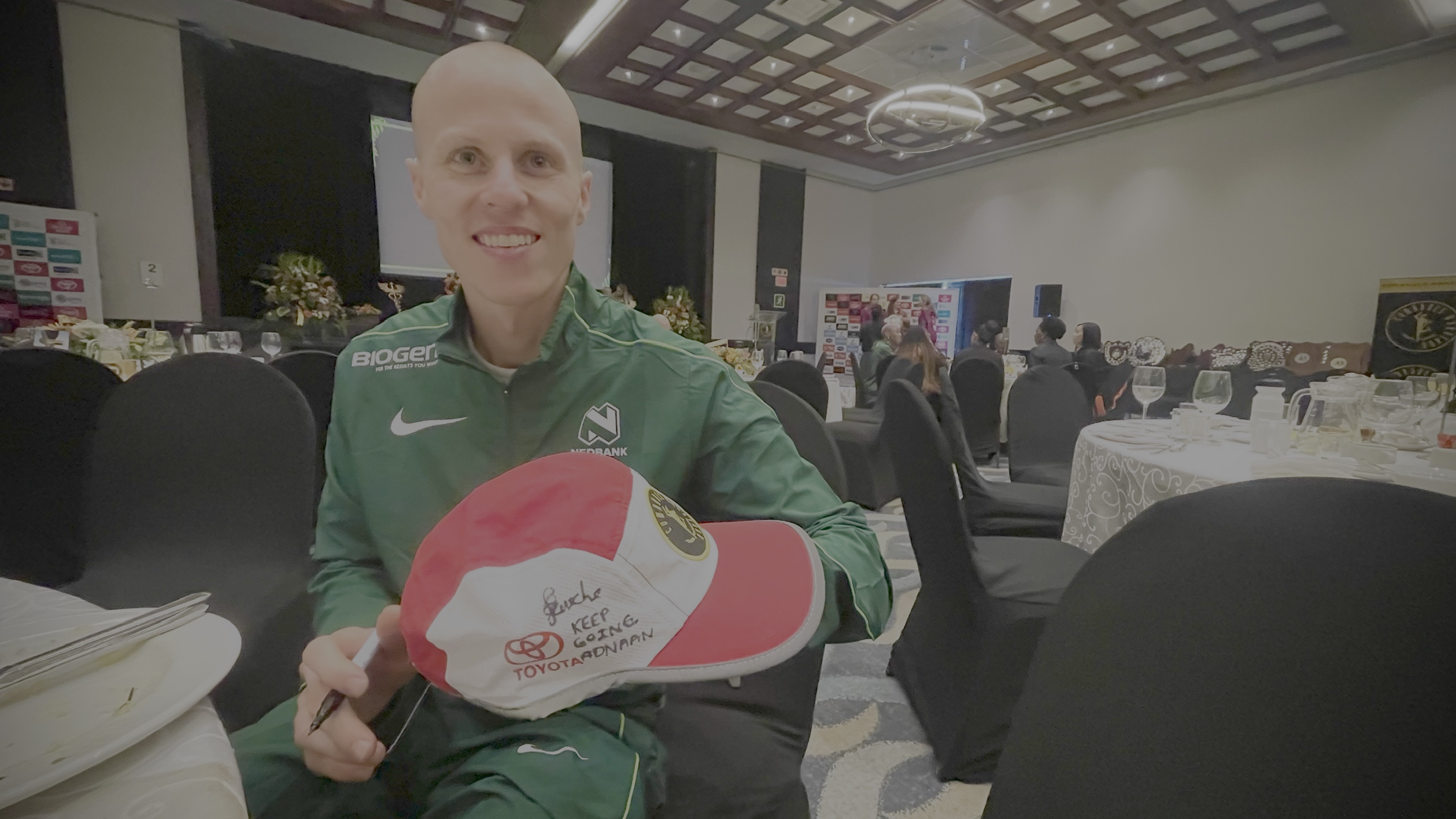
Featured Image: Adnaan Mohamed

Rassie reveals Springbok rookie revolution

By Adnaan Mohamed

Springbok coach Rassie Erasmus has never been shy about planning several moves ahead. His latest squad announcement, featuring 21 uncapped players among a 51-man training group for the Gqeberha double-header later this month, offers another glimpse into how South Africa intends to sustain its dominance beyond the current generation.

Among the newcomers, the inclusion of DHL Stormers backs Yaqeen Ahmed and Imad Khan stands out as more than a reward for impressive domestic performances. It is a reflection of South Africa’s determination to broaden its depth in two of the most influential positions on the field.

Ahmed, capable of operating at flyhalf and centre, and scrumhalf Khan are among a youthful contingent called into the national setup ahead of the Springboks’ clash against the Barbarians and the SA ‘A’ fixture against Zimbabwe on 20 June.

Their elevation comes at a significant moment.

With star playmaker Sacha Feinberg-Mngomezulu and scrumhalf Morne van den Berg sidelined through injury, Erasmus has been presented with an opportunity to accelerate the development of players who could feature prominently in future Springbok campaigns.

The injuries have not created vacancies so much as opportunities.

Ahmed’s selection is particularly intriguing. The highly rated Stormers playmaker has long been regarded as one of the country’s most promising attacking talents, combining tactical awareness with the versatility modern international rugby increasingly demands. His ability to cover multiple backline positions makes him a valuable asset in a Springbok environment where adaptability is prized almost as highly as raw talent.

Khan’s call-up carries similar strategic importance. South Africa’s production line of scrumhalves remains one of the healthiest in world rugby, yet Erasmus continues to search for greater depth at a position that often dictates the tempo of a match. Khan joins fellow uncapped scrumhalves Haashim Pead and Nico Steyn in a competitive group that offers selectors an opportunity to assess emerging talent in a high-performance environment.

The Stormers pair form part of a broader youth movement that includes SA Under-20 players Danie Kruger, Luan Giliomee, Vusi Moyo, Oliver Reid, Liam van Wyk, Junior Springbok captain Riley Norton, Siphosethu Mnebelele, Markus Muller and Zekhethelo Siyaya. All were previously involved in the expanded Springbok alignment camp programme.

The remaining uncapped players are Paul de Villiers, Bathobele Hlekani, Hanro Jacobs, Jurenzo Julius, JJ Kotze, Sibabalwa Mahashe, Emmanuel Tshituka and Jaco Williams.

The composition of the squad has also been shaped by circumstance. Vodacom Bulls players were unavailable after securing a place in the United Rugby Championship final against Leinster, opening the door for several younger prospects to gain exposure to the national environment.

For Erasmus, however, the exercise extends beyond short-term availability.

“We named a large group of players as we will be selecting a Springbok and SA ‘A’ team for the season-opening double-header in Gqeberha, and this will be beneficial in the long term as we build the squad, looking forward to next year’s Rugby World Cup and beyond,” he said.

“There is also an exciting mix of experienced campaigners and young players in this squad, and this formula has worked well for us in the past to ensure a clear pathway to build depth within the group.”

The Springbok coach believes the alignment camps held over recent months have prepared many of the newcomers for the demands awaiting them.

“The coaches have been working around the clock to put the systems in place in the last few months, and the in-person and virtual alignment camps have given most of the players a taste of what to expect, so it’s now a matter of implementing what they learned in the boardroom onto the field.”

Erasmus also highlighted the demanding season ahead.

“We are under no illusions about the challenge ahead this season with two matches against the Barbarians and the SA ‘A’ team against Zimbabwe playing out on the same day, which will be followed by two new competitions in the Nations Championship and Rugby’s Greatest Rivalry, so it will be important for the group to build cohesion as quickly as possible and make the most of our field sessions and team meetings to be as well prepared as possible when we take the field.”

For Ahmed and Khan, the call-up is not a destination. It is an invitation into one of the most competitive environments in world rugby. Whether either player features prominently in the months ahead remains uncertain.

What is clear is that Erasmus is already looking beyond the next Test, the next tournament and even the next season. The world champions are building depth with the same diligence that won them consecutive World Cups, and Ahmed and Khan are the latest names added to that long-term blueprint.

Springbok squad (in alphabetical order):

Forwards: Lood de Jager (Wild Knights), Paul de Villiers (DHL Stormers), Ben-Jason Dixon (DHL Stormers), Pieter-Steph du Toit (Toyota Verblitz), Eben Etzebeth (Hollywoodbets Sharks), Neethling Fouche (DHL Stormers), Bathobele Hlekani (Fidelity Securedrive Lions), Hanro Jacobs (Hollywoodbets Sharks), Vincent Koch (Hollywoodbets Sharks), Siya Kolisi (Hollywoodbets Sharks), JJ Kotze (DHL Stormers), Danie Kruger (DHL Stormers), Sibabalwa Mahashe (Fidelity Securedrive Lions), Malcolm Marx (Kubota Spears), Ntuthuko Mchunu (DHL Stormers), Siphosethu Mnebelele (Vodacom Bulls), Salmaan Moerat (DHL Stormers), Franco Mostert (Honda Heat), Ox Nche (Hollywoodbets Sharks), Riley Norton (DHL Stormers), Zachary Porthen (DHL Stormers), Oliver Reid (DHL Stormers), Evan Roos (DHL Stormers), Emmanuel Tshituka (Hollywoodbets Sharks), Vincent Tshituka (Hollywoodbets Sharks), Liam van Wyk (Hollywoodbets Sharks), Andre-Hugo Venter (DHL Stormers), Boan Venter (Edinburgh), Jasper Wiese (Urayasu D-Rocks).

Backs: Yaqeen Ahmed (DHL Stormers) Lukhanyo Am (DynaBoars), Damian de Allende (Wild Knights), Faf de Klerk (Canon Eagles), Andre Esterhuizen (Hollywoodbets Sharks), Aphelele Fassi (Hollywoodbets Sharks), Luan Giliomee (Hollywoodbets Sharks), Quan Horn (Fidelity Securedrive Lions), Jurenzo Julius (Hollywoodbets Sharks), Imad Khan (DHL Stormers), Cheslin Kolbe (Tokyo Sungoliath), Jesse Kriel (Canon Eagles), Manie Libbok (Kintetsu Liners), Vusi Moyo (Hollywoodbets Sharks), Markus Muller (DHL Stormers), Haashim Pead (Fidelity Securedrive Lions), Zekhethelo Siyaya (Hollywoodbets Sharks), Nico Steyn (Fidelity Securedrive Lions), Edwill van der Merwe (Hollywoodbets Sharks), Damian Willemse (DHL Stormers), Grant Williams (Hollywoodbets Sharks), Jaco Williams (Hollywoodbets Sharks).

Rassie Erasmus thanks Bok faithful with Christmas Walk

By Adnaan Mohamed

If Christmas had a team talk, Rassie Erasmus delivered it in takkies, not a tracksuit. And instead of white lines and whistles, he used a seaside promenade and the gentle rhythm of footsteps.

On Christmas morning, the Springboks head coach once again became Cape Town’s most followed pedestrian, drawing hundreds of supporters to the Blouberg coastline after issuing an open invitation on social media.

This is to thank you for your passionate support and the way you carry us,” Erasmus wrote. “Hulle weet nie wat ons weet nie” (They don’t know what we know).”

At precisely 06:00, because even festive strolling runs on Bok-standard time, the six-kilometre walk rolled out from outside Doodles Beachfront Restaurant.

The route was simple, symmetrical and suspiciously well conditioned: three kilometres out, three kilometres back, with Table View as the turning point and Christmas breakfast waiting at full-time.

The tradition, now in its second year, began the way most good ideas do: accidentally.

Merry Christmas to you guys as well. We just started last year, I think it was the night before Christmas and a few friends said let’s go for a walk, and a few guys in the neighborhood (joined us),” said Erasmus.

We sent messages on What’s App and told people whose maybe lonely or family that wants to join and this year, I think it doubled (in size) or something like that.

There were no bibs, no briefings and mercifully no shuttle runs.

So, no rules we just get together, walk three kilometres out, three kilometres back, sign a few things, give a photo or so and everybody goes and do their thing,” said Erasmus, effectively unveiling the most relaxed Springbok camp session ever staged.

Beneath the humour and flip-flops sat a serious point. This was Erasmus’ way of tipping his cap to the supporters who fill stadiums, timelines and living rooms.

It means everything. If they weren’t there, we would be playing in front of nobody and for nobody,” he said.

I live here in Blouberg and I know most of the people here. I know a lot (of them) are not from Blouberg, who drove here.

But it’s just a small little thank you to them and (a chance) to mingle with them on the ground. We sometimes don’t get a chance to do that so it’s wonderful.

While the Springboks continue to march relentlessly at the top of World Rugby, their head coach chose, just for one morning, to slow the tempo. No trophies, no tactics.

He just a shared walk, a few selfies and the quiet reminder that even world champions occasionally win simply by putting one foot in front of the other.