


‘Never believe Rassie’: Kirwan’s blunt Boks warning

By Adnaan Mohamed

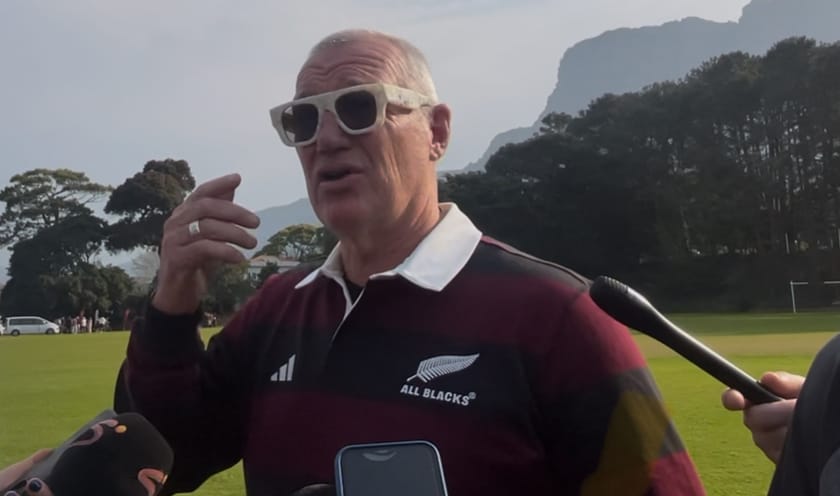
Sir John Kirwan has called Rassie Erasmus’s underdog card before the Springboks’ second Rugby Greatest Rivalry Test against the All Blacks.

And the All Blacks legend’s verdict is brutally simple.

“Never. Don’t believe Rassie. Don’t believe Rassie.”

Kirwan, one of New Zealand’s most celebrated rugby figures, refuses to buy into any suggestion that the four-time world champions are suddenly the underdogs after their 33-16 defeat to the All Blacks at Ellis Park last weekend.

“They are four-time world champions. They’ve been an outstanding rugby team for four years,” Kirwan said.

“So they are world champions. We are the underdogs.”

There is a healthy dose of mischief in Kirwan’s assessment, although his respect for the Springboks is unmistakable.

He expects a vastly improved South African performance at DHL Stadium on Saturday, predicting Erasmus will turn to a more conservative tactical approach and use the kicking game to squeeze New Zealand deep into their own territory.

“I think the Springboks will be way better,” Kirwan said.

“I think they’ll be a bit more conservative tomorrow. I think their infield kicking game will be different. So I expect them to try and pin us into our own half.”

The All Blacks, however, will arrive in Cape Town with their own armoury sharpened.

“These guys are on a journey to get better every week, so I think it’s going to be a massive game,” Kirwan said.

“The pressure is on the world champions and I’m sure they’ll step up to that. There’d be a lot of fireworks.”


For Kirwan, Saturday’s Test could become a tactical heavyweight bout, with neither side willing to blink during the decisive exchanges.

“It’s a boxing match. They’re gonna win some rounds, you’re gonna win some rounds. But at this level, winning those critical moments is really, really important.”

Those moments, he warned, can arrive at any stage.

“Sometimes they come after five minutes. Sometimes they come in the 79th minute.”

Kirwan expects the contest to go down to the wire.

“I think it’ll be incredibly close tomorrow. I think it’ll come down to a few points.”

His description of rugby as “chess with contact” could prove particularly apt in Cape Town.

“You need to win the first 10 minutes, the last 10 minutes before halftime, first 10 minutes after halftime, and the last 10 minutes,” he said.

“It’s really important to start fast. It’s really important to try and imprint the way that you want to play on the opposition. The South African team will be trying to do the same.”

Kirwan is equally bullish about the identity of Dave Rennie’s All Blacks.

“What I’ve seen is that this All Black side is playing a style of rugby that I think suits our skill set and suits the type of athlete that we have.”

The Springboks’ selection changes, including the absence of Handré Pollard and the continued emergence of Sacha Feinberg-Mngomezulu, have also caught his eye.

Kirwan described Feinberg-Mngomezulu as “world class” and believes the young flyhalf will have benefited from the lessons of Ellis Park.

“I think Sacha is still a young man and last week he would have learned a lot and he’ll be better tomorrow.”

He also saluted South Africa’s diminutive dynamo brigade, particularly the skill and footwork of the country’s wings.

“When you see Damian, his footwork. I mean, some of these guys into contact have fantastic feet.”

Then came another Kirwan gem:

“Long live the small, fast winger.”

For Kirwan, the rivalry runs far deeper than tactics, rankings and Test statistics.

As an eight-year-old, he was allowed to stay up late to watch the All Blacks. New Zealand won plenty of matches in those days, although South Africa provided a particularly formidable obstacle.

“That whole rivalry, we don’t know who’s going to win,” he said.

“I think we have the same passion for the game. And I think that’s brought us together.”

Kirwan believes rugby has often carried a cultural weight beyond the field, particularly in South Africa and New Zealand.

“A lot of times in our country, the game’s been bigger than a game. I think Nelson Mandela did that.”

The former All Black has also embraced the South African welcome.

“The hospitality, South African hospitality is unbelievable. Food’s great, people are lovely. And so for us, it’s like being at home. Really appreciate it.”

The pleasantries can wait once the whistle blows.

For now, Kirwan has thrown the psychological ball firmly into Erasmus’s court.

Rassie can call them underdogs. Kirwan isn’t buying it.

Teams: 

South Africa: 15 Damian Willemse, 14 Cheslin Kolbe, 13 Jesse Kriel, 12 Damian de Allende, 11 Ethan Hooker, 10 Sacha Feinberg-Mngomezulu, 9 Cobus Reinach, 8 Jasper Wiese, 7 Pieter-Steph du Toit, 6 Siya Kolisi (captain), 5 Ruan Nortje, 4 Eben Etzebeth, 3 Wilco Louw, 2 Malcolm Marx, 1 Ox Nche.
Replacements: 16 Deon Fourie, 17 Gerhard Steenekamp, 18 Thomas du Toit, 19 Lood de Jager, 20 Andre Esterhuizen, 21 Cameron Hanekom, 22 Morne van den Berg, 23 Manie Libbok.

New Zealand: 15 Damian McKenzie, 14 Will Jordan, 13 Quinn Tupaea, 12 Jordie Barrett, 11 Leroy Carter, 10 Ruben Love, 9 Cam Roigard, 8 Ardie Savea (captain), 7 Luke Jacobson, 6 Simon Parker, 5 Tupou Vaa’i, 4 Fabian Holland, 3 Tyrel Lomax, 2 Codie Taylor, 1 George Bower.
Replacements: 16 Asafo Aumua, 17 Xavier Numia, 18 Fletcher Newell, 19 Patrick Tuipoluto, 20 Peter Lakai, 21 Kyle Preston, 22 Anton Lienert-Brown, 23 Josh Moorby

Date: Saturday, August 29
Venue: DHL Stadium, Cape Town
Kick-off: 17.10
Expected weather conditions: Partly cloudy with a low of 11°C and a high of 18°C. Rain is also expected around kick-off time.
Referee: Angus Gardner (Australia)
Assistant referees: Karl Dickson (England), Sam Grove-White (Scotland)
TMO: Brett Cronan (Australia)

Why Springboks-All Blacks rivalry is bigger than rugby

Rugby’s Greatest Rivalry carries influence well beyond the playing field.

SA Rugby president Mark Alexander welcomed NZ Rugby president Erin Rush to Cape Town ahead of Saturday’s Test at DHL Stadium, highlighting the enduring relationship between two nations that have collectively won 70% of Rugby World Cups.

Erin Rush was elected first female president of NZ Rugby in 134 years. Photo: John Cowpland / action press

Rush, New Zealand Rugby’s first female president, has also brought a remarkable playing and broadcasting career into the governance arena.

Cape Town now prepares for another chapter in one of sport’s most enduring rivalries.

By Adnaan Mohamed

South Africa and New Zealand have spent more than a century throwing rugby thunderbolts at each other. On Wednesday morning, the latest chapter of that fierce sporting relationship began with handshakes, smiles and a shared flight into Cape Town.

South African Rugby president Mark Alexander welcomed his New Zealand counterpart Erin Rush at Cape Town International Airport ahead of Saturday’s second Rugby’s Greatest Rivalry Test between the Springboks and All Blacks at DHL Stadium.

The two presidents travelled together after witnessing New Zealand’s 33-16 victory over the Springboks at Ellis Park on Saturday. Their rugby roadshow continued at the same venue on Tuesday night, where the All Blacks edged the Lions 42-35 in a breathless spectacle featuring 11 tries.

Coach Dave Rennie’s side produced six tries, with Cash van Rooyen’s charges crossing five times. The thrilling contest crackled like a loose ball at a hotly contested breakdown, with the All Blacks eventually stealing victory in the final minute.

For Rush, South Africa’s welcome has been every bit as memorable as the rugby. After the All Blacks victory in the first Test, she expects the pressure and intensity of the rivalry to reach new heights for the rest of the series.

“It’s been amazing. There’s a lot at stake,” said Rush.

“Firstly, I want to say thank you to South Africa Rugby and the people of South Africa for their generous hospitality. Also for bringing such intense anticipation and a huge match-up on the field. It is so exciting and we’ve got so many of our supporters here who are enjoying it too.”

Her response came after Alexander pointed out the strong historical bond between New Zealand and South Africa.

“Yeah, thank you,” Rush replied.

Alexander then welcomed his New Zealand counterpart with the warmth of an old rugby handshake.

“We welcome Erin [Rush] and the All Blacks the old foe here in Cape Town. We’re great friends and always bring the best out of each other,” said Alexander.

“The one thing about rugby, it brings people together. And the two nations have got a long history, you know.”
Then came the statistic that gives this rivalry its heavyweight status.

“Between the two of us, we won 70% of the World Cups hosted to date. So, it is the greatest rivalry. And that’s why we’ve got the best two teams in the world competing in the next couple of weeks in South Africa.”

Rush arrives in the Mother City carrying a remarkable rugby story of her own. The 56-year-old became New Zealand Rugby’s first female president in May 2026, securing a two-year tenure after being elected by NZR’s affiliate members and succeeding former All Black Matthew Cooper.

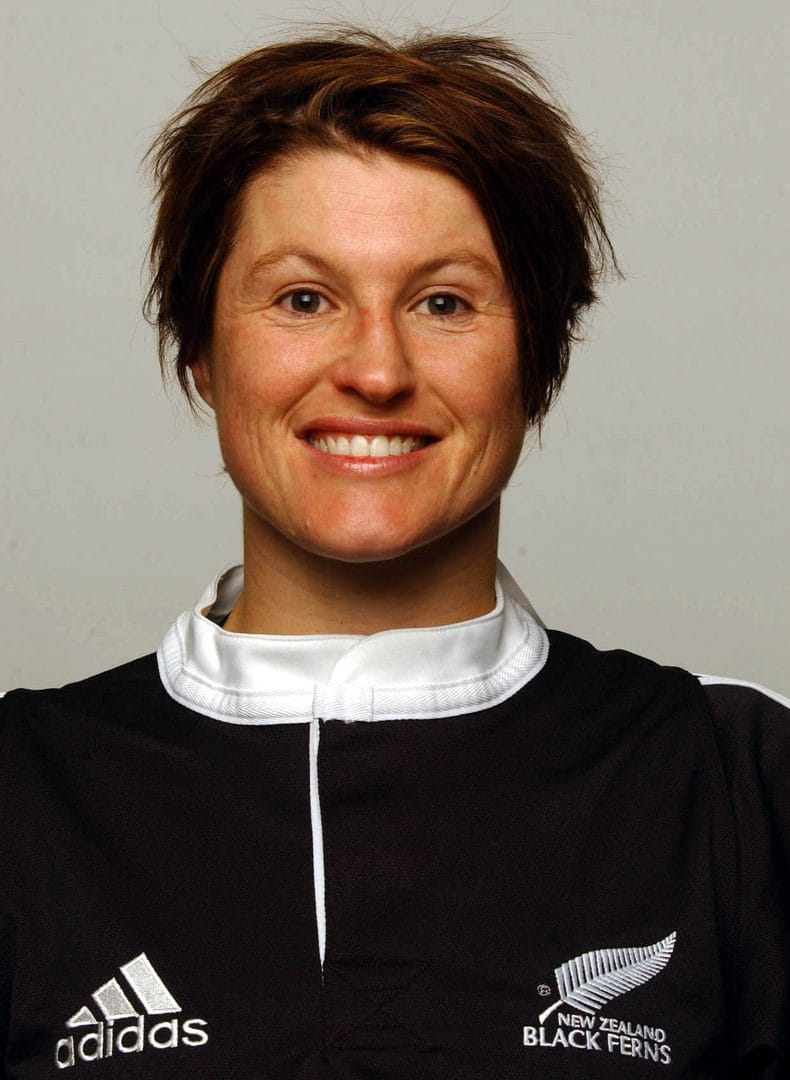
Her rugby CV reads like a long-running Test match. Rush was Black Fern No. 113, making her international debut in 2003 at 33, only weeks after giving birth. She captained Wellington Pride, earned 100 caps for the province and played club rugby for Wellington FC.

Her pioneering streak began even earlier. In 1998, she co-commentated the first Black Ferns Test broadcast live on television during the World Cup final.

Black Fern #113 – Erin Rush Image Credit: AllBlacks.com

She served as NZR vice-president from 2024 to 2026 before taking the presidency. Her current role includes attending board meetings, travelling with national squads, welcoming international guests and presenting medals, with no board voting rights attached to the ambassadorial position.

Now, Cape Town becomes the next set piece in a rivalry that has shaped rugby’s folklore.

Saturday’s Test promises another heavyweight collision. Alexander and Rush have already shared the flight, the hospitality and the rugby spectacle. Come kick-off, friendship will have to make room for the fiercest handshake in world rugby.

The rivalry is ready to rumble

Stormers rue missed chances as All Blacks escape

By Adnaan Mohamed

The Stormers came within touching distance of one of the biggest upsets in their history before a handful of crucial moments allowed the All Blacks to pull away at DHL Stadium on Friday night.

New Zealand eventually won 38-21 in the opening match of the Greatest Rivalry series, but the scoreline does not tell the full story.

At 14-14 after 65 minutes, the Stormers had genuine belief.

They had weathered a difficult opening, recovered from defensive lapses and gradually forced the All Blacks into a contest they were expected to dominate.

Then the game turned.

Rieko Ioane, Lee Roy Carter and Josh Moorby scored tries as New Zealand produced the clinical finishing expected from one of rugby’s most decorated teams.

For Stormers coach John Dobson, the frustration was knowing his side had created enough opportunities to make the result far more interesting.

“We dared to dream for a while, there were a couple of big moments,” Dobson said.

Those moments ultimately proved decisive.

Seabelo Senatla’s linebreak was one of them. The Stormers looked set to attack with real momentum before the opportunity ended in a penalty.

A promising maul on the far side also broke down when possession was lost.

Then came the pivotal passage at 14-all.

The Stormers were defending well and had the All Blacks under pressure, according to Dobson, before a scrum decision went against the hosts and New Zealand turned the resulting momentum into a try.

“They were shut down and boxed in, and that’s when I thought we really had a chance,” Dobson said.

Captain Ruhan Nel identified another critical moment.

The Stormers were in New Zealand territory with the scores level when a pick-and-go ended with the ball being lost forward.

Within moments, the Stormers were defending in their own 22.

New Zealand scored.

“If we converted that opportunity and go up 21-14, you’re feeling strong,” Nel said.

It was the sort of fine margin that separates a famous victory from a respectable defeat.

The Stormers had been written off before kick-off, with plenty of pre-match predictions suggesting the All Blacks would overwhelm them.

For long periods, the opposite was true.

New Zealand’s passing game eventually exposed the Stormers, but Dobson was full of praise for the skill level of the visitors.

“They pass so well. That style of rugby is magnificent,” he said.

Nel, meanwhile, was left with the unavoidable question of what might have been.

“I do feel there was an opportunity of two for us out there and if we handled it a little bit better we would’ve sung a different song,” he said.

The Stormers did not produce the historic result they dared to imagine.

They did, however, prove they belonged in the conversation.

Against the All Blacks, that is no small consolation.

The next step is turning those big moments from missed opportunities into match-winning ones.

The scorers:

Stormers:
Tries: Fourie, Senatla, penalty try
Cons: Ahmed 2

New Zealand:
Tries: Taukei’aho, Parker, Ioane, Carter, Moorby, Aumua
Cons: Barrett 3, Jacomb

DHL Stormers: 15 Warrick Gelant, 14 Seabelo Senatla, 13 Ruhan Nel (captain), 12 Jonathan Roche, 11 Leolin Zas, 10 Yaqeen Ahmed, 9 Imad Khan, 8 Evan Roos, 7 Hacjivah Dayimani, 6 Deon Fourie, 5 Connor Evans, 4 Adré Smith, 3 Neethling Fouché, 2 André-Hugo Venter, 1 Vernon Matongo.
Replacements: 16 JJ Kotzé, 17 Ntuthuko Mchunu, 18 Herman Lubbe, 19 Ruan Ackermann, 20 Keke Morabe, 21 Wandile Mlaba, 22 Dewaldt Duvenage, 23 Wandisile Simelane.

New Zealand: 15 Josh Moorby, 14 Leroy Carter, 13 Billy Proctor, 12 Anton Leinert-Brown, 11 Rieko Ioane, 10 Beauden Barrett, 9 Cortez Ratima, 8 Peter Lakai, 7 Anton Segner, 6 Simon Parker, 5 Patrick Tuipulotu, 4 Fabian Holland, 3 Pasilio Tosi, 2 Samisoni Taukei’aho, 1 George Bower.
Replacements: 16 Asafo Aumua, 17 Ollie Norris, 18 Siale Lauaki, 19 Sam Darry, 20 Ethan Blackadder, 21 Kyle Preston, 22 Josh Jacomb, 23 Caleb Clarke

Images: x.com/THESTORMERS

Deon Fourie comes full circle as Stormers hand ‘The Chef’ his chance

Adnaan Mohamed

Deon Fourie’s return for the Stormers against the All Blacks on Friday carries a remarkable sense of rugby symmetry.

The veteran loose forward’s previous appearance against New Zealand came in the Springboks’ dramatic 12-11 Rugby World Cup final victory in Paris in 2023. His comeback now arrives as the Stormers prepare to face the All Blacks for the first time since Western Province’s famous 12-11 victory at Newlands in 1976.

The scoreline is impossible to ignore.

For Fourie, it is another meeting with rugby’s oldest measuring stick. For the Stormers, it is an opportunity to reconnect with one of the Cape’s great rugby memories.

The 39-year-old has been sidelined since May after suffering a knee injury from a croc-roll by Ulster lock Iain Henderson in a URC clash. More than 10 weeks after surgery, he says he is ready.

“It’s about 10 or 11 weeks after the operation. Fitness-wise, I’ll probably only be able to tell you on Friday,” Fourie said.

“I am definitely raring to go, and it’s a great opportunity. I was looking forward to this match since it was announced a year or two ago.”

Few players understand the occasion better.

Fourie spent 77 minutes at hooker after replacing the injured Bongi Mbonambi early in the 2023 World Cup final. Playing through a shoulder injury, he made 21 tackles, captained the Springboks during the closing stages after Siya Kolisi’s yellow card and helped preserve South Africa’s one-point victory.

He admits another chance to face the haka seemed unlikely.

“I didn’t know if I would still be able to play this year, but fortunately everything went well, and I will get an opportunity to face the haka again.”

The veteran has not given up on adding to his Springbok career either.

“You always want to wear the green and gold jersey. Hopefully, I can put in a good performance and put my hand up for one or two more Tests.”

While Fourie represents experience, the Stormers are also preparing to unveil one of South African rugby’s brightest young talents.

Highly rated 20-year-old Junior Springbok flyhalf Yaqeen Ahmed is expected to make his senior Stormers debut.

Nicknamed “The Chef” for his ability to cook up attacking opportunities, Ahmed has earned a reputation as one of the country’s most gifted young playmakers. He is expected to partner 22-year-old scrumhalf Imad Khan in a youthful halfback combination against the world’s second-ranked side.

The opportunity has come with several experienced playmakers unavailable.

Sacha Feinberg-Mngomezulu is expected to rejoin the Springboks for Saturday’s Rugby Championship Test against Argentina, while Jurie Matthee continues his recovery from injury.

It leaves Ahmed with one of the toughest introductions in world rugby.

Friday’s clash therefore becomes a meeting of generations.

One player is approaching his 40th birthday and chasing another opportunity in green and gold. The other is taking his first steps at senior provincial level.

One carries the scars of rugby’s biggest battles.

The other carries the promise of many still to come.

Against the All Blacks, there is rarely a gentle beginning or a sentimental ending. There is only the next chapter.

Stormers coach slams rugby’s held-up and goal-line drop-out law

Adnaan Mohamed

DHL Stormers coach John Dobson believes World Rugby should revisit the law governing held-up situations after his side were denied two tries during their 44-21 United Rugby Championship quarterfinal victory over Cardiff in Cape Town on Saturday.

While the Stormers progressed comfortably to the semifinals after scoring six tries, the result did little to ease Dobson’s frustration with a law he feels unfairly rewards the defending team.

The Stormers have been held up over the tryline more than any other side in the URC this season, with Dobson suggesting it may even have cost them a higher finish on the log and the possibility of hosting a semifinal or final.

Speaking after the match at DHL Stadium, Dobson described the current law as one of rugby’s biggest anomalies.

“It’s our season. It’s our season. It is,” he said when asked by Modern Athlete how the held-up and goal-line dropout law affected the Stormers thus far in the 2025/26 URC season.

“It’s the worst. It’s one law in rugby that has to change. I’m not saying because it’s against us. I don’t understand this concept. You do so well, and you’re rewarded with receiving the ball back on your ten-yard.

“The old law was much better. Give it a five-metre scrum. You’ve attacked well, five-metre scrum.”

Under current laws, a defending team receives a goal-line dropout when an attacker is held up in-goal. Previously, the attacking side was awarded a five-metre scrum.

Stormers captain Ruan Nel experienced the frustration first-hand after being denied near the line against Cardiff.

“It sucks, actually,” Nel said.

“The arms were pretty there. When I dotted the ball down, I just put it straight on his knees. So I actually felt him at the bottom of the ruck. Well done. Proper effort there. Obviously, it’s very disappointing.”

Nel admitted the missed opportunities were frustrating, though he viewed them as evidence that the Stormers’ attack is consistently creating scoring chances.

“It’s encouraging because you’re obviously getting to the right spaces.

“It’s disappointing, but obviously over the line, just get the flipping thing down. But it’s encouraging at the same time because we are breaking them down, we are getting the reward in terms of position there.”

The experienced back also noted how frequently the issue has affected the Stormers this season.

“It’s funny. I’ve never been a part of a season where we’ve been held up so many times.”

Dobson’s concerns will take on added significance this week as the Stormers prepare for a semifinal against Leinster in Dublin.

The Irish province underlined their title credentials by demolishing the Lions 59-10 in the quarterfinals, running in nine tries in a clinical display at the Aviva Stadium.

If the Stormers are to challenge Leinster on their home turf, they will need to make the most of every scoring opportunity. Against a side renowned for converting pressure into points, being held up over the line and conceding a goal-line dropout could prove a costly setback.

For Dobson, the issue extends beyond the Stormers’ campaign. It is a law he believes fails to adequately reward attacking enterprise, and one he hopes World Rugby will eventually reconsider.

Image: Adnaan Mohamed

Stormers left reeling as Connacht spoil emotional Cape Town farewell

By Adnaan Mohamed

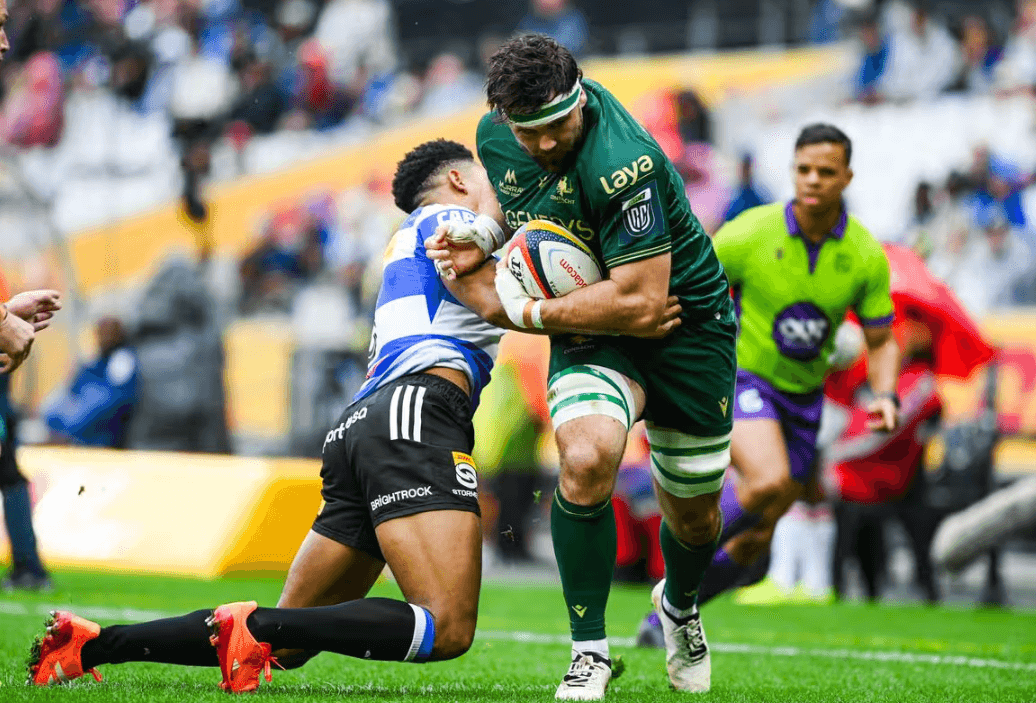
What was meant to be a day of tribute and celebration at DHL Stadium ended in bitter disappointment for the Stormers, who slumped to a shock 33-24 United Rugby Championship defeat to Connacht on Saturday.

On an emotionally charged afternoon, the home side honoured long-time team manager Christopher “Chippie” Solomons, who died suddenly from a heart attack last week, while veteran hooker Scarra Ntubeni was set for a fitting farewell in his final appearance in blue and white.

Instead, the occasion turned into a nightmare.

With Solomons’ family receiving warm applause from the 13,903-strong crowd on a cold, wet Cape Town afternoon, the mood before kick-off was heavy with emotion. Tears flowed among players as the Stormers prepared for a match coach John Dobson had described as one “for Chippie”.

By full-time, there was no comfort to be found.

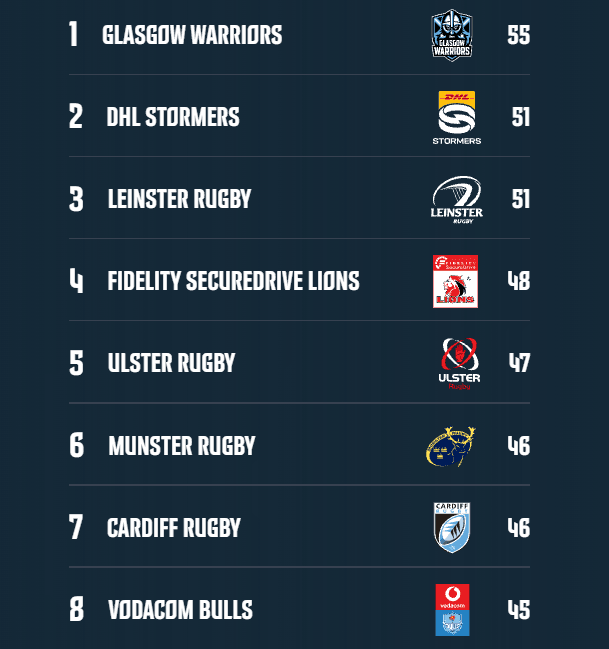
The defeat not only denied the Stormers the chance to climb to the top of the URC table, it also left their play-off ambitions under fresh pressure. Connacht’s first-ever win over the Stormers in Cape Town lifted the Irish side from ninth to sixth, while the hosts remained second.

The Stormers appeared to have done enough when Sacha Feinberg-Mngomezulu crashed over late in the second half to edge them ahead.

But the match swung dramatically moments later.

A costly error from the restart by replacement lock Ruben van Heerden handed Connacht the opening they needed, with scrumhalf Ben Murphy pouncing for a crucial try in the 71st minute to snatch a 26-24 lead and secure the visitors a bonus point.

Forced to chase the game, the Stormers unravelled.

Their expansive approach in slippery conditions proved costly, with loose passing and poor decision-making repeatedly placing them under pressure. That desperation was punished in the 77th minute when Connacht flyhalf Sean Naughton intercepted to race away for the decisive score.

Dobson admitted afterwards that his side had failed to adapt to the conditions.

“You are 100% correct. Yes, it was very frustrating. We shovelled rubbish out there for quite a bit of time. We did … We did,” he said.

The Stormers coach conceded his side should have played a more territorial game.

“We were loose throughout. There were a couple of patches in the first half that we spoke about where we shuffled it around too much.

“I thought we were very loose. We said at halftime, let’s be more direct and limit the passing on attack.

“But we kept shovelling the ball back repeatedly and conceded a penalty for sealing off.”

Dobson felt the Stormers strayed from a winning blueprint that was already working.

“It felt at times we needed to invent to beat them, when in reality the template was there to do it; we saw it with our mauling getting on top.”

He also pointed to key moments that shifted momentum.

“We had their maul on the ropes, and at one instance we had a quick throw in to Warrick Gelant, but then Damian Willemse threw a forward pass, Connacht got the scrum and ended up scoring.”

The emotional week, Dobson said, could not be used as an excuse, though he acknowledged the impact it had.

“We can’t use Chippie’s thing as an excuse, but it was a helluva week.”

Captain Ruhan Nel echoed his coach’s frustration.

“I felt we did more than enough in that game to put ourselves in the correct positions.

“I felt we defended great at certain times and then there were a lack of concentration due to simple decisions.”

The defeat leaves the Stormers with little room for error heading into a massive clash against the Glasgow Warriors next week, before a demanding two-match tour against Ulster Rugby and Cardiff Rugby.

“Massive… to get nothing out of this game is very disappointing,” Dobson said.

“We now have to win all three to get where we want to be, but that’s much easier said than done.

“We’ve put ourselves in a bit of a position now.”

For the Stormers, a day that began with tribute ended with a bruising reminder that sentiment alone does not win rugby matches.

Stormers v Bulls: When Bok Futures and Proven Steel Collide

By Adnaan Mohamed

There are derbies, and then there are rugby events that feel bigger than the competition table. The Stormers versus Bulls north–south clash at a sold-out DHL Stadium on Saturday belongs firmly in the latter category. It’s a fixture where reputations are tested as brutally as defensive lines.

The first URC blockbuster of 2026 arrives wrapped in symbolism. Damian Willemse will make his 100th start for the Stormers. Ruan Nortje returns to captain the Bulls. And at flyhalf, the generational baton hangs tantalisingly between two Springboks: Sacha Feinberg-Mngomezulu and Handré Pollard.

One represents the present tense of South African rugby’s future: instinctive, elastic, daring. The other is its hardened past and still-relevant present: precise, economical, forged in World Cup fire. Saturday is less about rivalry than rugby arithmetic: what happens when flair meets control under maximum pressure?

Stormers: Tempo, Power and Cape Town Edge

The Stormers receive a significant boost with the return of Willemse and Feinberg-Mngomezulu, restoring balance to a side that thrives on momentum. Willemse’s presence in midfield alongside Wandisile Simelane gives the hosts ballast and punch, while Cobus Reinach and Feinberg-Mngomezulu form a halfback pairing designed to accelerate the game.

Director of Rugby John Dobson framed the occasion without hyperbole:

“This is one of the biggest club rugby matches in the world and will be played in front of a sold-out DHL Stadium. It should be an incredible experience for everyone there.

We know that we will need to be at our absolute best throughout the game to come away with the result.”

Out wide, Suleiman Hartzenberg and Leolin Zas provide finishing pace, with Warrick Gelant lurking at the back like a counter-attacking wildcard. Up front, captain Salmaan Moerat marshals a pack that blends aggression with continuity, supported by Evan Roos and Ben-Jason Dixon in the loose — players built for derby combat.

Bulls: Structure, Steel and World Cup Calm

The Bulls arrive in Cape Town with a side subtly reshaped for control rather than chaos. Ruan Nortje’s return to the starting XV restores authority to the pack, while Marco van Staden adds breakdown venom. The front row of Gerhard Steenekamp, Johan Grobbelaar and Wilco Louw remains intact, signalling a clear intent to contest the set-piece battle.

Behind them sits a familiar Bulls spine: Pollard at 10, Willie le Roux at 15, David Kriel in midfield — experience stacked upon experience. Canan Moodie’s move to centre injects line-breaking speed, while Paul de Wet starts at scrumhalf against his former side.

Head coach Johan Ackermann underlined the method behind the selection:

“We’ve assessed the Sharks game and made adjustments where needed. Ruan’s leadership is vital, and bringing in players like Canan Moodie and Marco van Staden gives us the right balance for this contest. It’s about alignment and intensity as we start the year.”

The Key Battlegrounds

The obvious headline is flyhalf, but the game may hinge elsewhere. The midfield collisions between Willemse and Moodie will dictate gain-line success. The breakdown duel with Roos and Dixon versus Van Staden and Louw, could determine territory. And off the bench, both sides possess finishers capable of swinging momentum late.

This is not a derby built on nostalgia. It is one shaped by present ambition and future consequence. The Stormers want tempo and emotion. The Bulls want structure and silence.

Cape Town will decide which philosophy holds firm when the noise peaks.

Team Sheets

DHL Stormers:
15 Warrick Gelant; 14 Suleiman Hartzenberg, 13 Wandisile Simelane, 12 Damian Willemse, 11 Leolin Zas; 10 Sacha Feinberg-Mngomezulu, 9 Cobus Reinach; 8 Evan Roos, 7 Ben-Jason Dixon, 6 Ruan Ackermann; 5 JD Schickerling, 4 Salmaan Moerat (c); 3 Neethling Fouché, 2 André-Hugo Venter, 1 Ali Vermaak.
Replacements: Lukhanyo Vokozela, Ntuthuko Mchunu, Sazi Sandi, Adré Smith, Ruben van Heerden, Paul de Villiers, Stefan Ungerer, Jurie Matthee.

Vodacom Bulls:
15 Willie le Roux; 14 Sebastian de Klerk, 13 Canan Moodie, 12 David Kriel, 11 Stravino Jacobs; 10 Handré Pollard, 9 Paul de Wet; 8 Jeandre Rudolph, 7 Elrigh Louw, 6 Marco van Staden; 5 Ruan Nortje (c), 4 Cobus Wiese; 3 Wilco Louw, 2 Johan Grobbelaar, 1 Gerhard Steenekamp.
Replacements: Akker van der Merwe, Jan-Hendrik Wessels, Khuta Mchunu, Ruan Vermaak, Reinhardt Ludwig, Nizaam Carr, Embrose Papier, Devon Williams.

Match Information

Date: Saturday, January 3
Venue: DHL Stadium, Cape Town
Kick-off: 18:00 (16:00 GMT)
Referee: Griffin Colby (SA)
TMO: Marius Jonker (SA)

Dylan Maart’s Stormers surge has Springbok written all over it

Adnaan Mohamed

Dylan Maart’s rugby journey is unfolding like a perfectly weighted grubber, unexpected, precise and suddenly impossible to ignore.

On loan from Currie Cup champions Griquas, Maart is now streaking down the touchline for the Stormers. The Wellington-born speedster is finishing tries under the bright lights of the Investec Champions Cup, leaving defenders clutching at air and selectors sitting up straighter.

Maart wasted no time announcing himself in blue and white. A debut try against Munster in Limerick was followed by a brace against La Rochelle in the Investec Champions Cup, both five-pointers delivered on a silver platter by Springbok fly-half Sacha Feinberg-Mngomezulu.

“Look, to get a try in the first place for the Stormers is always special,” Maart said.

“Two or three, I was very lucky to be in the right place at the right time.

“If you have someone like Sacha, who has all the talent in the world, on your inside and who can find every space, you just have to be in the right place.

“So, yes, it was exciting to get those two tries and to have a say in the team’s victory at the end of the day.”

Those early scores have propelled Maart from squad player to headline act, and now the Wellington-born speedster is preparing for another milestone: his first run-out at DHL Stadium.

“Making my debut, playing overseas for the first time and obviously the results have been going our way,” he said ahead of the Lions derby.

“I’m very excited to play my first game at the DHL Stadium in front of the home crowd … exciting times.”

The rise has been as steep as a midfield chip-and-chase.

“If I think of where I was a year ago to where I am now, I never thought I’d have the opportunity to play here at the Stormers, so I’m very grateful and very excited.

While Maart is carving his own attacking lines, his compass points firmly towards an old friend and local hero, Springbok winger Kurt-Lee Arendse, who also cracked international rugby later than most.

“I actually didn’t play rugby until after high school, but I watched a lot of rugby,” Maart revealed.

“There’s a lot of guys that I can mention. But for me, growing up, it was Bryan Habana.

“Cheslin [Kolbe] now, as well as one of my friends, Kurt-Lee Arendse. He lives in Paarl, I’m from Wellington so he’s a guy I look up to and can always ask if I need some advice.

“He’s also a role model for me. And very inspiring also. To see that he can also make it. So, that’s something for me to look forward to.”

At 29, when many players are settled into predictable careers, Maart rolled the dice. He left his job as a warehouse worker at a bottling plant and bet everything on rugby. The risk was rooted in hardship.

“I played rugby in primary school, but nothing in high school, for various reasons.

“Things weren’t good at home. There were many nights when there was no food and we went to sleep hungry.”

At 13, he worked as a taxi guard, opening doors, collecting fares and carrying bags, just to put food on the table and secure a ride to school in Paarl. Rugby, though distant, never left his heart.

When opportunity finally knocked, Maart smashed the door down. He rose with Boland Cavaliers, became a pillar of a Griquas side that ended a 55-year Currie Cup drought, and is now lighting up the URC and Champions Cup in Stormers colours.

The Stormers’ season mirrors Maart’s surge. They are unbeaten in the Investec Champions Cup, eight wins from eight in all competitions, and positioned to host a last-16 European play-off.

Saturday’s URC clash against the Lions at DHL Stadium, only their third home game of the campaign, offers Maart another stage to sprint his late-blooming dream closer to green and gold.

Like Arendse before him, Maart is proof that in rugby, timing matters less than belief, and that some wings only truly catch the wind when the stakes are highest.

Blitzboks Seek Pride and Payback in Cape Town Sevens Showdown

By Adnaan Mohamed

The early Cape Town light had just begun dissolving the mist over Table Mountain when the Blitzboks filed through the airport doors, the weariness of a long Dubai flight etched into their shoulders. But in the middle of the group, Ricardo Duarttee walked with the quiet intent of a man who’d already circled one date in bold red: Cape Town Sevens weekend.

Dubai may have left them with a fifth-place finish and a few unwelcome scratch marks, but the sweepers and speedsters of South Africa’s Sevens squad are not known for dwelling on bruises. The moment their plane hit the tarmac, the city’s salty summer breeze felt like a second chance.

“We regrouped on Sunday already after the disappointment of Saturday, as one could see on our day two results,” Duarttee explained, the memory of a tough pool still lingering.

“It hurts that we dropped results to Fiji and Argentina in our pool, but we came back on Sunday to get some belief back.”

Belief – South African rugby’s most renewable resource – will matter again this weekend when the Blitzboks step into DHL Stadium, a venue Duarttee speaks of the way some speak of childhood playgrounds.

“Cape Town is just such a special place to play at. There is a massive feeling of excitement for the weekend.”

The Blitzboks hoisted the Cape Town trophy last year, only the second time since the tournament moved south in 2015, and no one in green and gold is in the mood to wait another eight years for the next.

“We certainly do not want to wait that long again, in fact, the squad will be very determined to right the wrongs from Dubai,” he said.

For Duarttee, statistics and score tallies don’t define their mission. Emotion does. Connection does. And the home crowd with the sea of flags, the hum of vuvuzelas, the familiar roar matters more than any number on the scoreboard.

“We play for the love of the game, for the passion we have for it and this weekend, we get to play in front of family, friends and loyal supporters.”

Pool of Death

This year’s pool is ruthless: New Zealand first, then the familiar bruises of Fiji, rounded off by Great Britain. But to Duarttee, that’s the perfect storm.

“What an opportunity this will be for us to rectify the mistakes and show what we are capable of, especially in front of a proper crowd to cheer us on. I cannot wait for Saturday, it is going to be a huge day.”

He didn’t end the conversation so much as issue a call to arms.

“We need to put some pride back in the Springbok Sevens jersey and where better that right here. There is no place like DHL Stadium on the weekend of the Cape Town Sevens.

“We need our supporters to come and celebrate our only opportunity to play at home with us. See you there.”

Source: SA Rugby