The quiet power of Siya Kolisi’s 55

By Adnaan Mohamed at the FNB Stadium in Soweto

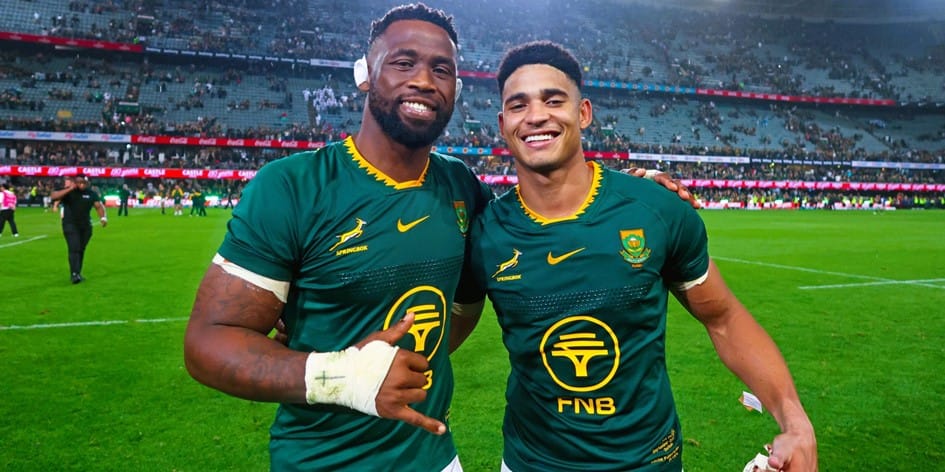
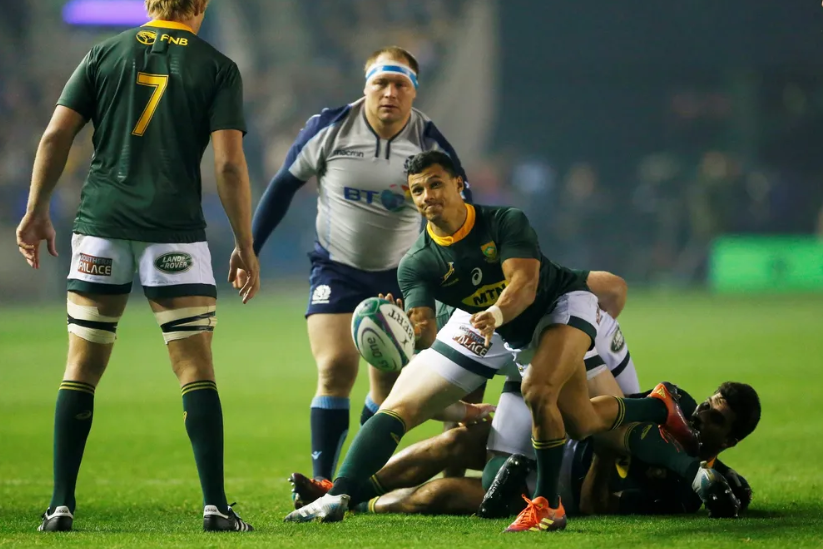
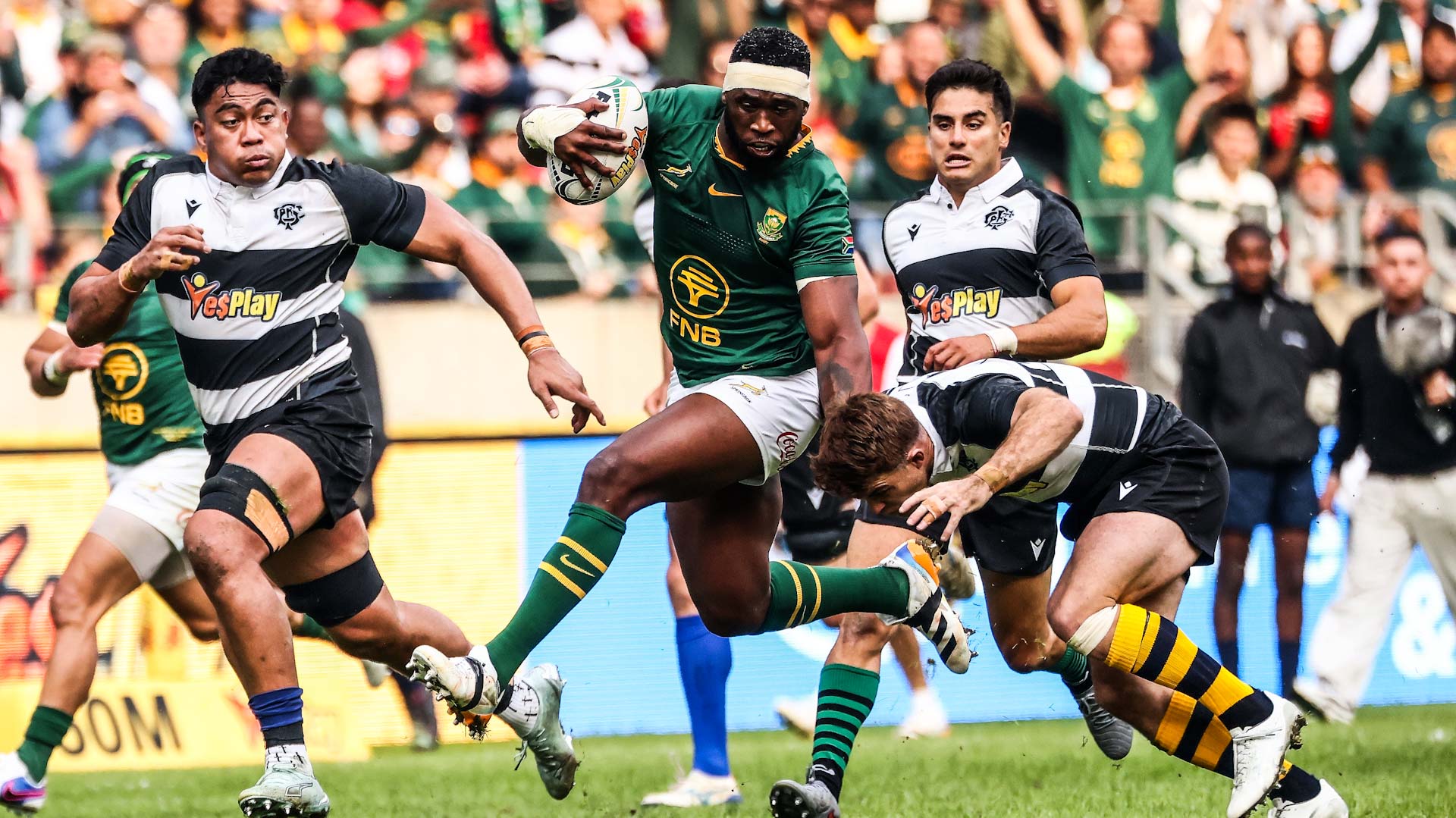
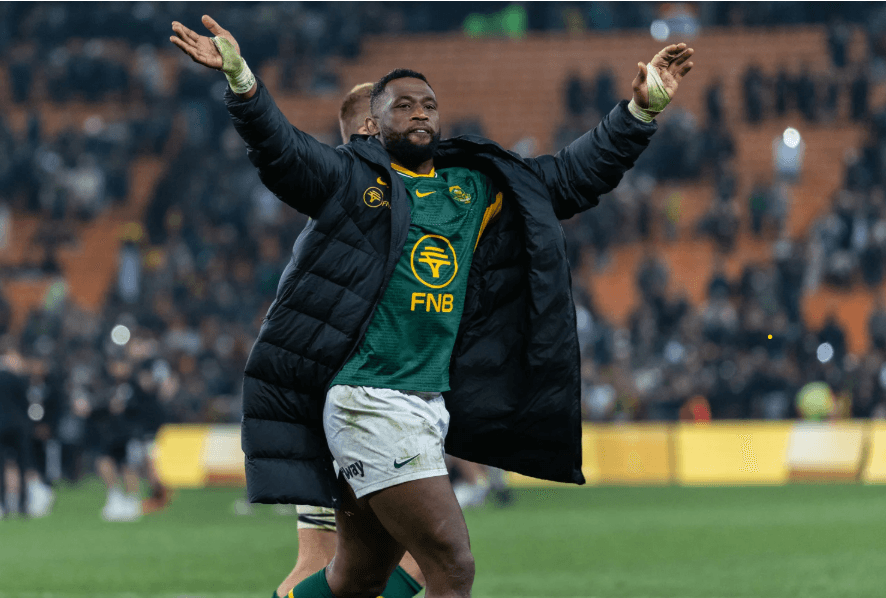
Siya Kolisi has never been particularly interested in making himself the story. On the night he became the most successful captain in Springboks history, that instinct was as powerful as ever.

The scoreboard at FNB Stadium said South Africa 29, New Zealand 24. The series said Springboks 2, All Blacks 1. The record books said something rather more extraordinary: 55 Test victories as captain, one more than the 54 accumulated by John Smit.

For most athletes, that would be the moment to pause, puff out the chest and allow history a little room to breathe.

Kolisi, characteristically, handed the oxygen to everyone else.

“If this were tennis it would be different, but this is a team sport. It shows the work Rassie [Erasmus] and his coaching staff put in,” the 35-year-old told Modern Athlete after the match.

“We’ve got so many leaders in this side that I really only have one job to do, which is focus on my own game.”

There is something almost disarming about the understatement.

Fifty-five victories as Springboks captain is not merely a statistic. It is a towering monument built across years of upheaval, triumph, scrutiny and expectation. It stretches beyond the rugby field into the improbable story of a boy from Zwide who became the face of a nation’s most recognisable sporting institution.

Yet Kolisi speaks about it as though he has merely completed another assignment.

That is perhaps the paradox of his leadership. His influence is enormous precisely because he rarely behaves as though it is.

The record came on a night when FNB Stadium became more than a rugby ground. Almost 88,000 people filled the Calabash for a match carrying the historical weight of Soweto and the emotional currency of a nation.

Kolisi understood the symbolism.

“It was really special. We always say we won’t just say thank you in words, but through our effort. We were tested in that first 25 minutes, they came out firing, and we had to dig deep to fight our way back into it.”

Then came the image that stayed with him: children running alongside the Springbok team bus, hoping for a glimpse of their heroes despite being unable to afford tickets.

“They can’t afford to come and watch us play, but seeing that, and understanding the history of this place, the young people who fought so that we could be sitting here today, that’s why we wanted this game here,” Kolisi said.

“That’s what we play for, not just the people who can afford it, but everyone.”

It is difficult to imagine a more revealing explanation of his captaincy.

The 55 wins belong to Kolisi. The meaning he attaches to them belongs to something larger.

Even the victory itself did not escape his scrutiny.

“I thought we played better in the first Test [at Ellis Park], we just didn’t convert our chances,” he said.

“There’s still so much more we can do. Our defence in particular can get better.”

His answer carried the familiar Kolisi mixture of humility and hunger. No grand declaration. No coronation. No invitation for the rugby gods to start carving his statue.

Only work.

“The way the coaches rotate the team and give other guys opportunities keeps everyone hungry. If you don’t get picked this week, you know your chance is coming. It also keeps us fresh so we’re not overplayed. It’s a group effort, and I’m really happy about that.”

And so, after 55 wins, the captain looks ahead rather than back.

“Playing together more consistently helps a great deal, and I’m looking forward to what we can build on next week [in Baltimore].”

History has caught up with Siya Kolisi. He appears in no hurry to stop running.
Soweto calls. Siya must answer.

By Adnaan Mohamed

The Calabash will roar. The rain may fall. And somewhere inside the thunder of 90 000 voices, Siya Kolisi will carry a piece of South African history onto the FNB Stadium battlefield.

For the Springbok captain, Saturday’s third Test against the All Blacks is bigger than a series decider.

It is personal.

It is political history without the politics.

And it is an opportunity to repay a debt to the people of Soweto whose sacrifices helped create the freedom that allowed Kolisi and assistant coach Mzwandile Stick to rise to the summit of South African sport.

“We’re thankful for the people connected to that place who fought for the freedom that lets me and him [assistant coach Mzwandile Stick] sit here today,” Kolisi said on Friday.

“Giving our best tomorrow, and using every opportunity we get, is part of us saying thank you.”

Those words will carry considerable weight when the Springboks emerge into the cauldron.

Kolisi spoke about Soweto’s sporting heartbeat, recalling the 1996 African Cup of Nations and the extraordinary connection between the stadium and its community.

He spoke, too, about homeless residents cheering the Springbok bus and locals sacrificing what little they have so others can experience the spectacle.

“It hasn’t always gone our way in Soweto, we didn’t win the first time we played here, but the numbers that show up at the stadium, and the vibe inside it, we feel it,” he said.

“We hope we can give them a good memory, not just with words but with our efforts tomorrow.”

History is also waiting for Kolisi personally.

Victory would give him 55 Test wins as Springbok captain, taking him beyond John Smit and into record territory.

Pieter-Steph du Toit, Jasper Wiese and Kolisi will also establish a new record for Tests played together as a Springbok loose trio.

Kolisi, though, refuses to make the occasion about himself.

“As for the wins record, that’s a team achievement, not mine personally. As long as we win, I’m happy, because it shows we’re building and moving forward as a group.”

That collective mindset will be tested by an All Blacks side with its own pride bruised after losing 33-26 in Cape Town.

New Zealand captain Ardie Savea knows exactly where the battle could be won.

The breakdown.

“Every rugby team is trying to hunt turnovers at the breakdown, and there’s no doubt the Springboks are strong there,” Savea said. “They did a good job keeping us out last week, and they’ll have to do it again this week.”

The All Blacks cannot afford another sluggish launch.

“You wouldn’t be an All Black if you weren’t confident by this point in the week, so we’re confident, but we also respect the threat the Springboks pose.”

“Last week they came out firing … we’d talked about starting well and didn’t quite deliver on that.”

Savea will also have to contend with his friend turned foe.

Kolisi’s thunderous tackle in Cape Town remains fresh in his memory.

“I told him, next time, tackle me frontwards, take me home,” Savea joked. “I was lying on the ground and all I could hear was my dad’s voice telling me to get up. So, I got up.”

Then the smile disappeared.

“Siya’s the same guy off the field, we get on well, but once you’re on the field you’re locked in, he’s the enemy out there. That’s footy, we’re going to try and smash each other tomorrow, then jump on the plane again afterwards.”

Savea likened the decider to State of Origin: “Game three, one apiece, here in Africa, so it’s a big one.”

He knows the All Blacks must be clinical.

“We have to be really clinical, accurate and disciplined. They’re world champions for a reason, and if you do that you won’t get it back.”

Kolisi expects the weather to be irrelevant.

“It won’t affect our game plan at all. The way we play is built for any weather.”

That is the challenge facing New Zealand.

Stop the Springbok juggernaut. Survive the Soweto storm. Silence the Calabash.

For Kolisi, the equation is simpler.

Give everything.

Give thanks.

Make history.

South Africa: Cheslin Kolbe, Kurt-Lee Arendse, Jesse Kriel, Damian de Allende, Ethan Hooker, Sacha Feinberg-Mngomezulu, Cobus Reinach, Jasper Wiese, Pieter-Steph du Toit, Siya Kolisi (captain), Ruan Nortje, Eben Etzebeth, Wilco Louw, Malcolm Marx, Ox Nche.

Replacements: Deon Fourie, Gerhard Steenekamp, Thomas du Toit, Lood de Jager, Andre Esterhuizen, Cameron Hanekom, Morne van den Berg, Manie Libbok.

New Zealand: Damian McKenzie, Will Jordan, Quinn Tupea, Jordie Barrett, Leroy Carter, Ruben Love, Cam Roigard, Ardie Savea (captain), Luke Jacobson, Peter Lakai, Sam Darry, Tupuo Vaa’i, Tyrel Lomax, Asafo Aumua, George Bower.

Replacements: Samisoni Taukei’aho, Xavier Numia, Fletcher Newell, Fabian Holland, Wallace Sititi, Kyle Preston, Anton Lienert-Brown, Josh Moorby.

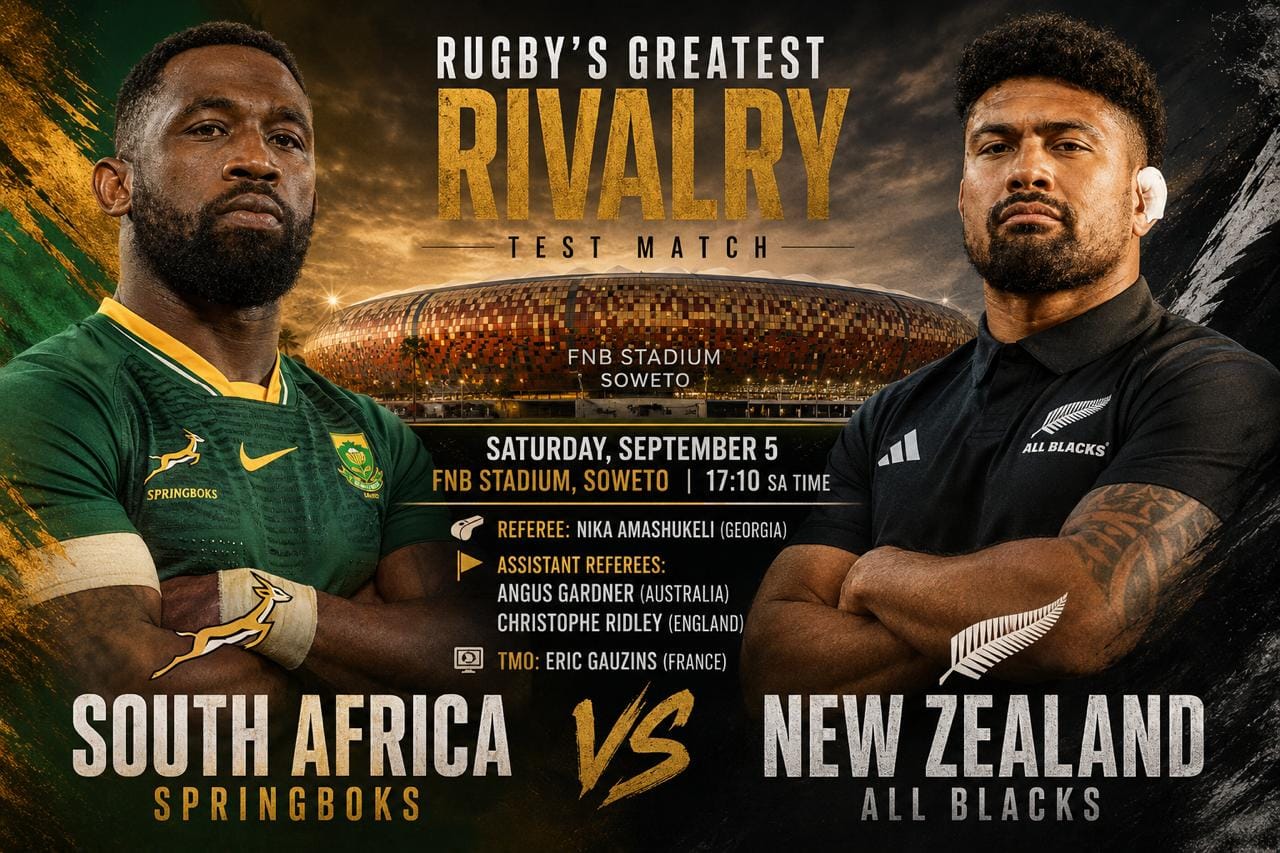
Saturday, September 5 | FNB Stadium, Soweto | 17:10 SA time

Referee: Nika Amashukeli (Georgia)
Assistant referees: Angus Gardner (Australia), Christophe Ridley (England)
TMO: Eric Gauzins (France)

Aimee’s whistle of resilience, courage and ‘Sterkte” to the Boks

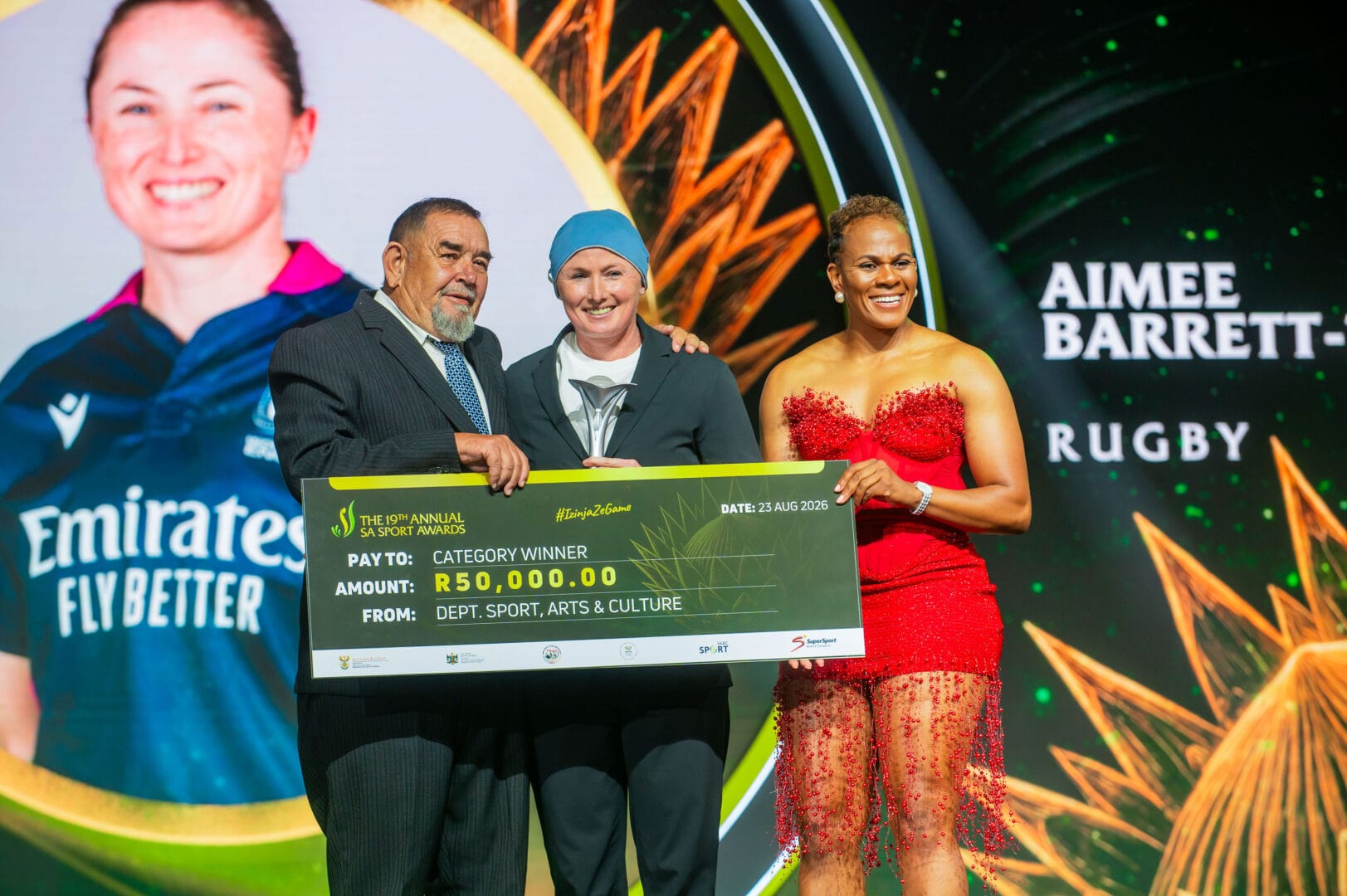
SUN CITY, NORTH WEST: From breaking barriers on the rugby field to facing breast cancer with extraordinary courage, Aimee Barrett-Theron continues to inspire. The most-capped female international referee in rugby history was named Technical Official of the Year at the South African Sport Awards. Her message to the Springboks ahead of their Cape Town clash with the All Blacks? “Sterkte.”

By Adnaan Mohamed

Aimee Barrett-Theron has spent years policing rugby’s most ferocious frontiers with a whistle, a stopwatch and nerves forged in the furnace of elite sport.

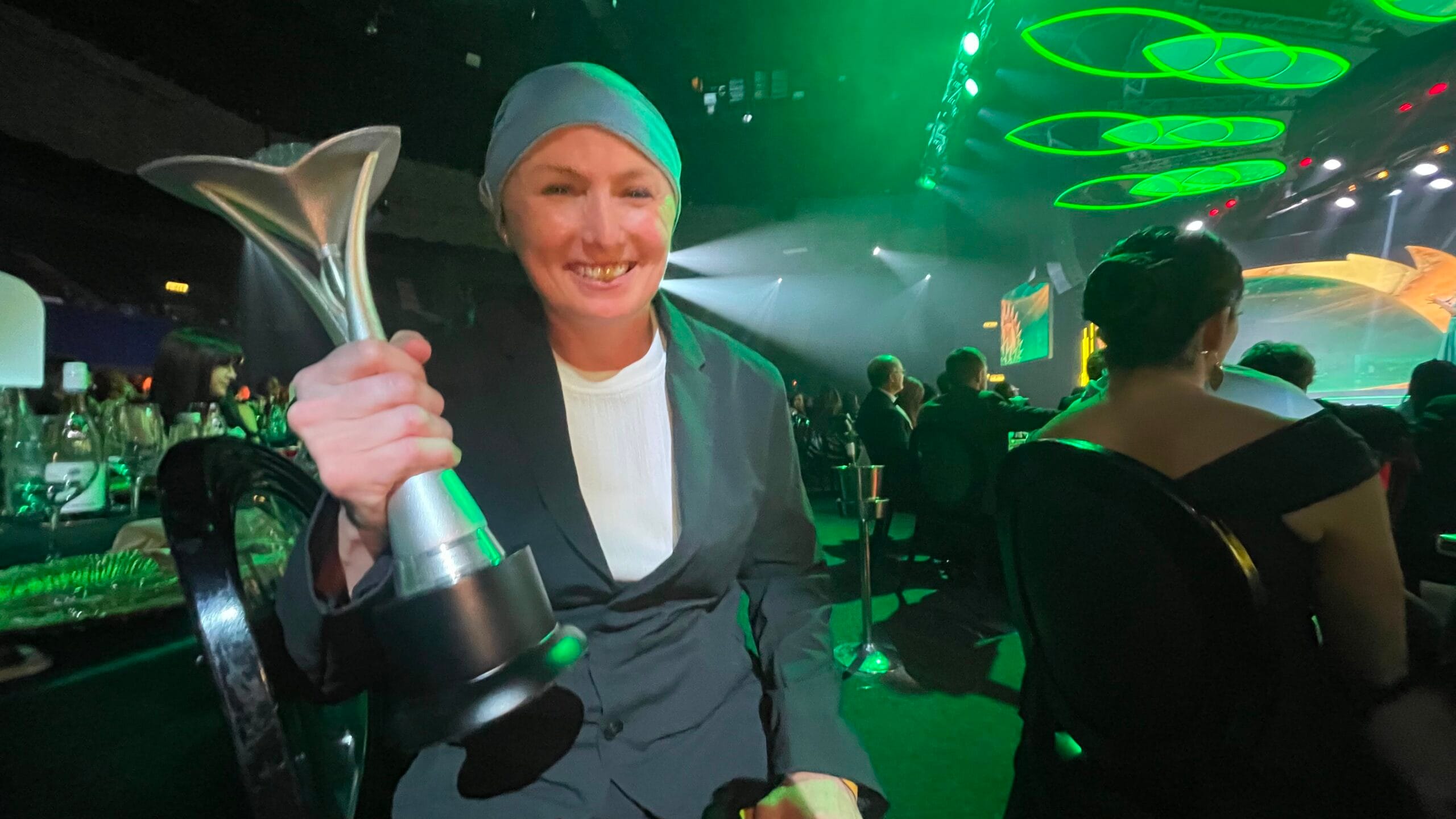
On Sunday night, 23 August, the trailblazing referee received another trophy for her extraordinary contribution, being named Technical Official of the Year at the 19th South African Sport Awards at Sun City Superbowl.

Her latest accolade came with an unmistakably human soundtrack. Barrett-Theron is halfway through treatment for breast cancer, temporarily away from the international rugby battlefield and drawing strength from the same discipline that carried her through some of the sport’s biggest arenas.

“The treatment’s going well. I’m about halfway through at the moment so it’s been quite a challenge not being on the field, but I’m still very much involved for coaching because I’m still very much involved here so it’s a tough time to be out there, but I’m still as supportive as I can,” she said.

The road back remains a marathon measured in courage rather than kilometres.

“Yeah, yeah, so a couple of tests and a lot of my friends out there referring I’d love to be supportive there but it’s 20% for the year,” Barrett-Theron said in the interview, reflecting on her curtailed involvement in officiating.

Her career has already smashed through several glass ceilings.

A former Springbok Women’s XVs and Sevens player, she swapped playing boots for the referee’s whistle and became the first woman to referee a men’s professional match in South Africa.

She has since taken charge of 52 international Tests, making her the most-capped female international referee in rugby history. Earlier in 2026, she became only the second woman ever to referee 50 Test matches.

Her CV reads like a roll of honour: the 2017 and 2025 Women’s Rugby World Cups, the Tokyo Olympics, the United Rugby Championship and the Women’s Six Nations.

Then came the diagnosis.

In July, Barrett-Theron announced her temporary departure from officiating after being diagnosed with breast cancer. She has confirmed the condition is treatable and is concentrating on treatment and recovery, with specialists guiding her through the process.

Rugby’s family responded with the force of a defensive line. World Rugby and SA Rugby leaders joined players, officials and supporters in sending messages of encouragement.

Her Sport Awards triumph added another medal to a career already heavy with milestones.

“It’s special to be able to get the trophy,” she said. “At the end of the day and to be recognised for the hard work that we put in”

Then came the question every South African wanted answered: could the Springboks beat the All Blacks at DHL Stadium on Saturday in the second Test of Rugby’s Greatest Rivalry?

For a moment, the referee’s hat came off.

“Yeah, when it comes to Springboks, I can take my referee hat off and I’d love the boys to have any positive results on the weekend.”

Her message to the Boks carried the warmth of a teammate standing beside the tunnel before kick-off.

“Yeah, just stack them on and good luck boys. Represents us the best you can. We know you’ve got it in you.”

And there was one final word, simple enough to fit on a dressing-room wall and strong enough to carry across the Cape Town wind:

“Sterkte.”

For Barrett-Theron, the whistle may be silent for now. Her voice remains firmly in the game.

South African sport has crowned her greatness. Rugby knows her resilience will be worth another standing ovation when she returns.

Under the glittering banner of “Crowned in Greatness”, the 19th South African Sport Awards delivered a night where champions, trailblazers and behind-the-scenes heroes took their bows.

Akani Simbine lead the winners at the 19th South African Sport Awards, with Prudence Sekgodiso, Pieter Coetze and Protea Test Cricket also honoured.

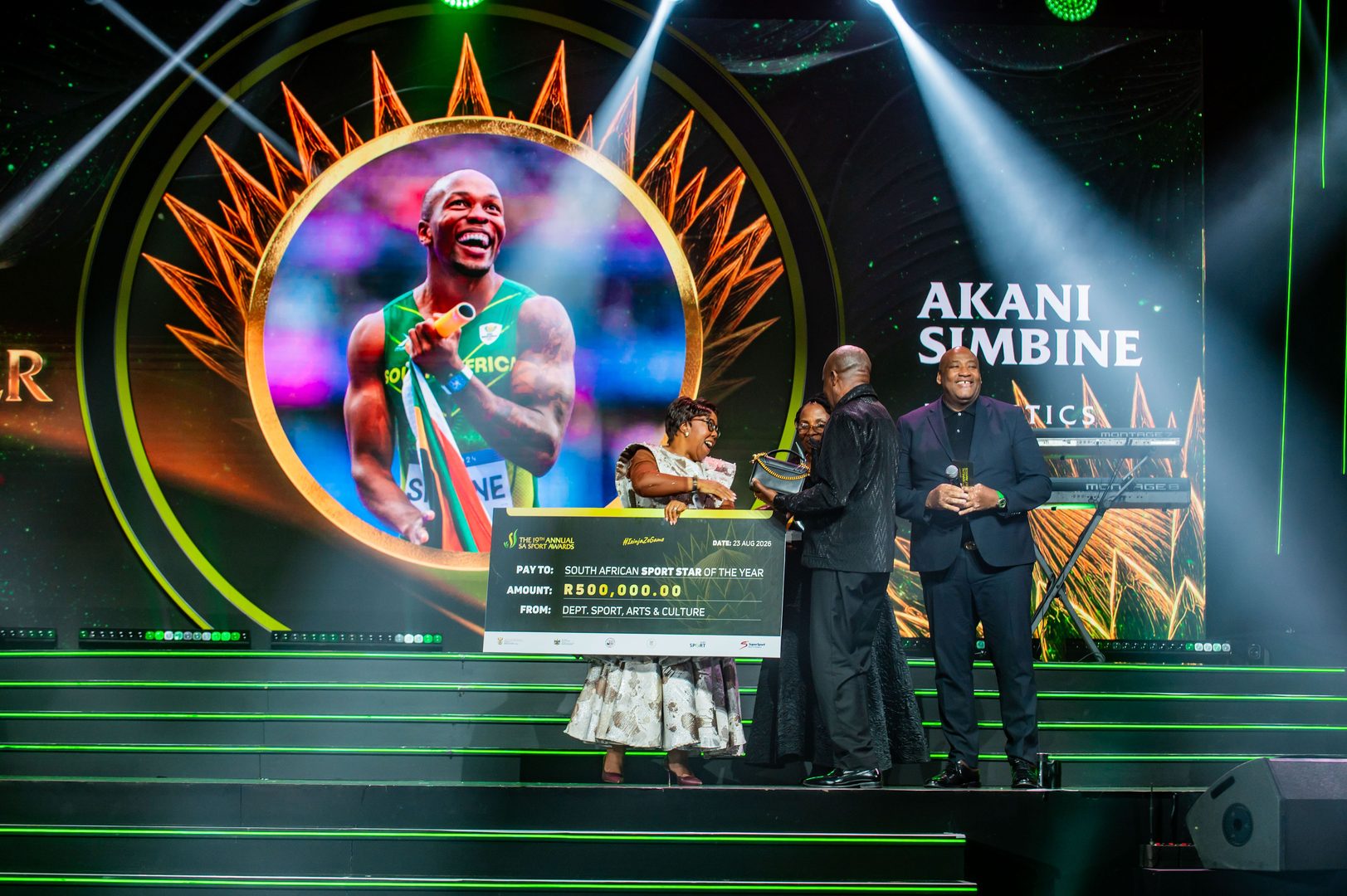
Simbine claimed Sport Star of the Year, adding another gleaming medal to an already formidable athletics legacy. The sprint king has spent years living on the razor’s edge of hundredths of a second, and this time the stopwatch gave way to the applause of a nation.

The Protea Men’s Test Cricket team pocketed Sport Team of the Year, another feather in Cricket South Africa’s cap after a campaign that demanded patience, character and plenty of backbone.

Prudence Sekgodiso was crowned Sportswoman of the Year, while swimmer Pieter Coetze took Sportsman of the Year. Athletics also supplied Coach of the Year Thabo Matebedi, ensuring the track-and-field brigade left Sun City with pockets bulging with silverware.

Young guns Bayanda Walaza, the Youth/Junior Sport Star of the Year, and the Men’s Under-20 Rugby Team, named Youth/Junior Sport Team of the Year, showed that the pipeline is pumping.

Bayanda Walaza, the Youth/Junior Sport Star of the Year with SA swim legend Chad le Clos

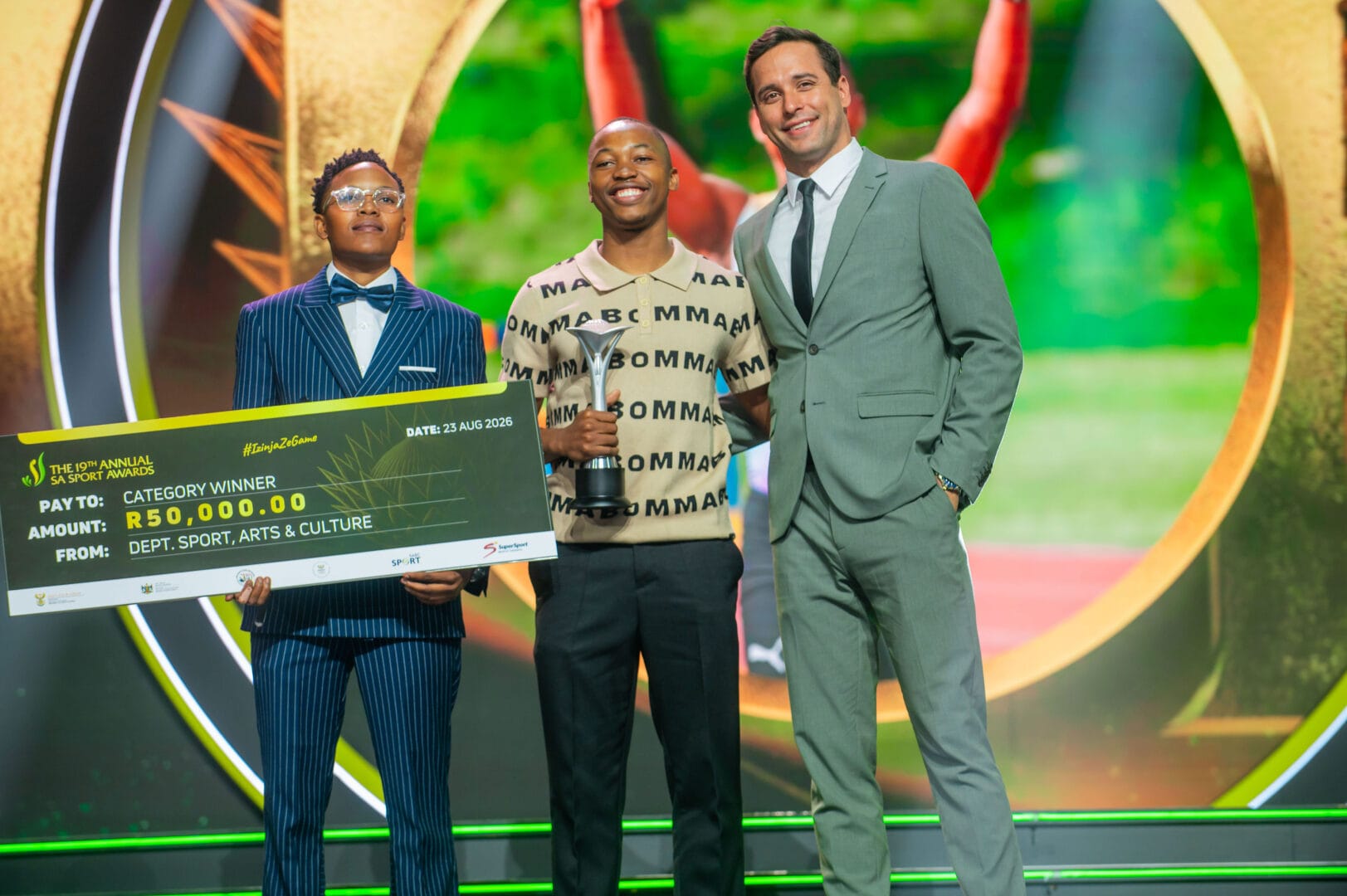
Simoné Kruger won Sportswoman of the Year with a Disability, while Puseletso Michael Mabote claimed Sportsman of the Year with a Disability for para athletics.

The evening’s unsung heroes received their own standing ovation. Anthony Moruthane was named Sport Administrator of the Year, Nqobile Kunene Sport Volunteer of the Year, and Khokho Association South Africa Recreation Body of the Year.

Cricket South Africa collected National Federation of the Year, while Rachel Makhura took Sports Media Journalist of the Year, with photographer Skhu Nkomphela winning Sport Visual Journalist of the Year.

And then came the lifetime tributes, a reminder that sporting greatness is built over generations. Siya Vabaza-Booi, Selwyn Nathan and Veli Nhlapo received the Steve Tshwete Lifetime Achievement honour.

The Andrew Mlangeni Green Jacket went to William Mtolo, Teenage Dladla, Prof. Mlungisi Ngubane and Patson Banda, while Rayno Nel, Tasneem Solomons and Temba Bavuma were recognised for Excellence.

It was a night when South African sport looked in the mirror and saw its past, present and future staring back.

The crown fitted. The champions roared. And the sporting heartbeat kept thumping.

All Blacks turn up volume ahead of first RGR Springboks Test

By Adnaan Mohamed

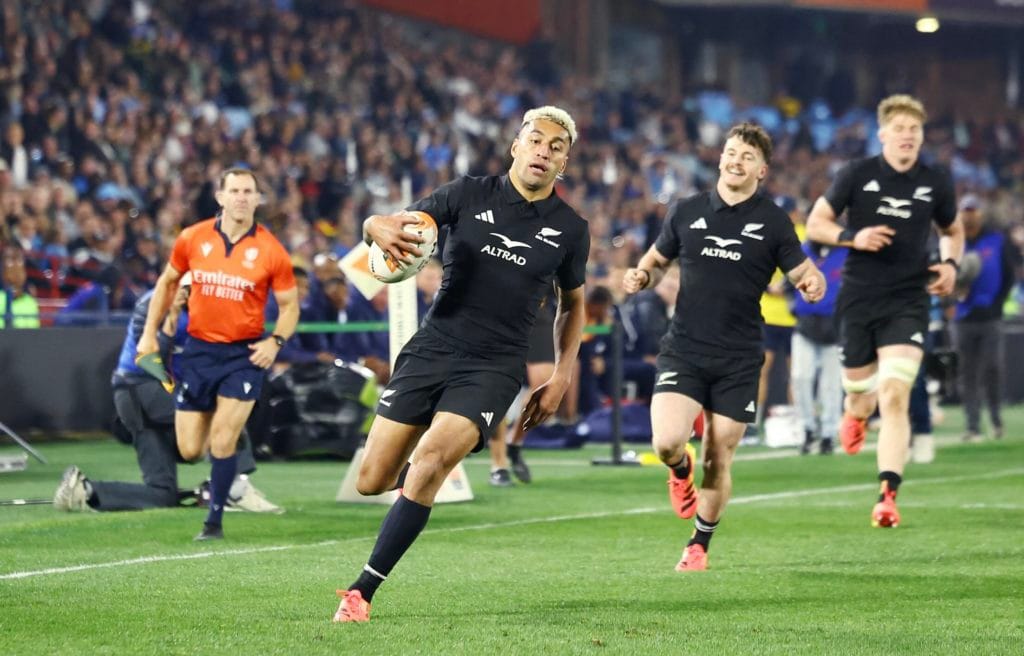
The All Blacks have turned up the volume ahead of Rugby’s Greatest Rivalry (RGR), with the Bulls bearing the brunt of a 50-19 demolition at Loftus Versfeld.

New Zealand ran in eight tries in Pretoria on Saturday, producing their most complete performance of the South African tour to date and finishing their provincial warm-ups unbeaten.

It was a statement built on scrum power, breakdown brutality and attacking freedom. Josh Moorby, Leroy Carter and captain Codie Taylor all crossed twice as the All Blacks raced into a 24-0 halftime lead.

The Bulls eventually found some life, scoring three tries, yet New Zealand kept the scoreboard ticking like a taxi meter on a busy Saturday night.

For Dave Rennie, the performance offered useful clues ahead of next Saturday’s first Test against the Springboks in Johannesburg.

“50 points against a very good Bulls side is a positive,” Rennie said.

“We played a team that was prepared to play and really took it to us. I thought our set piece was strong, especially the scrum.”

The All Blacks created 11 line breaks to the Bulls’ one and showed improved discipline, giving Rennie plenty of selection headaches with his Test squad now taking shape.

“That certainly wasn’t our Test side tonight, and so there will be a number of changes,” he said.

“There were some really good performances that will put pressure on us from a selection point of view.”

Rennie also knows the Bulls were not a Test-strength opponent. The Pretoria side had not played since June and had limited preparation following their URC final appearance.

That reality explains why Rennie was quick to sound the brakes on the victory parade.

“What we know is that the intensity levels and the quality we’re going to come up against next week are three, four, or fivefolds, but we’ve played reasonably well on tour, and we know we need to up the ante.”

The All Blacks could welcome back Will Jordan and Cam Roigard, who have progressed from their respective injuries. Damian McKenzie remains a concern with an ankle problem, while Rennie hopes he can train on Tuesday.

New Zealand captain Codie Taylor delivered his own warning.

“No disrespect to the Bulls but they [the Springboks] will lift the tempo and physicality. That’s what Test match footy is all about. It’s an exciting week ahead.”

Loftus was the dress rehearsal. Ellis Park is where the curtain rises.

And the Boks have heard the warning bell.

Springboks boosted by returning stars ahead of Los Pumas showdown

By Adnaan Mohamed

The Springboks have arrived in Buenos Aires with several frontline players returning from injury as preparations intensify for Saturday’s Rugby Championship Test against Argentina at Estadio José Amalfitani.

Head coach Rassie Erasmus‘ squad reached the Argentine capital shortly after midnight on Sunday after travelling from Cape Town via São Paulo in two groups. The players will rest on Sunday before resuming training on Monday as they acclimatise to the time difference ahead of the Test.

The Argentina fixture is another important step in South Africa’s season before the four-match Rugby’s Greatest Rivalry series against New Zealand begins on 22 August.

“It’s great to be back in Buenos Aires, and we are looking forward to the challenge of facing the Pumas here once again,” Erasmus said.

“It was a long journey, and there is a fair time difference between the countries, so the players will have time to rest and acclimatise today, and then we’ll return to the training field tomorrow.

“Fortunately, we did most of the groundwork for the match at our training camp in Johannesburg earlier this week, so we have a good base to build on in the next few days.”

The biggest boost for South Africa is the return of flyhalf Sacha Feinberg-Mngomezulu after ankle surgery.

The 24-year-old has not played since suffering the injury during a United Rugby Championship match in May. His inclusion follows a standout performance against Argentina last season when he scored a Springbok record 37 points in Durban.

Erasmus now has four experienced flyhalves available, with Feinberg-Mngomezulu joining Handre Pollard, Manie Libbok and recent debutant Vusi Moyo.

Captain Siya Kolisi, locks Eben Etzebeth and Lood de Jager, together with scrumhalf Morne van den Berg, are also in line to make their first appearances of the season after recovering from injury or concussion.

“We tried to get the balance right in selecting some guys who are returning from injury and who have not had too much game time,” Erasmus said.

“The guys who have recovered from their injuries have been training hard this week and are ready to go, so it will be great for them to get a tough Test match under the belt.”

Several senior players, including Jesse Kriel and Pieter-Steph du Toit, remain in South Africa after featuring in three Tests across 15 days during July. They have resumed preparations for the upcoming New Zealand series.

“We are on track in terms of our preparation for both this match and the New Zealand Tour,” Erasmus said.

South Africa heads into the match in strong form after opening the season with an 80-31 victory over the Barbarians before recording Nations Championship wins over England (45-21), Scotland (42-28) and Wales (43-0).

Argentina’s campaign has been less consistent. Los Pumas defeated Wales 35-21, although they suffered defeats to Scotland and England.

History also favours the Springboks. South Africa has won 14 of its 18 Tests in Argentina since the nations first met there in 1993, losing three and drawing one.

Erasmus is expected to consult with his coaching staff before confirming the matchday squad later this week.

Springbok squad

Forwards: Lood de Jager, Ben-Jason Dixon, Thomas du Toit, Eben Etzebeth, Johan Grobbelaar, Cameron Hanekom, Siya Kolisi (captain), Elrigh Louw, Wilco Louw, Zachary Porthen, Gerhard Steenekamp, Marco van Staden, Boan Venter, Jan-Hendrik Wessels, Cobus Wiese.

Backs: Andre Esterhuizen, Aphelele Fassi, Sacha Feinberg-Mngomezulu, Ethan Hooker, Quan Horn, Herchel Jantjies, Canan Moodie, Handre Pollard, Cobus Reinach, Morne van den Berg, Edwill van der Merwe.

Coach: Rassie Erasmus.

Stormers’ War Dog ready to bite bigger

By Adnaan Mohamed

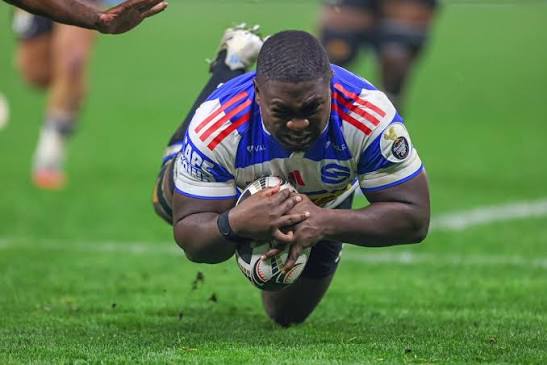
Every rugby team has a heartbeat. Some have a battering ram. The DHL Stormers may have found both wrapped into one compact, relentless hooker who happily answers to one unforgettable nickname. Meet Vernon Paulo. “War Dog.”

It is a label that refuses to loosen its grip, following the 25-year-old from Oakdale, through Bloemfontein, and now into the blue jersey he dreamed of wearing as a boy growing up in Riversdale.

The nickname sounds fierce enough to fill a front row on reputation alone. Paulo smiles at the story behind it.

“I think it comes more from the mobility on the field, actually being always available on attacking options or even on defence. So that’s actually basically where it started. I’m a running dog on the field, then I think that’s where it benefits my game as a player.”

The explanation says as much about his personality as his rugby. Paulo is less interested in barking than chasing. Like a distance runner refusing to see the finish line, he keeps circling back into the contest, hunting carries, tackles and support lines with tireless appetite.

That engine has already begun paying dividends.

Having joined the Stormers earlier this year after making his name with the Toyota Cheetahs, Paulo announced himself with a try on his Stormers XXIII Currie Cup debut against defending champions Griquas at DHL Stadium.

The score grabbed headlines. His mindset deserves equal attention.

“I think it was a lot of excitement being here. Playing rugby here is a massive privilege. You want to make the jersey proud and make the players, team and coaches proud around you. You focus on your job and being good in what you have to do.”

There is no chest-thumping. No grand declarations. The War Dog motif is carried with quiet purpose rather than theatrical growling.

His greatest dream has already become reality.

“As a small boy, if you stay in the Western Cape, it’s a dream to play for the Stormers. Most of my childhood role models came out of the Stormers team. When I got the call, it was like a dream come true. Now I’m living that dream and I have to make the best of it.”

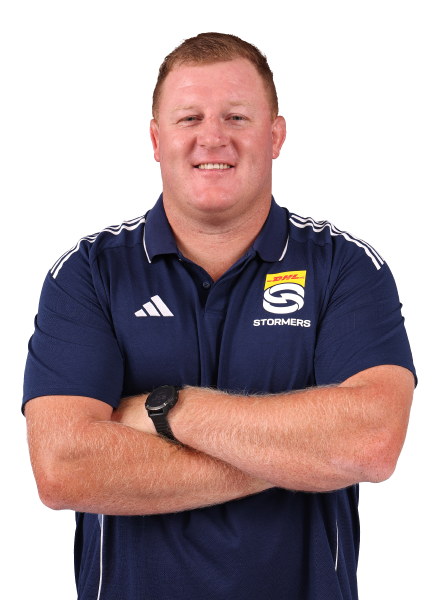
Stormers assistant coach Helmut Lehmann believes Paulo belongs in a forward pack discovering its own identity.

Stormers XXIII assistant coach Helmut Lehmann Photo: Stormers.com

“The last four, five, six weeks we’ve really improved a lot. Most importantly it’s getting everybody aligned with the Stormers way.”

Lehmann also praised the group’s resilience after surviving an error-filled opening victory.

“There was a lot of fight, a lot of character from the guys.”

That fighting spirit mirrors Paulo’s own rugby DNA.

He knows tougher examinations await, beginning with a hostile trip to Boland on Sunday where packed stands in Wellington often roar like a restless ocean crashing against the touchline.

“We know there will be noise, we know there will be pressure, but it’s more about us focusing on our process and what we want to deliver.”

The War Dog understands something every great hooker eventually learns.

Nicknames may win smiles.

Consistency earns selection.

“If the call comes, I’ll be ready, but for now this moment is to serve the team where I’m at.”

For Vernon Paulo, serving the team has become the loudest growl of all.

IMAGES: X.COM/STORMERS

Eight years later, Papier gets his Scottish sequel

There are few better storytellers than rugby. Eight years after making his first Springbok start against Scotland on a wet Murrayfield evening, Embrose Papier is preparing to face the same opponents again. This time, the stage is Loftus Versfeld. The jersey still carries the same weight. The man wearing it has changed completely.

The Clanwilliam-born scrumhalf returns to the Springbok starting line-up carrying far more than seven Test caps. He brings eight seasons of perseverance, frustration and relentless self-belief after watching South Africa conquer the rugby world from the outside.

When Papier burst onto the international scene in 2018 as a fearless 21-year-old, he appeared destined to become the Boks’ long-term No 9. Rugby, however, had other ideas.

A conveyor belt of elite scrumhalves, including Faf de Klerk, Cobus Reinach and Jaden Hendrikse, kept the Bulls playmaker waiting while the Springboks collected back-to-back Rugby World Cup titles.

Instead of fading into the background, Papier rebuilt his game.

His outstanding United Rugby Championship campaign left Rassie Erasmus with little choice. Twelve tries, six assists, 15 clean breaks, 27 defenders beaten and more than 500 metres gained transformed him from an outside contender into an irresistible selection.

The timing could hardly be more fitting.

Papier will reunite with Handre Pollard, his halfback partner on that memorable Murrayfield night when South Africa defeated Scotland 26-20.

Handre Pollard and Embrose Papier will start for the Boks against Scotland again on Saturday at Loftus after eight years. Photo: Springboks

“I think there are always nerves before a Test match, but I’m super excited for the opportunity,” Papier said this week.

We all know Handre has a lot of experience. We’ve spent a lot of time together on the pitch and I’m excited to go into this game with him.

“We need to pitch up on the day and give it everything.”

His familiarity with Scotland stretches beyond international rugby.

After five United Rugby Championship seasons with the Bulls, Papier knows many of Scotland’s players through bruising encounters with Glasgow Warriors and Edinburgh. He even crossed for a crucial try against Glasgow in last season’s URC semi-final.

For Erasmus, the recall is built on form rather than sentiment.

“Firstly, I thought he played really well this season,” the Springbok coach said.

“Sometimes it’s not because the player is not playing well enough or is not Springbok class. There are other players performing really well.

“He gathered form and now gets the opportunity at home with Handre, where they’ve played a lot of rugby.”

Paper occasionally writes the perfect ending.

Papier still has to do that himself.

Saturday offers more than another Test appearance. It is an opportunity to show that careers are rarely defined by the doors that close, but by the courage to keep knocking until one opens again.

Images: x.com/springboks

Springbok coaches welcome wins but identify key areas for improvement

By Adnaan Mohamed

The scoreboards at Nelson Mandela Bay Stadium painted a picture of dominance on Saturday, but Springbok coach Rassie Erasmus and SA A coach Mzwandile Stick were far more interested in the details hidden beneath the numbers.

The Springboks opened their season with an emphatic 80-31 victory over the Barbarians, while SA A brushed aside Zimbabwe 40-0. Despite the convincing results, both coaches identified areas requiring urgent attention before the Nations Championship begins in two weeks.

Erasmus praised the Springboks’ attacking output but admitted their discipline and defensive consistency left room for improvement.

“Our discipline wasn’t great, and they (the Barbarians) scored tries in quick succession, so yellow cards were not ideal,” said Erasmus.

The Bok coach pointed to the realities of a squad reconnecting after several months apart.

“But we have to remind ourselves that it’s been six or seven months since we’ve played together, and some guys were new in the mix, while we also didn’t know when the DHL Stormers or Vodacom Bulls players would be available at some stage, which are all aspects we have to keep in mind.

“To score 80 points is nice, but the Barbarians were thrown together quite late, and had only three training sessions, which makes them difficult to analyse. They scored four or five great tries, so we need to eliminate those defensive lapses and be better as a unit when we play against England.”

One concern for Erasmus was the injury suffered by experienced lock Franco Mostert, who was forced from the field.

“I’m worried about his ankle. He’ll go for scans tomorrow, so hopefully it’s not too bad.”

Springbok captain Siya Kolisi echoed his coach’s assessment, saying the match provided valuable evidence of what is working and what still needs attention.

“I thought a lot of what we wanted to get through, we did, but also, when things didn’t work, and we went against the plan, we learned lessons there,” said Kolisi.

“I always have to watch the game again to get a good assessment about things, but I already know some of the mistakes we made and the areas we need to fix. There were opportunities where I thought we could have controlled things better.”

Earlier in the day, SA A delivered a disciplined defensive display against a determined Zimbabwe side preparing for the 2027 Rugby World Cup in Australia.

Stick admitted the performance was not without frustration despite the clean-sheet victory.

“We knew it was going to be a big challenge because the majority of our players have never played together, so it was a new team, and Zimbabwe tried to challenge us by keeping ball in hand and playing direct rugby. I enjoyed the way they played.

“That said, for us, the goal was to see whether the players could execute what we’ve been working on over the past two weeks, and it was sometimes frustrating when the points weren’t coming.

“In the first half, we were unlucky, with two tries disallowed – once where a player went into touch, and another when a player was slightly in front of the kick. But from my side, the way the guys stayed in the fight, even when we were under pressure, was great, and we managed to keep a clean sheet.”

SA A captain Vincent Tshituka paid tribute to Zimbabwe’s intensity and ambition.

“We played against a desperate side, and we expected that. We knew the Zimbabwe players would be motivated and would want to prove a point against world-class opposition, and it showed.”

South Africa’s opening victories delivered plenty of encouragement. Erasmus and Stick know tougher examinations await, and both coaches left Gqeberha with a notebook full of positives and a to-do list that remains far from complete.

Images: X.com/Springboks

Rassie reveals Springbok rookie revolution

By Adnaan Mohamed

Springbok coach Rassie Erasmus has never been shy about planning several moves ahead. His latest squad announcement, featuring 21 uncapped players among a 51-man training group for the Gqeberha double-header later this month, offers another glimpse into how South Africa intends to sustain its dominance beyond the current generation.

Among the newcomers, the inclusion of DHL Stormers backs Yaqeen Ahmed and Imad Khan stands out as more than a reward for impressive domestic performances. It is a reflection of South Africa’s determination to broaden its depth in two of the most influential positions on the field.

Ahmed, capable of operating at flyhalf and centre, and scrumhalf Khan are among a youthful contingent called into the national setup ahead of the Springboks’ clash against the Barbarians and the SA ‘A’ fixture against Zimbabwe on 20 June.

Their elevation comes at a significant moment.

With star playmaker Sacha Feinberg-Mngomezulu and scrumhalf Morne van den Berg sidelined through injury, Erasmus has been presented with an opportunity to accelerate the development of players who could feature prominently in future Springbok campaigns.

The injuries have not created vacancies so much as opportunities.

Ahmed’s selection is particularly intriguing. The highly rated Stormers playmaker has long been regarded as one of the country’s most promising attacking talents, combining tactical awareness with the versatility modern international rugby increasingly demands. His ability to cover multiple backline positions makes him a valuable asset in a Springbok environment where adaptability is prized almost as highly as raw talent.

Khan’s call-up carries similar strategic importance. South Africa’s production line of scrumhalves remains one of the healthiest in world rugby, yet Erasmus continues to search for greater depth at a position that often dictates the tempo of a match. Khan joins fellow uncapped scrumhalves Haashim Pead and Nico Steyn in a competitive group that offers selectors an opportunity to assess emerging talent in a high-performance environment.

The Stormers pair form part of a broader youth movement that includes SA Under-20 players Danie Kruger, Luan Giliomee, Vusi Moyo, Oliver Reid, Liam van Wyk, Junior Springbok captain Riley Norton, Siphosethu Mnebelele, Markus Muller and Zekhethelo Siyaya. All were previously involved in the expanded Springbok alignment camp programme.

The remaining uncapped players are Paul de Villiers, Bathobele Hlekani, Hanro Jacobs, Jurenzo Julius, JJ Kotze, Sibabalwa Mahashe, Emmanuel Tshituka and Jaco Williams.

The composition of the squad has also been shaped by circumstance. Vodacom Bulls players were unavailable after securing a place in the United Rugby Championship final against Leinster, opening the door for several younger prospects to gain exposure to the national environment.

For Erasmus, however, the exercise extends beyond short-term availability.

“We named a large group of players as we will be selecting a Springbok and SA ‘A’ team for the season-opening double-header in Gqeberha, and this will be beneficial in the long term as we build the squad, looking forward to next year’s Rugby World Cup and beyond,” he said.

“There is also an exciting mix of experienced campaigners and young players in this squad, and this formula has worked well for us in the past to ensure a clear pathway to build depth within the group.”

The Springbok coach believes the alignment camps held over recent months have prepared many of the newcomers for the demands awaiting them.

“The coaches have been working around the clock to put the systems in place in the last few months, and the in-person and virtual alignment camps have given most of the players a taste of what to expect, so it’s now a matter of implementing what they learned in the boardroom onto the field.”

Erasmus also highlighted the demanding season ahead.

“We are under no illusions about the challenge ahead this season with two matches against the Barbarians and the SA ‘A’ team against Zimbabwe playing out on the same day, which will be followed by two new competitions in the Nations Championship and Rugby’s Greatest Rivalry, so it will be important for the group to build cohesion as quickly as possible and make the most of our field sessions and team meetings to be as well prepared as possible when we take the field.”

For Ahmed and Khan, the call-up is not a destination. It is an invitation into one of the most competitive environments in world rugby. Whether either player features prominently in the months ahead remains uncertain.

What is clear is that Erasmus is already looking beyond the next Test, the next tournament and even the next season. The world champions are building depth with the same diligence that won them consecutive World Cups, and Ahmed and Khan are the latest names added to that long-term blueprint.

Springbok squad (in alphabetical order):

Forwards: Lood de Jager (Wild Knights), Paul de Villiers (DHL Stormers), Ben-Jason Dixon (DHL Stormers), Pieter-Steph du Toit (Toyota Verblitz), Eben Etzebeth (Hollywoodbets Sharks), Neethling Fouche (DHL Stormers), Bathobele Hlekani (Fidelity Securedrive Lions), Hanro Jacobs (Hollywoodbets Sharks), Vincent Koch (Hollywoodbets Sharks), Siya Kolisi (Hollywoodbets Sharks), JJ Kotze (DHL Stormers), Danie Kruger (DHL Stormers), Sibabalwa Mahashe (Fidelity Securedrive Lions), Malcolm Marx (Kubota Spears), Ntuthuko Mchunu (DHL Stormers), Siphosethu Mnebelele (Vodacom Bulls), Salmaan Moerat (DHL Stormers), Franco Mostert (Honda Heat), Ox Nche (Hollywoodbets Sharks), Riley Norton (DHL Stormers), Zachary Porthen (DHL Stormers), Oliver Reid (DHL Stormers), Evan Roos (DHL Stormers), Emmanuel Tshituka (Hollywoodbets Sharks), Vincent Tshituka (Hollywoodbets Sharks), Liam van Wyk (Hollywoodbets Sharks), Andre-Hugo Venter (DHL Stormers), Boan Venter (Edinburgh), Jasper Wiese (Urayasu D-Rocks).

Backs: Yaqeen Ahmed (DHL Stormers) Lukhanyo Am (DynaBoars), Damian de Allende (Wild Knights), Faf de Klerk (Canon Eagles), Andre Esterhuizen (Hollywoodbets Sharks), Aphelele Fassi (Hollywoodbets Sharks), Luan Giliomee (Hollywoodbets Sharks), Quan Horn (Fidelity Securedrive Lions), Jurenzo Julius (Hollywoodbets Sharks), Imad Khan (DHL Stormers), Cheslin Kolbe (Tokyo Sungoliath), Jesse Kriel (Canon Eagles), Manie Libbok (Kintetsu Liners), Vusi Moyo (Hollywoodbets Sharks), Markus Muller (DHL Stormers), Haashim Pead (Fidelity Securedrive Lions), Zekhethelo Siyaya (Hollywoodbets Sharks), Nico Steyn (Fidelity Securedrive Lions), Edwill van der Merwe (Hollywoodbets Sharks), Damian Willemse (DHL Stormers), Grant Williams (Hollywoodbets Sharks), Jaco Williams (Hollywoodbets Sharks).

Bulls and Stormers secure home URC playoffs as Lions limp into quarters

By Adnaan Mohamed

The Vodacom United Rugby Championship (URC) playoffs will feature three South African teams after a dramatic final round delivered a cocktail of celebration and frustration for the country’s franchises.

The Vodacom Bulls and DHL Stormers earned prized home URC quarter-finals with emphatic statements in Pretoria and despite defeat in Cardiff respectively, while the Fidelity SecureDrive Lions scraped into the playoffs after stumbling in Limerick. The Hollywoodbets Sharks ended their campaign with a fireworks display in Durban.

The Bulls charged like a runaway scrum at Loftus Versfeld, flattening Benetton Rugby 45-19 to secure fourth place and a home quarter-final against Munster Rugby. Johan Ackermann’s men crossed for seven tries and stretched their winning streak to six matches.

Sergeal Petersen bagged a brace, while Willie le Roux, Johan Grobbelaar, Cobus Wiese, Celimpilo Gumede and Ruan Nortje also powered over. Handre Pollard added five conversions with the precision of a metronome steering a backline orchestra.

Benetton’s resistance came through Louis Lynagh’s double and a try by Rhyno Smith, though the visitors spent most of the evening chasing shadows across the Highveld turf.

In Wales, Cardiff slammed the brakes on the Stormers’ hopes of a top-two finish with a gritty 22-16 victory at Cardiff Arms Park. The Cape side burst from the blocks like sprinters off the starter’s gun, but Cardiff’s defence became a brick wall around the tryline.

Adre Smith scored early for the Stormers, while Sacha Feinberg-Mngomezulu added a conversion and three penalties. Cardiff struck through Jacob Beetham’s brace, Tom Bowen and Ioan Lloyd to seal a quarter-final rematch in Cape Town.

The Lions, meanwhile, slipped to a 24-17 defeat against Munster in Limerick, leaving them with the daunting challenge of facing defending champions Leinster Rugby in Dublin.

Down in Durban, the Sharks signed off in style by crushing Zebre Parma 54-19. Siya Kolisi produced a captain’s farewell worthy of a stadium ovation with two tries, while Jaco Williams, Zekethelo Siyaya, Vusi Moyo, Emmanuel Tshituka, Le Roux Malan and Ross Braude also crossed the whitewash.

The result secured 10th place for the Sharks and offered a glimpse of a side beginning to sharpen its claws for future campaigns.

Vodacom URC quarter-finals

Friday, 29 May
Glasgow Warriors v Connacht – Scotstoun Stadium, Glasgow (20:45 SA time)

Saturday, 30 May
Vodacom Bulls v Munster – Loftus Versfeld, Pretoria (13:00)
DHL Stormers v Cardiff – DHL Stadium, Cape Town (15:30)
Leinster v Fidelity SecureDrive Lions – Aviva Stadium, Dublin (21:00)