

Aimee’s whistle of resilience, courage and ‘Sterkte” to the Boks

SUN CITY, NORTH WEST: From breaking barriers on the rugby field to facing breast cancer with extraordinary courage, Aimee Barrett-Theron continues to inspire. The most-capped female international referee in rugby history was named Technical Official of the Year at the South African Sport Awards. Her message to the Springboks ahead of their Cape Town clash with the All Blacks? “Sterkte.”

By Adnaan Mohamed

Aimee Barrett-Theron has spent years policing rugby’s most ferocious frontiers with a whistle, a stopwatch and nerves forged in the furnace of elite sport.

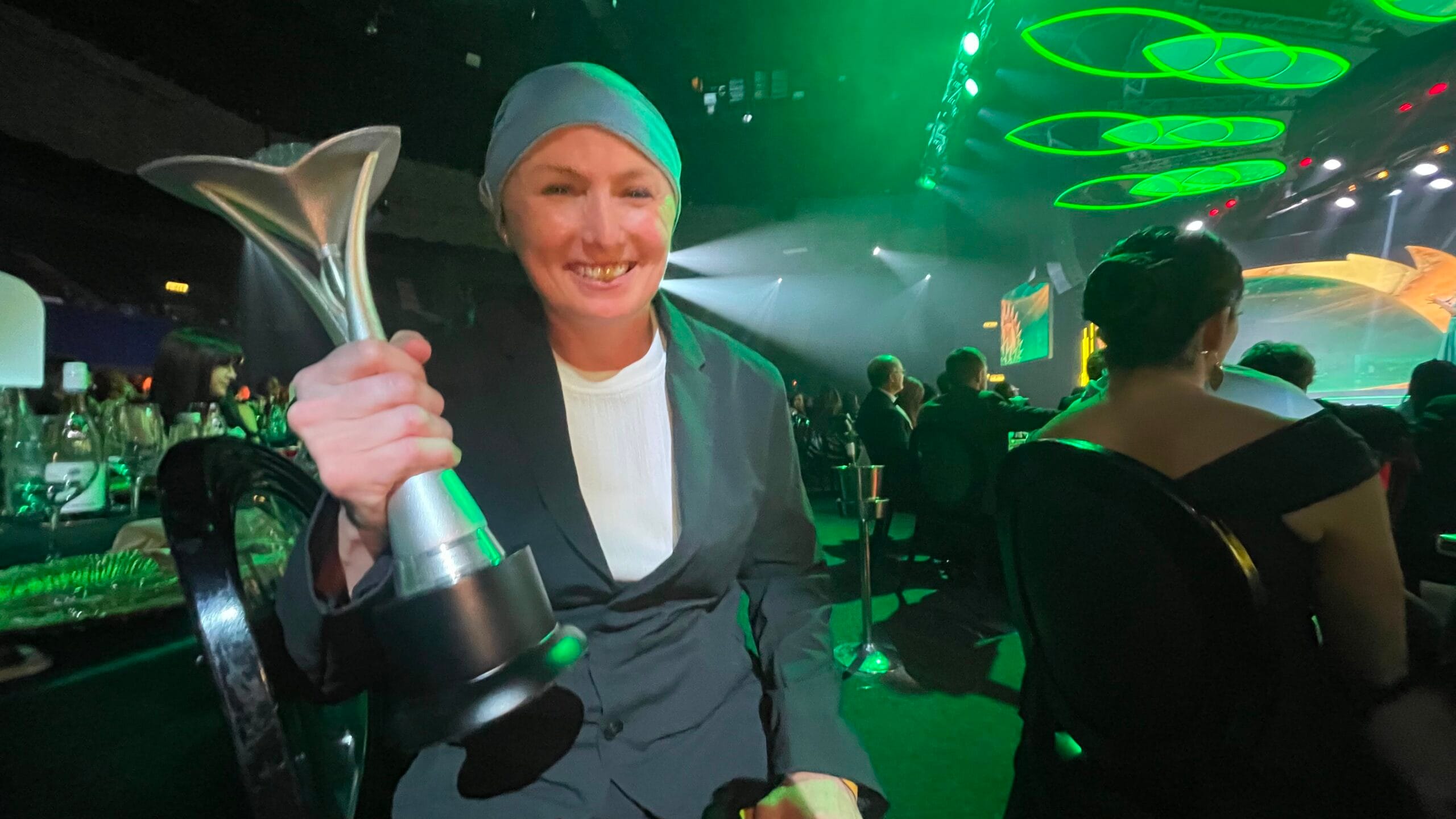
On Sunday night, 23 August, the trailblazing referee received another trophy for her extraordinary contribution, being named Technical Official of the Year at the 19th South African Sport Awards at Sun City Superbowl.

Her latest accolade came with an unmistakably human soundtrack. Barrett-Theron is halfway through treatment for breast cancer, temporarily away from the international rugby battlefield and drawing strength from the same discipline that carried her through some of the sport’s biggest arenas.

“The treatment’s going well. I’m about halfway through at the moment so it’s been quite a challenge not being on the field, but I’m still very much involved for coaching because I’m still very much involved here so it’s a tough time to be out there, but I’m still as supportive as I can,” she said.

The road back remains a marathon measured in courage rather than kilometres.

“Yeah, yeah, so a couple of tests and a lot of my friends out there referring I’d love to be supportive there but it’s 20% for the year,” Barrett-Theron said in the interview, reflecting on her curtailed involvement in officiating.

Her career has already smashed through several glass ceilings.

A former Springbok Women’s XVs and Sevens player, she swapped playing boots for the referee’s whistle and became the first woman to referee a men’s professional match in South Africa.
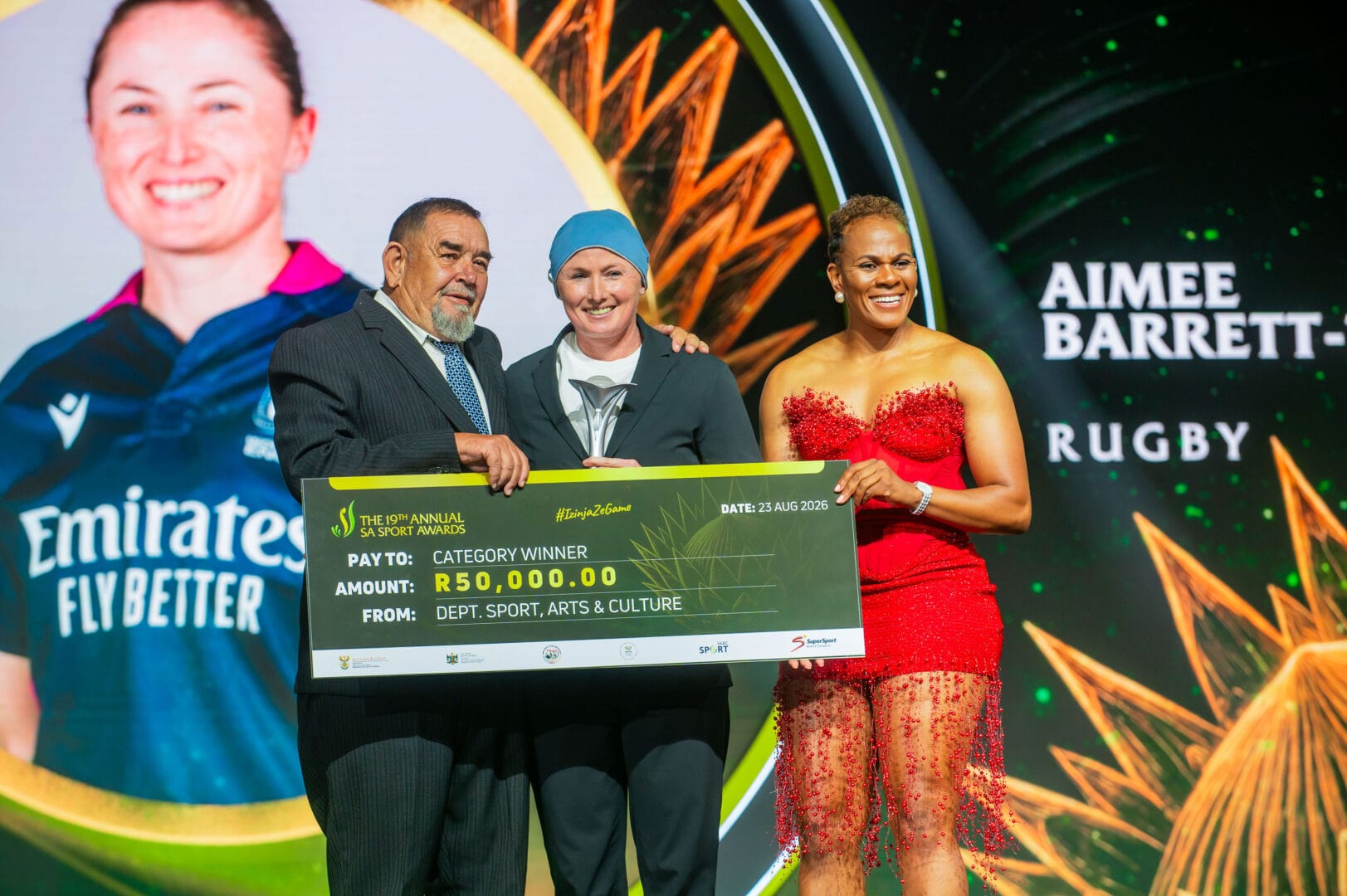
She has since taken charge of 52 international Tests, making her the most-capped female international referee in rugby history. Earlier in 2026, she became only the second woman ever to referee 50 Test matches.

Her CV reads like a roll of honour: the 2017 and 2025 Women’s Rugby World Cups, the Tokyo Olympics, the United Rugby Championship and the Women’s Six Nations.

Then came the diagnosis.

In July, Barrett-Theron announced her temporary departure from officiating after being diagnosed with breast cancer. She has confirmed the condition is treatable and is concentrating on treatment and recovery, with specialists guiding her through the process.

Rugby’s family responded with the force of a defensive line. World Rugby and SA Rugby leaders joined players, officials and supporters in sending messages of encouragement.

Her Sport Awards triumph added another medal to a career already heavy with milestones.

“It’s special to be able to get the trophy,” she said. “At the end of the day and to be recognised for the hard work that we put in”

Then came the question every South African wanted answered: could the Springboks beat the All Blacks at DHL Stadium on Saturday in the second Test of Rugby’s Greatest Rivalry?

For a moment, the referee’s hat came off.

“Yeah, when it comes to Springboks, I can take my referee hat off and I’d love the boys to have any positive results on the weekend.”

Her message to the Boks carried the warmth of a teammate standing beside the tunnel before kick-off.

“Yeah, just stack them on and good luck boys. Represents us the best you can. We know you’ve got it in you.”

And there was one final word, simple enough to fit on a dressing-room wall and strong enough to carry across the Cape Town wind:

“Sterkte.”

For Barrett-Theron, the whistle may be silent for now. Her voice remains firmly in the game.

South African sport has crowned her greatness. Rugby knows her resilience will be worth another standing ovation when she returns.

Under the glittering banner of “Crowned in Greatness”, the 19th South African Sport Awards delivered a night where champions, trailblazers and behind-the-scenes heroes took their bows.

Akani Simbine lead the winners at the 19th South African Sport Awards, with Prudence Sekgodiso, Pieter Coetze and Protea Test Cricket also honoured.
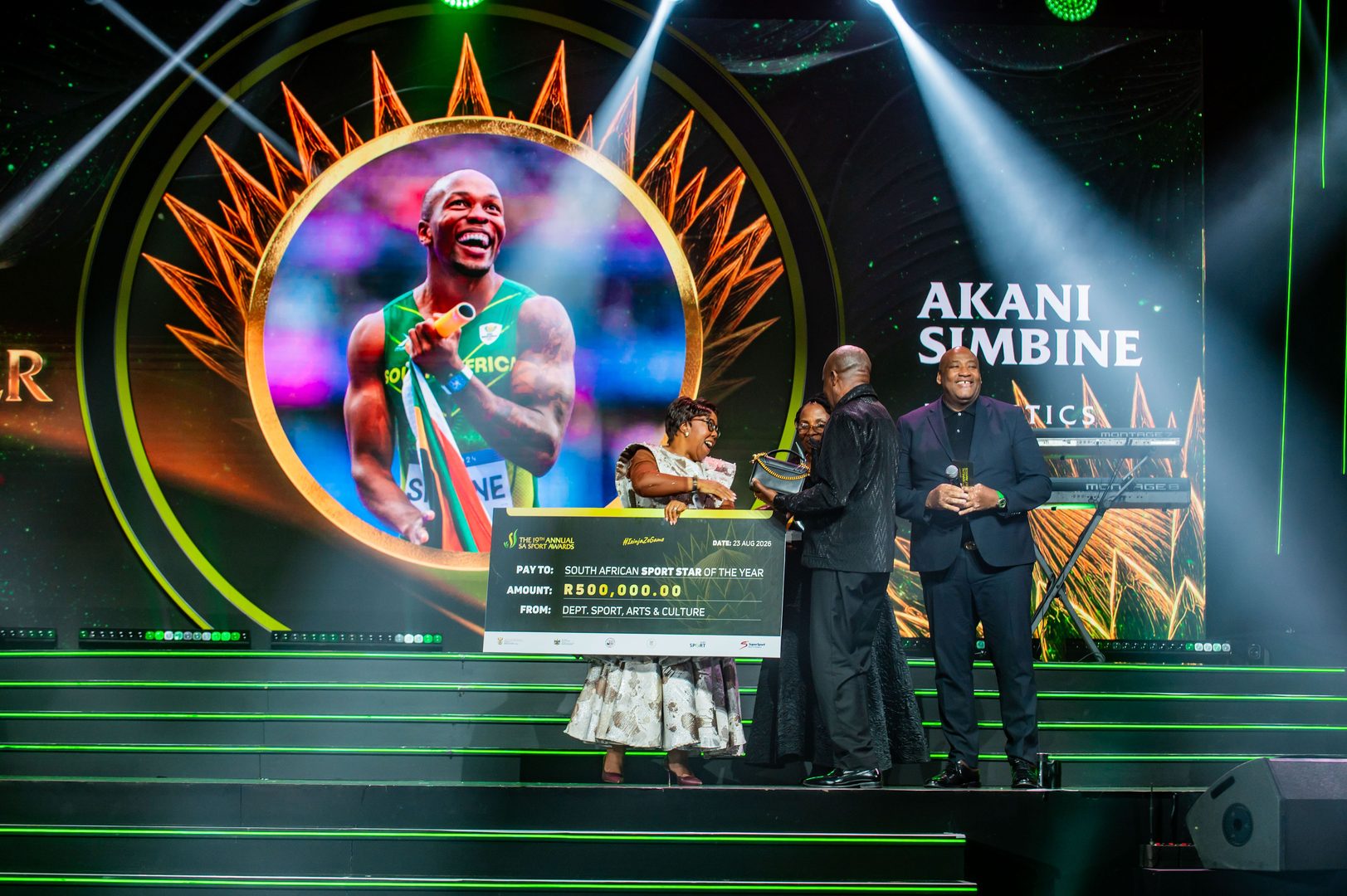
Simbine claimed Sport Star of the Year, adding another gleaming medal to an already formidable athletics legacy. The sprint king has spent years living on the razor’s edge of hundredths of a second, and this time the stopwatch gave way to the applause of a nation.

The Protea Men’s Test Cricket team pocketed Sport Team of the Year, another feather in Cricket South Africa’s cap after a campaign that demanded patience, character and plenty of backbone.

Prudence Sekgodiso was crowned Sportswoman of the Year, while swimmer Pieter Coetze took Sportsman of the Year. Athletics also supplied Coach of the Year Thabo Matebedi, ensuring the track-and-field brigade left Sun City with pockets bulging with silverware.

Young guns Bayanda Walaza, the Youth/Junior Sport Star of the Year, and the Men’s Under-20 Rugby Team, named Youth/Junior Sport Team of the Year, showed that the pipeline is pumping.
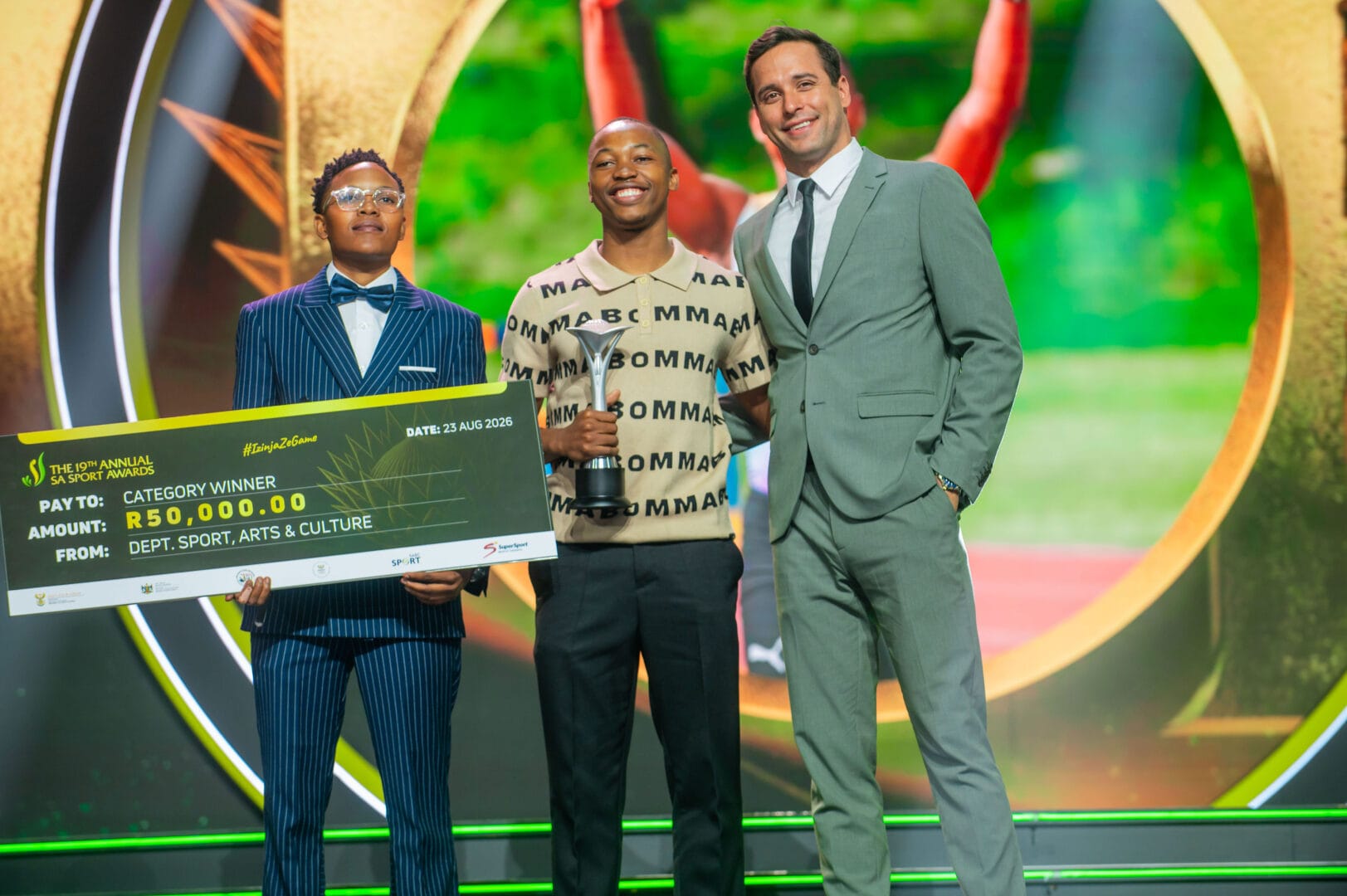
Bayanda Walaza, the Youth/Junior Sport Star of the Year with SA swim legend Chad le Clos

Simoné Kruger won Sportswoman of the Year with a Disability, while Puseletso Michael Mabote claimed Sportsman of the Year with a Disability for para athletics.

The evening’s unsung heroes received their own standing ovation. Anthony Moruthane was named Sport Administrator of the Year, Nqobile Kunene Sport Volunteer of the Year, and Khokho Association South Africa Recreation Body of the Year.

Cricket South Africa collected National Federation of the Year, while Rachel Makhura took Sports Media Journalist of the Year, with photographer Skhu Nkomphela winning Sport Visual Journalist of the Year.

And then came the lifetime tributes, a reminder that sporting greatness is built over generations. Siya Vabaza-Booi, Selwyn Nathan and Veli Nhlapo received the Steve Tshwete Lifetime Achievement honour.

The Andrew Mlangeni Green Jacket went to William Mtolo, Teenage Dladla, Prof. Mlungisi Ngubane and Patson Banda, while Rayno Nel, Tasneem Solomons and Temba Bavuma were recognised for Excellence.

It was a night when South African sport looked in the mirror and saw its past, present and future staring back.

The crown fitted. The champions roared. And the sporting heartbeat kept thumping.
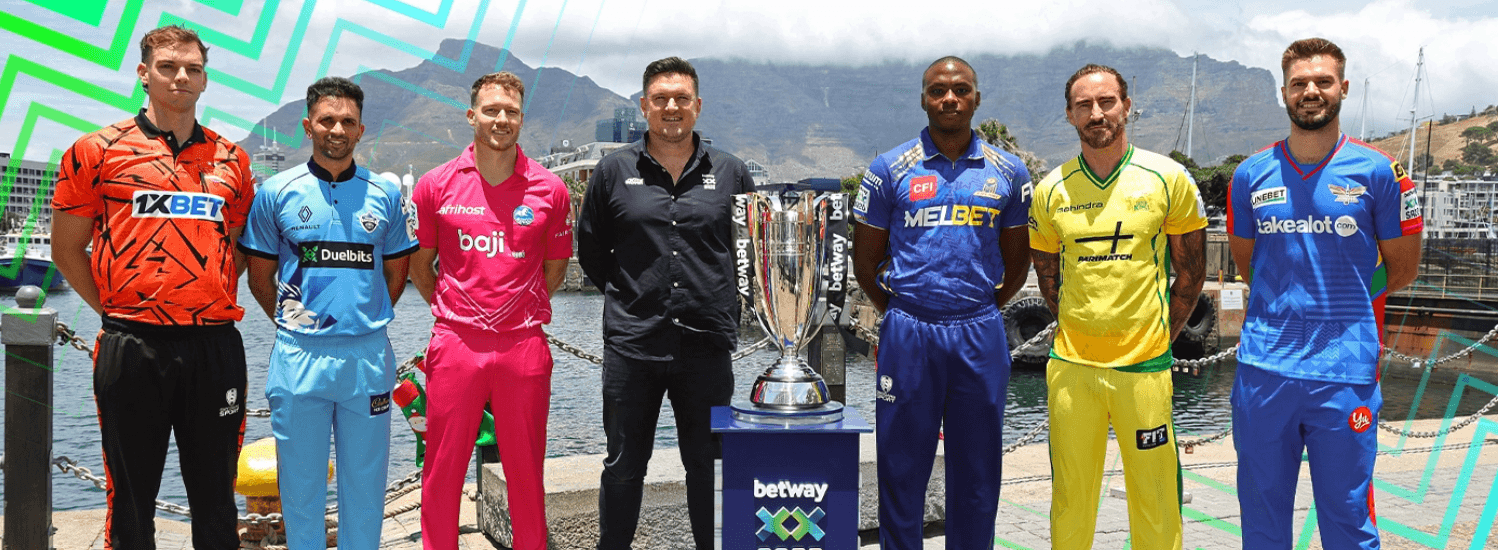
Betway SA20 Season 4: A Summer of Sixes, Stars and Succession

By Adnaan Mohamed

South Africa’s summer blockbuster is ready for its opening scene. Betway SA20 Season 4 strides to the crease on Boxing Day at Newlands, where cricket royalty and fearless young guns will collide in a festive showdown packed with promise.

The countdown gathered pace in Cape Town as League Commissioner Graeme Smith addressed the media alongside a who’s who of SA20 captains: Aiden Markram, Faf du Plessis, Kagiso Rabada, David Miller, Keshav Maharaj and Tristan Stubbs. The message was clear: the league is no longer finding its feet, it’s sprinting between the wickets.

“I’m very excited. I think from our perspective, it has been three great seasons building up to where we are now,” Smith said.

“We are really looking forward to a great summer of cricket. The players on my left and right, having spoken to them this morning, are also really looking forward to performing well over the next coming weeks.”

Smith believes SA20 has become fertile ground for South Africa’s next wave of talent.

“We’re starting to see an influx of talent performing well. It’s an incredible opportunity for those youngsters to be exposed to the quality of the game, to learn and to use the League as a platform for them.

“It’s not just the 15 players that play for South Africa in the year, but another 60-odd players that have developed.”

A new chapter begins for Aiden Markram, who swaps Sunrisers Eastern Cape success for fresh challenges at Durban’s Super Giants.

“It’s exciting being with the new team,” Markram said. “The competition is such a great time of year in South Africa. I’ve said it now quite a few times, but guys really enjoy it. The fans love it.”

No player embodies SA20’s growth more than Tristan Stubbs. Once a Rising Star, the Gqeberha local now captains Sunrisers Eastern Cape.

“I’m really excited and just keen to get going. We sort of followed a similar blueprint to the first year. A lot of the team is based around local boys who know PE, live in and around PE. Just being a PE boy brings that culture and that extra fight to play for the team in front of a home crowd,” Stubbs said.

At Joburg Super Kings, Faf du Plessis is embracing a youthful revolution.

“I feel there was a shift in his (Fleming) style when it comes to looking at younger players and backing younger players,” Du Plessis said.

“This year especially we have a very young squad… That’s the nature of the beast of SA20.”

David Miller expects raw hunger to be the difference-maker.

“There’s going to be a lot of energy, enthusiasm from the youngsters… This is the month to enjoy the season and have a lot of fun and play extremely competitive cricket at the same time.”

New leadership also arrives in Centurion, where Keshav Maharaj eyes Highveld challenges.

“Every novel opens with a new chapter, so I’m really looking forward to it,” Maharaj said.

Defending champions MI Cape Town, meanwhile, lean on chemistry as Kagiso Rabada sharpens the attack.

“Familiarity is a key thing. You need to bond with your teammates,” Rabada said.

With opening-night tickets already sold out, SA20 Season 4 is shaping up as a summer where every ball matters, and the future of South African cricket swings freely.

Proteas Rise in India: Shukri and Temba leads a masterclass in resilience

By Adnaan Mohamed

For years, touring India has felt like stepping into cricket’s equivalent of the “Death Zone” in brutal conditions, deafening crowds, and a cauldron of pressure where even great teams lose their bearings. South Africa has known that pain too well. Heavy defeats. Broken confidence. Tours remembered for their scars rather than their strides forward.

But this time, something powerful shifted.

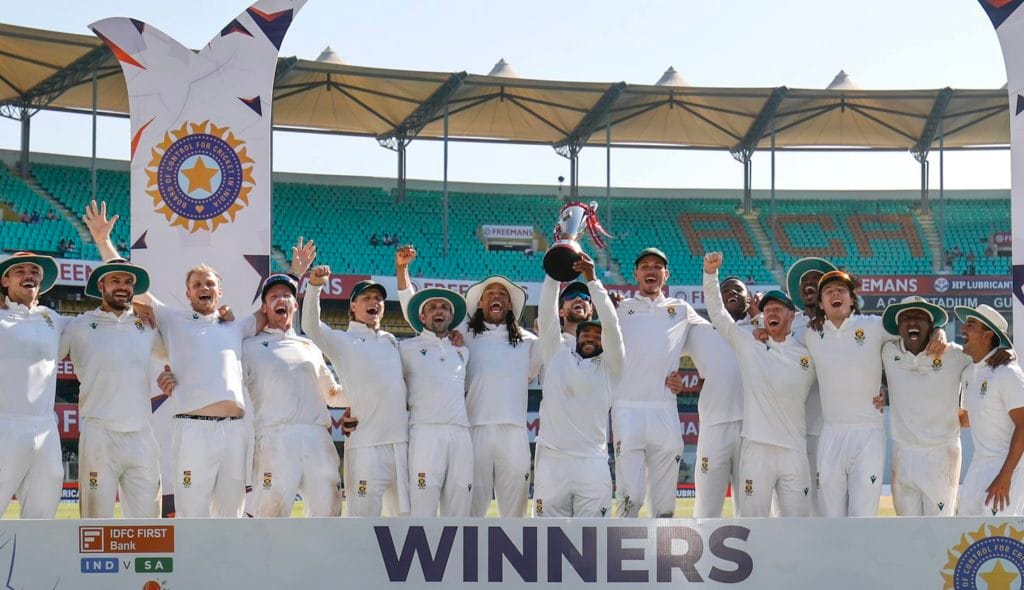
In a story worthy of every athlete who has ever been told they’re not enough, the Proteas walked back into the lion’s den, and roared back even louder, sealing a historic 2–0 Test series win, their first in India in 25 years.

The victory was a reset, a reclaiming of identity, and a reminder of what’s possible when belief becomes bigger than fear.

A Captain Who Carries More Than the Badge

Temba Bavuma’s journey mirrors the heartbeat of modern sport in South Africa: resilience, self-discovery, and the courage to keep standing up when the world expects you to stay down.

Twice before he had toured India. Twice he came home with the kind of numbers and memories most athletes try to forget. Thrown into unfamiliar roles, navigating team turmoil, and battling his own form demons, Bavuma could easily have let those failures define him.

But the man who walked out in Guwahati was not the same athlete.

He was calmer. Clearer. Centered. A captain who had found his voice. A leader whose strength lay not in shouting orders, but in empowering others.

“Coming here, I would never have thought 2–0 would be the result,” Bavuma admitted.

“We know how dark it can be, so getting 2–0 here is an incredible achievement. We’ve painted ourselves into history.”

This is the language of someone who understands the trenches and knows what it means to climb out of them.

A Team Built on Trust, Not Ego

Under coach Shukri Conrad, the Proteas have become more than just a squad. They’re a collective built on shared ownership. Conversations are open. Roles are clear. Leadership is distributed like responsibility in a relay race, everyone carries the baton at some point.

“I’m a lot more assured as a person and as a captain,” Bavuma said.

“We have a lot of leaders in the team. Guys who add value in their own space. Guys I bounce ideas off. And I’ve learned to separate Temba the batter from Temba the captain.”

For athletes, this is gold: Identity is not a single performance. Leadership is not a solo act.

Champions Step Up When It Matters

Great teams need great moments. And South Africa found them everywhere.

  • Simon Harmer, returning to the very country where his career once stalled, produced the greatest bowling series by any visiting spinner in India: 17 wickets at 8.94. A statistic and a story built on grit.
  • Marco Jansen was a walking highlights reel: destructive bouncers, crucial runs, and a catch so athletic it bordered on impossible.
  • Aiden Markram reinvented himself as South Africa’s safest pair of hands, plucking a world record nine catches and steadying the mood whenever needed.

This wasn’t a win built on stars. It was built on synergy and those subtle connections athletes feel when the entire team is in rhythm.

Rising Above the Weight of History

India had lost just one series at home in 12 years. Their fans are famously unyielding. Their conditions notoriously unforgiving. And yet, the Proteas showed that history, no matter how intimidating, is only a backdrop, not a destiny.

Their 408-run win in the second Test wasn’t just dominance; it was a message:

This team is evolving. Growing. Believing.

For South African cricket, often weighed down by near misses and what-ifs, this was an emphatic reminder that the future can be bold, bright, and beautifully unpredictable.

What This Means for the Athlete in All of Us

Every athlete, whether you run trails, swim laps, hit gym reps, or chase PBs knows what it feels like to revisit a place of past disappointment. The doubt. The fear. The ghosts.

What the Proteas did in India is what everyone strives for:

  • To return to a place of pain, and rewrite the story.
  • To trust the process even when your stats say you shouldn’t.
  • To lead with humility, not ego.
  • To push through dark moments because the light ahead is worth it.
  • To discover that your greatest breakthroughs often hide behind your greatest failures.

Bavuma and his team won a cricket series and delivered a universal message of courage:

Your past is not a prophecy. Your setbacks are not your ceiling. Your biggest victories often arrive exactly where you once struggled most.

And sometimes, after 25 long years, everything aligns, and you finally conquer your Everest.