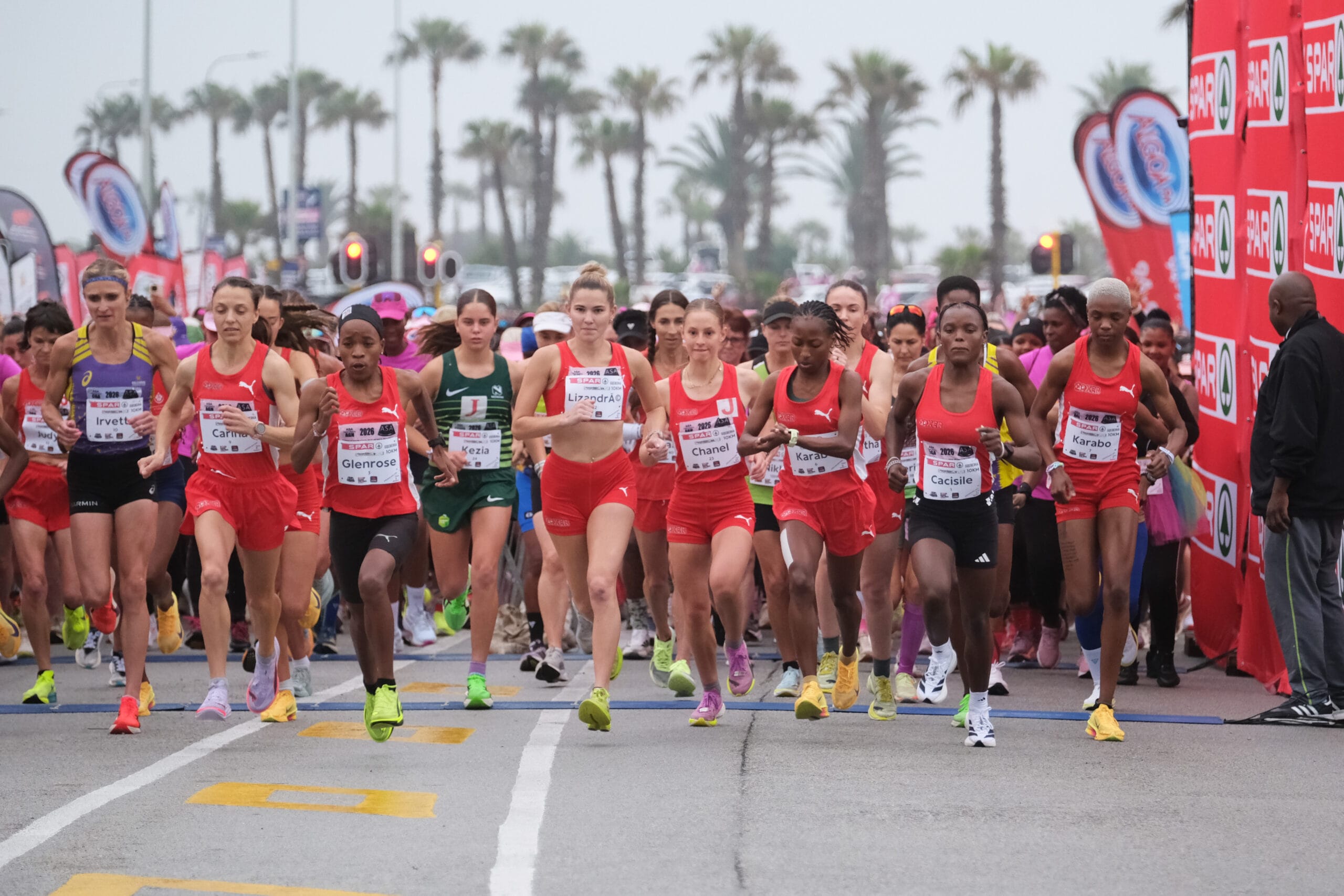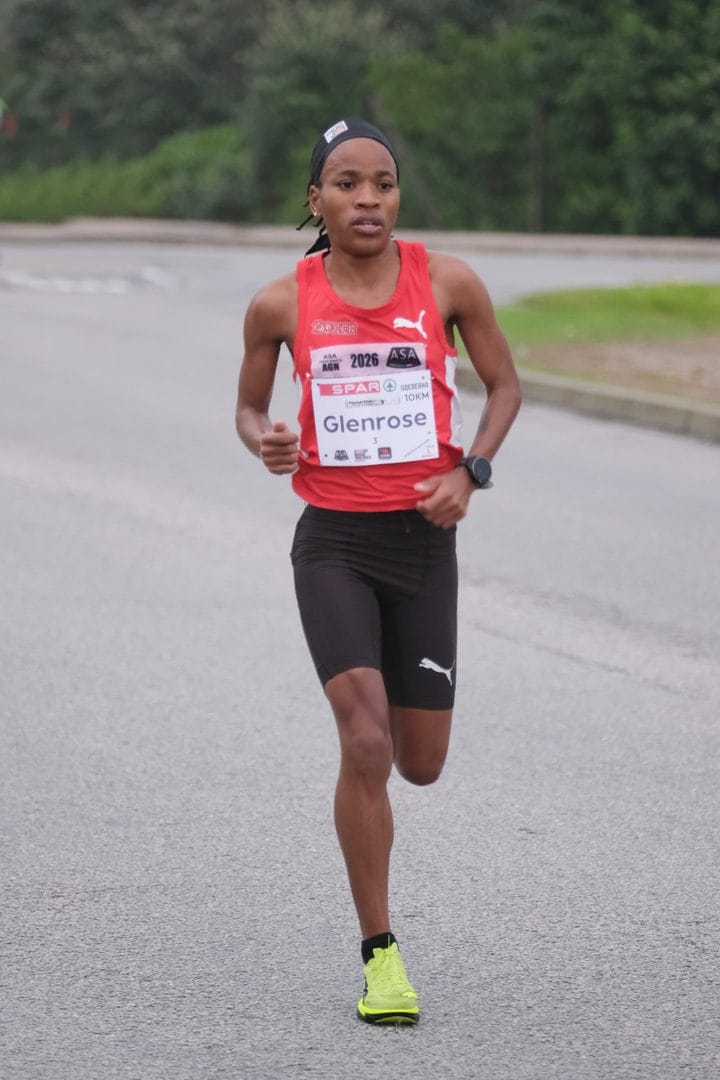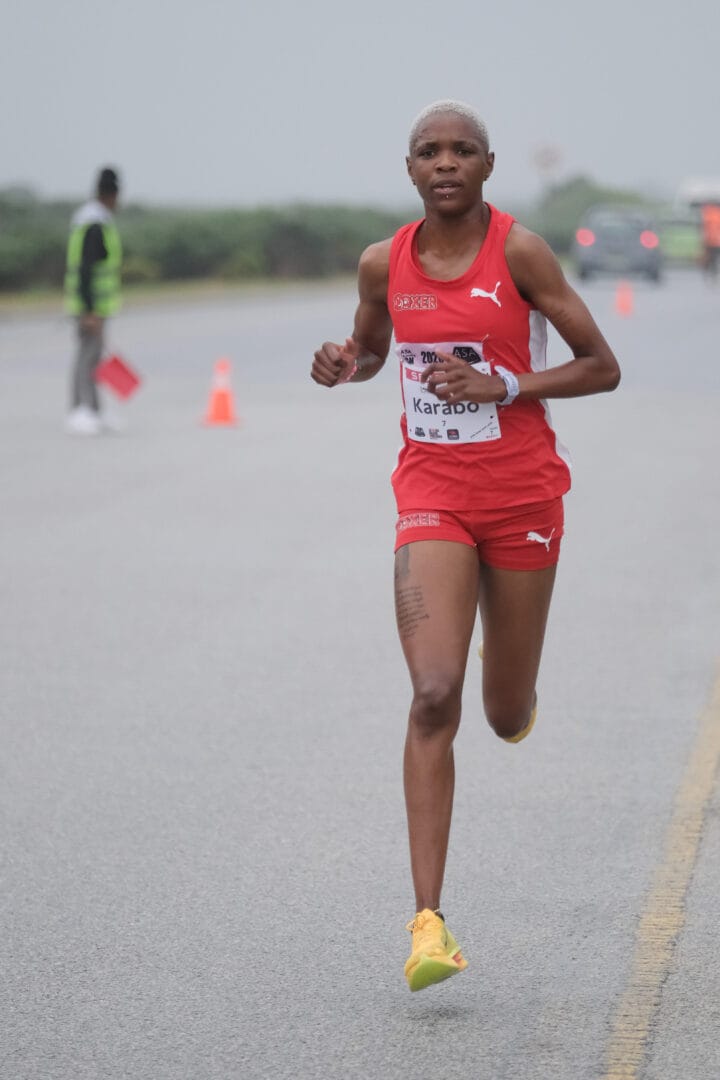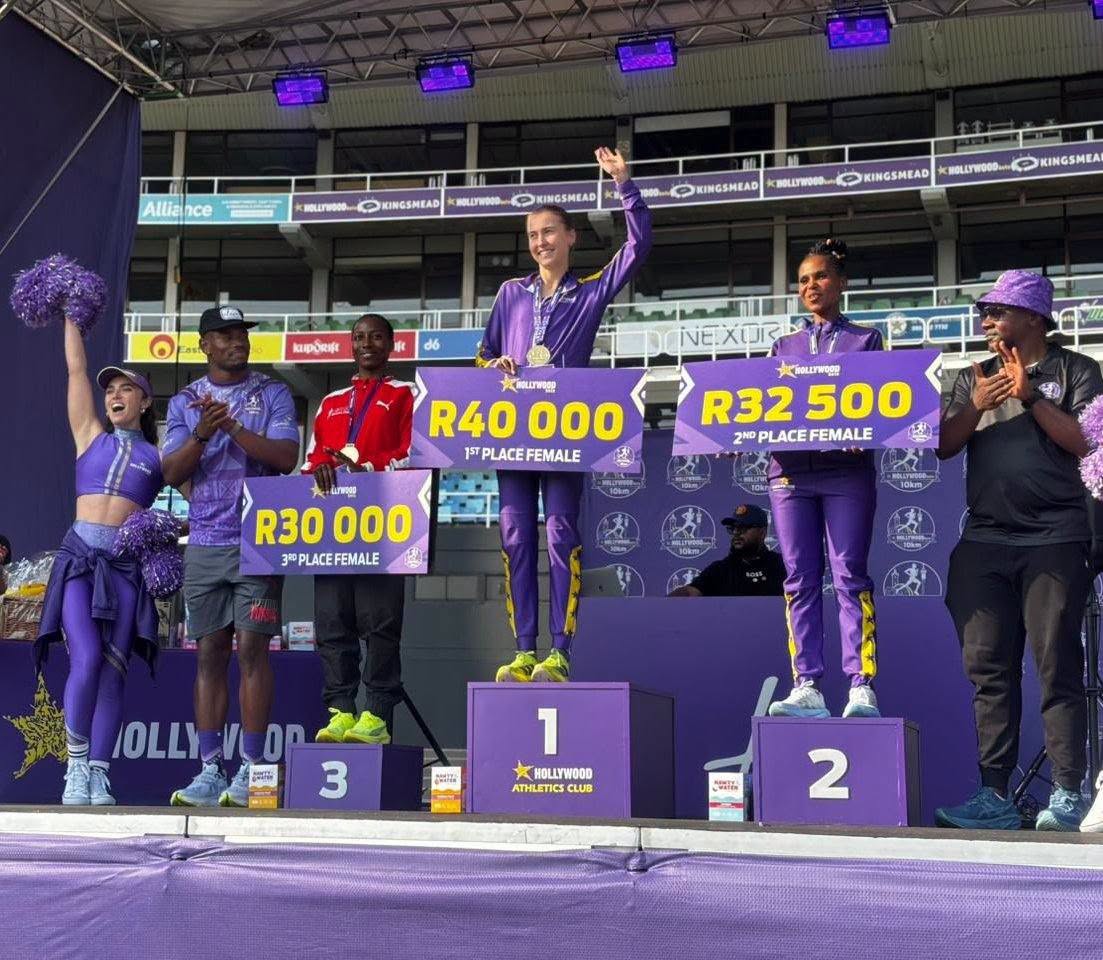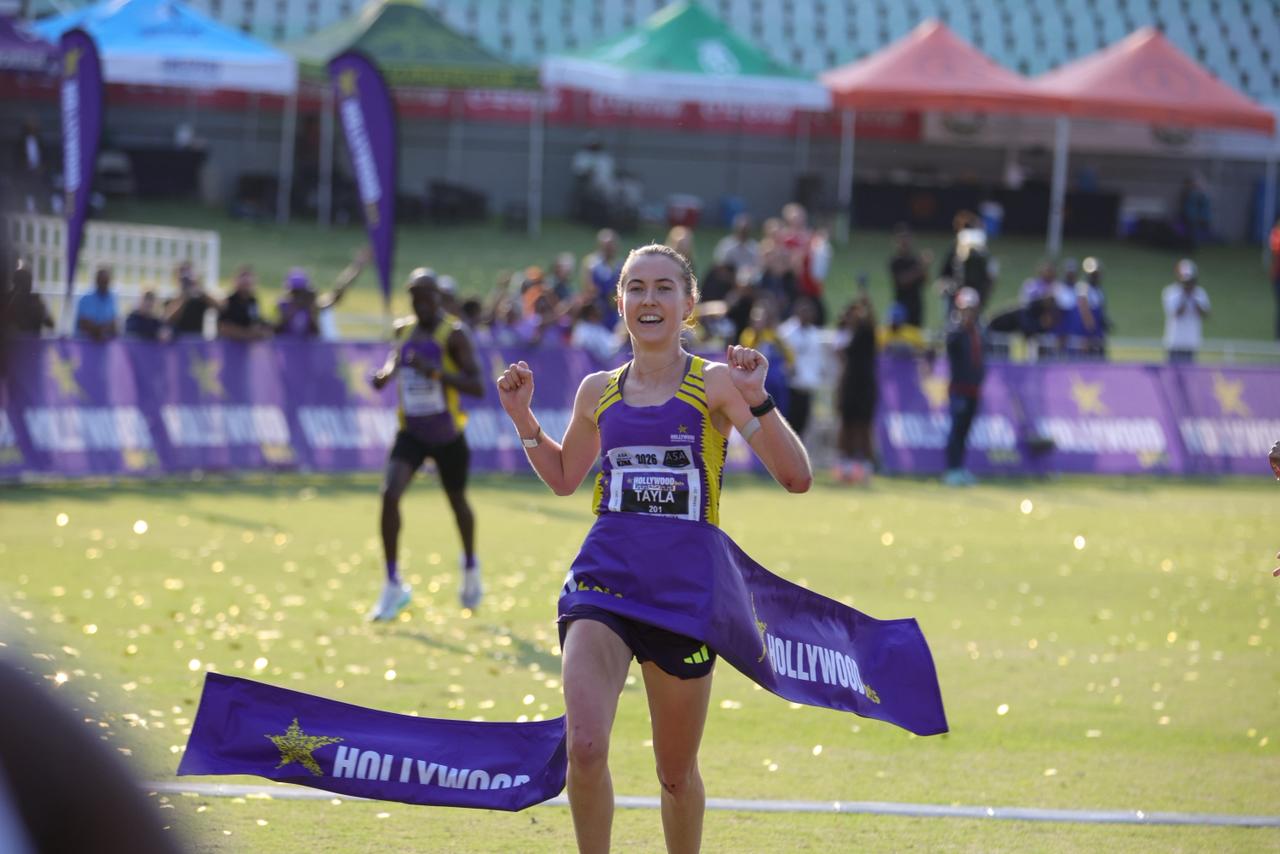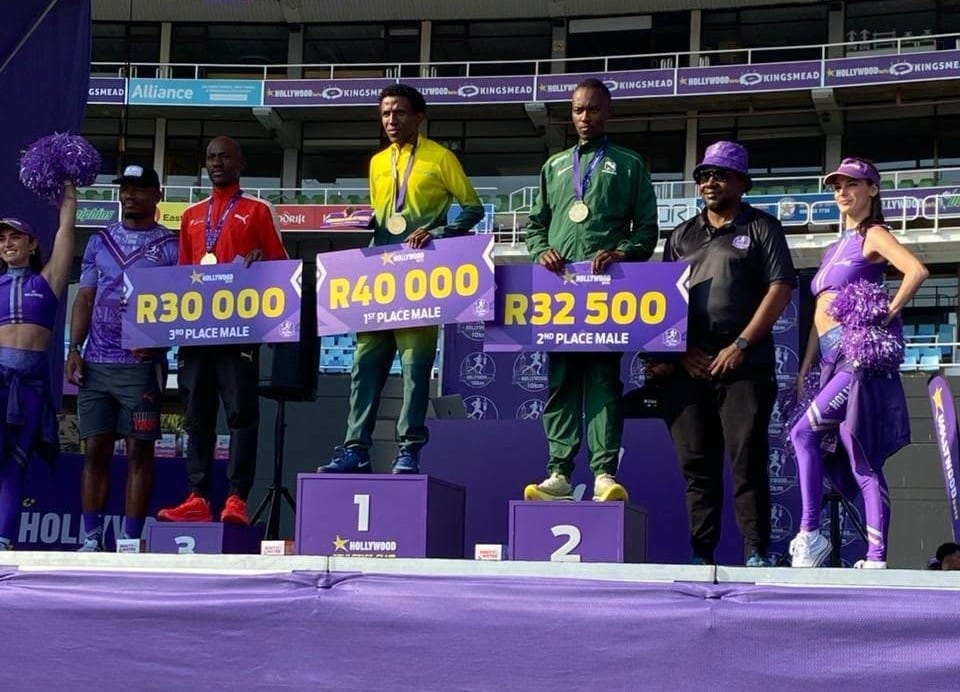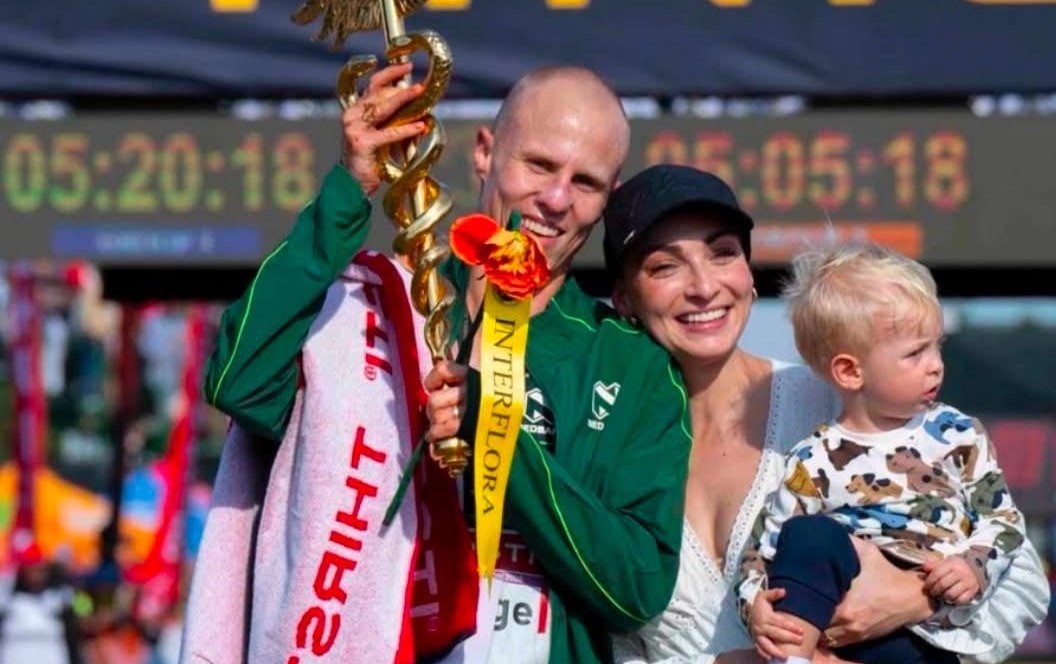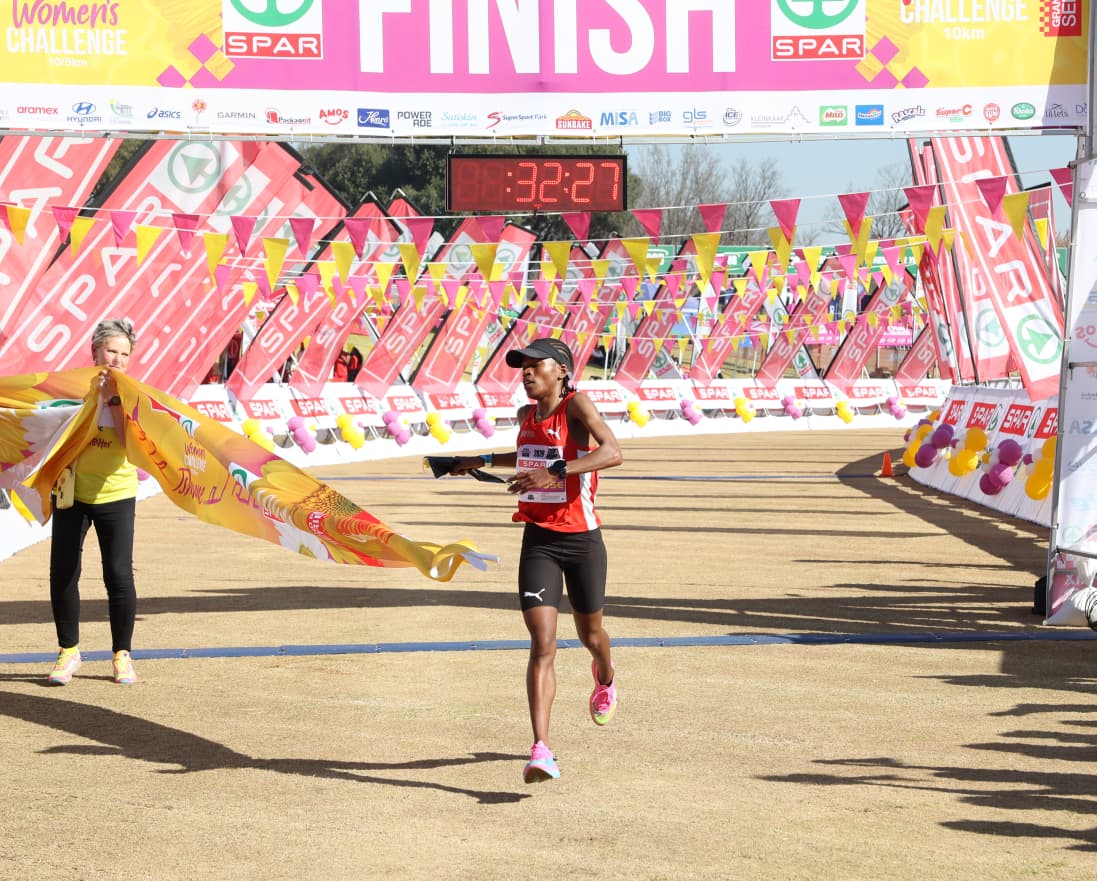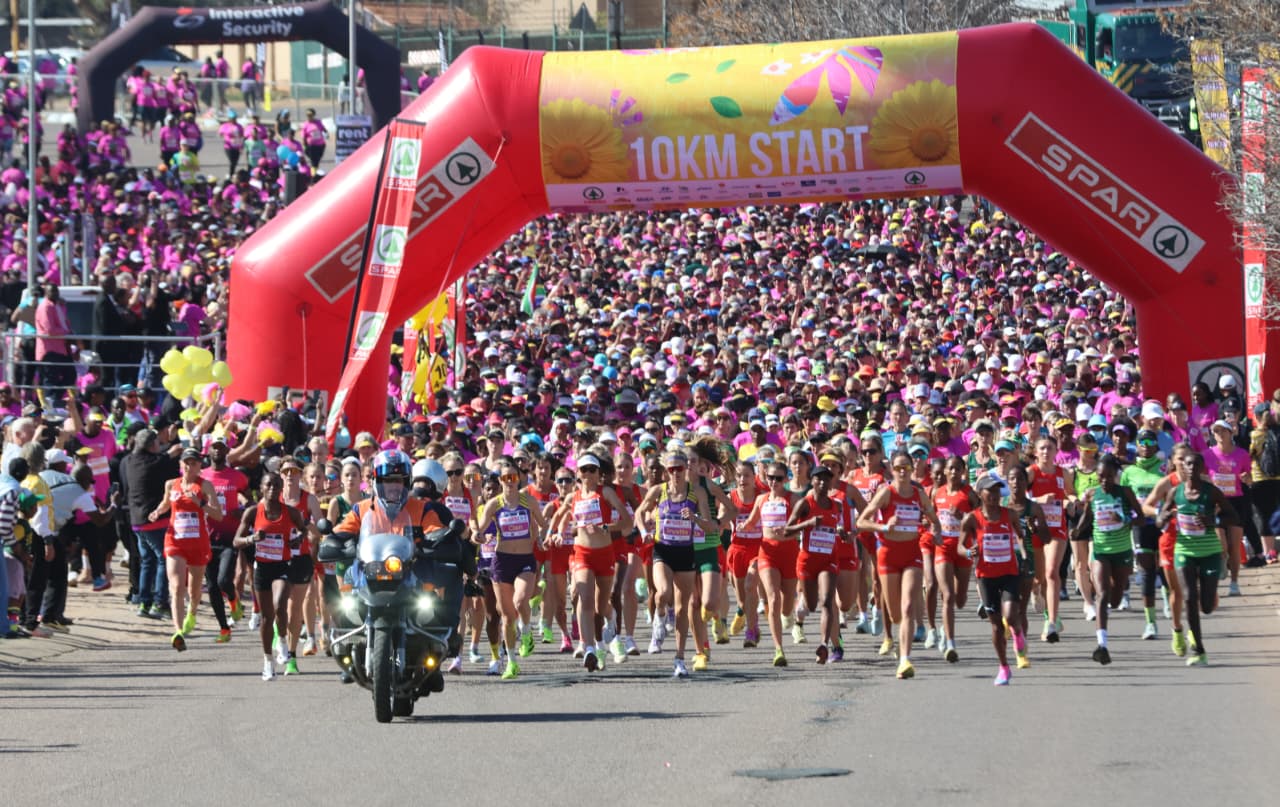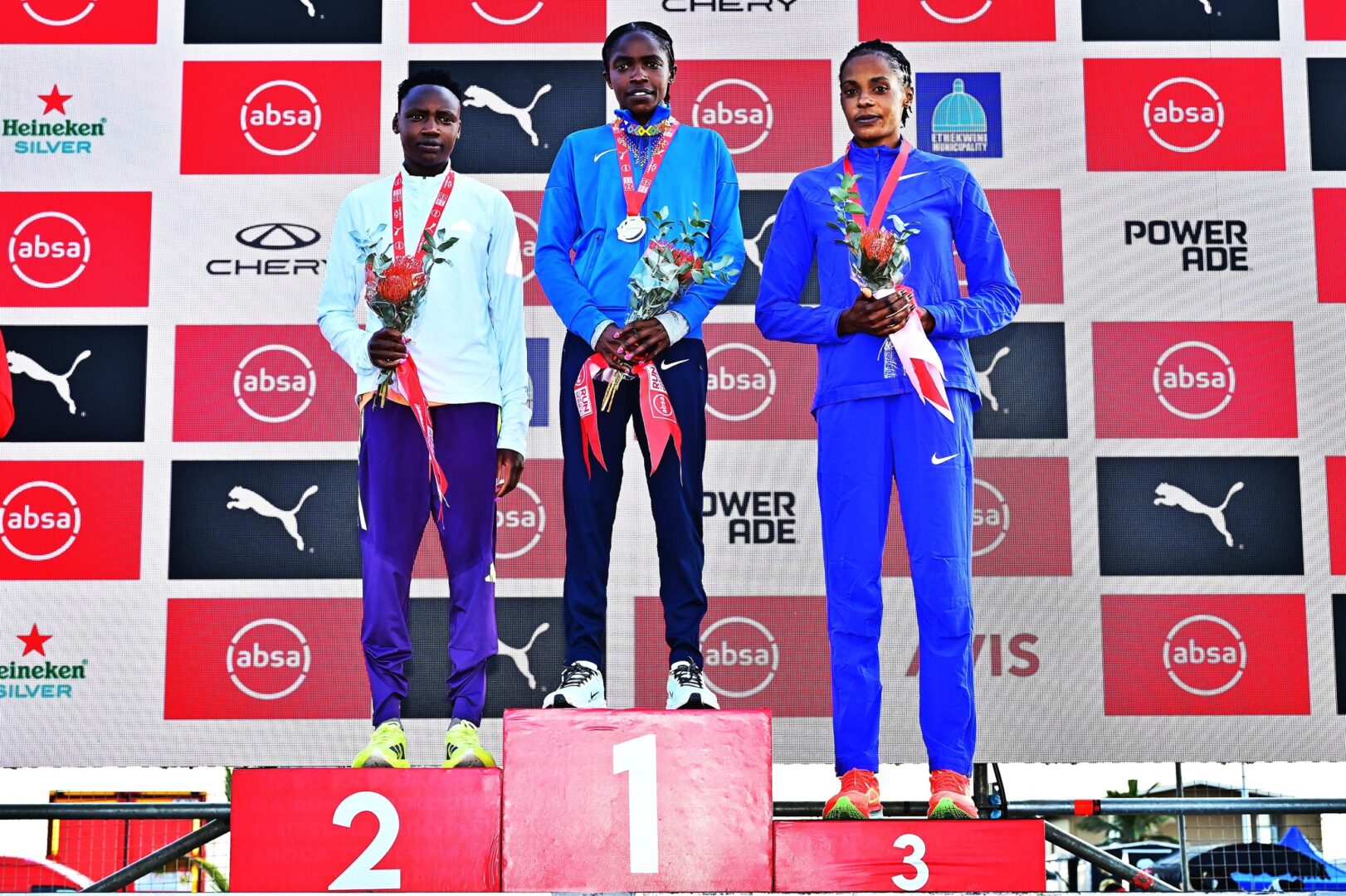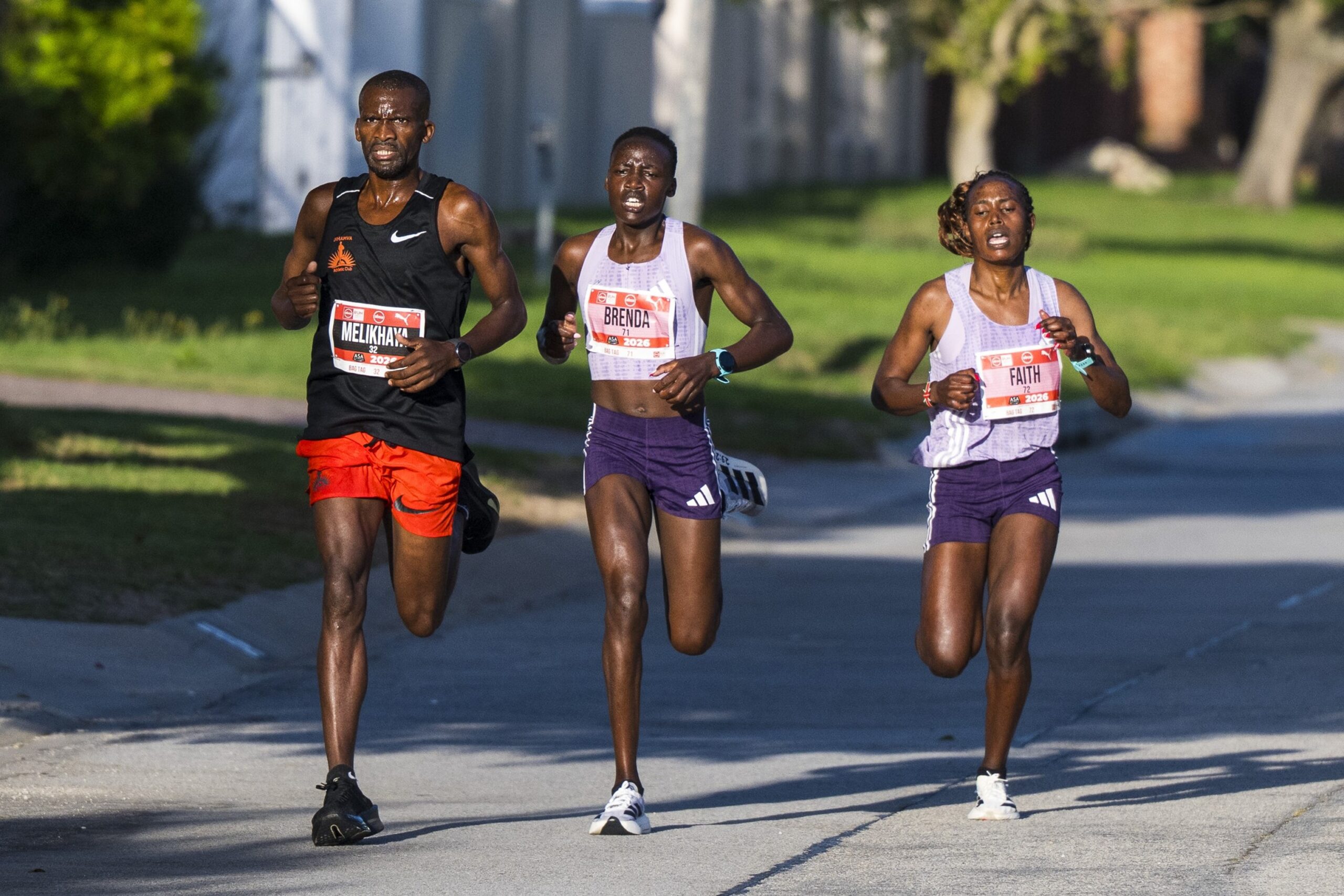


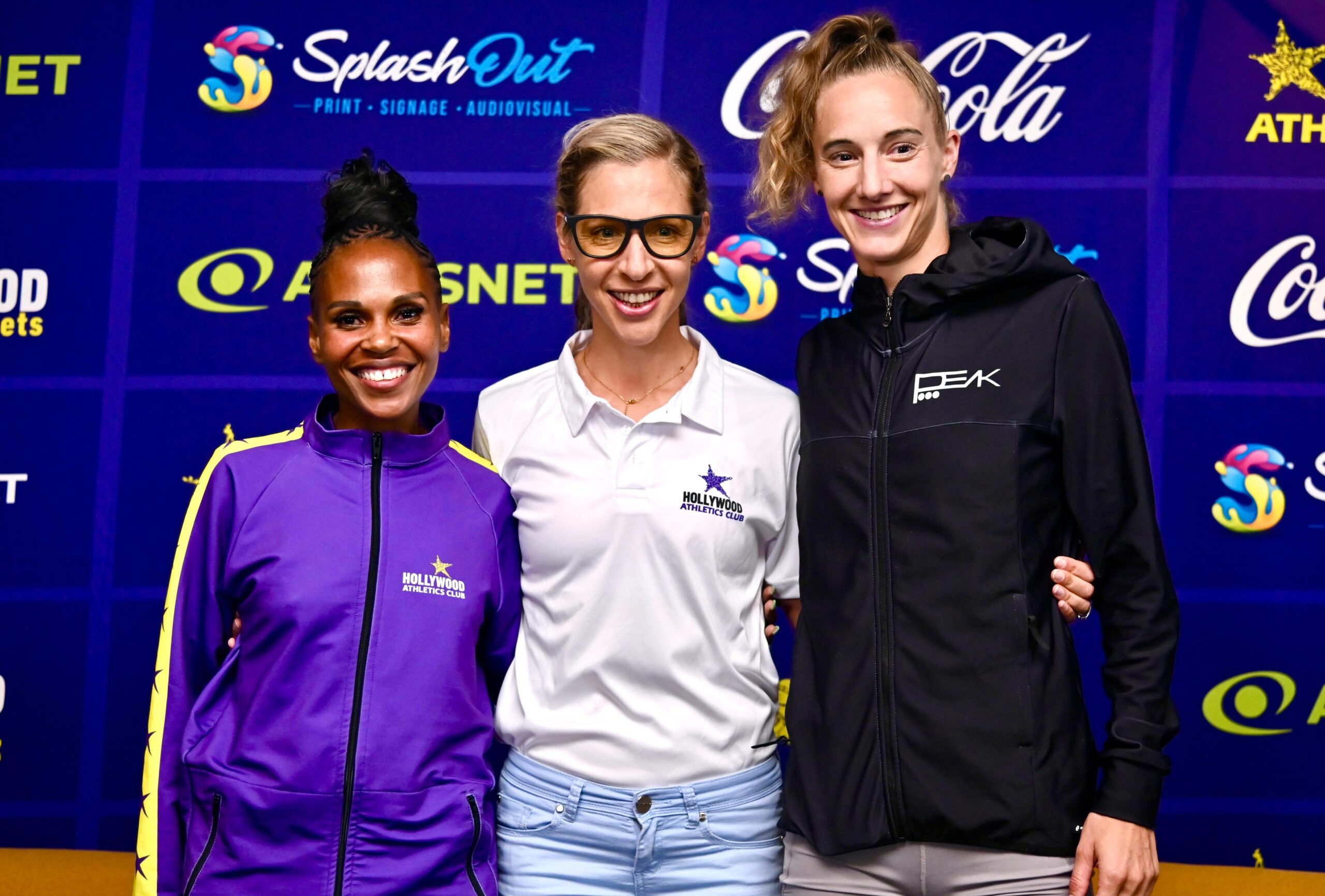
Defending SPAR Grand Prix champion Glenrose Xaba returned to winning ways by breaking the Tshwane course record on Saturday, boosting her title defence with a dominant display over 10km in Centurion.
The Boxer Athletics Club star clocked 32:28 at SuperSport Park to shave one second off the previous course record of 32:29, set by Namibia’s Helalia Johannes in 2022.
It was Xaba’s first victory of the 2026 series after finishing second behind Tayla Kavanagh in Cape Town and missing the Durban leg while competing internationally.
Kavanagh’s absence due to her Commonwealth Games campaign in Glasgow presented an opportunity, and Xaba capitalised with a measured performance.
Ethiopian athlete Selam Gebre stayed with Xaba through the opening half of the race before the South African made her move shortly after the 5km mark. She quickly opened a decisive gap and never looked back.
The performance was underlined by disciplined pacing, with Xaba completing the second half of the race 31 seconds faster than the first.
“I’m training for the half marathon at the World Road Running Championships in Copenhagen in September, and the race went according to plan,” Xaba said.
“Coming into the race, my strategy was to run very fast to get bonus points, and I was very happy to be back in Tshwane and running the SPAR race. I’m looking forward to the rest of the series.”
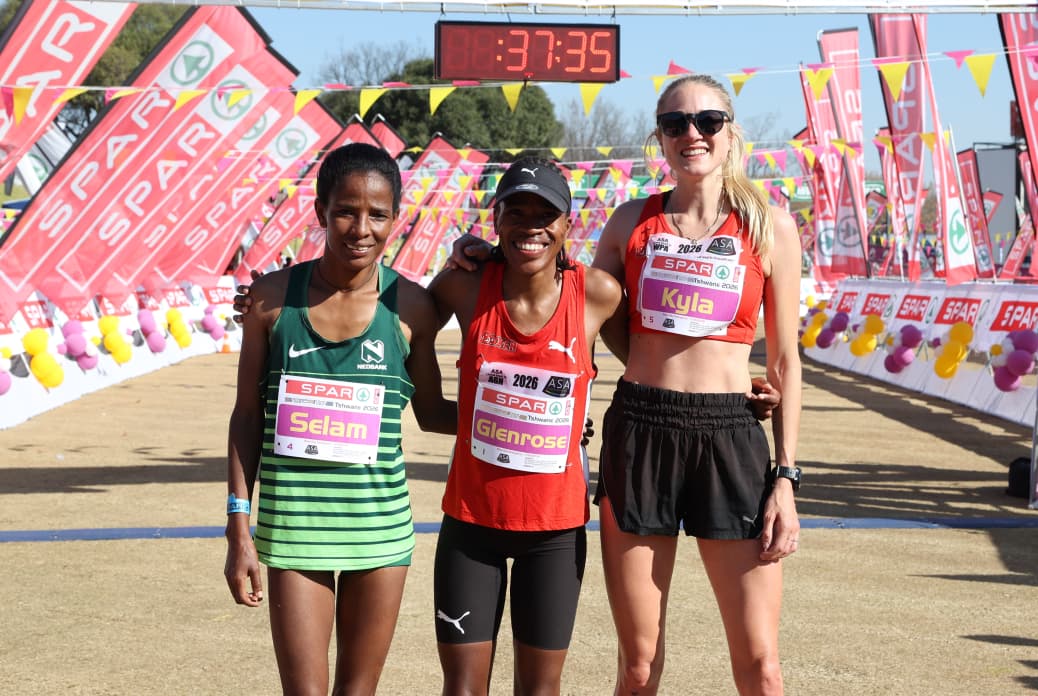
Gebre secured second place in 34:10 despite battling the conditions.
“The race today was very tough and intense, if I’m honest. The start time was different to what we’re used to, and the elevation kind of caught up with me and I couldn’t breathe at certain points. So, it was tough, but I had to push myself as best I could and I’m glad I came second,” she said.
South Africa’s Kyla Jacobs finished third in 34:21 after a strong closing kilometre. It was her second podium finish of the series, with both Jacobs and Gebre collecting bonus points for running under 34:40.
“It’s always great to be here for the Tshwane race because this is actually where my running career started, so I’m really proud and happy to be on the podium today,” Jacobs said.
“It was a great race. I tried to run conservatively and was able to pick the field up from the back, so I was happy with how I executed it.”
Xaba’s victory throws fresh momentum into the SPAR Grand Prix series as she continues her build-up to the World Road Running Championships in Copenhagen later this year.
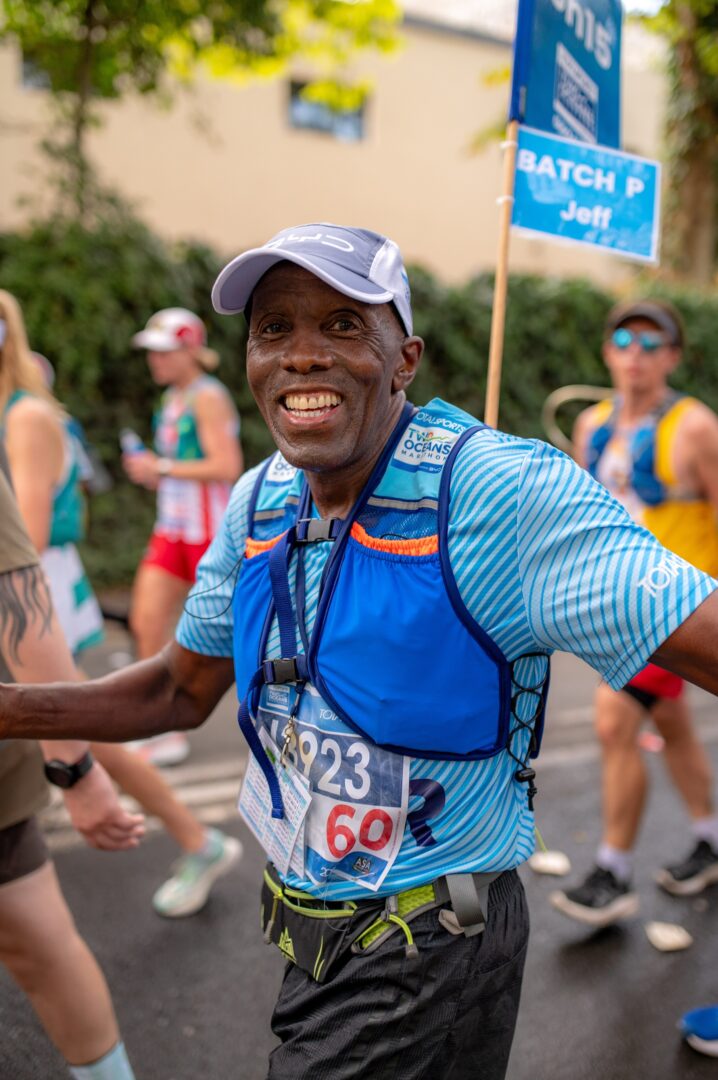
The priority entry window opened at 10:00 on 15 July and closes at 22:00 on Wednesday, 22 July, giving the event’s most loyal runners the first opportunity to secure a place in either the 56km Ultra Marathon or the 21.1km Half Marathon.
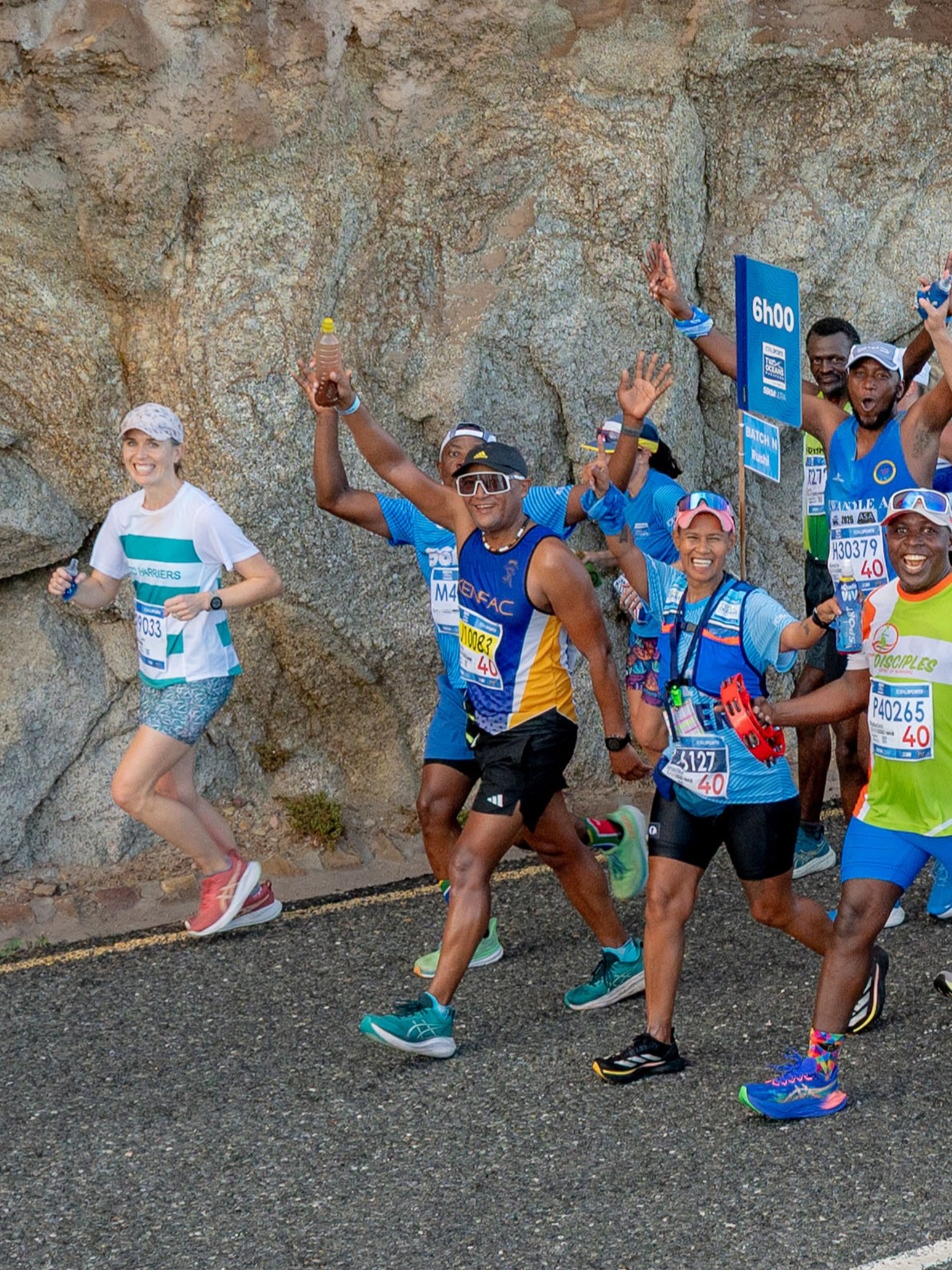
Totalsports TWO OCEANS MARATHON powered by BYD photo credit Devin Paisley
Two Oceans Marathon NPC chairperson Chris Goldschmidt said the exclusive entry period recognises runners who have played a significant role in building the race’s legacy.
“The opening of the Yellow and BNC entry window is always a special milestone in our journey to race day,” said Goldschmidt.
“It is our way of recognising and rewarding the loyalty of runners who have embraced the spirit and tradition of the Totalsports TWO OCEANS MARATHON powered by BYD over many years. We are proud to welcome these dedicated members back first as we begin the countdown to another unforgettable edition of the world’s most beautiful marathon.”
Event director Wade Bromfield described the opening of entries as the first major milestone on the road to race weekend in April next year.
“The exclusive Yellow and BNC entry period marks the first major milestone on the road to the 2027 Totalsports TWO OCEANS MARATHON powered by BYD. We encourage all eligible members to take advantage of this dedicated entry window and secure their place early.
“While our team has been hard at work behind the scenes for some time, there is always a special sense of excitement when we can officially welcome our loyal Yellow and BNC members on the journey to race day. We look forward to seeing them back on the start line next April.”
Eligible Yellow and Blue Number Club members can enter through the official Two Oceans Marathon website by selecting the entry option for either the Half Marathon or Ultra Marathon.
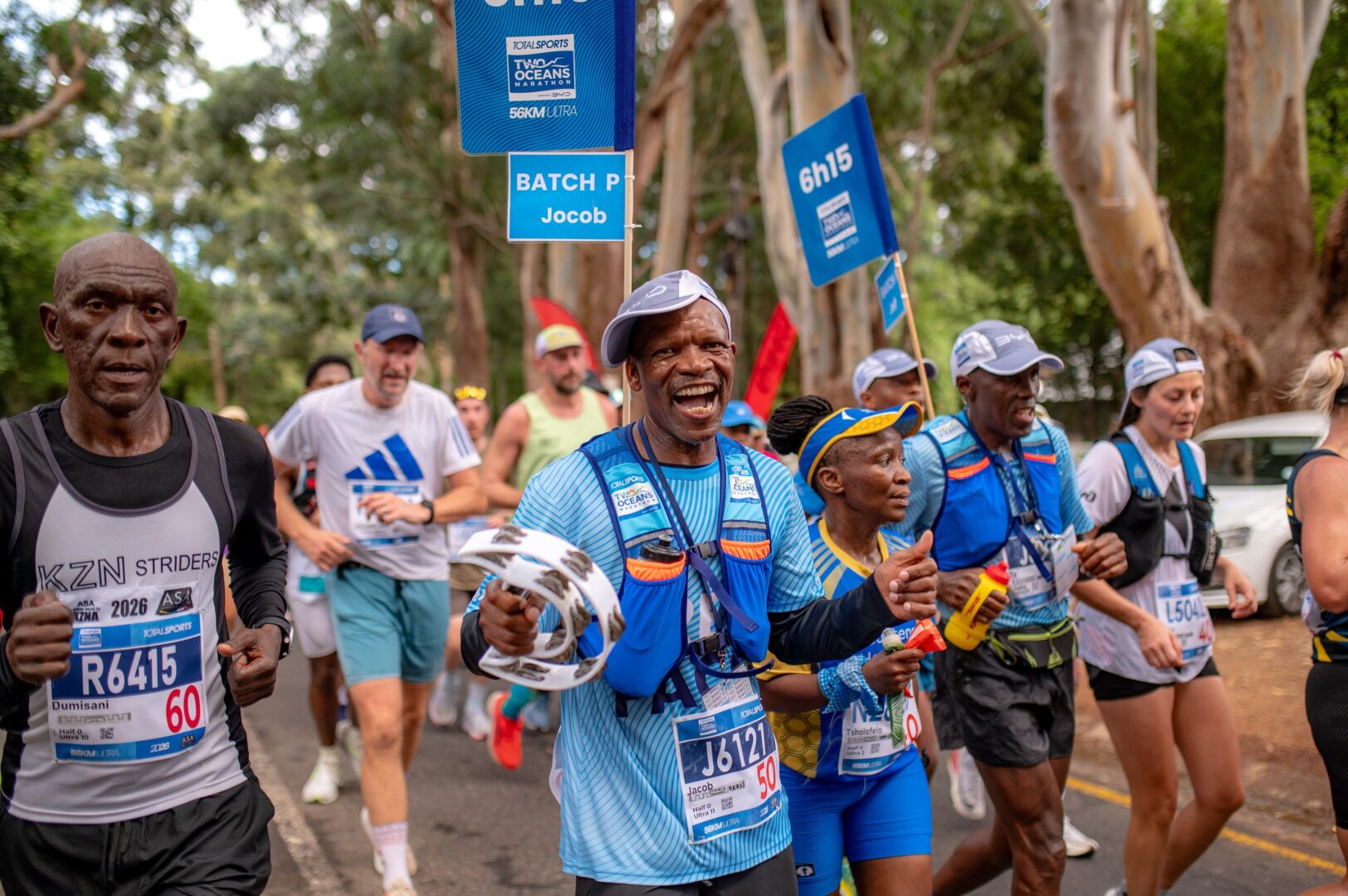
Totalsports TWO OCEANS MARATHON powered by BYD photo credit Devin Paisley
The general ballot for both races opens on 5 August 2026.
The 2027 event programme begins with the 8km Night Run on Wednesday, 31 March, followed by the 4.5km International Friendship Run on 1 April and the Trail Run on 2 April.
The Half Marathon will be held on Saturday, 3 April, with a capacity of 21,000 runners, while the iconic 56km Ultra Marathon takes place on Sunday, 4 April, with an identical field limit of 21,000 participants.
Entries for the Night Run, International Friendship Run and Trail Run open on 3 August 2026.
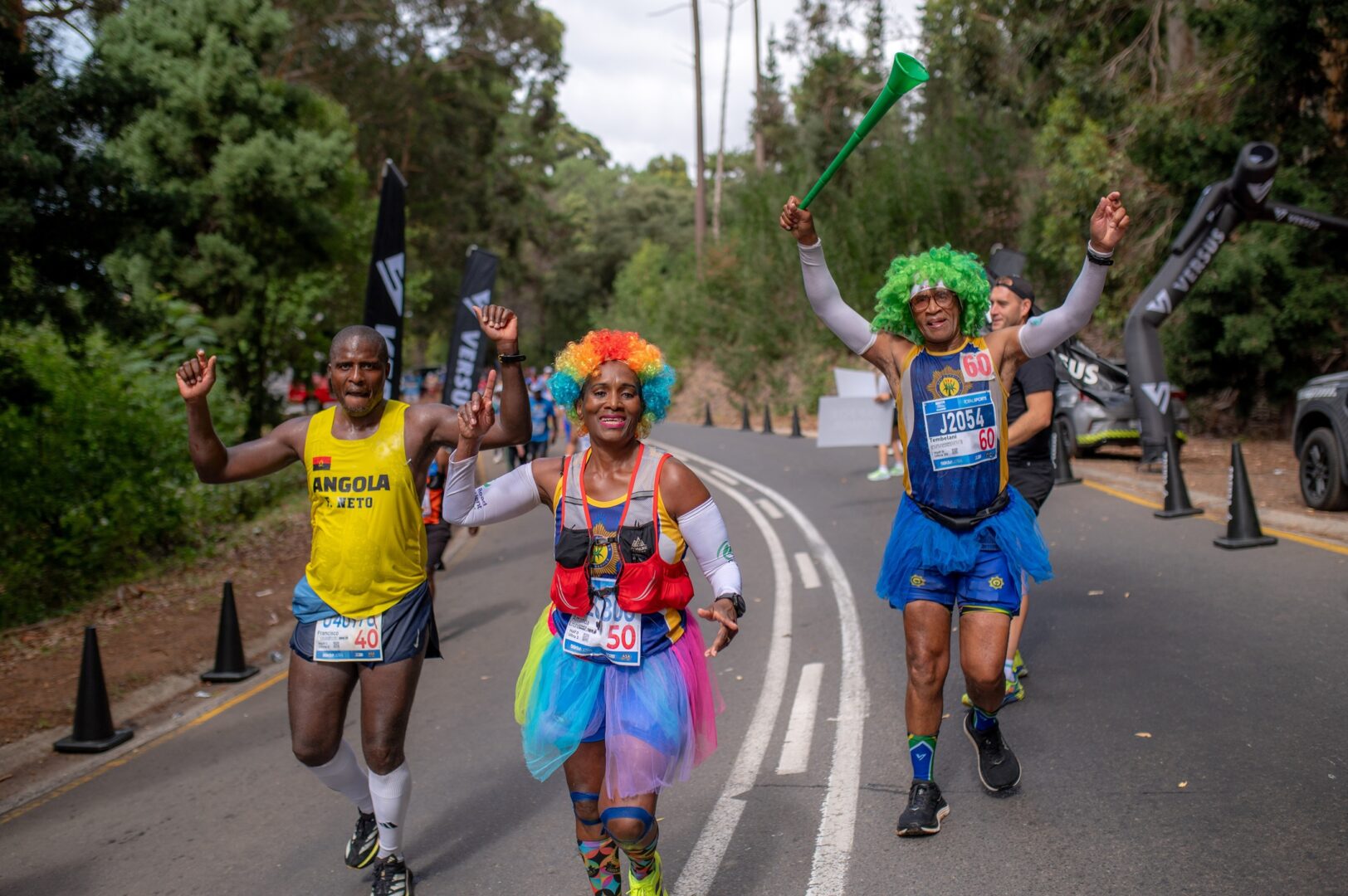
Totalsports TWO OCEANS MARATHON powered by BYD photo credit Devin Paisley
The Half Marathon entry fee is R450 for licensed South African athletes, while licensed local runners will pay R840 to enter the Ultra Marathon. International and Rest of Africa entry fees are payable in pounds sterling and remain subject to the prevailing exchange rate at the time of payment.
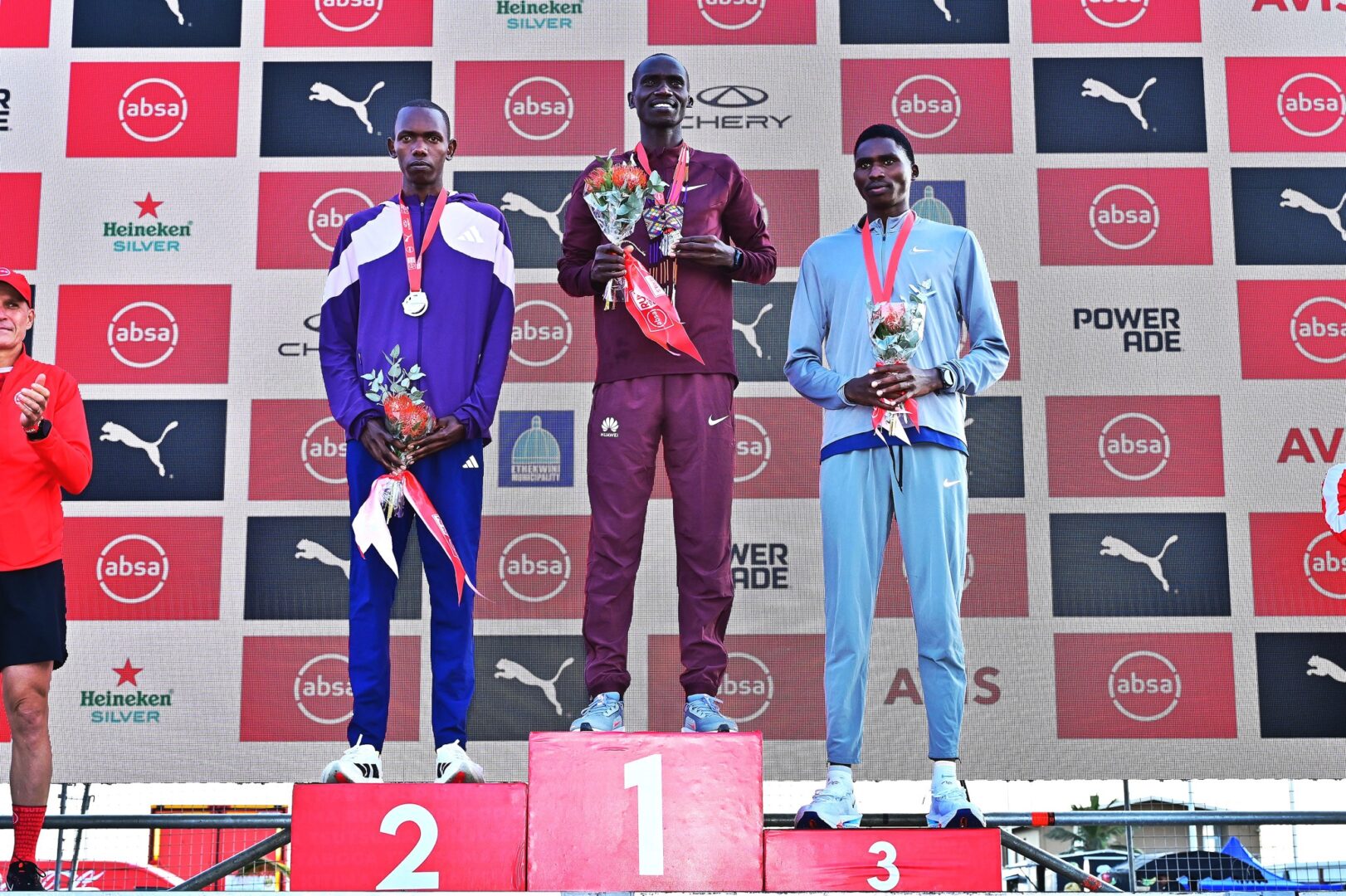
The Ugandan Olympic champion stopped the clock in 27:19, the second fastest 10km ever run on African soil, after averaging 2:44 per kilometre on Durban’s fast course.
Top three men’s finishers at the Durban 10K by Action Photo
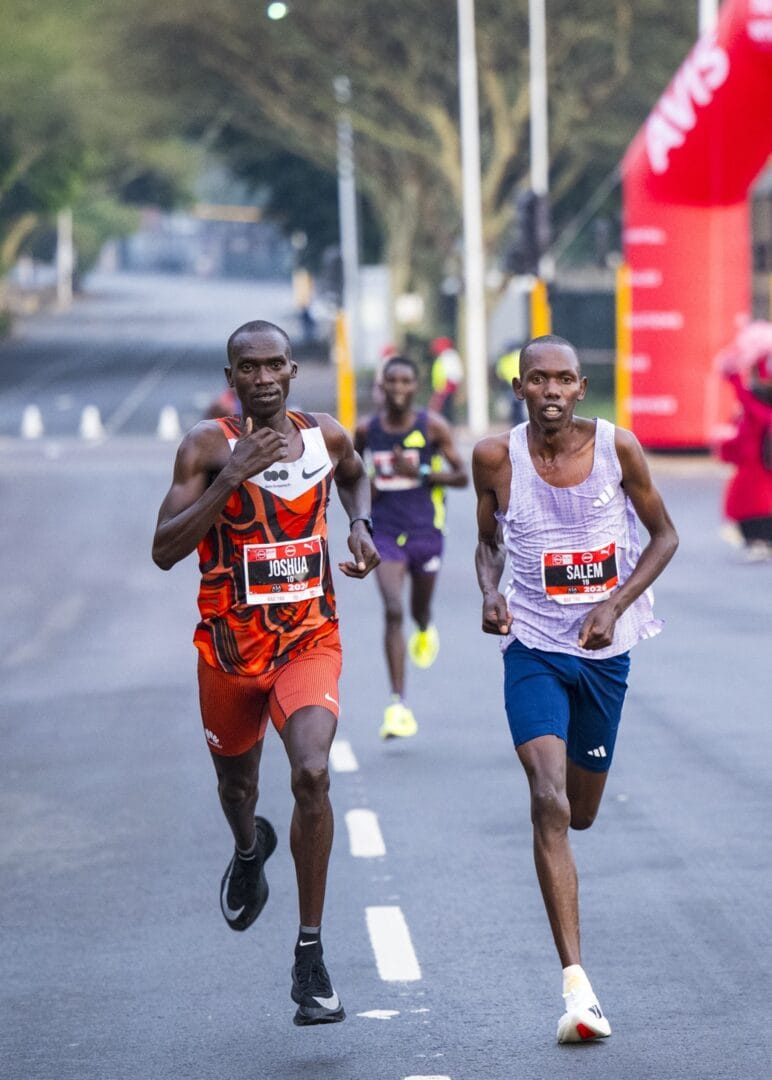
Kenya’s Salem Kibet finished second in 27:29, while Uganda’s Emmanuel Kibet completed the podium in 27:32.
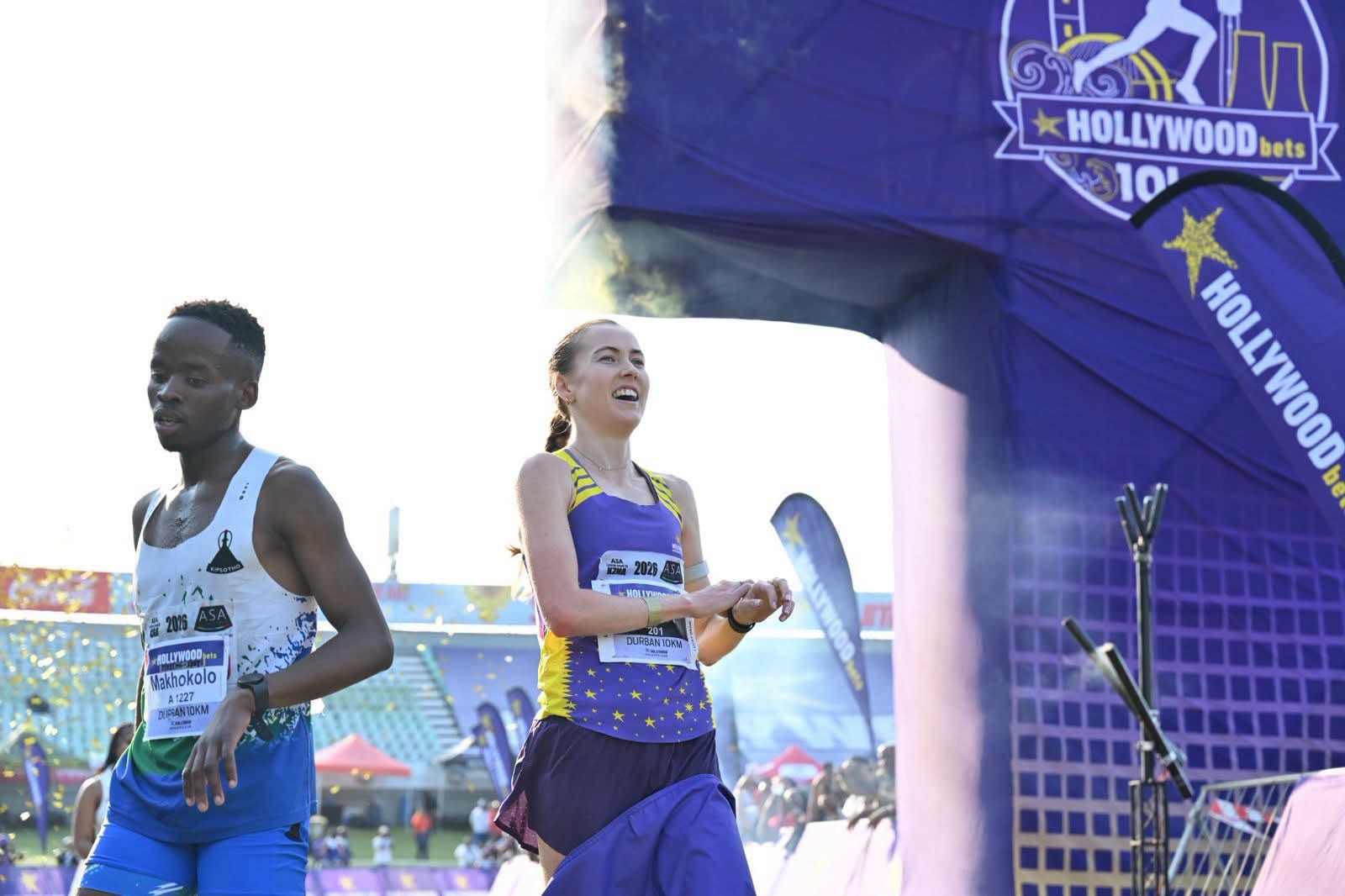
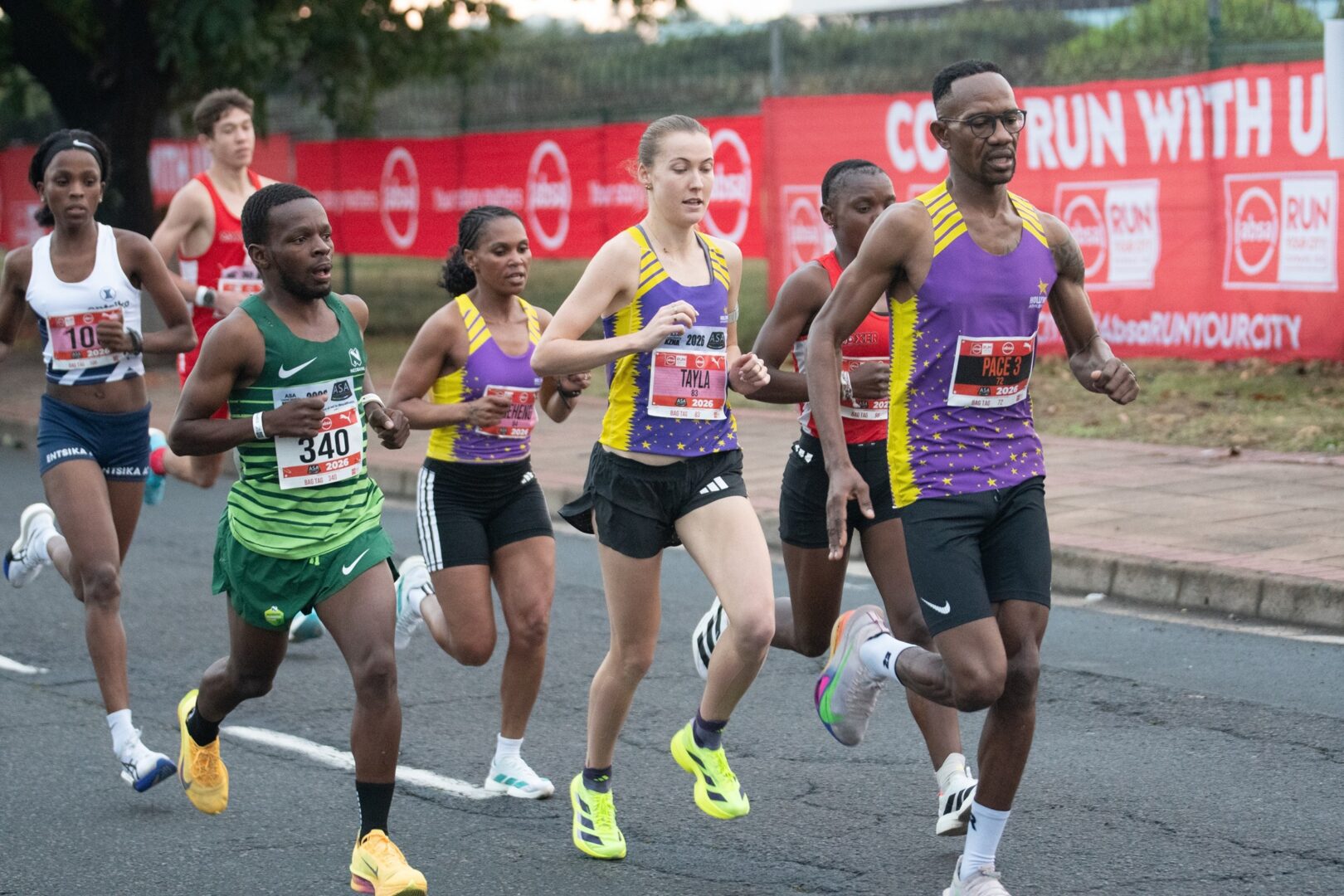
The strength of the elite field was reflected by the performances of the leading South Africans. Defending champion Kabelo Mulaudzi was the first local athlete home in sixth place in 28:06, while Durban favourite Tayla Kavanagh equalled her personal best of 31:28 to finish fourth in the women’s race. Hollywood Athletics Club teammate Neheng Khatala of Lesotho crossed the line fifth in 32:04.
Hollywood AC stars Tayla Kavanagh and Neheng Khatala were the first SA women across the finish line Photo: Gavin Ryan
Cheptegei, who won the Durban race in 2017 before setting a South African All-Comers record of 27:16 a year later, said the elusive barrier remains achievable with stronger pacing support.
“I’m so happy to be here again. Running in the streets of Durban with such an incredible field was spectacular. My goal was to run sub-27, but it wasn’t possible today,” said Cheptegei.
“Maybe we needed a pacemaker to take us through 5km and then speed up again later. To win again and set a new course record makes me happy and gives me motivation moving forward.”
The 29-year-old, regarded as one of the greatest distance runners of his generation, felt the pace eased too early.
“Sometimes you plan to run faster and you need help from different athletes. I realised it wasn’t going to be possible because the tempo wasn’t fast enough and I had to push by myself.”
Cheptegei remains convinced the landmark performance will happen on African roads.
“I believe it’s very possible. We need more support with the pacemaking duties and then we can see a sub-27 here. The course is spectacular, the conditions were perfect and the level of competition was really good.”
He also praised the organisers for assembling one of the strongest international fields seen in South Africa.
“These events give athletes opportunities to showcase their talent and become sporting heroes. Such incentives help develop the sport and South Africa is headed in the right direction.”
The women’s race produced a Kenyan clean sweep as Doreen Cherop claimed the biggest victory of her career in 30:43, finishing ahead of Brenda Jepchirchir (30:52) and Beatrice Chepkoech (31:25).
Top three women finishers at the Durban 10K by Action Photo
“My target was to finish on the podium. I’m so happy to become the winner today. I didn’t expect it,” said Cherop.
“We reached 5km in about 15:04, which was fast for me. When I got close to Brenda, I found extra energy and kicked all the way to the finish.”
Cherop said she hopes to return to Durban after exceeding her own expectations.
“I expected to run 31 minutes, but I ran 30. I’ll be back because the weather is good and the race is good.”
Although the historic time barriers remained intact, Sunday’s performances reinforced the Absa RUN YOUR CITY DURBAN 10K’s reputation as one of Africa’s premier road races and showed that the continent is edging ever closer to another landmark moment.
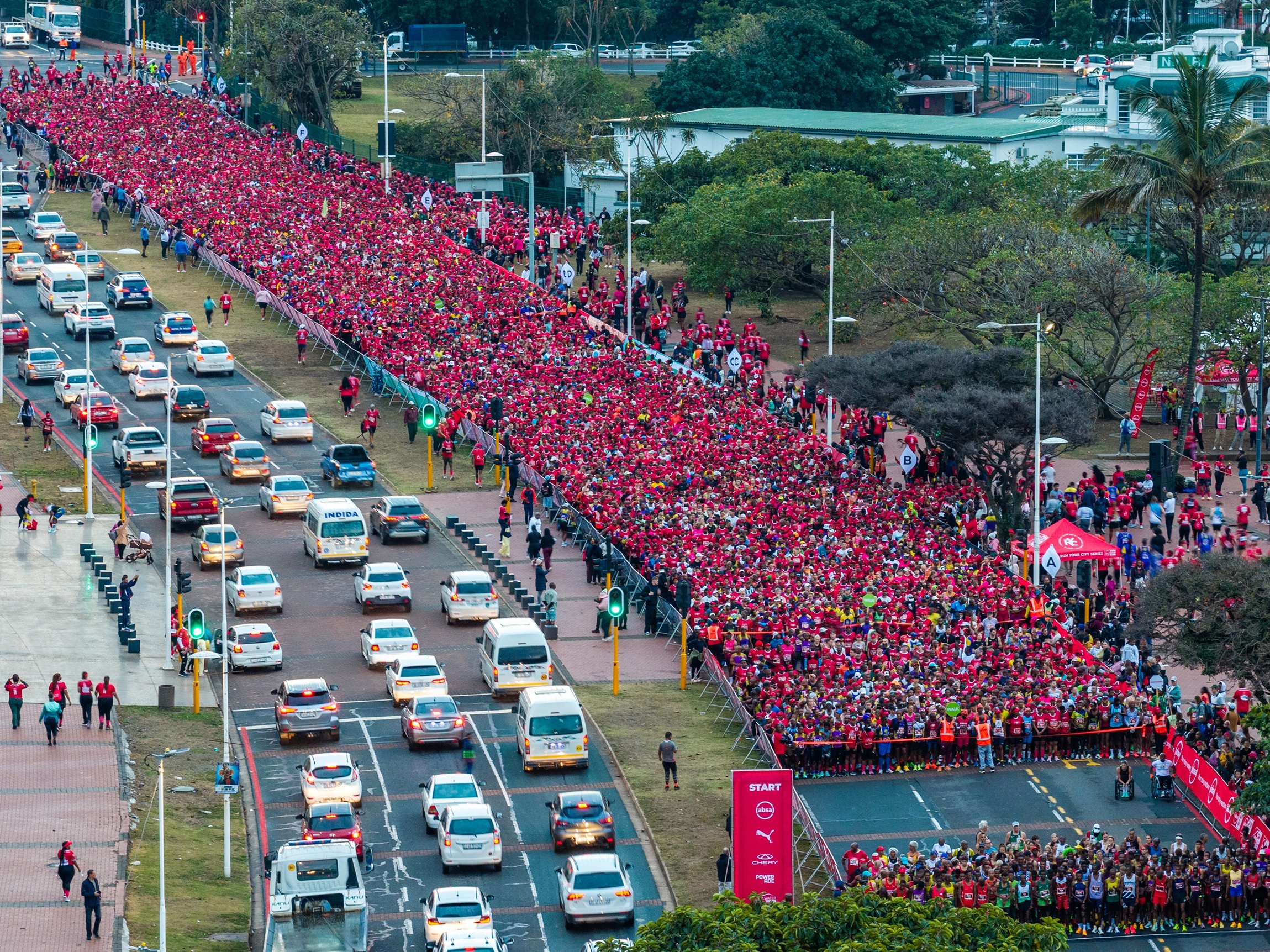
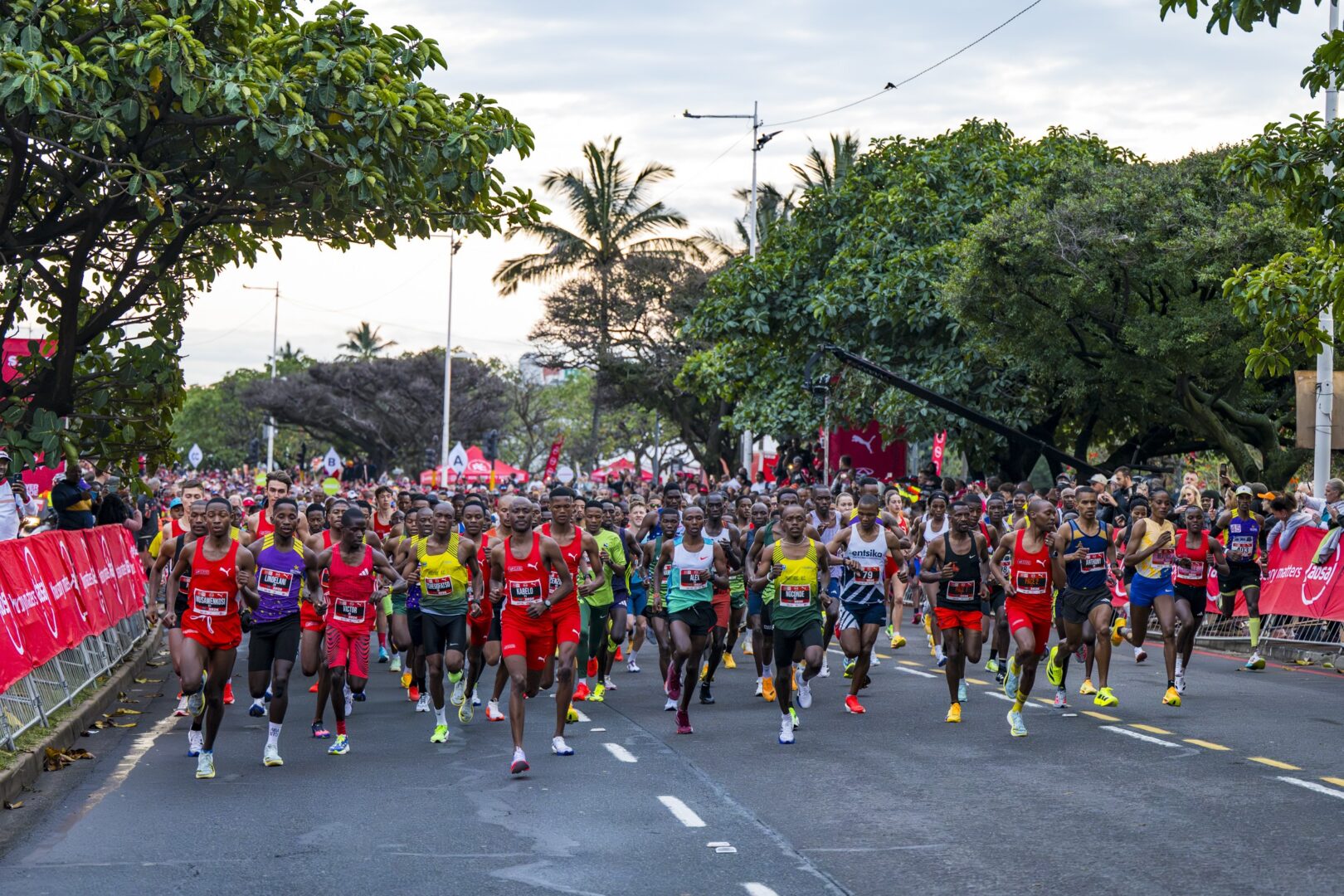
Elite start of the Durban 10K PHOTO CREDIT: Anthony Grote
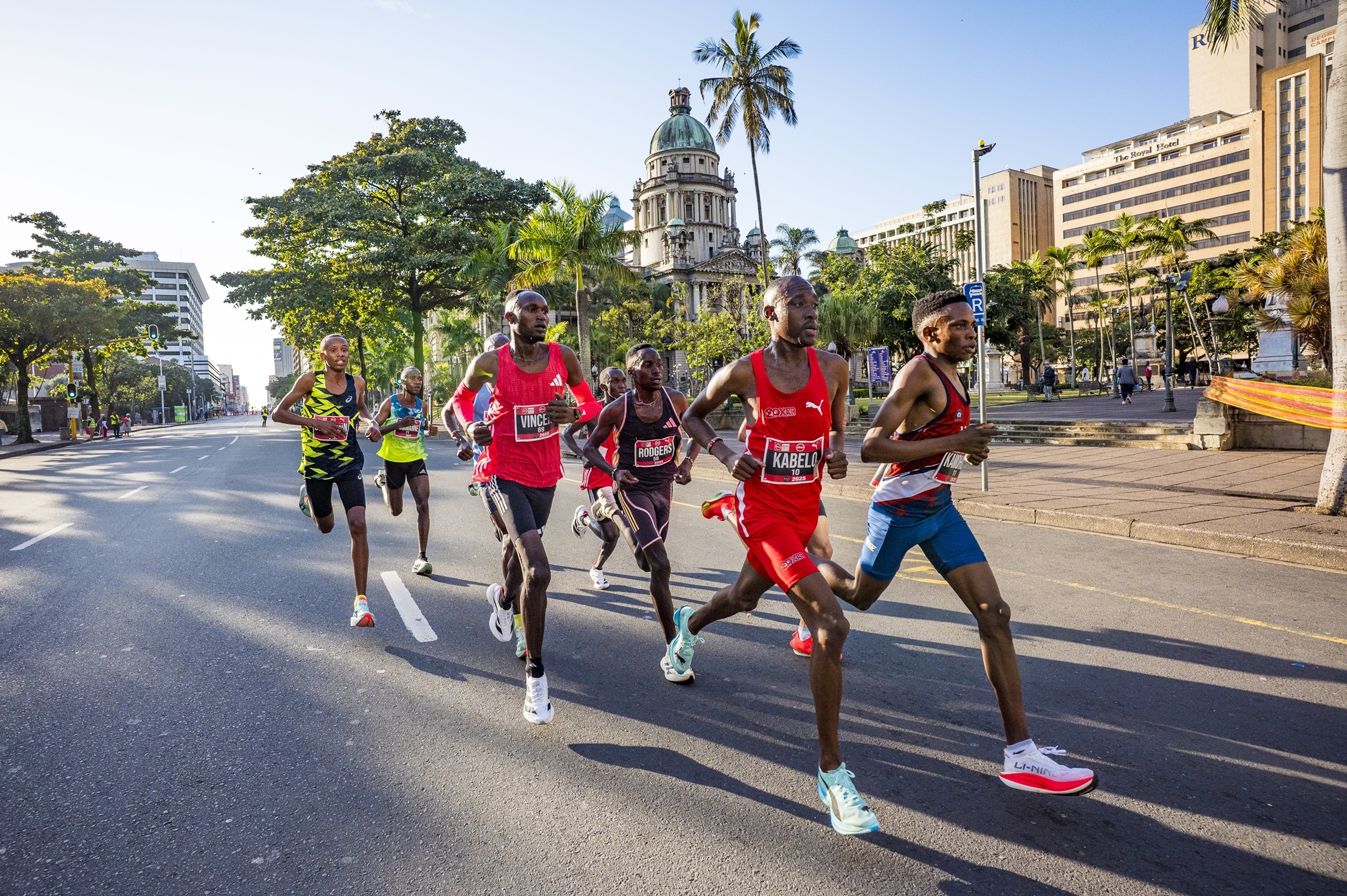
Joshua Cheptegei’s return to the Absa RUN YOUR CITY DURBAN 10K has reignited memories of one of the fastest races ever staged on South African soil, while presenting Stephen Mokoka and Kabelo Mulaudzi with another opportunity to test themselves against one of distance running’s greatest champions.
The two-time Olympic gold medallist returns to Durban on Sunday, eight years after producing a breathtaking 27:16 South African All-Comers record in the 2018 race. That performance made Cheptegei the first athlete to break the 28-minute barrier in South Africa, while Julien Wanders also rewrote the European record with 27:32.
For Mokoka, who finished sixth in that memorable contest, Cheptegei’s presence remains a benchmark for how international stars can elevate local competition.
“It was a great event because of his presence. It was the first time a sub-28-minute 10km was run in South Africa. We witnessed that thanks to Stillwater Sports, which continues to bring the world’s biggest names to our shores. We also saw the European record being broken. Having an athlete of his calibre in our country made it a special occasion, and I’m looking forward to racing against him again,” said Mokoka.
The former South African 10km record holder believes Sunday’s race offers emerging athletes a rare chance to measure themselves against an athlete who has conquered the Olympic Games, World Championships and world records.
“It’s a great opportunity for emerging athletes to compete against one of the best athletes and a world record holder. It also shows how far the Absa RUN YOUR CITY Series has come.
“If you can attract someone like Joshua after winning Olympic and world titles, while also giving athletes like Kabelo Mulaudzi the chance to compete against him, you’re creating healthy competition. The younger athletes won’t be afraid to push the pace, while Joshua will want to remind everyone of his class.”
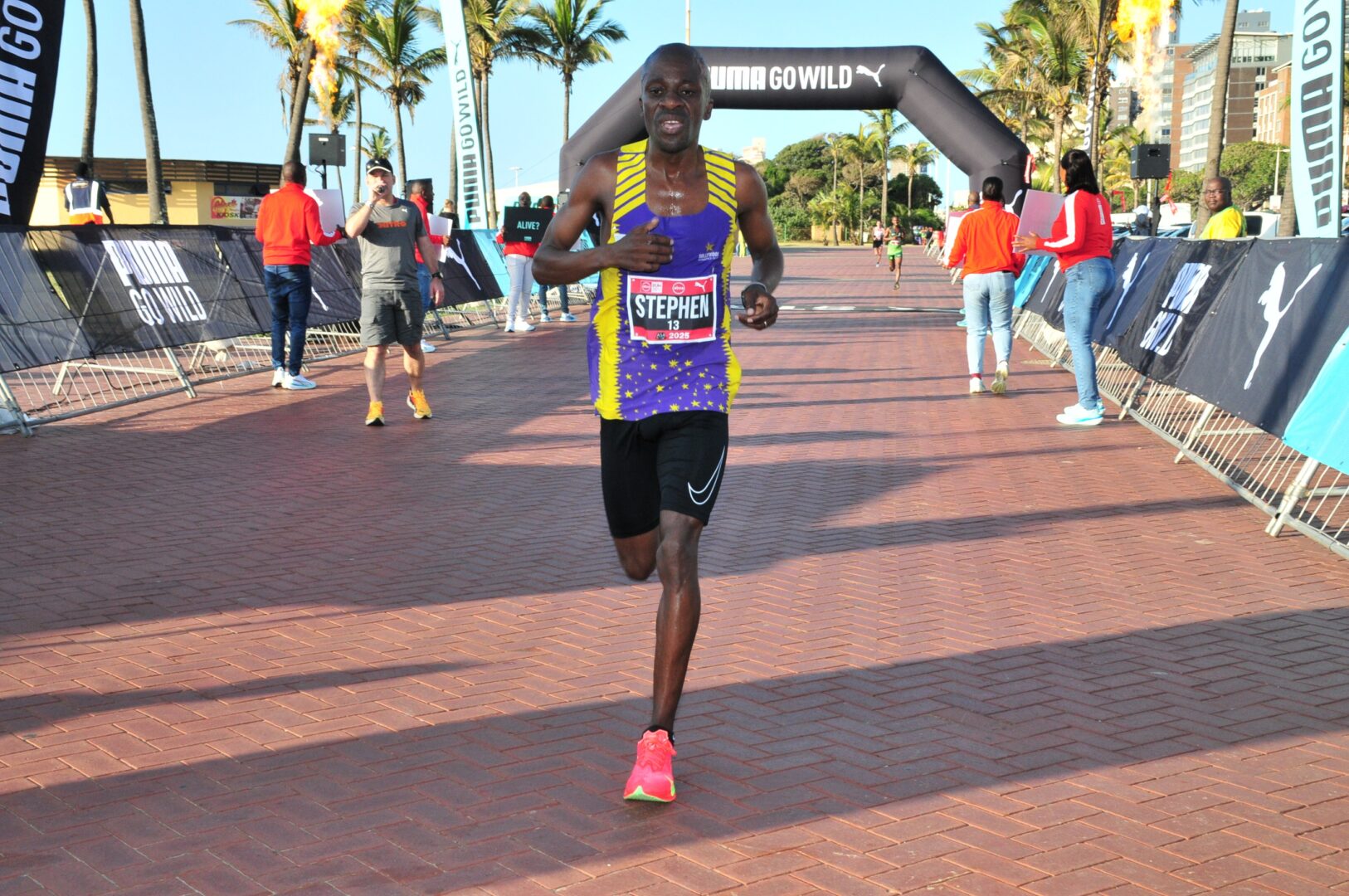
Stephen Mokoka in action during the 2025 Absa RUN YOUR CITY DURBAN 10K. PHOTO CREDITS: Action Photo
Mulaudzi knows the value of that opportunity.
Having finished 13th behind Cheptegei in 2018, he has since developed into one of South Africa’s leading road runners, winning six RUN YOUR CITY races and lowering his personal best to 27:41 in Durban last year.
“I am extremely grateful to the Absa RUN YOUR CITY Series because it created opportunities for me to compete internationally. My invitation to the Great Manchester Run came through those performances, and I believe the organisation of the Absa RUN YOUR CITY Series is every bit as world-class,” he said.
The 27-year-old hopes Sunday’s showdown can inspire another breakthrough.
“I have always enjoyed racing against athletes who are better than me. It’s a privilege to line up with Joshua again, and I hope competing against him will bring out the best in me and everyone else in the field.”
Stillwater Sports managing director Michael Meyer said Cheptegei’s return reflects the growing international reputation of the series.
“Joshua Cheptegei’s return to Durban is a significant moment for the Absa RUN YOUR CITY Series and for South African road running,” Meyer said.
“It speaks to the growth of the series that we are able to attract athletes of Joshua’s calibre. Athletes like Mokoka and Mulaudzi thrive on this level of competition and it raises the standard for everyone involved.
“When the best in the world line up in our races, it elevates the event, inspires the next generation and reinforces the Absa RUN YOUR CITY Series as a truly world-class platform.”
With Durban’s race sold out and one of the sport’s biggest names back on the start line, Sunday’s contest promises another high-quality examination of South Africa’s leading road runners against the global gold standard.
For years, African road running has waited for two stubborn barriers to fall. On 12 July, the sold-out Absa RUN YOUR CITY DURBAN 10Kcould become the stage where both finally surrender.
The prospect of the first men’s sub-27-minute 10km and the first women’s sub-30-minute performance on African soil has transformed the Durban race from another elite road event into a genuine date with history.
At the centre of the men’s assault stands Ugandan superstar Joshua Cheptegei. The Olympic champion and world record holder over 5 000m and 10 000m owns a personal best of 26:38, making him the obvious favourite to shatter the long-standing continental milestone.
Yet the stopwatch will not be chasing Cheptegei alone.
Kenya’s Felix Masai, who claimed victory at this year’s Totalsports Two Oceans Half Marathon, brings a 27:24 lifetime best, while Gilbert Kiprotich believes he has already crossed the psychological finish line.
After producing a blistering 27:01 split during the Lisbon Half Marathon, Kiprotich is convinced Durban’s flat course and fast pace can carry him into the exclusive sub-27 club.
Gilbert Kiprotich Photo Supplied
“I believe I am capable of running comfortably under 27:00 in Durban,” said Kiprotich.
“We are hoping for favourable weather conditions and strong pacing on race day.”
Cheptegei is refusing to become consumed by the numbers, even though they continue to follow him like a determined shadow.
“It would be an honour for the record to be broken on African soil,” he said.
“I think that would be great for African athletics.”
The women’s race carries an equally compelling storyline.
Brenda Jepchirchirreturns to South Africa with unfinished business after strong winds denied her a realistic opportunity of breaking 30 minutes in Gqeberha earlier this year. Since then, the Kenyan has reinforced her credentials by clocking 29:25, making her the second fastest woman in the world in 2026 and the joint fourth fastest in history.
“If the conditions are favourable and the race unfolds well, I would love to run under 30 minutes,” Jepchirchir said.
“It would be a significant milestone in my career, and I believe it is possible.”
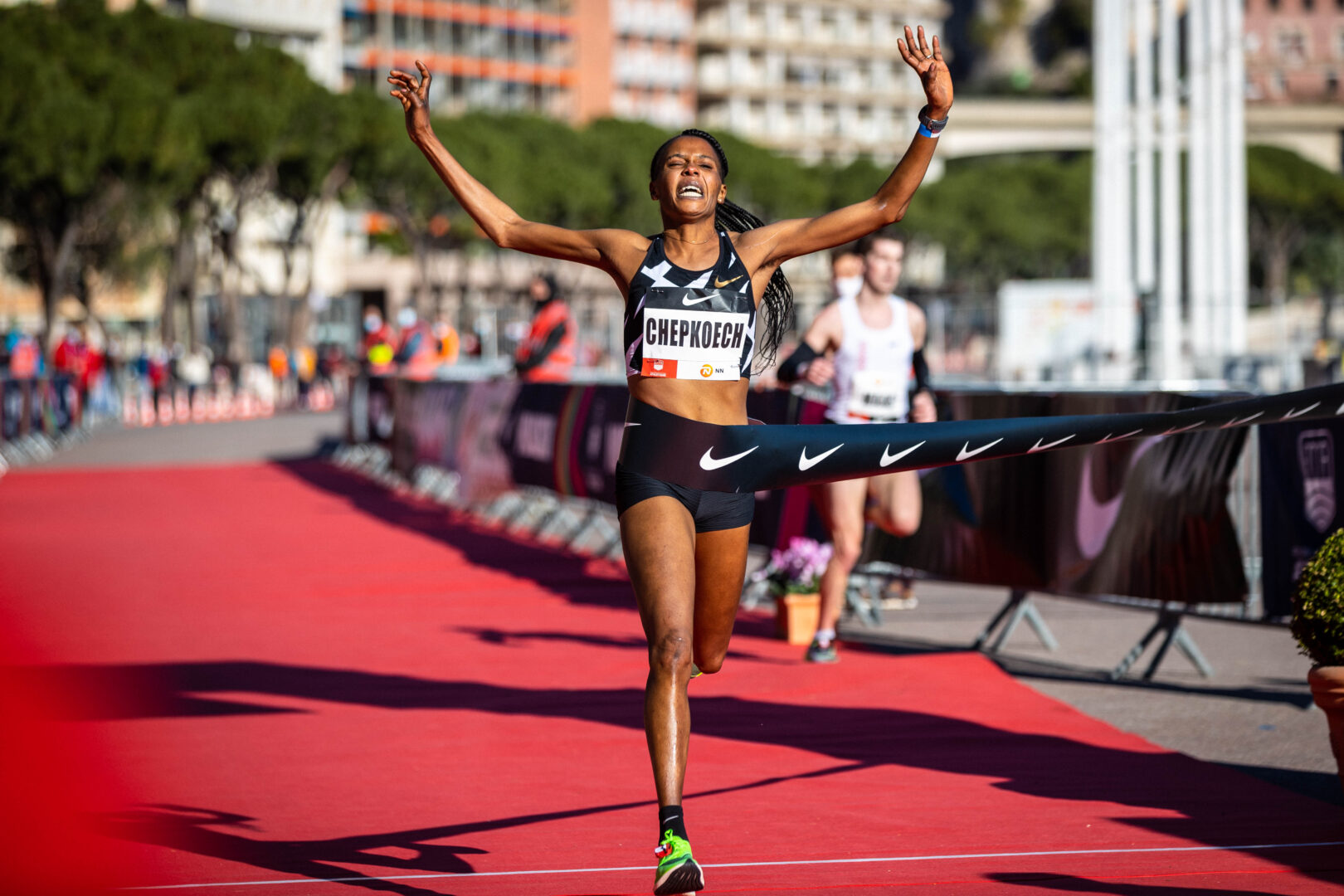
Beatrice Chepkoech by GSC Media House
Standing alongside her is world steeplechase record holder Beatrice Chepkoech, whose presence deepens an already formidable field. Although the Kenyan is continuing her return after giving birth, the 2019 world champion believes Durban offers the perfect setting to be part of something memorable.
“This is what every athlete dreams of, building a legacy that will endure in the world of athletics,” said Chepkoech.
Stillwater Sports founder Michael Meyer believes the stars have aligned.
“The prospect of witnessing the first sub-27-minute men’s 10km and the first sub-30-minute women’s 10km on African soil at a single event is incredibly exciting,” Meyer said.
Elite athletes, favourable winter conditions and one of the continent’s quickest road courses have combined to create a rare opportunity.
Records rarely wave a white flag willingly. The DURBAN 10K now has the chance to force their surrender, twice, in the space of one unforgettable morning.
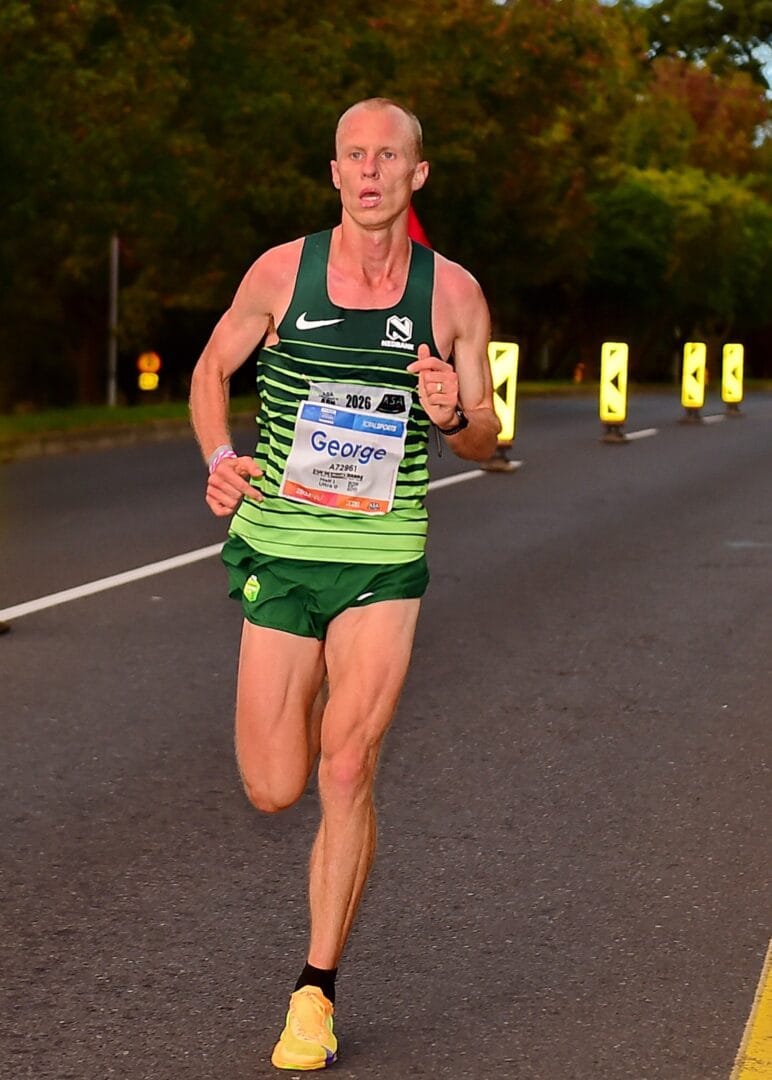
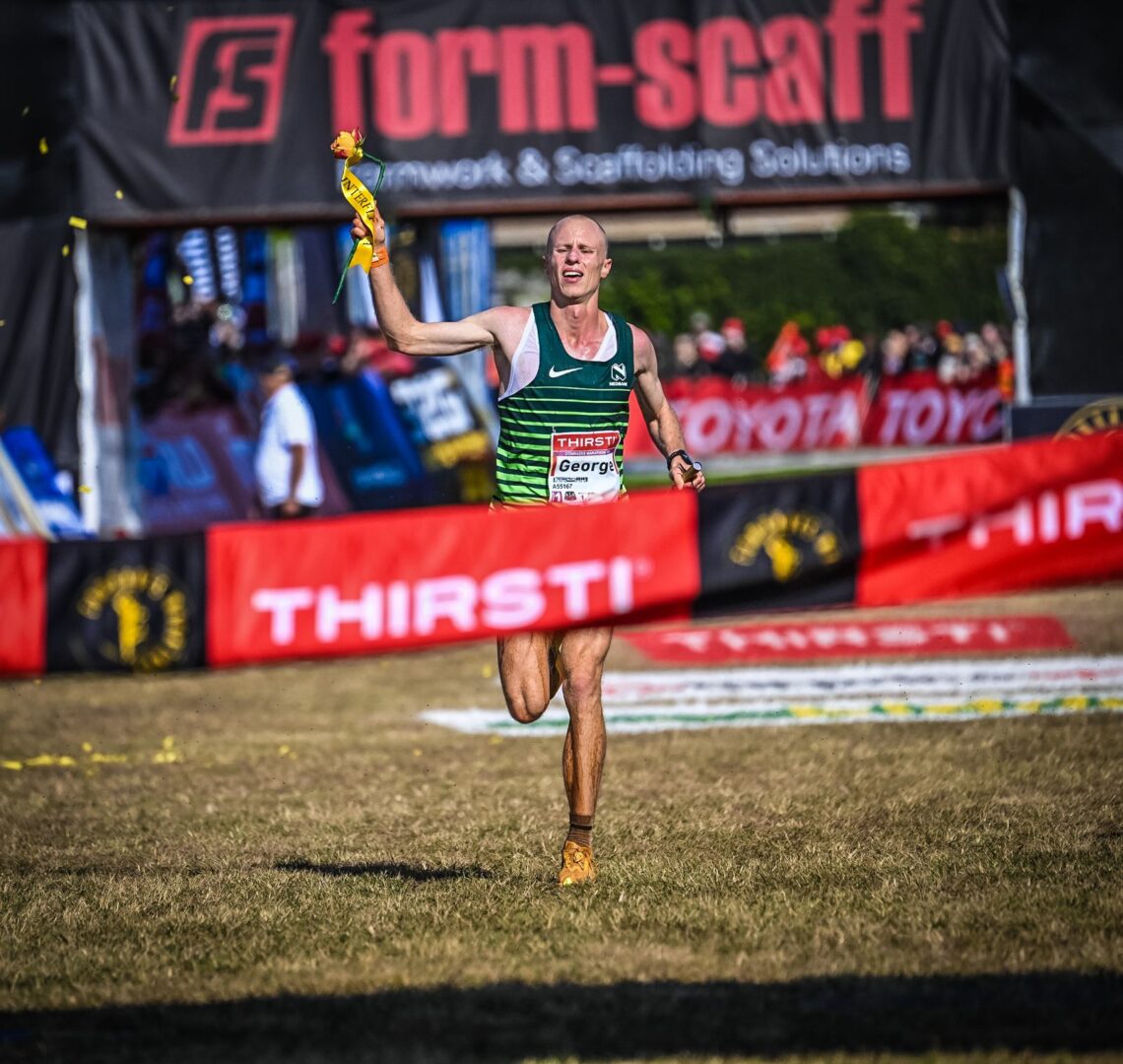
PIETERMARITZBURG – George Kusche andGerda Steyndelivered one of the most remarkable days inComrades Marathonhistory on Sunday, smashing long-standing Up Run records and each walking away with more than R2.3 million in prize money and incentive bonuses.
On a shortened 85.777km route, the fastest in recorded Up Run history, expectations of rapid times proved well founded as both champions produced performances that rewrote the record books.
Kusche stormed to victory in 5:15:56, obliterating the previous men’s Up Run record of 5:24:49 set by Leonid Shvetsov in 2008. His average pace of 3:40.99 per kilometre also eclipsed Vladimir Kotov’s long-standing benchmark for the best average pace.
Dutch defending champion Piet Wiersma finished second in 5:19:36, with South Africa’s Mbuti Mollo taking third in 5:21:31 after leading for much of the race. Great Britain’s Alex Milne and Japan’s Haruki Okayama also dipped beneath the previous course record, underlining the extraordinary pace of the contest.
For Kusche, the victory only became real at the finish line.
George Kusche stormed to victory and obliterated the previous men’s Up Run record and set a new benchmark for the best average pace.
“I honestly didn’t believe I was going to win until I crossed the finish line. Comrades is extremely hard mentally, and there was no way I could know that they were not going to catch me, so I pushed as hard as I could and hoped that nobody would pass me.”
The South African, who finished 12th on debut a year ago, made his decisive move after Mollo began to struggle late in the race and never looked back.
“Comrades is a nerve-wrecking experience. This past week it was very hard to think about anything except the Comrades, and I’m very grateful that everything worked out as planned. It’s a bit of a gamble by going out early, but luckily it paid off this time around,” he said.
Steyn was equally dominant in the women’s race, clocking 5:44:53 to improve on the Up Run record she established in 2024. She also lowered her own best average pace mark while securing a fifth Comrades title, made up of three Up Run victories and two Down Run triumphs.
“It is an honour to come away with another Comrades Marathon win and a new course record. It’s what I have been dreaming of and working for since the start of the year,” Steyn said.
“I ran this Comrades as if it was my last race, but after crossing the finish line I already know it was far from my last. I can’t imagine my life without this race and I’m already looking forward to the 2027 centenary edition.”
Zimbabwe’s Nobukhosi Tshuma claimed second in 5:53:36 after overcoming significant personal sacrifices during her preparation, while South Africa’s Irvette van Zyl completed the podium in 6:02:30.
The record-breaking performances also produced record-breaking rewards.
Kusche and Steyn each earned R2.322 million through victory prize money, the Cell C top-up, first South African incentives, Up Run record bonuses and the Cell C average pace incentive.
Comrades Marathon Association general manager Alain Dalais described the event as an outstanding rehearsal for next year’s centenary edition.
“We are incredibly proud of the 2026 race and our two record-breaking winners. George Kusche lived up to the pre-race expectation by shattering the men’s Up Run record, while Gerda Steyn joined some of the most illustrious legends of this great race with five wins.
“It was a fantastic elite race with record-breaking performances and a truly fitting spectacle for the 50th edition of the Up Run.”
Top 10 Men 1 George Kusche Nedbank Running Club GN South Africa 5:15:56 2 Piet Wiersma Nedbank Running Club International Netherlands 5:19:36 3 Mbuti Mollo Maxed Elite KZN South Africa 5:21:31 4 Alex Milne Nedbank Running Club International Great Britain 5:22:29 5 Haruki Okayama Nedbank Running Club International Japan 5:24:46 6 Charles Lawrence adidas United States of America 5:27:08 7 Lloyd Bosman Nedbank Running Club SWD South Africa 5:28:53 8 Nikolai Volkov Nedbank Running Club International ANA 5:28:59 9 Vasilii Korytkin Kemerovo Runners ANA 5:29:29 10 Tebogo Pulusa Dwarsrivier Mine Athletic Club South Africa 5:29:40
Top 10 Women 1 Gerda Steyn Hollywood Athletic Club CGA South Africa 5:44:53 2 Nobukhosi Tshuma Entsika Zimbabwe 5:53:36 3 Irvette van Zyl Hollywood Athletic Club CGA South Africa 6:02:30 4 Shelmith Muruiki Entsika Kenya 6:06:38 5 Naomi Robinson Nedbank Running Club International Great Britain 6:07:55 6 Loveness Madziva Nedbank Running Club Zimbabwe Zimbabwe 6:09:54 7 Courtney Olsen Hollywood Athletic Club International United States of America 6:11:20 8 Dikiledi Majara Nedbank Running Club AFS Lesotho 6:12:29 9 Jenet Mbhele Umzimkhulu Striders South Africa 6:13:08 10 Carla Molinaro Hollywood Athletic Club International Great Britain 6:14:04
Cape Town has crossed a finish line decades in the making.
The Sanlam Cape Town Marathonhas officially become the first Abbott World Marathon Majoron African soil after passing the second and final stage of its assessment process, securing its place among the sport’s most prestigious races.
From 2027, Cape Town will stand alongside Tokyo, Boston, London, Sydney, Berlin, Chicago and New York in what has long been marathon running’s most exclusive club, a landmark moment for a continent that has produced generations of distance-running greats.
“After watching the race grow in size and stature during its candidacy and also seeing the resilience and dedication of the team lead so wonderfully by Clark Gardner, Africa’s first Major has finally arrived.The unique culture, the welcome from the people of the city and the wonderful setting Cape Town provides will bring a whole new dimension to our series. I know runners in Africa and across the world will have a phenomenal experience at this race.”
The announcement marks the culmination of years of planning and community support, with organisers repeatedly highlighting the role played by runners, volunteers, clubs, sponsors and city partners in helping the event meet the demanding criteria.
“This achievement belongs to every person who believed in and committed to this vision,” said race director and CEO Clark Gardner.
“We could never have reached this moment alone. Our runners carried us to the numbers we needed, our sponsors and partners stood firm beside us even when the 2025 race could not go ahead, and our supporters, club captains, residents and service providers each played their part. The Sanlam Cape Town Marathon stands as proof that when Africa comes together, we can achieve anything. This victory belongs to all of them.”
The significance stretches far beyond one city or one race.
For years, African athletes have dominated the global marathon scene while many recreational runners faced the financial burden of travelling overseas to experience a Major. Cape Town’s elevation changes that equation, with organisers committing to keeping two-thirds of race entries available to African participants.
Sanlam Group CEO Paul Hanratty described the announcement as “a collective victory”.
“For 13 years, Sanlam has been part of this journey, walking alongside the event as a committed partner and supporting its growth into a world-class platform. We hope this moment inspires people across Africa to dream bigger, go further and live with confidence.”
The event also carries significant economic value, with projections suggesting it could contribute around R800 million through tourism, accommodation and related spending.
Cape Town Mayor Geordin Hill-Lewis. Image Fahwaaz Cornelius
“For Cape Town to be the home of an Abbott World Marathon Majors race is an incredible moment for our city,” said Mayor Geordin Hill-Lewis.
“Achieving this milestone will contribute greatly to Cape Town’s economy, inspire future generations of runners, and leave a legacy for the sport across Africa.”
For a continent that has long supplied many of marathon running’s brightest stars, the road has finally curved home. Africa is no longer chasing the world’s biggest races. It now hosts one.
TheSanlam Cape Town Marathondelivered a landmark moment for African road running on Sunday as Ethiopia’s Mohamed Esa produced the fastest marathon ever run on African soil in a record-shattering performance through the streets of the Mother City.
Esa stormed to victory in 2:04:55, obliterating the previous course record of 2:08:16 set by fellow Ethiopian Abdisa Tola in 2024.
Mohamed Esa of Ethiopia won the 2026 Sanlam Cape Town Marathon in a new course record 2:04:55, which is the fastest time ever run on African soil. Image: Fahwaaz Cornelius
His time also eclipsed the previous fastest marathon run on the continent, the 2:06:32 recorded by Morocco’s Hicham Laqouahi in 2020, while establishing a new South African All-Comers record.
One of the key requirements for Major status is a world-class elite and wheelchair field. The 2026 edition delivered exactly that and the athletes responded by rewriting the record books.
Esa arrived in Cape Town with the quickest season-best in the field after clocking 2:04:49 in the 2025 Chicago Marathon, and delivered on that form with a decisive late surge.
He broke away from a leading pack of four inside the final three kilometres before pulling clear again in the closing stages.
The depth of the elite field underlined the quality of the race, with the first 10 runners all finishing quicker than the previous course record.
“To be honest, I was not thinking about the course record today, because my target was to win the race in my African homeland,” said Esa.
“So the win was the priority, and I was not targeting the course record, but I am really happy that I could do both today.”
Fellow Ethiopian Yihunilign Adane finished second in 2:04:59, while Kenya’s Kalipus Lomwai completed the podium in 2:05:06.
South African veteran Stephen Mokoka was the leading local athlete in 13th place in 2:10:48.
He was followed by Matlakala Bennet Seloyi, who clocked a personal best 2:12:17, while debutant Anthony Timoteusimpressed with 2:13:04 in his first marathon.
The Ethiopian later waited at the finish line to welcome fellow runners home, including marathon great Eliud Kipchoge, who finished 16th in 2:13:29.
“Eliud is my role model, and I love and respect him so much,” Esa said.
“I wanted to show the world that we are the same family of African runners.”
In the women’s race, Ethiopia completed a clean sweep of the podium positions.
The top 3 women in the 2026 Sanlam Cape Town Marathon, from left, Mestawut Fikir (Ethiopia, second), Dera Dida Yami (Ethiopia, winner), and Waganesh Amare (Kenya, third).Image: Fahwaaz Cornelius
Dera Dida Yami claimed victory in 2:23:18, narrowly missing the course record of 2:22:22 set by South Africa’s Glenrose Xaba in 2024.
“I came here to win the race and that was my goal,” Dida said.
“But I’ll be very happy to come back here and try to break the course record next year.”
She also revealed that Tamirat Tola already plans to race in Cape Town next year after missing this year’s event following his London Marathon campaign.
Mestawut Fikir crossed second in 2:23:46, with Waganesh Amare third in 2:23:57.
Former women’s world champion Edna Kiplagat finished fifth in 2:25:44 at the age of 46.
South Africa’s top finisher was Mia Morrison, who placed 15th in 2:49:52.
WHEELCHAIR RECORDS SHATTERED
The wheelchair races also produced two course records.
Great Britain’s David Weir won the men’s race in 1:30:20 to better the previous mark of 1:32:09 set in 2023.
“The atmosphere was amazing with the crowd, and the weather was good as well,” said Weir.
“I didn’t plan to go for the record today, it was one of those things.”
David WeirManuela Schär
Switzerland’s Manuela Schär dominated the women’s race in 1:43:25, smashing the previous course record of 1:52:58.
“I’ve done all the Majors around the world, and this is definitely one of my favourites,” Schär said.
“The crowd was amazing, and then the view… you have the ocean and Table Mountain. It was beautiful.”
The latest edition of the Sanlam Cape Town Marathon comes at a crucial stage in the event’s bid to become part of theAbbott World Marathon Majors series, strengthening its growing reputation as Africa’s leading marathon.
The Sanlam Cape Town Marathon is poised for a potentially historic Sunday as one of the deepest elite fields ever assembled on African soil prepares to attack the record books beneath Table Mountain.
The 32nd edition of the race has attracted 27,000 marathon runners and a combined total of 44,500 participants across the weekend’s events, while the elite field carries enough firepower to threaten both course records.
In the men’s race, 13 athletes have already run faster than the current course mark of 2:08:16 set by Abdisa Tola in 2024. Ten of them have dipped beneath that time within the last year.
Leading the charge is marathon icon Eliud Kipchoge, the two-time Olympic champion and former world record-holder, whose personal best of 2:01:09 makes him the fastest athlete in the field historically.
Although now 41, Kipchoge remains a formidable contender after clocking 2:05:25 in London last year.
Ethiopia’s Mohamed Esa enters with arguably the sharpest recent form after posting 2:04:49 in Chicago in 2025, while Israel’s Maru Teferi arrives with a personal best of 2:04:44.
Mohamed Esa
Kenya’s Benard Kipkurui Biwott and Justus Kangogo, alongside Ethiopians Yihunilign Adane, Mulugeta Asefa Uma and Boki Kebede Asefa, add further depth to a field packed with sub-2:06 runners.
Another major contender is Adane Gebre Kebede, who won in Cape Town in 2023 and finished runner-up in 2024. His recent 2:06:16 in Houston suggests he could again feature prominently.
South Africa’s hopes will largely rest with three-time champion Stephen Mokoka, alongside Desmond Mokgobu, Bennet Seloyi and debutant Anthony Timoteus.
The women’s race also promises fireworks.
South African star Glenrose Xaba set the course record of 2:22:22 in 2024, producing the fastest women’s marathon ever run on African soil. This year’s elite lineup includes five women who have already run faster than 2:20.
Ethiopian trio Ruti Aga, Dera Dida and Mestawat Fikir are expected to spearhead the challenge. Aga owns a 2:18:09 best, while Dida and Fikir have clocked 2:18:32 and 2:18:48 respectively.
Edna Kiplagat
Experienced campaigners Lonah Salpeter and Edna Kiplagat add further quality to the field. Salpeter remains the fastest woman in the race historically with her 2:17:45 Tokyo victory in 2020, while two-time world champion Kiplagat continues to compete at elite level at 47.
“We have assembled the best marathon elite and wheelchair fields the African continent has ever seen, led by the best marathon runner of all time, Eliud Kipchoge,” said Clark Gardner.
“With so many starters who have run faster times than our course records, we feel confident that the record books will need updating after this year’s race.”
The race also represents another significant milestone in Cape Town’s bid to become Africa’s first Abbott World Marathon Majorsevent, alongside marathons in New York, Boston, Berlin, Chicago, Tokyo, Sydney and London.
South African sprinter Gift Leotlela produced a major statement at the opening meeting of the 2026 Wanda Diamond League season after storming to victory in the men’s 100m in Shanghai on Saturday.
Leotlela clocked 9.97 seconds in a race decided by the narrowest of margins, with the top three separated by hundredths of a second in a dramatic photo finish.
Kenya’s Ferdinand Omanyala took second in 9.98 after being added late to the field, while American sprinter Kenny Bednarek matched that time for third place.
It marked the firstDiamond League victory of Leotlela’s career and continued a strong rise for the South African, who carried a personal best of 9.87 into the meeting.
“It means a lot to win my first-ever Diamond League,” Leotlela said afterwards.
“It is a first time in China for me, so to finish number one was a great feeling. I wanted to come here and enjoy myself and make a good start to the season.”
Leotlela said he focused more on execution than the clock in a field packed with proven international performers.
“I knew I am in great shape, but I didn’t want to think about time, just focus on my race. I had a decent start, not great. I just tried to keep my composure, stay in my rhythm and stay strong.”
The performance will strengthen belief that Leotlela can challenge consistently on the global stage this season, particularly with major championships looming later in the year.
“The main goal for me in 2026 is to win the Commonwealth Games and then on to the Ultimate Championships at the end of the season,” he said.
South Africa’s Akani Simbinefinished sixth in 10.05, while Botswana Olympic champion Letsile Tebogo crossed seventh in 10.12 after balancing 100m and 400m races earlier this season.
The 2026 Wanda Diamond League season continues in Xiamen on 23 May before travelling to stops including Rome, Paris, London and Zurich ahead of the final in Brussels on 4 and 5 September 2026.