
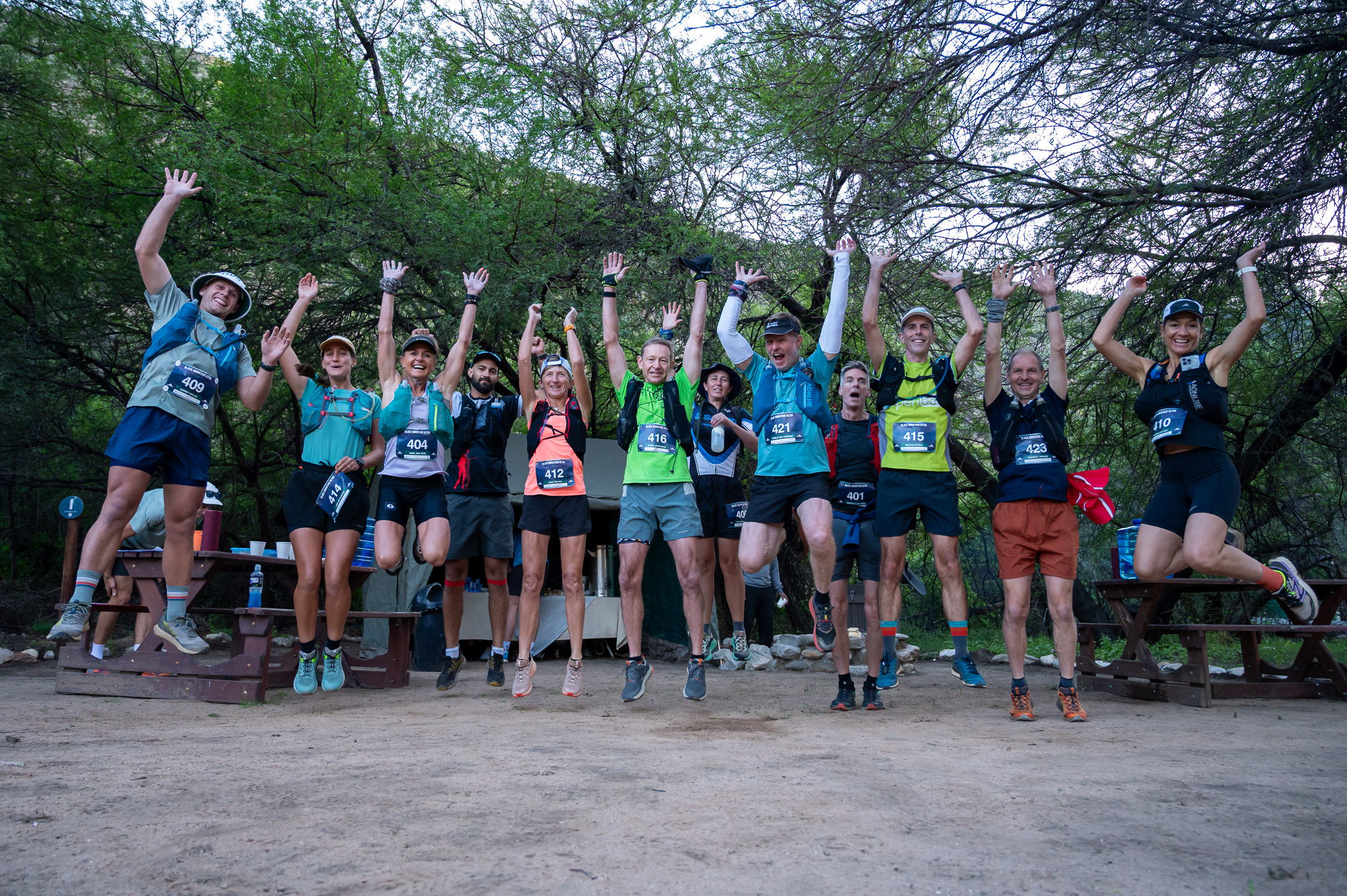
By Adnaan Mohamed
There are mountains that invite you to admire their beauty. Then there are mountains that demand you earn the privilege of experiencing them.
Deep in the rugged heart of the Klein Karoo, the Swartberg Mountains offer both in generous measure. Their formidable slopes, unforgiving shale trails, technical descents and exposed ridgelines promise an adventure where every kilometre comes with a price, every climb tests your resolve and every summit offers a breathtaking reward.
For those brave enough to answer the call, the Black Mountain Ultra returns on 16 October 2027, bringing trail runners back to one of South Africa’s most spectacular and demanding mountain playgrounds.
Based near Calitzdorp, with its race village at The Retreat at Groenfontein, approximately four hours from Cape Town, the event offers four distances: 73km, 43km, 19km and 6km.
An ITRA-accredited and UTMB Index race, Black Mountain Ultra is back for its second edition following an inaugural event in 2026 that attracted 136 participants across the four distances.
However, the real story behind this emerging trail-running adventure stretches far beyond elevation profiles, finishing times and accumulated kilometres.
At its heart is a personal connection to the mountains, an extraordinary endurance journey and a vision to put the Klein Karoo firmly on the adventure-tourism map.
From personal battles to mountain ambitions
For founder Elize van Staden, Black Mountain Ultra represents the coming together of two lifelong passions: endurance sport and the great outdoors.
Her own journey has been punctuated by formidable challenges, including several Ironman events, ultramarathons and the extraordinary 111km La Ultra in the Himalayas.
Her relationship with endurance sport began with a refusal to surrender.
In 2007, van Staden was advised that she would have to give up running. Surgery followed, and during her recovery she needed a new goal. Someone suggested Ironman.
The distance seemed almost incomprehensible, but completing her first event, despite suffering two flat tyres, ignited a passion that would take her to some of the world’s most challenging endurance destinations.
A significant deep-vein thrombosis (DVT) later presented another obstacle. Her response was to take on La Ultra, an intimidating 111km adventure at extreme Himalayan altitude.
For van Staden, the attraction of endurance sport lies in discovering what remains possible when the body and mind begin negotiating for an early finish.
“I’ve always believed I could go further than I might first imagine,” she explains.
“Life is too short to be ruled by ‘what ifs’. I think we should do the things that scare us, take on the challenges that excite us, and give ourselves the chance to discover what we’re capable of.”
La Ultra delivered a particularly brutal lesson in mental resilience.
Runners endured a night of temperatures reaching minus 10 degrees Celsius before climbing into daytime conditions exceeding 40 degrees.
The physical toll accumulated with every kilometre, leaving her feet, back and almost every muscle protesting.
One moment remains particularly vivid.
With only 9km remaining, van Staden passed her hotel in Leh, went inside, sat on the couch and put her feet in water.
Getting back up proved an enormous psychological battle.
Encouraged by those around her, she eventually stood and walked the remaining distance to the finish.
The experience reinforced a philosophy that now underpins her approach to endurance and the Black Mountain Ultra.
“You don’t have to feel certain you can finish. You find a way to keep moving while the doubt is still there.”
Her strategy is refreshingly uncomplicated: break an overwhelming challenge into manageable pieces.
Reach the next hill. Get to the summit. Then decide what comes next.
It is advice that will resonate with anyone staring up at the Swartberg’s intimidating slopes.
A mountain race born from a lifelong connection
The inspiration behind Black Mountain Ultra stretches back to Van Staden’s childhood.
Her father grew up in Ladysmith, and family trips to the Swartberg introduced her to the rugged beauty of the Klein Karoo.
A particularly significant moment arrived in 2010 during a five-day bikepacking expedition from Prince Albert to Van Wyksdorp.
Cycling along Groenfontein Road outside Calitzdorp, she looked across a secluded valley framed by the imposing Swartberg Mountains.
The possibility of creating a race was not yet on her radar, but the landscape stayed with her.
Years of returning to the region, exploring its roads, trails and mountain passes, eventually helped transform that connection into an ambitious project.
“We wanted to share this remote landscape through an experience worthy of it,” she says.
Establishing an event in such an isolated mountain environment was a considerable undertaking, requiring relationships with CapeNature, private landowners and the local community.
The first person in Calitzdorp to support the idea was Erika Calitz, who operates the Donkey Trail concession.
Her knowledge of the terrain and community helped open doors and gave the organisers confidence to pursue the project.
That early support became the foundation of an event built on collaboration and local involvement.
The mountain always gets the final say
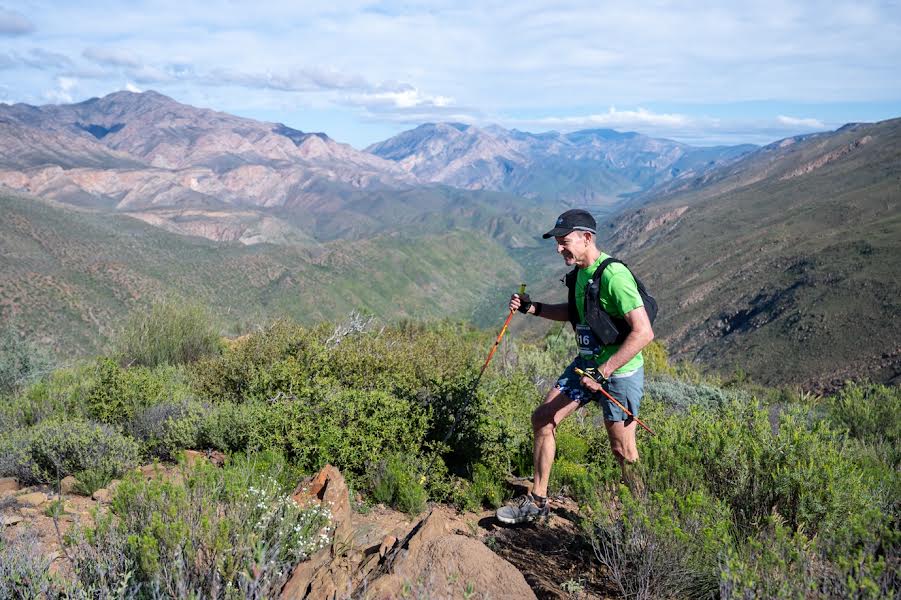
The 73km route is a serious examination of mountain-running credentials.
Its 2,838m of climbing comes through a succession of demanding ascents and descents, with fatigue accumulating as runners negotiate rough terrain and exposed mountain sections.
Shale underfoot takes its toll, shade is scarce and unpredictable weather adds another layer of complexity.
One section, however, deserves particular attention.
Van Staden identifies the climb from Fonteinplaas, out of Gamkaskloof towards Donkey Camp and the route’s highest point, as the toughest section of the race.
By then, runners will already have descended The Ladder and crossed the valley.
Their legs will be carrying the accumulated punishment of the earlier terrain when the long, exposed ascent begins.
Conditions can change dramatically, with valley heat giving way to cold and wind at higher elevations.
Reaching the summit offers little opportunity for celebration. A lengthy, technical descent over loose and uneven ground still awaits.
The mountain has a wicked sense of humour.
For van Staden, preparation is non-negotiable.
“Build time on your feet, practise climbing and descending on rough terrain, and test your nutrition, hydration and kit before race day.”
Mandatory equipment requirements also deserve serious attention. Runners must understand that carrying the prescribed gear is an essential part of participating responsibly in remote mountain terrain.
Her advice to prospective entrants is simple: respect the route and never underestimate it.
“Black Mountain Ultra is not only for the fastest runners. It is for people willing to prepare, respect the mountain and take on something that feels bigger than their everyday experience.”
For first-time mountain ultrarunners, she recommends building gradually, developing confidence through experience and learning to manage the terrain rather than concentrating exclusively on distance.
And perhaps most importantly, runners should not wait until every trace of doubt disappears.
A little uncertainty is part of the adventure.
Beyond the finish line: Growing the Klein Karoo
Black Mountain Ultra is the flagship event of Traverse The Earth, a female-founded and female-led South African adventure and eco-tourism company established by Van Staden in 2025.
Its ambitions extend well beyond staging an annual trail race.
The broader vision is to develop cycling, e-bike and locally led adventure experiences connecting visitors with Calitzdorp, Route 62 and the surrounding Klein Karoo.
Wine farms, food, art, local producers, natural attractions and existing trails all form part of the bigger picture.
The objective is to encourage visitors to stay longer, explore further and invest in communities that often remain overlooked by mainstream tourism.
October is particularly significant.
The Garden Route and Klein Karoo Tourism Strategy 2025–2030 identifies events as an important mechanism for spreading tourism benefits across different seasons and destinations.
With tourism traditionally peaking during December and January, an October event provides an opportunity to attract visitors during a quieter period.
Van Staden believes Route 62 is increasingly establishing its own identity as a destination.
“More people are beginning to recognise it as a destination in its own right, where they can enjoy slower, more meaningful experiences,” she says.
The race also offers tangible benefits to local businesses.
Accommodation providers, restaurants, shops, farms and other enterprises contribute to the event, while runners frequently travel with family members, friends and support crews who spend several nights in the region.
The message is clear: come for the mountains, stay for the Klein Karoo.
Sustainability with purpose
Environmental responsibility and community involvement are woven into the event’s DNA.
The inaugural race introduced several practical initiatives aimed at reducing waste and supporting environmental restoration.
Finishers received spekboom plants through Jobs for Carbon, a landscape-restoration programme operating in Vanwyksdorp.
A total of 190 handmade goodie bags were produced using discarded T-shirts, curtain material and other fabric waste through a collaboration with Re.Bag.Re.Use and members of the Vroue Landbou Vereeniging.
Single-use plastic was eliminated at aid stations, with reusable soft cups provided to participants.
These initiatives will form part of the event’s ongoing sustainability commitment.
Black Mountain Ultra also supports the Klein Karoo Athletics Fund, which helps local athletes access coaching, development and competition opportunities.
Its wider environmental partnerships include Jobs for Carbon and the Gouritz Cluster Biosphere Reserve, which works to protect biodiversity while strengthening resilient landscapes and communities.
Local volunteers are equally important, assisting with registration, equipment checks, route marking, aid stations and runner support.
Landowners contribute invaluable knowledge about access, gates, water points and the logistical demands of operating in remote terrain.
This is community tourism in action, with the mountains providing the spectacular backdrop and local people helping make the experience possible.
An adventure worth travelling for
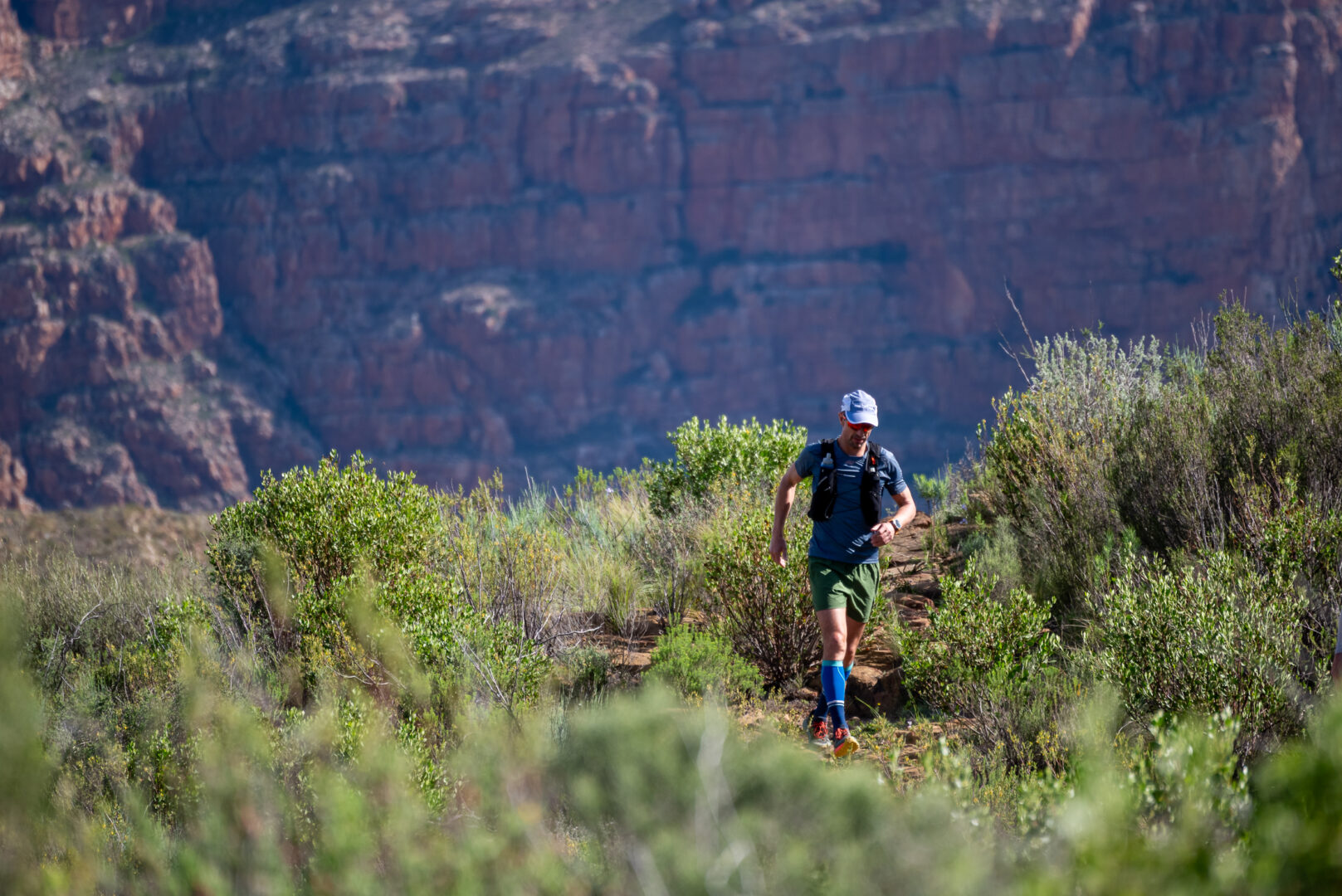
The 43km route starts in Gamkaskloof, with a coordinated shuttle system transporting participants into the remote valley.
The 19km provides a challenging mountain-running experience, while the 6km offers families and newcomers an opportunity to experience the event.
Together, the four distances create an inclusive platform for runners with different levels of experience and ambition.
For van Staden, success will ultimately be measured by what participants carry home beyond their finishing times.
“I hope runners leave with more than a finish time,” she says.
She wants them to discover the mountains, experience the hospitality of the Klein Karoo, support local businesses and build connections with the people who call the region home.
“The race is a mountain challenge, but it should end in connection: to the landscape, the people and a stronger sense of what you’re capable of.”
That is perhaps the most compelling attraction of Black Mountain Ultra.
The Swartberg will demand strong legs, disciplined preparation and an iron will. Its climbs will test patience, its descents will punish tired muscles and its unpredictable conditions will expose every weakness in a runner’s preparation.
Yet somewhere between the valley floor and the mountain summit lies the possibility of discovering something extraordinary about yourself.
The finish line may be 73km away, but the real journey begins with a single step.
And as van Staden’s own endurance story reminds us, sometimes the greatest achievement is finding the courage to keep moving when the mountain seems determined to stop you.
For more information and entries, visit blackmountainultra.com.