
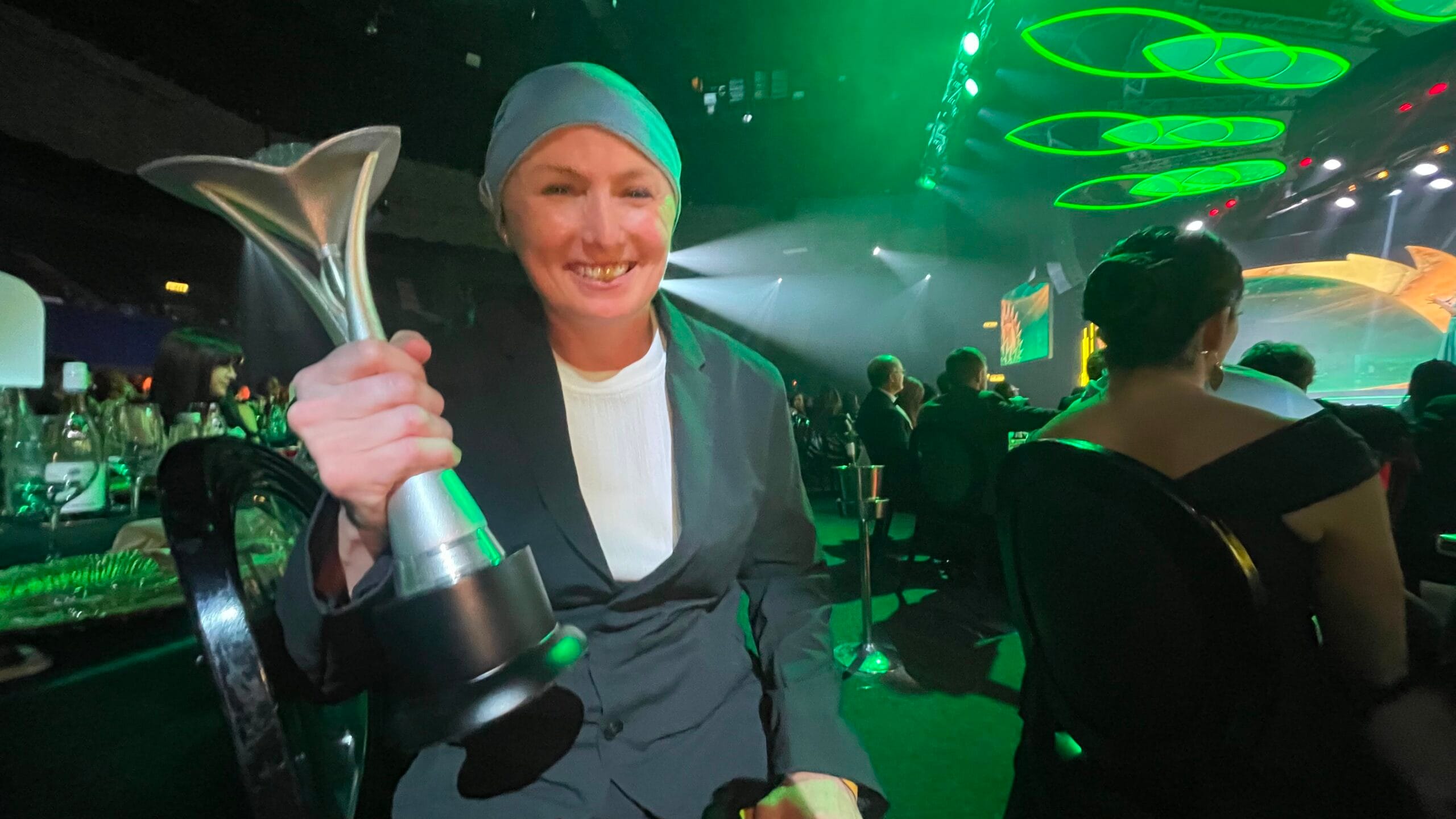
SUN CITY, NORTH WEST: From breaking barriers on the rugby field to facing breast cancer with extraordinary courage, Aimee Barrett-Theron continues to inspire. The most-capped female international referee in rugby history was named Technical Official of the Year at the South African Sport Awards. Her message to the Springboks ahead of their Cape Town clash with the All Blacks? “Sterkte.”
By Adnaan Mohamed
Aimee Barrett-Theron has spent years policing rugby’s most ferocious frontiers with a whistle, a stopwatch and nerves forged in the furnace of elite sport.
On Sunday night, 23 August, the trailblazing referee received another trophy for her extraordinary contribution, being named Technical Official of the Year at the 19th South African Sport Awards at Sun City Superbowl.
Her latest accolade came with an unmistakably human soundtrack. Barrett-Theron is halfway through treatment for breast cancer, temporarily away from the international rugby battlefield and drawing strength from the same discipline that carried her through some of the sport’s biggest arenas.
“The treatment’s going well. I’m about halfway through at the moment so it’s been quite a challenge not being on the field, but I’m still very much involved for coaching because I’m still very much involved here so it’s a tough time to be out there, but I’m still as supportive as I can,” she said.
The road back remains a marathon measured in courage rather than kilometres.
“Yeah, yeah, so a couple of tests and a lot of my friends out there referring I’d love to be supportive there but it’s 20% for the year,” Barrett-Theron said in the interview, reflecting on her curtailed involvement in officiating.
Her career has already smashed through several glass ceilings.
A former Springbok Women’s XVs and Sevens player, she swapped playing boots for the referee’s whistle and became the first woman to referee a men’s professional match in South Africa.
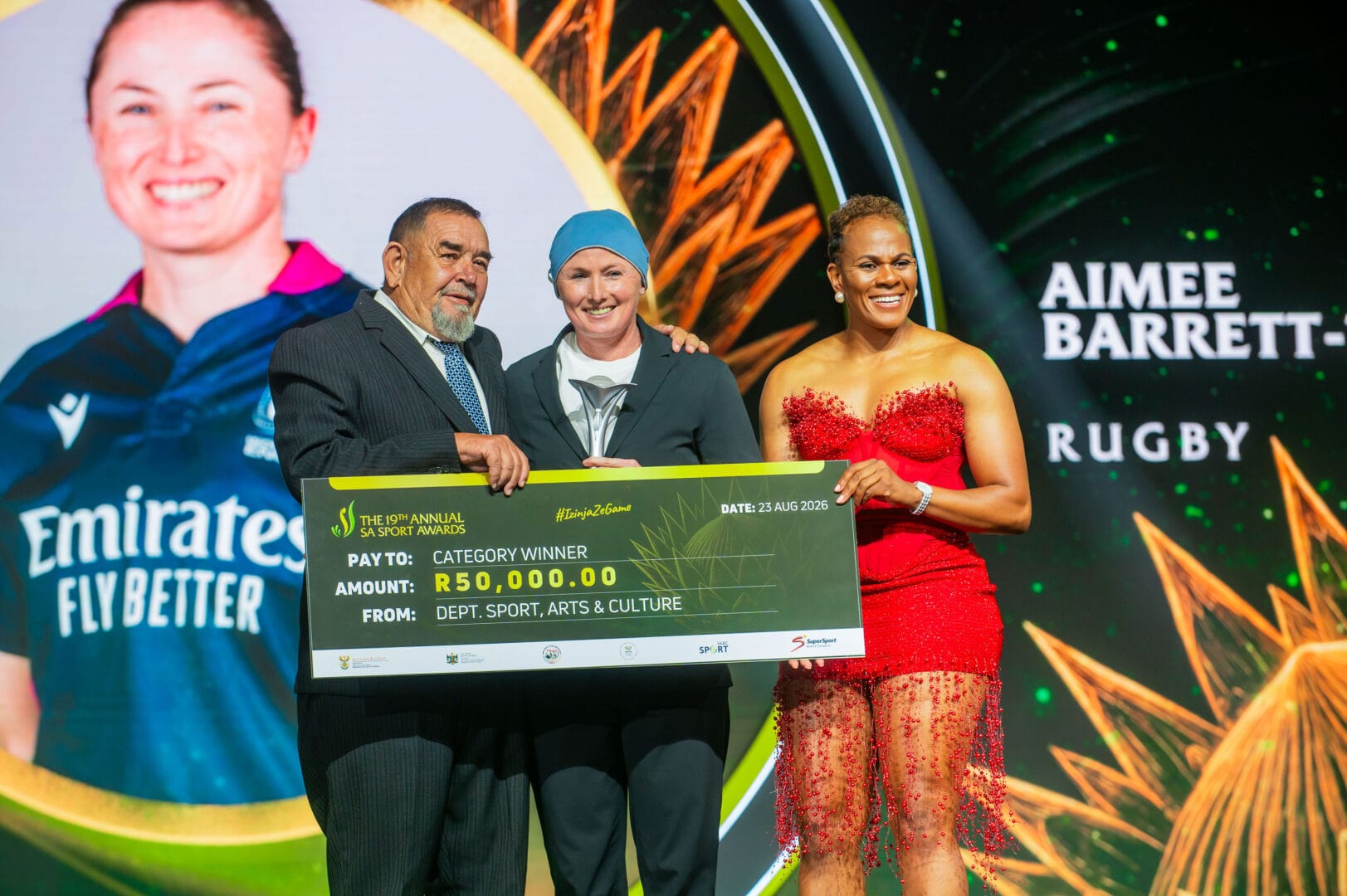
She has since taken charge of 52 international Tests, making her the most-capped female international referee in rugby history. Earlier in 2026, she became only the second woman ever to referee 50 Test matches.
Her CV reads like a roll of honour: the 2017 and 2025 Women’s Rugby World Cups, the Tokyo Olympics, the United Rugby Championship and the Women’s Six Nations.
Then came the diagnosis.
In July, Barrett-Theron announced her temporary departure from officiating after being diagnosed with breast cancer. She has confirmed the condition is treatable and is concentrating on treatment and recovery, with specialists guiding her through the process.
Rugby’s family responded with the force of a defensive line. World Rugby and SA Rugby leaders joined players, officials and supporters in sending messages of encouragement.
Her Sport Awards triumph added another medal to a career already heavy with milestones.
“It’s special to be able to get the trophy,” she said. “At the end of the day and to be recognised for the hard work that we put in”
Then came the question every South African wanted answered: could the Springboks beat the All Blacks at DHL Stadium on Saturday in the second Test of Rugby’s Greatest Rivalry?
For a moment, the referee’s hat came off.
“Yeah, when it comes to Springboks, I can take my referee hat off and I’d love the boys to have any positive results on the weekend.”
Her message to the Boks carried the warmth of a teammate standing beside the tunnel before kick-off.
“Yeah, just stack them on and good luck boys. Represents us the best you can. We know you’ve got it in you.”
And there was one final word, simple enough to fit on a dressing-room wall and strong enough to carry across the Cape Town wind:
“Sterkte.”
For Barrett-Theron, the whistle may be silent for now. Her voice remains firmly in the game.
South African sport has crowned her greatness. Rugby knows her resilience will be worth another standing ovation when she returns.
Under the glittering banner of “Crowned in Greatness”, the 19th South African Sport Awards delivered a night where champions, trailblazers and behind-the-scenes heroes took their bows.
Akani Simbine lead the winners at the 19th South African Sport Awards, with Prudence Sekgodiso, Pieter Coetze and Protea Test Cricket also honoured.
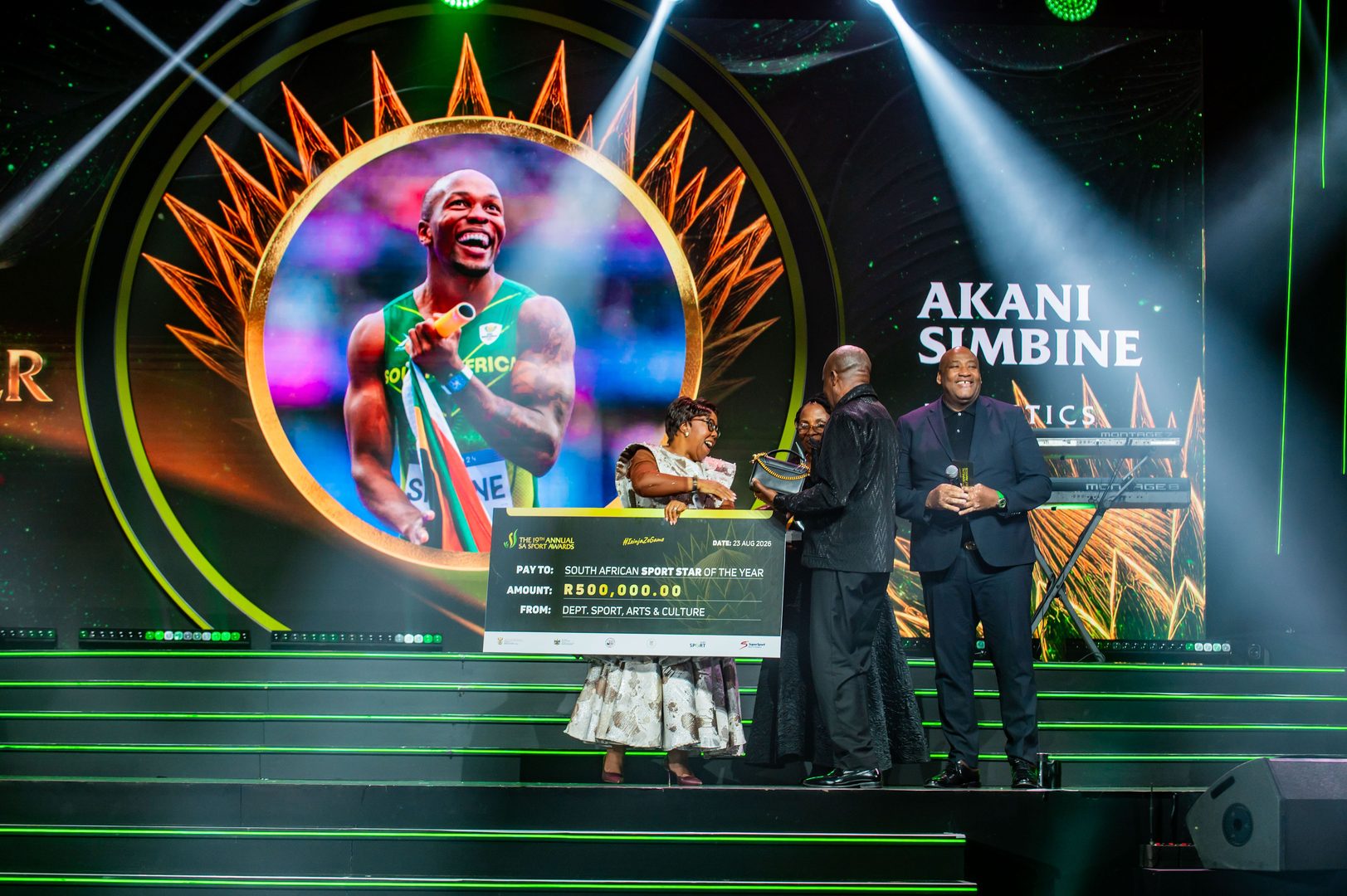
Simbine claimed Sport Star of the Year, adding another gleaming medal to an already formidable athletics legacy. The sprint king has spent years living on the razor’s edge of hundredths of a second, and this time the stopwatch gave way to the applause of a nation.
The Protea Men’s Test Cricket team pocketed Sport Team of the Year, another feather in Cricket South Africa’s cap after a campaign that demanded patience, character and plenty of backbone.
Prudence Sekgodiso was crowned Sportswoman of the Year, while swimmer Pieter Coetze took Sportsman of the Year. Athletics also supplied Coach of the Year Thabo Matebedi, ensuring the track-and-field brigade left Sun City with pockets bulging with silverware.
Young guns Bayanda Walaza, the Youth/Junior Sport Star of the Year, and the Men’s Under-20 Rugby Team, named Youth/Junior Sport Team of the Year, showed that the pipeline is pumping.
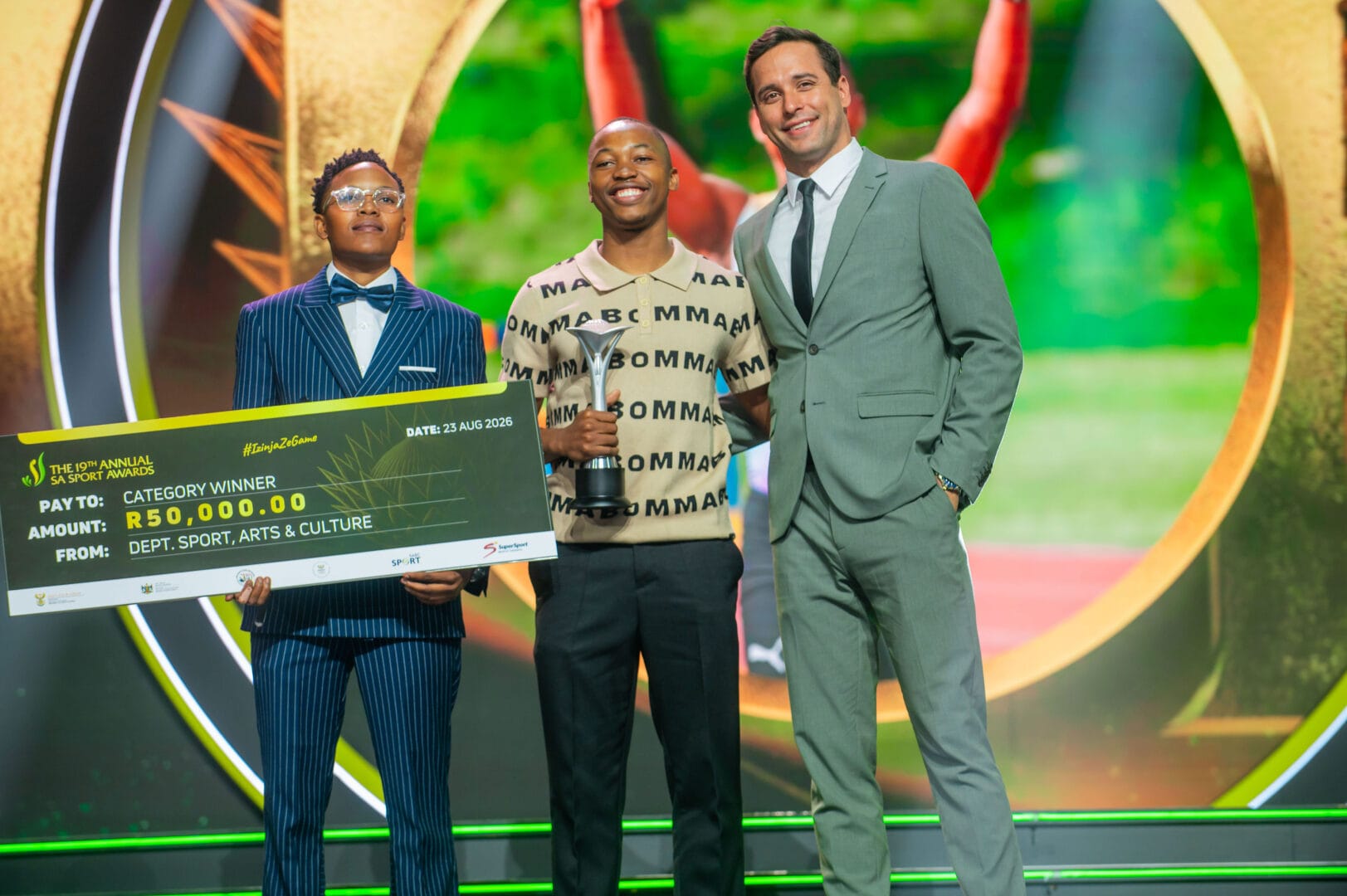
Simoné Kruger won Sportswoman of the Year with a Disability, while Puseletso Michael Mabote claimed Sportsman of the Year with a Disability for para athletics.
The evening’s unsung heroes received their own standing ovation. Anthony Moruthane was named Sport Administrator of the Year, Nqobile Kunene Sport Volunteer of the Year, and Khokho Association South Africa Recreation Body of the Year.
Cricket South Africa collected National Federation of the Year, while Rachel Makhura took Sports Media Journalist of the Year, with photographer Skhu Nkomphela winning Sport Visual Journalist of the Year.
And then came the lifetime tributes, a reminder that sporting greatness is built over generations. Siya Vabaza-Booi, Selwyn Nathan and Veli Nhlapo received the Steve Tshwete Lifetime Achievement honour.
The Andrew Mlangeni Green Jacket went to William Mtolo, Teenage Dladla, Prof. Mlungisi Ngubane and Patson Banda, while Rayno Nel, Tasneem Solomons and Temba Bavuma were recognised for Excellence.
It was a night when South African sport looked in the mirror and saw its past, present and future staring back.
The crown fitted. The champions roared. And the sporting heartbeat kept thumping.