
Proteas begin West Indies T20 series as World Cup preparation intensifies

By Adnaan Mohamed

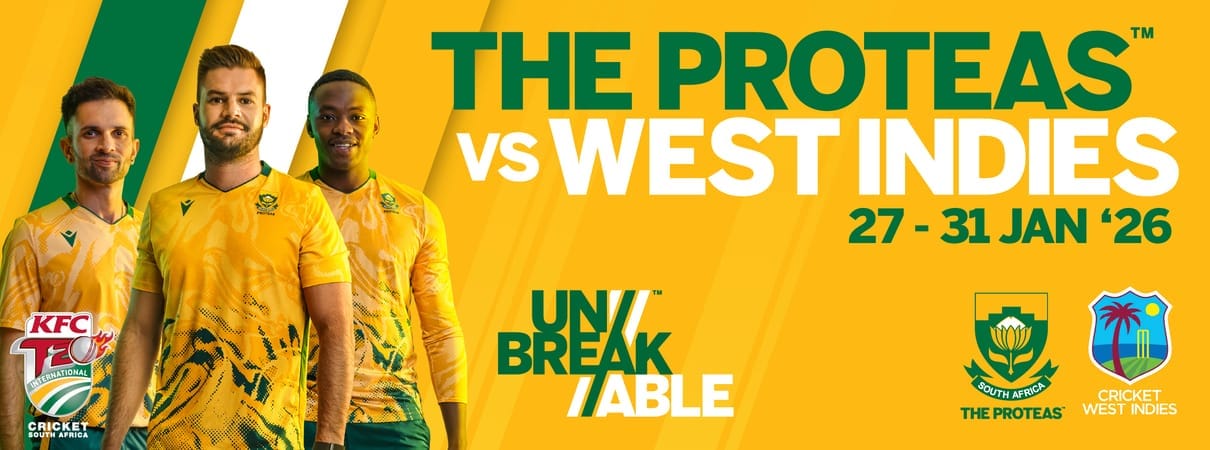
The streamers has barely settled on the pitch, yet the cricketing carousel is already spinning at full tilt. Less than 48 hours after the SA20 final, seven players are back in harness, this time in national colours as South Africa and the West Indies begin a trimmed three-match T20 series, a final nets session before the T20 World Cup spotlight switches on.

Originally slated for five games, the series was shortened to avoid colliding with the World Cup support window. Make no mistake, though this is no gentle loosener. Both teams are still bruised from the last global showpiece. South Africa reached the final and had one hand on the trophy before India snatched it away by seven runs. West Indies fell at the Super Eights hurdle, undone by the Proteas. The hunger to go one better burns like a fresh new ball on a green pitch.

For South Africa, the backdrop is complicated. Results in 2025 were uneven – 12 losses in 18 matches and no series wins – often due to injuries and players juggling formats.

All-format coach Shukri Conrad will still want a series victory inked next to his name, even if this contest is labelled “preparatory”.

Management, however, have opted for rotation. Quinton de Kock, Marco Jansen and Tristan Stubbs—fresh from lifting the SA20 trophy with Sunrisers Eastern Cape against Pretoria Capitals—have been rested for Tuesday’s first T20 in Paarl. Lhuan-dre Pretorius and Eathan Bosch step in as short-term replacements.

The series is a dress rehearsal for the T20 World Cup starting next week in India, where rhythm matters as much as results.

Markram’s joy for Stubbs and empathy for Maharaj
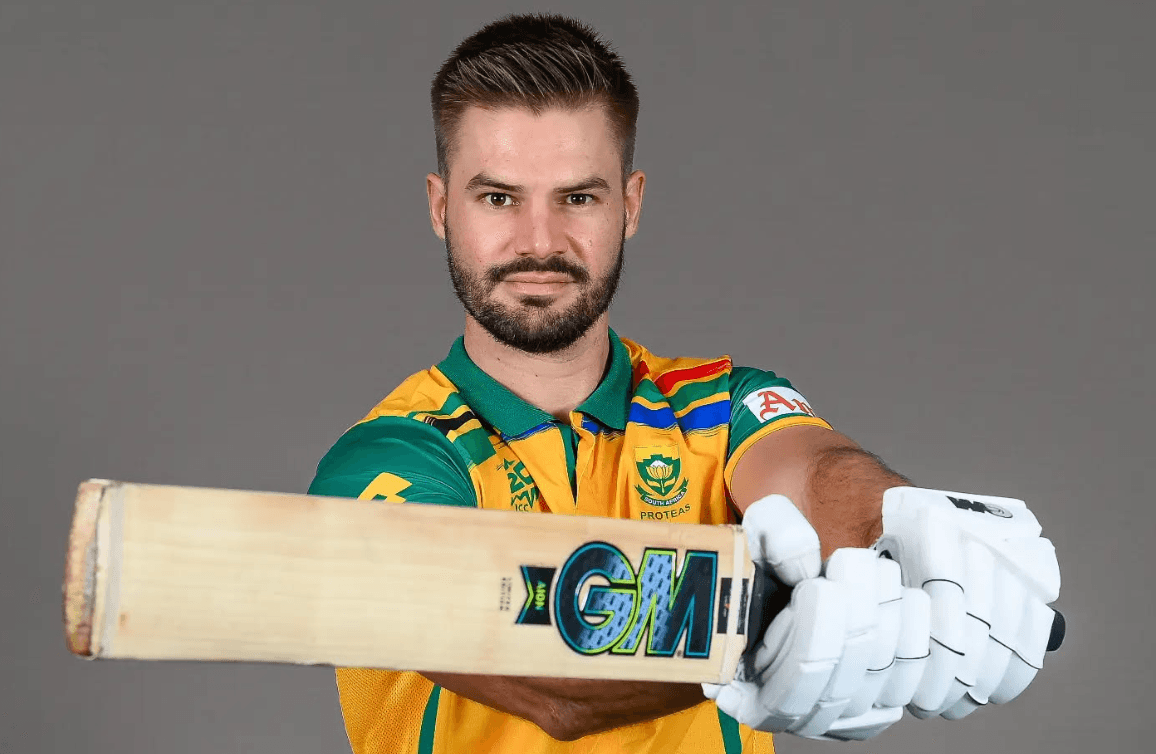
Aiden Markram Photo: CSA

Proteas T20 captain Aiden Markram, who knows the Sunrisers’ dressing room intimately, was glowing about Stubbs’ match-defining final.

“He’s one of the guys in the team everyone wants to see do well. He’s that sort of person, and he grafts hard, he’s the ultimate pro.

And when you put the hard work in and don’t get the results you can get quite down on yourself, even your peers feel sorry for you. Then to come out and play a knock like that last night [Sunday], you can only be happy for him. It’s great to do it in final.

And when you do well in big games you take that confidence to the next one.”

Stubbs’ unbeaten 63 off 41 balls, alongside Matthew Breetzke’s 68 off 49, powered the Sunrisers’ chase of 159 with balls to spare – an innings stitched together like a perfectly timed partnership.

On the losing side stood Keshav Maharaj, Capitals skipper and Proteas stalwart. Markram understood the sting.

“As a person he’s an all-in type of guy, and it would have hurt him. He’s not an emotional kind of guy.

It’s just that he cares and puts a lot of love into it, then you come up just short, and the way the game unfolded as well, I understand why he’s hurting.

When I see him I’ll put an arm around him, get him riled up. I chatted to him a bit last night and said the trophy you want to win is the one in a few weeks time and that’s what we’ll go for now, and he’s all in for that.

We’ll try get him over last night as quick as we can and get him looking forward to the world cup as quick as we can.”

Now the whites are folded away, the national caps pulled on, and the scoreboard reset to zero. The real exam looms, but first, three high-tempo auditions under Paarl’s lights.

South Africa squad vs West Indies (T20s)

Aiden Markram (capt), Corbin Bosch, Dewald Brevis, Lhuan-dre Pretorius, Rubin Hermann, George Linde, Keshav Maharaj, Kwena Maphaka, Lungi Ngidi, Anrich Nortje, Kagiso Rabada, Ryan Rickelton, Jason Smith, Eathan Bosch
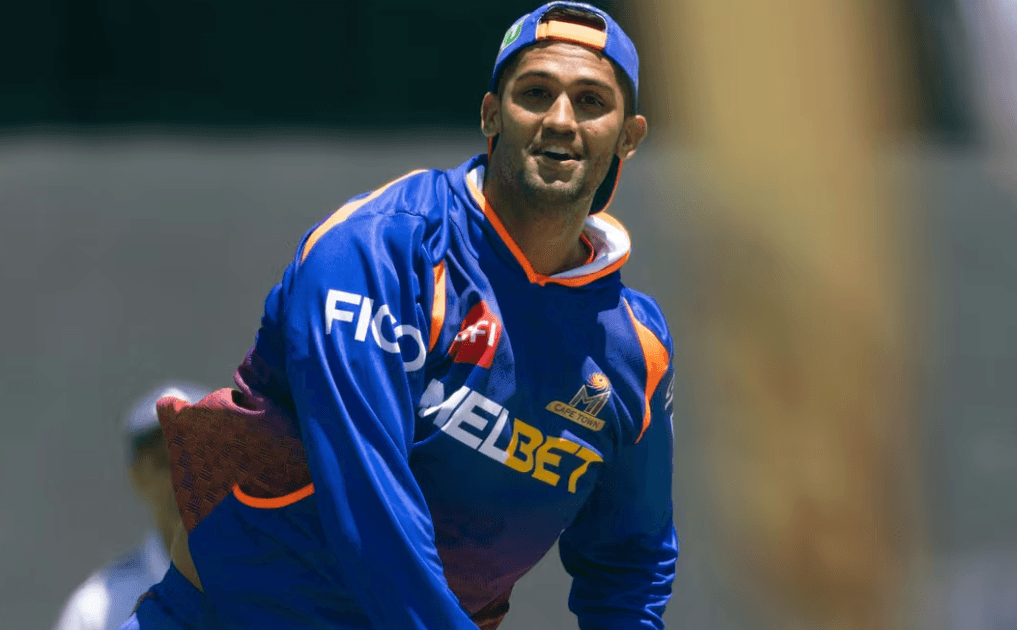
Jason Smith over Tristan Stubbs: Inside SA’s bold call for the T20 World Cup

By Adnaan Mohamed

South Africa’s T20 Cricket World Cup squad announcement made one thing clear: the selectors are prioritising structure and balance over star power. No decision underlined that more than the inclusion of Jason Smith ahead of Tristan Stubbs.

On paper, it is a difficult call to justify. Stubbs is one of South Africa’s most proven T20 batters in recent seasons. His performances in the IPL, where he has averaged over 50 with a strike rate above 170, place him among the most effective middle-order players in the global game.

He is also already established in South Africa’s T20I setup and has experience across all three formats. With the World Cup taking place in India and Sri Lanka, leaving out a batter who has thrived in Indian conditions is a significant gamble.

Tristan Stubbs (Source: @mufaddal_vohra/x.com)

However, World Cup selection is about fit, not form alone. The choice of Jason Smith suggests the selectors believe this tournament will demand flexibility and game management rather than constant aggression. Smith is not in the squad to outscore opponents in ten balls; he is there to control innings when conditions or situations require restraint. On slower surfaces, or against high-quality spin, that role becomes increasingly valuable.

South Africa’s recent struggles in ICC tournaments have often followed a familiar pattern: strong starts undone by middle-order collapses or an inability to adapt when conditions shift. Smith offers a different profile. He can bat in multiple positions, rotate strike, and provide stability when the run rate tightens. These are not headline skills, but they are often decisive in knockout matches.

The broader squad composition reinforces this approach. Tony de Zorzi’s selection despite a hamstring issue, Ryan Rickelton’s omission despite strong domestic form, and Kagiso Rabada’s inclusion despite fitness concerns all point to a group built with specific roles in mind. The selectors appear willing to accept short-term risk in pursuit of a balanced, adaptable XI.

That does not remove the downside of leaving Stubbs out. T20 cricket remains a format where individual brilliance can outweigh careful planning. There will be matches where South Africa could use the immediate impact and power Stubbs provides. If Smith struggles to score quickly enough or fails to influence games, the decision will be questioned sharply.

In selecting Jason Smith, South Africa have made a clear statement. They are backing composure, versatility, and tactical discipline over explosive potential. It is a conservative call in a format that rewards boldness, but one rooted in a clear reading of conditions and tournament pressure. Whether that reading is correct will define the success or failure of their World Cup campaign.

South Africa Men’s Squad – ICC Men’s T20 World Cup 2026
Aiden Markram (captain, Momentum Multiply Titans), Corbin Bosch (Momentum Multiply Titans),
Dewald Brevis (Momentum Multiply Titans), Quinton de Kock (DP World Lions), Tony de Zorzi (World
Sports Betting Western Province), Donovan Ferreira (Momentum Multiply Titans), Marco Jansen
(Momentum Multiply Titans), George Linde (World Sports Betting Western Province), Keshav
Maharaj (Hollywoodbets Dolphins), Kwena Maphaka (DP World Lions), David Miller (Hollywoodbets
Dolphins), Lungi Ngidi (Momentum Multiply Titans), Anrich Nortje (Hollywoodbets Dolphins), Kagiso
Rabada (DP World Lions) and Jason Smith (Hollywoodbets Dolphins).

Management
Shukri Conrad (Head Coach), Khomotso Volvo Masubelele (Team Manager), Ashwell Prince (Batting
Coach), Piet Botha (Bowling Coach), Kruger van Wyk (Fielding Coach), Albie Morkel (Specialist
Consultant), Runeshan Moodley (Strength and Conditioning Coach), Matthew Reuben (Performance
Analyst), Sizwe Hadebe (Physiotherapist), Dr Salih Solomon (Team Doctor), Kyle Botha (Logistics and
Masseur), Lucy Davey (Media Manager) and Brian Khonto (Security Officer).

Group D Fixtures
Monday, 09 February at 15:30 SAST
South Africa vs Canada – Narendra Modi Stadium, Ahmedabad
Wednesday, 11 February at 07:30 SAST
South Africa vs Afghanistan – Narendra Modi Stadium, Ahmedabad
Friday, 14 February at 15:30 SAST
New Zealand vs South Africa – Narendra Modi Stadium, Ahmedabad
Tuesday, 18 February at 07:30 SAST
South Africa vs United Arab Emirates – Arun Jaitley Stadium, Delhi

Proteas Rise in India: Shukri and Temba leads a masterclass in resilience

By Adnaan Mohamed

For years, touring India has felt like stepping into cricket’s equivalent of the “Death Zone” in brutal conditions, deafening crowds, and a cauldron of pressure where even great teams lose their bearings. South Africa has known that pain too well. Heavy defeats. Broken confidence. Tours remembered for their scars rather than their strides forward.

But this time, something powerful shifted.

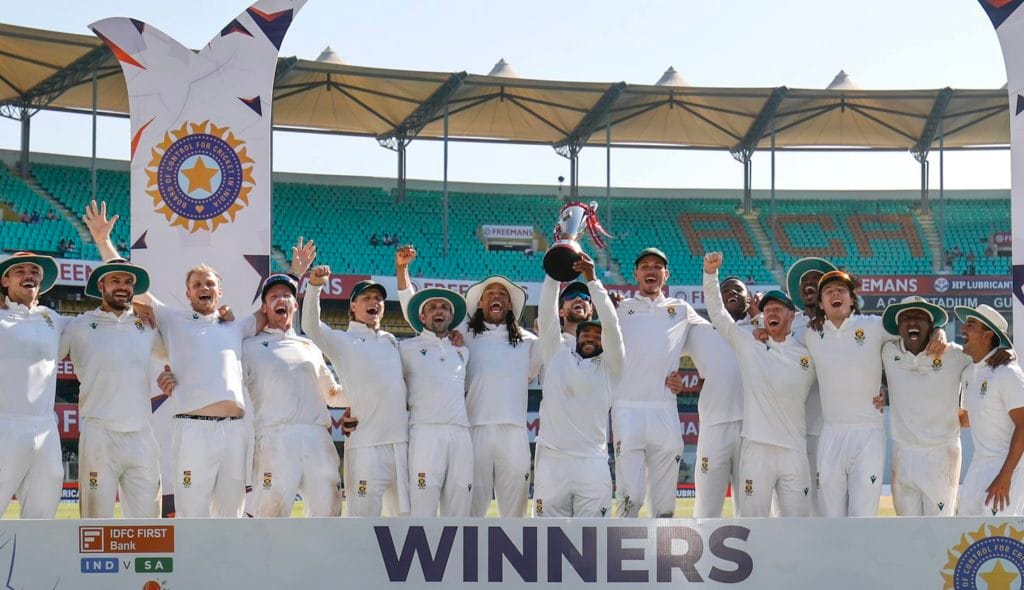
In a story worthy of every athlete who has ever been told they’re not enough, the Proteas walked back into the lion’s den, and roared back even louder, sealing a historic 2–0 Test series win, their first in India in 25 years.

The victory was a reset, a reclaiming of identity, and a reminder of what’s possible when belief becomes bigger than fear.

A Captain Who Carries More Than the Badge

Temba Bavuma’s journey mirrors the heartbeat of modern sport in South Africa: resilience, self-discovery, and the courage to keep standing up when the world expects you to stay down.

Twice before he had toured India. Twice he came home with the kind of numbers and memories most athletes try to forget. Thrown into unfamiliar roles, navigating team turmoil, and battling his own form demons, Bavuma could easily have let those failures define him.

But the man who walked out in Guwahati was not the same athlete.

He was calmer. Clearer. Centered. A captain who had found his voice. A leader whose strength lay not in shouting orders, but in empowering others.

“Coming here, I would never have thought 2–0 would be the result,” Bavuma admitted.

“We know how dark it can be, so getting 2–0 here is an incredible achievement. We’ve painted ourselves into history.”

This is the language of someone who understands the trenches and knows what it means to climb out of them.

A Team Built on Trust, Not Ego

Under coach Shukri Conrad, the Proteas have become more than just a squad. They’re a collective built on shared ownership. Conversations are open. Roles are clear. Leadership is distributed like responsibility in a relay race, everyone carries the baton at some point.

“I’m a lot more assured as a person and as a captain,” Bavuma said.

“We have a lot of leaders in the team. Guys who add value in their own space. Guys I bounce ideas off. And I’ve learned to separate Temba the batter from Temba the captain.”

For athletes, this is gold: Identity is not a single performance. Leadership is not a solo act.

Champions Step Up When It Matters

Great teams need great moments. And South Africa found them everywhere.

  • Simon Harmer, returning to the very country where his career once stalled, produced the greatest bowling series by any visiting spinner in India: 17 wickets at 8.94. A statistic and a story built on grit.
  • Marco Jansen was a walking highlights reel: destructive bouncers, crucial runs, and a catch so athletic it bordered on impossible.
  • Aiden Markram reinvented himself as South Africa’s safest pair of hands, plucking a world record nine catches and steadying the mood whenever needed.

This wasn’t a win built on stars. It was built on synergy and those subtle connections athletes feel when the entire team is in rhythm.

Rising Above the Weight of History

India had lost just one series at home in 12 years. Their fans are famously unyielding. Their conditions notoriously unforgiving. And yet, the Proteas showed that history, no matter how intimidating, is only a backdrop, not a destiny.

Their 408-run win in the second Test wasn’t just dominance; it was a message:

This team is evolving. Growing. Believing.

For South African cricket, often weighed down by near misses and what-ifs, this was an emphatic reminder that the future can be bold, bright, and beautifully unpredictable.

What This Means for the Athlete in All of Us

Every athlete, whether you run trails, swim laps, hit gym reps, or chase PBs knows what it feels like to revisit a place of past disappointment. The doubt. The fear. The ghosts.

What the Proteas did in India is what everyone strives for:

  • To return to a place of pain, and rewrite the story.
  • To trust the process even when your stats say you shouldn’t.
  • To lead with humility, not ego.
  • To push through dark moments because the light ahead is worth it.
  • To discover that your greatest breakthroughs often hide behind your greatest failures.

Bavuma and his team won a cricket series and delivered a universal message of courage:

Your past is not a prophecy. Your setbacks are not your ceiling. Your biggest victories often arrive exactly where you once struggled most.

And sometimes, after 25 long years, everything aligns, and you finally conquer your Everest.