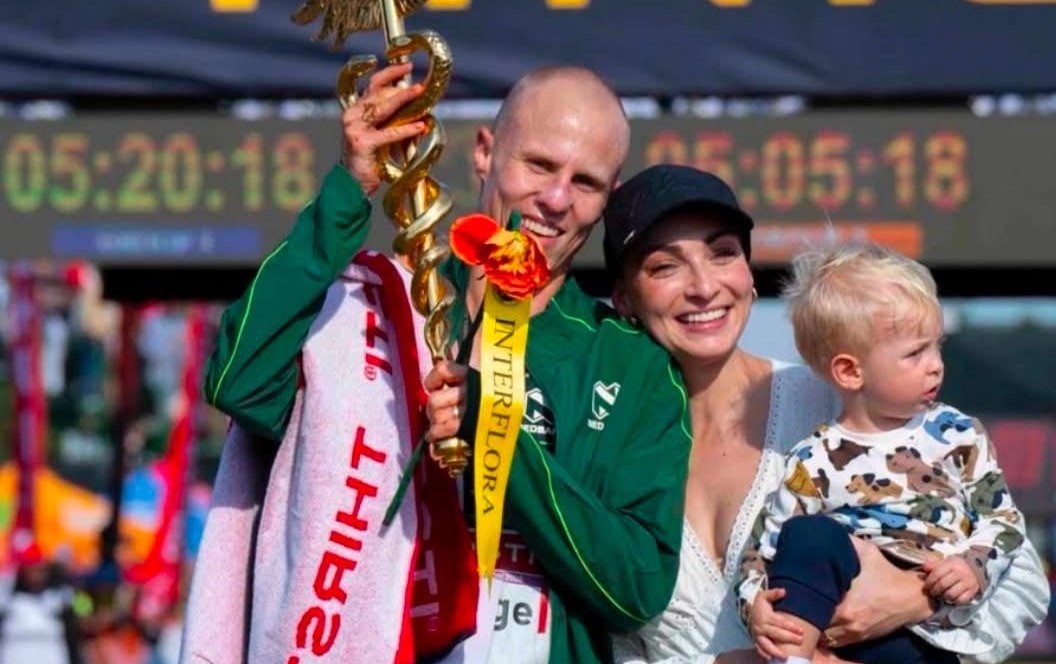
Inside the mind of Comrades Champion George Kusche

By Adnaan Mohamed

With two kilometres remaining, George Kusche glanced at the race clock for the first time all day.

The display showed roughly 5:08.

His body felt like a battered vehicle limping home after a cross-country expedition. His left calf had been threatening mutiny for more than 30 kilometres. Every stride sent warning signals through weary muscles. The road tilted and twisted ahead like a mischievous serpent refusing to surrender its final secrets.

Yet something curious happened.

The mathematics suddenly made sense.

“I remember thinking, if I run 10 minutes in these last two kilometres, I’m still going to run 5:18.”

For most runners, that would be astonishing pace after nearly 86 kilometres.

For Kusche, it was a moment of realisation.

History was waiting at the finish line.

The remarkable part is that he still wasn’t thinking about winning.

“I wasn’t thinking about winning. I was honestly afraid,” he told nine-time Comrades champion Bruce Fordyce.

“I thought to myself, I can’t think about anything else now. I need to focus on putting my foot in front of the other and running as fast as I can.”

That fear may have been his greatest ally.

Because while many runners arrive at Comrades armed with bravado and bold predictions, Kusche approached the race like a scientist approaching an unsolved equation.

Carefully.

Methodically.

Relentlessly.

And in doing so, he produced one of the greatest performances the race has ever witnessed.

THE UNDERDOG WHO WAS NEVER CHASING A TROPHY
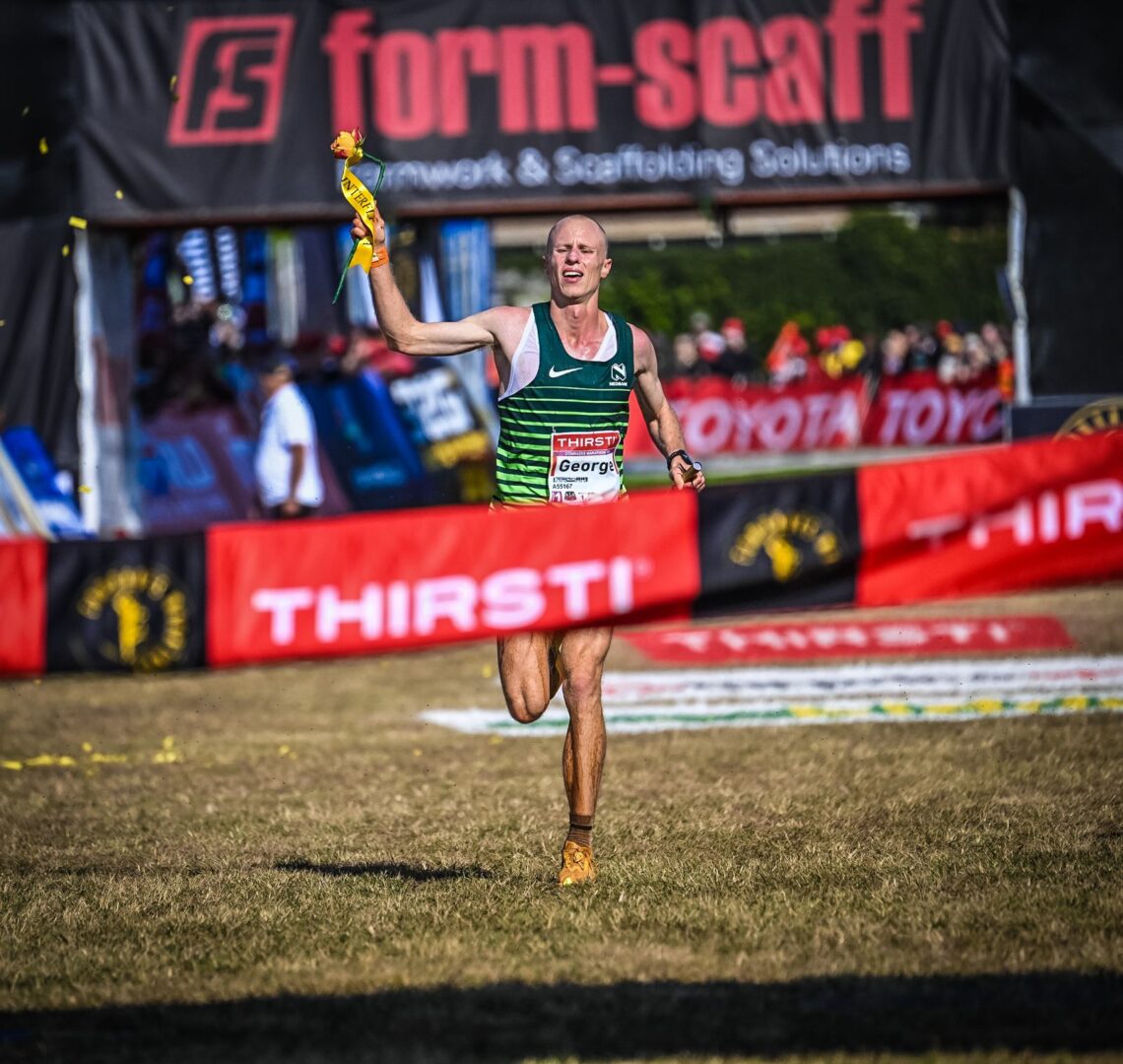
When Kusche crossed the finish line at Hollywoodbets Scottsville Racecourse in Pietermaritzburg, the clock stopped at 5:15:56.

The time demolished Russian Leonid Shvetsov’s 18-year-old Up Run record of 5:24:49 by almost nine minutes.

It also delivered the fastest average pace ever recorded in the history of the Comrades Marathon.

Yet the journey began not with victory but with disappointment disguised as success.

A year earlier, the former NCAA athlete had finished 12th in his Comrades debut.

Many runners would have celebrated.

Kusche analysed.

“On the day I knew that was the absolute best I could have done,” he said.

“But I know I made a lot of mistakes preparing for that Comrades because it was my first one. I was naive about what it takes to run Comrades.”

The race became a classroom.

The student paid attention.

PROJECT 2026
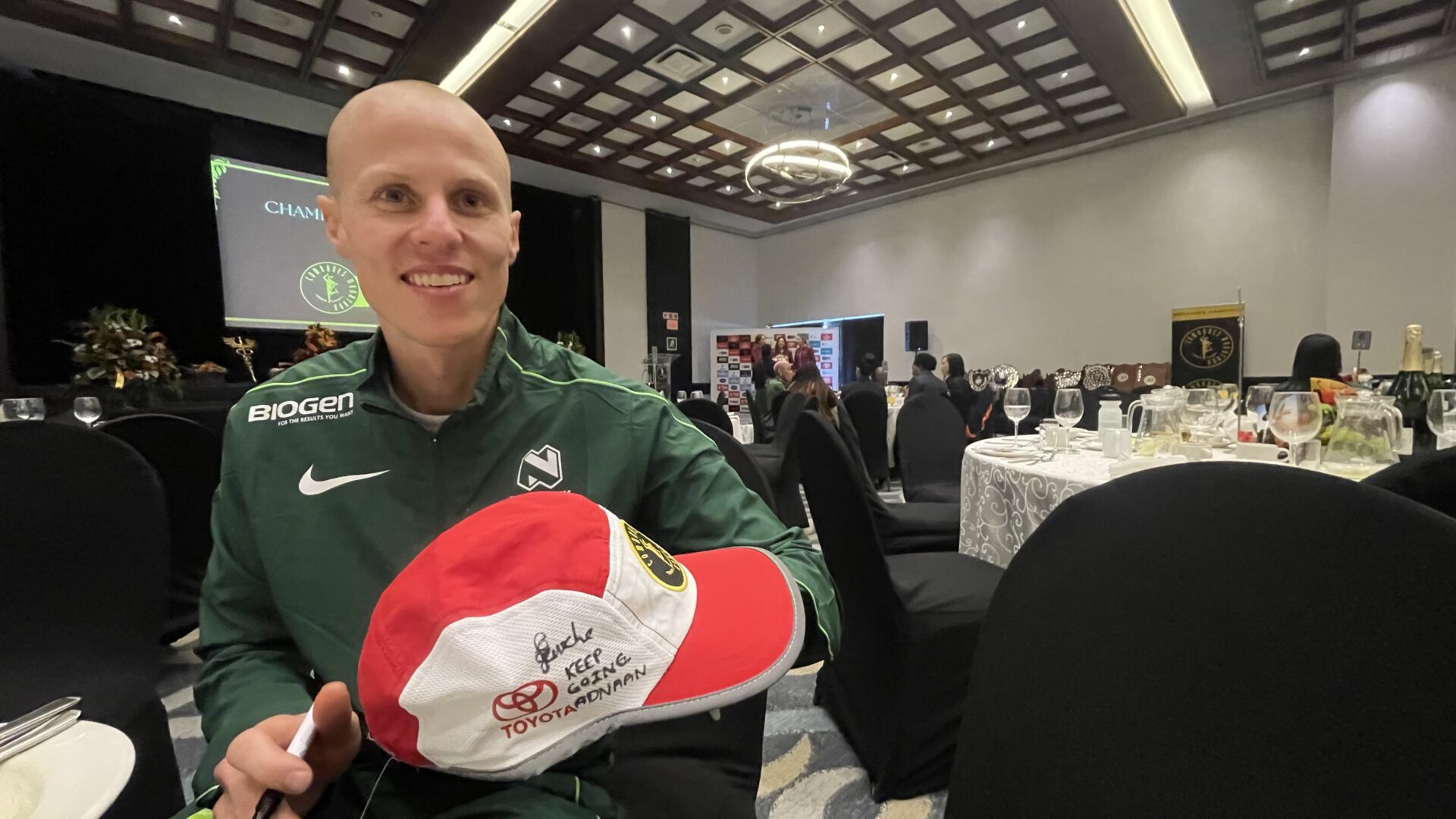
George Kusche at the 2026 Comrades Winners Breakfast Photo: Adnaan Mohamed

Most athletes emerging from a strong debut create a target.

Kusche created a process.

“It was Project 2026, but not to win.”

That statement sounds almost absurd after what followed.

“It was Project 2026 to focus on the process as much as I can and make sure that on June 14, 2026, I show up as the absolute best version that I could be.”

“If that means a win, then I’m happy.”

The distinction matters.

The goal was not a trophy.

The goal was optimisation.

Every kilometre became a data point.

Every session became an experiment.

Every mistake became valuable information.

THE SCIENTIST IN THE RUNNING SHOES

Away from racing, Kusche works full-time as a Data Scientist at Pepkor Lifestyle.

The numbers are woven into his DNA.

Born in Malalane in Mpumalanga, educated at Laerskool Malelane and Affies in Pretoria, he earned a Master’s degree in Statistics and passed eight Actuarial Society of South Africa examinations on his first attempt.

He coaches himself.

That revelation surprised Fordyce.

In an era overflowing with coaches, consultants and performance gurus, Kusche remains his own architect.

“I coach myself.”

His approach combines science and instinct.

“I accumulated a lot of volume, but that came over a period of a year.”

“It’s a gradual increase in both volume and intensity and elevation gain.”

“I meticulously tracked various metrics over time and ensured that they increased and peaked at the right time.

The scientist measured everything.

The athlete listened to his body.

The combination proved potent.

THE HILL THAT BUILT A CHAMPION

Every Tuesday, a hill in Pretoria became his laboratory.

He repeatedly climbed and descended Platheus Hill.

No dramatic sprinting.

No social media heroics.

No chest-thumping workouts.

“I simply jogged up and jogged down.”

“And I just let the elevation gain do the damage it had to do.”

Slowly, the hill surrendered.

“Without increasing my effort, I could see my pace increasing and my heart rate decreasing.”

Like water carving a canyon, the work accumulated quietly until the results became impossible to ignore.

THE OVERTRAINING MYTH

As race day approached, whispers began circulating.

Some observers believed Kusche was training too much.

Even Fordyce and former champion Nick Bester had concerns.

“We said George is terribly overtrained.”

Kusche knew the rumours.

“I know about the overtraining allegations.”

His answer reflected the analytical mindset that defines him.

“You can’t look at one number and say someone’s overtraining.”

“My workouts kept improving.”

His peak week reached an eye-watering 259 kilometres.

Yet he remembers feeling restrained.

“I felt like I could have done 300.”

“I felt guilty not running more.”

The engine was humming.

The data agreed.

THE SURGES THAT BROKE THE RACE

The winning move arrived long before he took the lead.

Running within a pack, Kusche sensed comfort spreading among his rivals.

Comfort is dangerous in championship racing.

So he attacked it.

“I didn’t want the pack to be comfortable.”

Climbing Inchanga, he repeatedly surged.

Not wildly.

Not recklessly.

Simply enough to raise the temperature.

“I felt really strong.”

“I just decided to go in front of the pack and gradually increase the pace.”

The surges acted like tiny cracks in a dam wall.

Invisible at first.

Devastating later.

“After about four of those surges, I decided it’s now time to go for gold.”

The race had changed.

The field simply had not realised it yet.

FEAR ON POLLY SHORTTS

For television viewers, Kusche looked magnificent.

Fordyce remembers watching him move through Harrison Flats and immediately predicting victory.

“George is going to win.”

The reality unfolding inside Kusche’s body was far less glamorous.

“My left calf was cramping.”

“My legs were sore.”

“I kind of felt tired.”

Then came Polly Shortts.

The notorious climb often acts like a final judge standing between contenders and champions.

Fortunately, Kusche had studied every metre.

“I knew exactly how long that hill would be.

That knowledge became a psychological weapon.

“I knew it’s two kilometres.”

“I knew that if I could get to the top in the lead and feeling strong and maintain my pace, then the odds are good of winning.”

What happened next was pure courage.

“I didn’t feel good.”

“But I went up that hill giving it everything I had.”

The hill blinked first.

WHAT IT FEELS LIKE TO BE COMRADES CHAMPION

Fordyce ended their conversation with a question few champions answer easily.

What does it actually feel like to be Comrades champion?

Kusche paused.

The answer was strikingly simple.

“It’s a confirmation that the work I’ve been putting in over the past year has paid off.”

Perhaps that response explains everything.

The record.

The preparation.

The humility.

The fear.

The patience.

For George Kusche, Comrades was never about chasing applause.

It was about discovering whether the equation was correct.

On a cold winter morning between Durban and Pietermaritzburg, the answer arrived.

Loudly.

The data scientist had solved the biggest puzzle in South African road running.

And the solution may only be the beginning.

With the Down Run waiting in 2027 and Fordyce joking that the record should be “quite scared“, Kusche remains cautious.

“You need to be afraid of Comrades.”

“If you’re not afraid, you’re not going to perform at the highest level.”

Those words may sound strange coming from a champion.

Then again, George Kusche has never approached Comrades like everybody else.

That is precisely why his name now stands above everybody else’s.
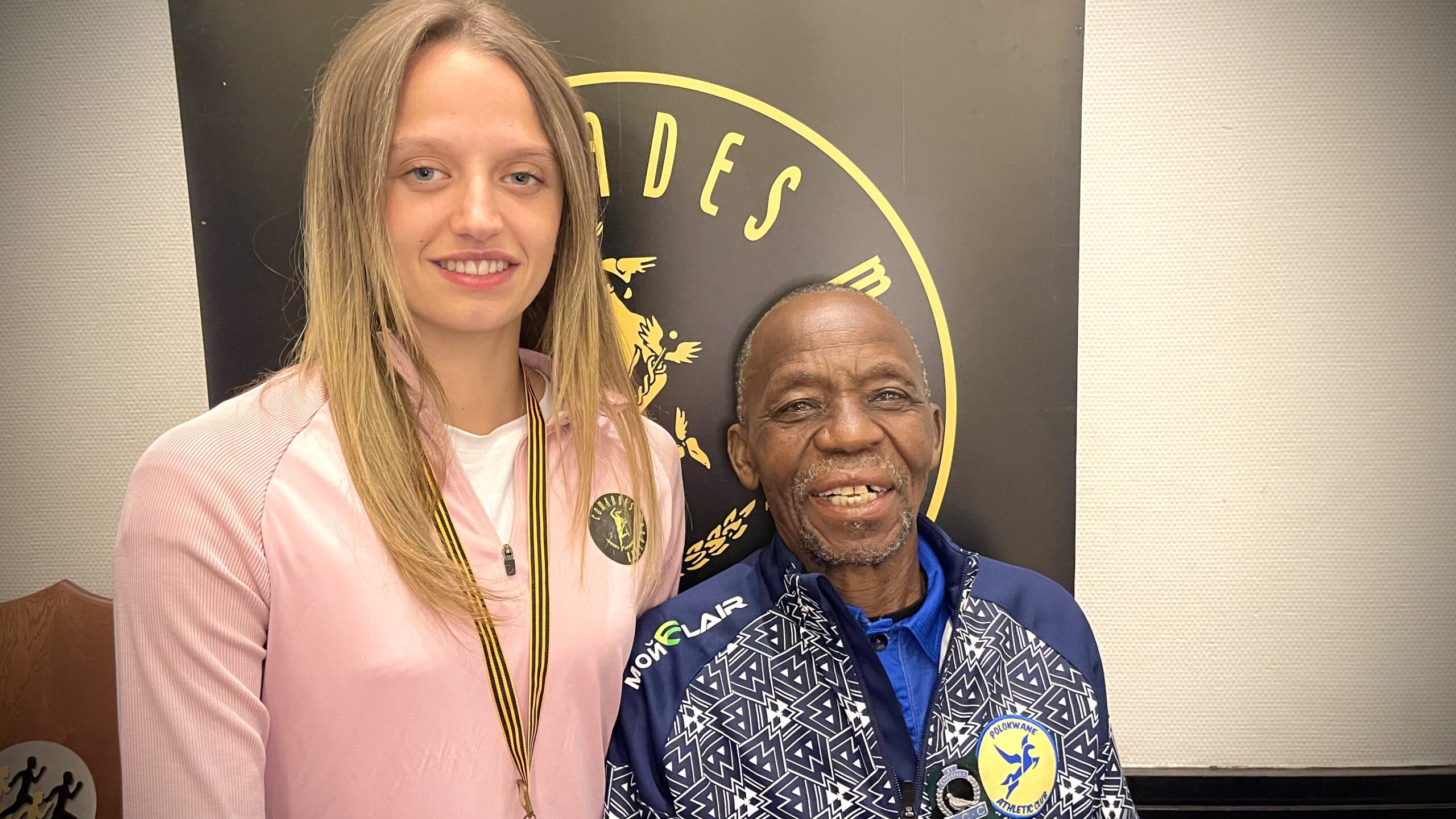
Oldest (84) and Youngest (20) conquer 2026 Comrades

By Adnaan Mohamed

The 2026 Comrades Marathon delivered many memorable performances on the gruelling 85.777km journey from Durban to Pietermaritzburg, though few stories captured the spirit of the race quite like those of Johannes Mosehla and Bailey O’Leary.

Separated by 64 years in age, the pair finished the 99th edition of the Ultimate Human Race as its oldest and youngest official finishers.

Mosehla, 84, crossed the line in 11:12:26 on Sunday to break his own record as the oldest finisher in Comrades history. In doing so, the Polokwane Running Club member finished ahead of thousands of runners many decades his junior.

The veteran runner, who began his running journey in 1963, said the achievement was a source of pride and gratitude.

“To be the oldest finisher at Comrades is a great honour,” said Mosehla.

“This race continues to inspire me every year. Running has given me so much throughout my life. I hope my journey encourages people to stay active, stay disciplined and keep chasing their goals regardless of age.”

Mosehla credits his remarkable longevity to consistency, moderation and a healthy lifestyle.

“You must listen to your body, eat well, rest properly and enjoy what you are doing. Running should bring happiness. I still love training in the mountains and spending time outdoors.”

While Mosehla represented experience and endurance, O’Leary embodied youthful ambition.

The 20-year-old, who lives in the United Kingdom and whose parents are both originally from Durban, finished her Comrades debut in 10:42:51 to become the youngest female finisher in this year’s race.

Her first Comrades was made even more special by sharing the journey with her father, Jon O’Leary.

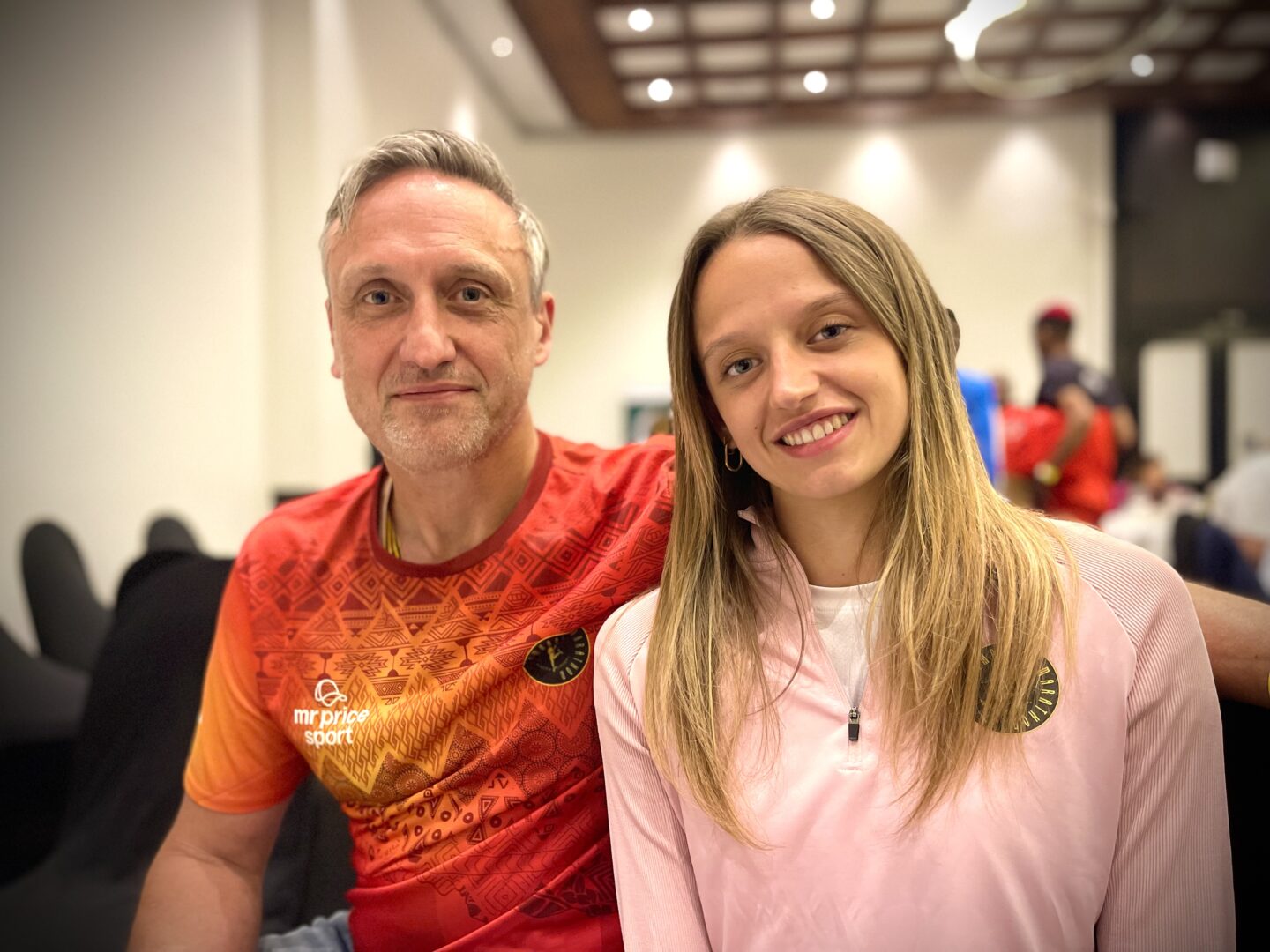
Proud dad Jon O’ Leary with his daughter Bailey O’ Leary at the Comrades Winners breakfast on Monday 15 June 2026. Photo: Adnaan Mohamed

“I grew up supporting my dad and listening to stories about Comrades,” said Bailey.

He inspired my love for the race and it was always my dream to run my first Comrades with him. He helped me a lot, especially in the first half, and crossing the finish line was incredibly special.”

For Jon, the day was about far more than another medal.

“It was one of the proudest moments of my life,” he said.

“Comrades means so much to our family. To see Bailey achieve her goal and share the experience with her from start to finish was unforgettable.”

As the Comrades Marathon prepares to celebrate its centenary in 2027, both runners have already confirmed their intention to return.

Mosehla will aim to extend his remarkable record, while O’Leary hopes to secure a special back-to back medal awarded to novices for consecutive finishes.

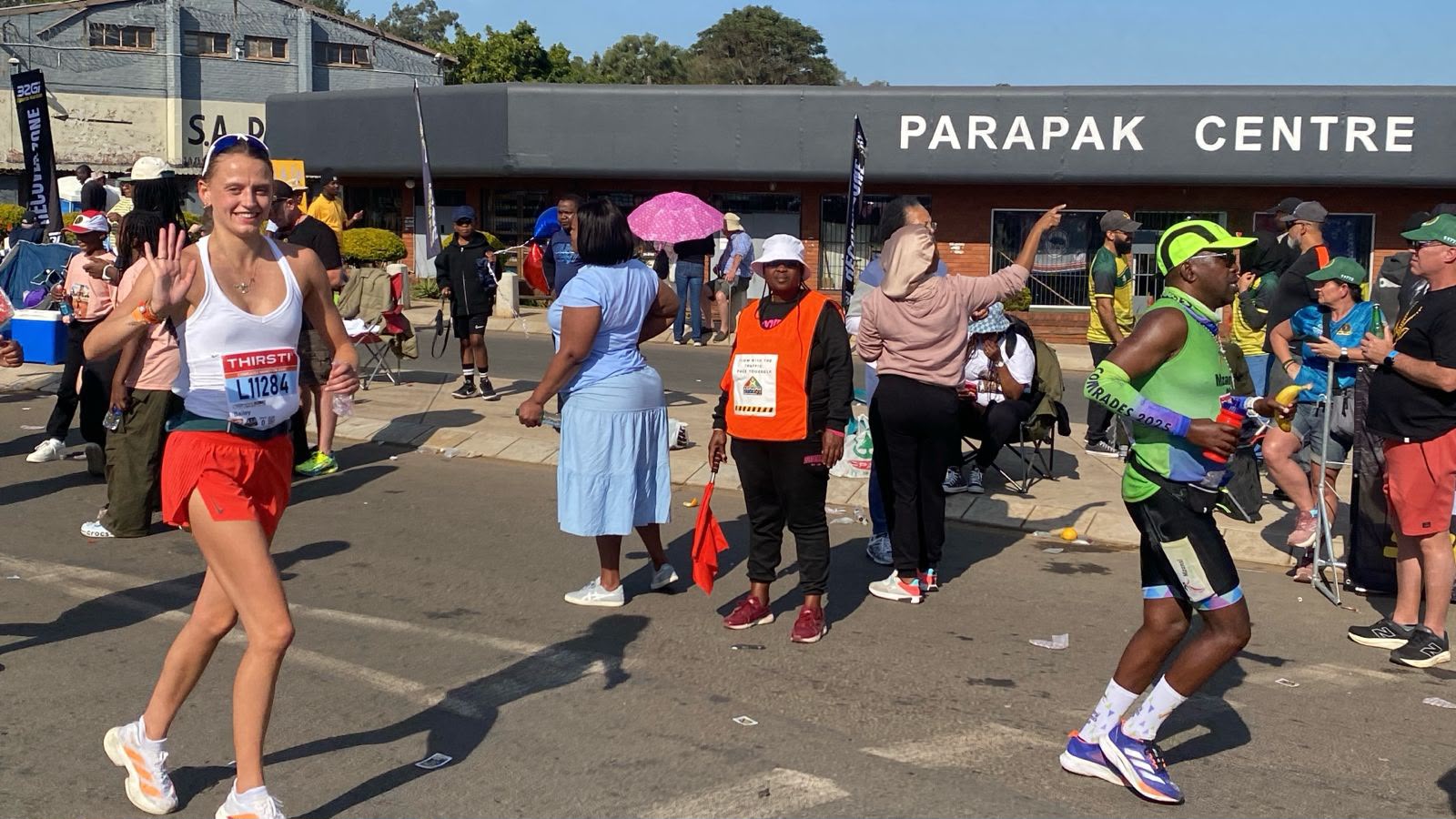
Bailey O’ Leary in action on the 2026 Comrades Marathon Up Run Route Photo: Supplied

Their stories served as a powerful reminder that Comrades remains a race where generations meet, dreams endure and the finish line belongs to anyone willing to keep moving forward.

Queen Gerda ready to climb again as fifth title beckons

By Adnaan Mohamed

The numbers attached to Gerda Steyn’s career are extraordinary, though the woman herself continues to speak with the calm certainty of someone more interested in preparation than praise.

Four Comrades Marathon victories. Seven Two Oceans Ultra Marathon titles. Countless records and unforgettable performances.

On Sunday, the Hollywood Athletics Club star will line up in Durban chasing a fifth Comrades crown, convinced that another carefully crafted build-up has left her exactly where she wants to be.

“I can’t believe we are here again. It feels like yesterday that we were lining up for the down run of 2025,” Steyn told Modern Athlete in an exclusive interview.

“I’m very excited to line up this year. The training has gone really well. The Up Run is my favourite direction. I’m really excited, so I can’t wait for Sunday.”

That preference is rooted in both emotion and experience.

Steyn says the climb to Pietermaritzburg rewards discipline, patience and intelligent pacing, qualities that have become trademarks of her racing style.

“I think the Up Run suits me as a type of athlete that I am. It is a lot to do with pacing yourself well, conserving your energy very well in the first half and running smart. You need a lot of strength to compete well in the Up Run.”

It also carries sentimental value.

“It was my first ever Comrades Marathon, so that’s how I fell in love with the race. To line up again this year is very special.”

As in previous campaigns, Steyn spent much of her preparation in the Alps following the Two Oceans Ultra Marathon, using the relentless climbs and descents to sharpen her endurance.

“I’ve always done the exact same routine. I feel like it’s the right thing for me to do. I can focus 100% on running and you either go steep up or steep down, which really complements the training.”

She returned to South Africa earlier than usual and settled in Dullstroom, where familiar surroundings and sessions alongside Hollywood teammates provided a valuable psychological lift.

“We were fortunate enough to share the roads with Tete, Edward and Johannes and the rest of the Hollywood guys. They are such a positive group with a wonderful dynamic. It was a great way to finish the training and line up with excitement.”

With another slightly shortened Up Run route, speculation around a possible course record has gathered momentum.

Steyn refuses to be distracted.

“My first goal is really to defend my title. If that comes with a record and I feel good on the day and everything goes according to plan, I’m sure it is possible.”

Looking back at her preparation compared to 2024, she believes there is room for something special.

“I think there’s room for it. Everything has to go according to plan and I mustn’t focus on the record so much that I forget to focus.”

It is a mindset that has carried her to the summit of South African ultra-distance running before.

On Sunday, she will trust it again.

Shortest Comrades Up Run could boost Gerda Steyn’s R2m bid

By Adnaan Mohamed

The 2026 Comrades Marathon will be run over the shortest Up Run distance in recent history, a development that could significantly favour multiple champion Gerda Steyn as she targets both victory and a lucrative payday.

Race organisers have confirmed that the 99th edition, scheduled for Sunday, 14 June, will cover 85.777km from Durban to Pietermaritzburg. The distance is 133 metres shorter than the 2024 Up Run and nearly a kilometre shorter than the 2019 route.

In an event where pacing and energy management are decisive, even marginal reductions in distance can influence outcomes at the elite level. For Steyn, who has dominated the women’s race in recent years, the shorter course presents an opportunity to push the pace from early on while still maintaining control in the closing stages.

The adjusted route comes amid ongoing infrastructure developments along the traditional course. Comrades Marathon Race Director Sue Forge said organisers had worked closely with authorities to finalise a safer and more efficient layout.

“The ongoing roadworks have had a significant impact on the route and our planning. However, thanks to the outstanding collaboration and support of the municipalities, the Road Traffic Inspectorate, Durban Metro Police and Msunduzi Traffic Police, we have been able to finalise a route that not only provides a slightly shorter distance for runners, but also improves the management of road closures, traffic flow, infrastructure removal and post-race clean-up,” Forge said.

While the start in Durban and finish at Scottsville Racecourse remain unchanged from 2024, several key adjustments have reduced the overall distance.

“We have changed the set-up of the finish at Scottsville and shortened the finish straight, while out on the route, the biggest change is that from 45th Cutting to Cowies Hill, where runners will move in a contra-flow direction. This means they will run on the other side of the road to previous years, against the normal traffic direction, which will also reduce the gradient of that section slightly,” Forge explained.

“Meanwhile, we have retained the Umlaas Road cut-through, working closely with SANRAL and the appointed contractors to remove a 12-metre section of the new roadside barriers and surface the area, enabling runners to cross directly. This adjustment will once again save runners approximately 870 metres,” she added.

The official route measurement was completed on 25 and 26 April under the supervision of World Athletics-accredited measurer Mike Rooke, using a calibrated bicycle to ensure accuracy.

Historically, comparisons with earlier races remain difficult. Before 1969, distances were recorded in miles and often estimated, with the Up Run generally listed at around 54 miles, or approximately 86.886km.

Despite that uncertainty, the 2026 race is widely regarded as the shortest modern Up Run, a factor that could have implications for record attempts.

Steyn already holds the women’s Up Run best time after clocking 5:49:46 in 2024, becoming the first woman to break six hours on the route. With performance incentives linked to both time and pace, she stands to earn a substantial bonus if she improves on that mark.

“With the shortest route on record for the Up Run being run this year, coupled with lucrative cash incentives for runners to chase the best time and best pace records, we may see those records fall again in 2026,” said Forge.

The men’s Up Run record of 5:24:49, set by Leonid Shvetsov in 2008, has also come under increasing pressure in recent years.

All indications point to a faster race in 2026, with the revised route likely to encourage aggressive strategies from the leading contenders. For Steyn, the combination of form, experience and course conditions could place her firmly on track for another dominant performance.

Comrades 2026 field finalised after entry rush

By Adnaan Mohamed

The battle to secure a place at the 99th edition of the Comrades Marathon proved as demanding as the race itself, with the newly introduced ballot system placed under immediate pressure by overwhelming demand.

The 2026 Up Run from Durban to Pietermaritzburg (Approximately 87 km – 89 km) which takes place on Sunday, 14 June 2026 is capped at 22 000 entries. The race had already sold out its full quota in a single day in (under 10 hours) on 3 November 2025, underlining the enduring appeal of the ultra-marathon.

A total of 4 832 runners applied for 2 444 substitution entries, which became available after withdrawals between 16 and 30 March. Those entries were funnelled into a draw, replacing the previous first-come system that had long drawn criticism.

Comrades Marathon Association race director Sue Forge (pictured above) said the shift to a ballot was necessary to create a more equitable process.

“In previous years, substitutions operated on a first-come, first-served basis, meaning a runner’s chance of securing an entry depended largely on being the quickest to log in,” Forge said.

“This system was not fair, as many runners have limited or inconsistent access to the Comrades Marathon website or app, and payment processing difficulties also placed some runners at a disadvantage.”

Forge said the ballot system ensured that every applicant had an equal opportunity.

“This year we introduced a ballot system in which all available entries were placed into a draw, giving applicants an opportunity to secure one of the available entries.”

Despite the revised approach, the imbalance between supply and demand remained stark.

“Unfortunately, with 4 832 applicants competing for 2 444 entries, some runners were inevitably left disappointed,” she said.

The substitution process unfolded in phases, with the application window closing on 2 April before the ballot draw was conducted. Successful applicants were notified via email, with entry fees automatically debited in scheduled cycles.

Entries linked to failed payments were returned to the pool and redrawn, with the process repeated multiple times to ensure all available slots were filled. Organisers also contacted runners directly where necessary.

“Our entries office went the extra mile throughout these processes,” Forge said.

“Our goal was to ensure that all available entries were allocated, and that every runner seeking an entry had a fair opportunity of getting into the 2026 race.”

Forge acknowledged the disappointment among those who missed out and encouraged them to look ahead to next year’s milestone event.

The substitution ballot entry period for the 2026 Comrades Marathon saw 2,444 runners secure a substitution entry. Photo Credit: Comrades Marathon Association

“We acknowledge that some runners remain very disappointed after missing out, and we sincerely hope they will try again in 2027, when we celebrate the centenary edition of this incredible race,” she said.

“Importantly, all runners wishing to be part of the 100th edition next year will once again have a fair chance of securing an entry. Participation in the 2026 race will not influence eligibility or selection in the 2027 process.”

With the field now finalised, attention turns to compliance requirements ahead of race day on 14 June.

Runners must submit qualifying details, complete the compulsory medical questionnaire and update their profiles by 4 May or risk disqualification.

“The entry process is now officially closed and the CMA will not be undertaking any further entry processes or ballot draws after the May 4 deadline,” Forge said.

“Finally, I would like to thank all runners for their passion, enthusiasm, and ongoing support of the Comrades Marathon. Your commitment to the race continues to inspire us and remains at the heart of everything we do.”

Mosiako in top form ahead of 2026 Totalsports Two Oceans half marathon showdown

By Adnaan Mohamed

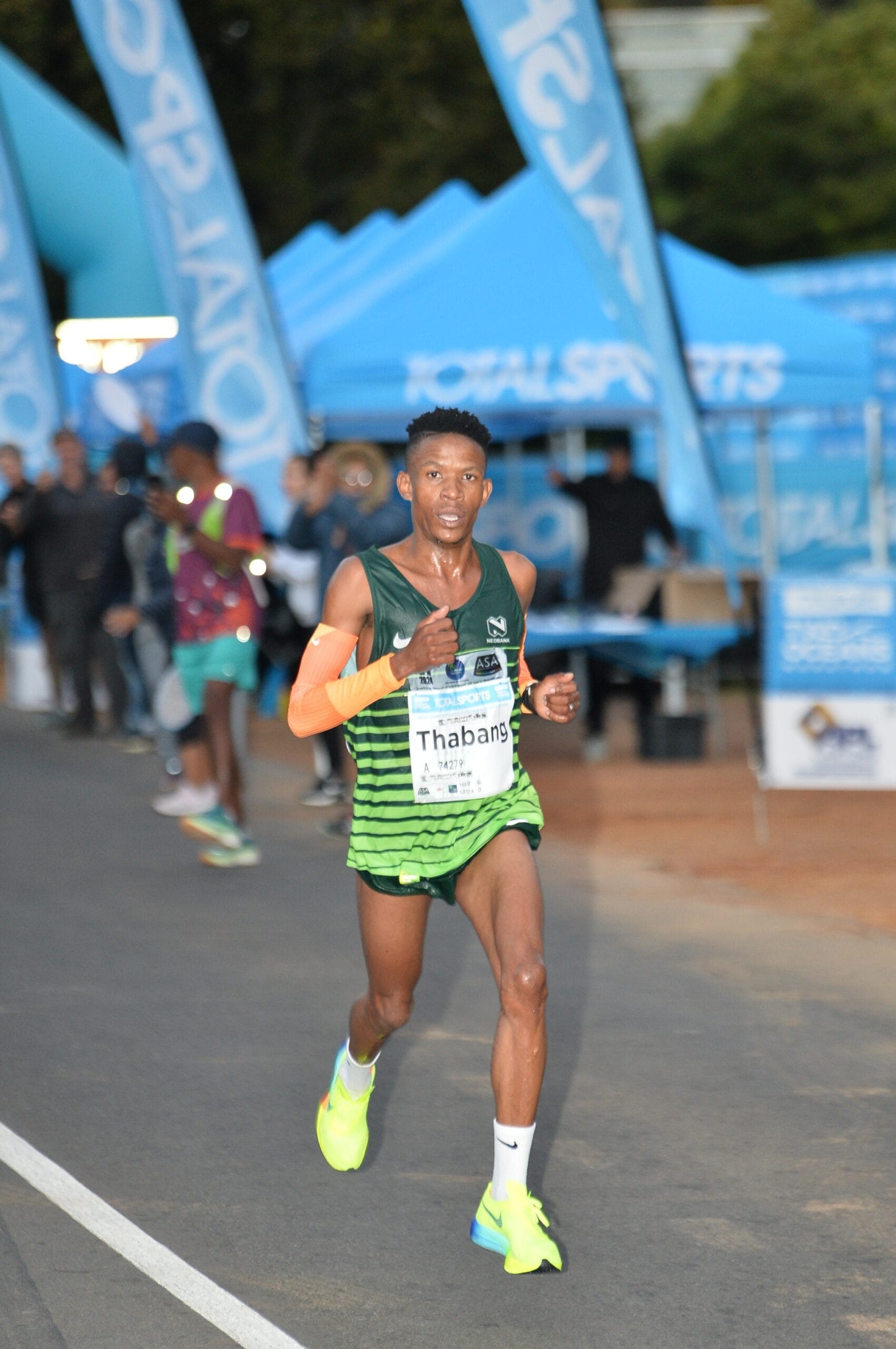
Thabang Mosiako has timed his run into form with precision ahead of the Totalsports Two Oceans Half Marathon on 12 April, delivering back-to-back performances that underline his intent to challenge for the title in Cape Town.

The Nedbank Running Club athlete produced a commanding victory at the Phakamile Mabija Human Rights Half Marathon in Kimberley, clocking 1:04:37 to set a new course record. He finished 1 minute and 23 seconds clear of teammate Joel Mmone.

“What a great race,” said Mosiako. “The road was smooth and safe, it was well organised and everything was indeed perfect. Overall, I am happy with my performance.”

That result followed a strong showing at the Paris Half Marathon on 8 March, where he ran 1:00:44 to finish third, the third fastest 21km time of his career.

The 31-year-old, who is the 2023 South African half marathon champion and one of the country’s fastest ever over the distance, believes improved race management has played a key role in his current form following his recent marathon campaigns.

“I think this time around I was smarter after my second marathon. I took enough rest, that’s why I didn’t struggle with the buildup phase and that led me to the shape I have now.”

Mosiako will return to Cape Town aiming to improve on last year’s fifth-place finish and replicate his victory in 2024.

“I’m going for the Two Oceans Half Marathon again to correct the mistake I made last year,” he said. “I’m just praying to remain injury free and to have consistency in training. I’m really happy about what’s coming my way.”

Two Oceans Marathon NPC chairperson Chris Goldschmidt believes Mosiako will be among the leading contenders.

“We’ve been watching Thabang Mosiako’s recent performances with great interest. His form in the lead-up to the Totalsports Two Oceans Half Marathon powered by BYD certainly suggests that he is ready to challenge strongly for the title again. With athletes of this calibre lining up, we can expect an exciting and highly competitive race on 12 April.”

Race general manager Wade Bromfield echoed those sentiments.

“Thabang has shown impressive determination since finishing sixth last year, and his recent results indicate that he’ll arrive at the start line full of confidence. Performances like these add to the anticipation surrounding the Totalsports Two Oceans Half Marathon powered by BYD, and we’re looking forward to seeing how the race unfolds with such a strong field competing for top honours.”

The 2026 event carries a combined prize purse of R2.6 million, with the half marathon offering R422 600, adding further incentive to an already competitive field.

Event Information

  • Thursday, 9 April: International Friendship Run
  • Friday, 10 April: Trail Run (07:00)
  • Saturday, 11 April: Ultra Marathon (05:15)
  • Sunday, 12 April: Half Marathon (06:15)

Total Prize Purse (2026): R2.6 million

  • Ultra Marathon: R2 177 400
  • Half Marathon: R422 600

Totalsports Two Oceans Marathon secures BYD as presenting sponsor

By Adnaan Mohamed

The Totalsports Two Oceans Marathon has entered a new phase after global electric vehicle manufacturer BYD was announced as the race’s official presenting sponsor from 2026.

The partnership marks the first time in the event’s history that the Cape Town race will have a presenting sponsor. The event will now be known as the Totalsports Two Oceans Marathon powered by BYD.

Organisers believe the agreement strengthens efforts to elevate the race and align it with sustainability initiatives.

“This is a proud and exciting moment for us as we welcome BYD as Presenting Sponsor of the Totalsports Two Oceans Marathon from 2026, with the event now officially known as the Totalsports Two Oceans Marathon powered by BYD,” said Two Oceans Marathon NPC chairperson Chris Goldschmidt.

“This partnership reflects a shared commitment to excellence, innovation and community. BYD’s leadership in new energy vehicles, including advanced electric mobility solutions, aligns strongly with our vision for a more sustainable future.”

The race, widely known as the “World’s Most Beautiful Marathon”, winds through the Cape Peninsula and attracts thousands of local and international runners each year.

According to race general manager Wade Bromfield, securing a presenting sponsor represents a key milestone in the organisation’s long-term strategy.

“From the outset, our ambition has been to restore and elevate the World’s Most Beautiful Marathon to its former glory. Securing our first-ever Presenting Sponsor marks a major milestone in that journey,” said Bromfield.

“With BYD’s innovation and energy behind us, we are proud to power the next era of the Totalsports Two Oceans Marathon.”

BYD is one of the world’s leading manufacturers of new energy vehicles, including electric cars, and develops advanced battery technology aimed at reducing emissions. The company is listed on the Hong Kong and Shenzhen stock exchanges.

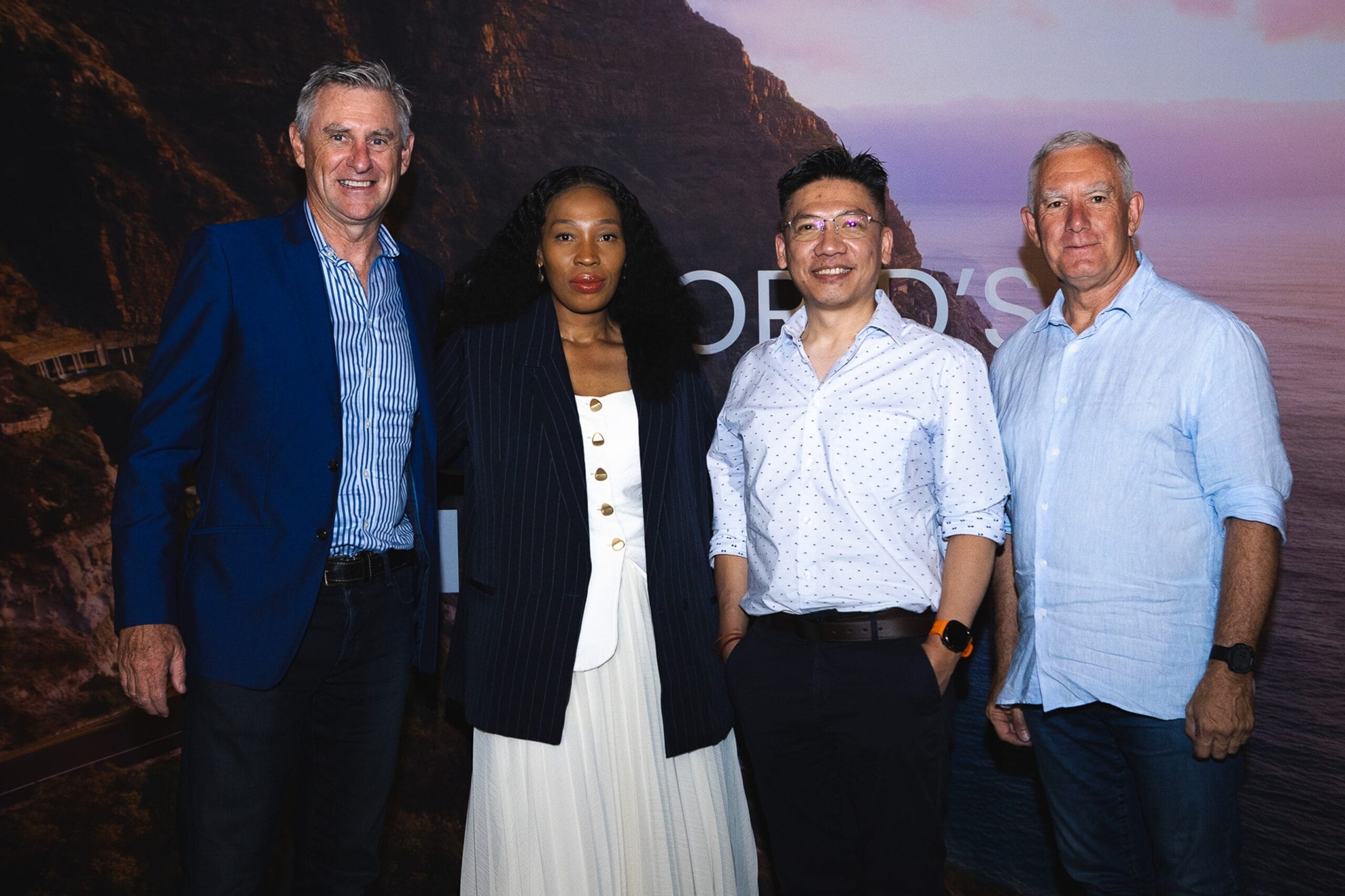
The Totalsports Two Oceans Marathon has announced BYD as its Official Presenting Sponsor in a landmark collaboration that will see one of the world’s leading electric vehicle manufacturers Power one of South Africa’s most iconic endurance events. PHOTO: Adnaan Mohamed

BYD South Africa marketing director for the Middle East and Africa region Nomonde Kweyi said the partnership reflects the company’s commitment to innovation and sustainability.

“As a brand committed to innovation, sustainability, and enhancing everyday mobility, we see tremendous alignment with an event that inspires endurance, passion and progress,” said Kweyi.

“This partnership gives us a unique platform to showcase how clean, efficient and future-focused mobility can enhance major events.”

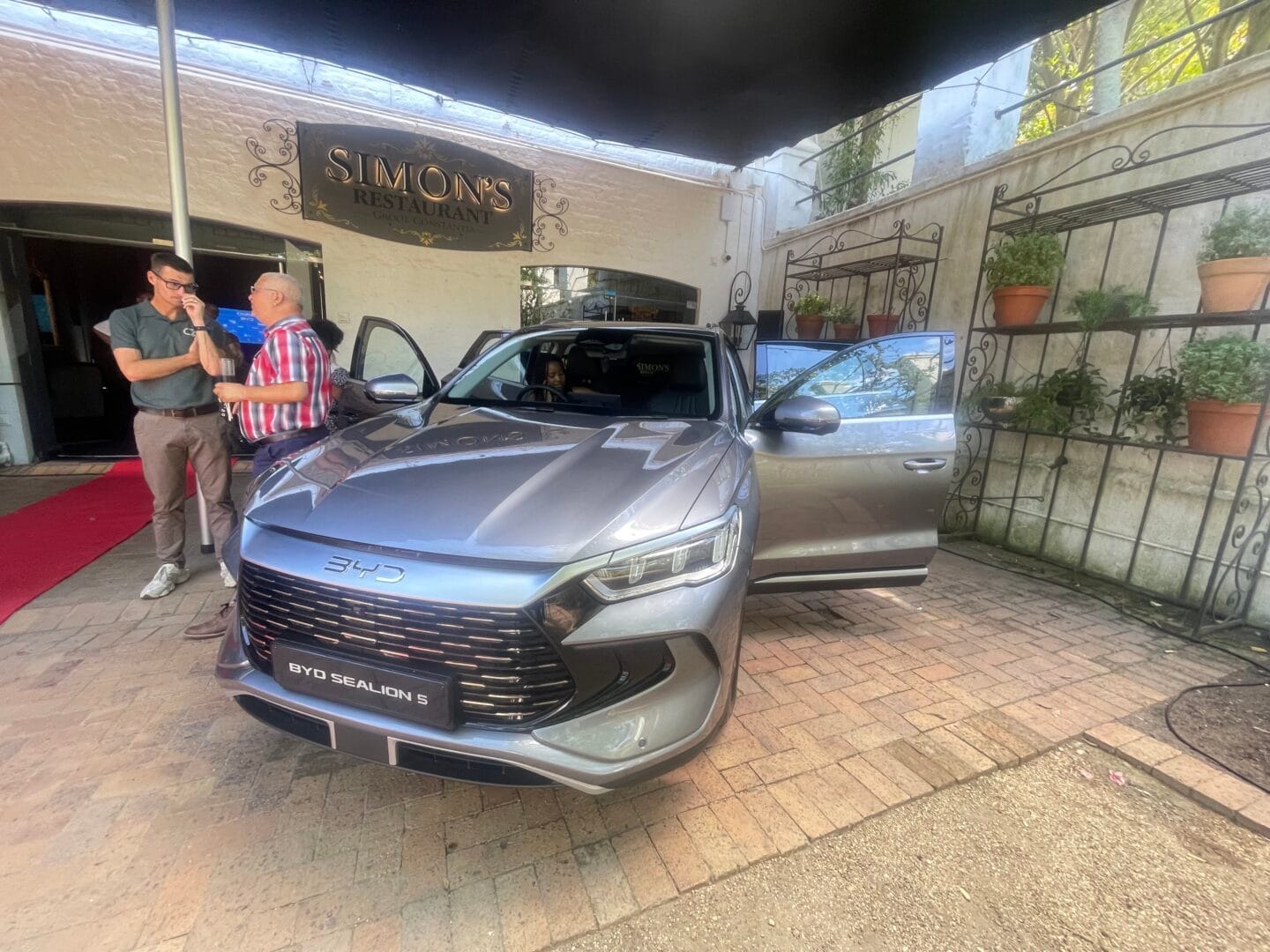
Kweyi added that runners and spectators will see the brand’s vehicles integrated into the race experience.

“Runners and spectators can look forward to experiencing our vehicles up close from lead and support cars on race day to interactive displays and engagements in the lead-up to the event. We are excited to bring our technology, energy and innovation to the running community.”

The 2026 event programme will include the International Friendship Run on 9 April, the Trail Run on 10 April, the Ultra Marathon on 11 April and the Half Marathon on 12 April.

Caldwell and Lötter Claim Maiden Midmar Mile titles

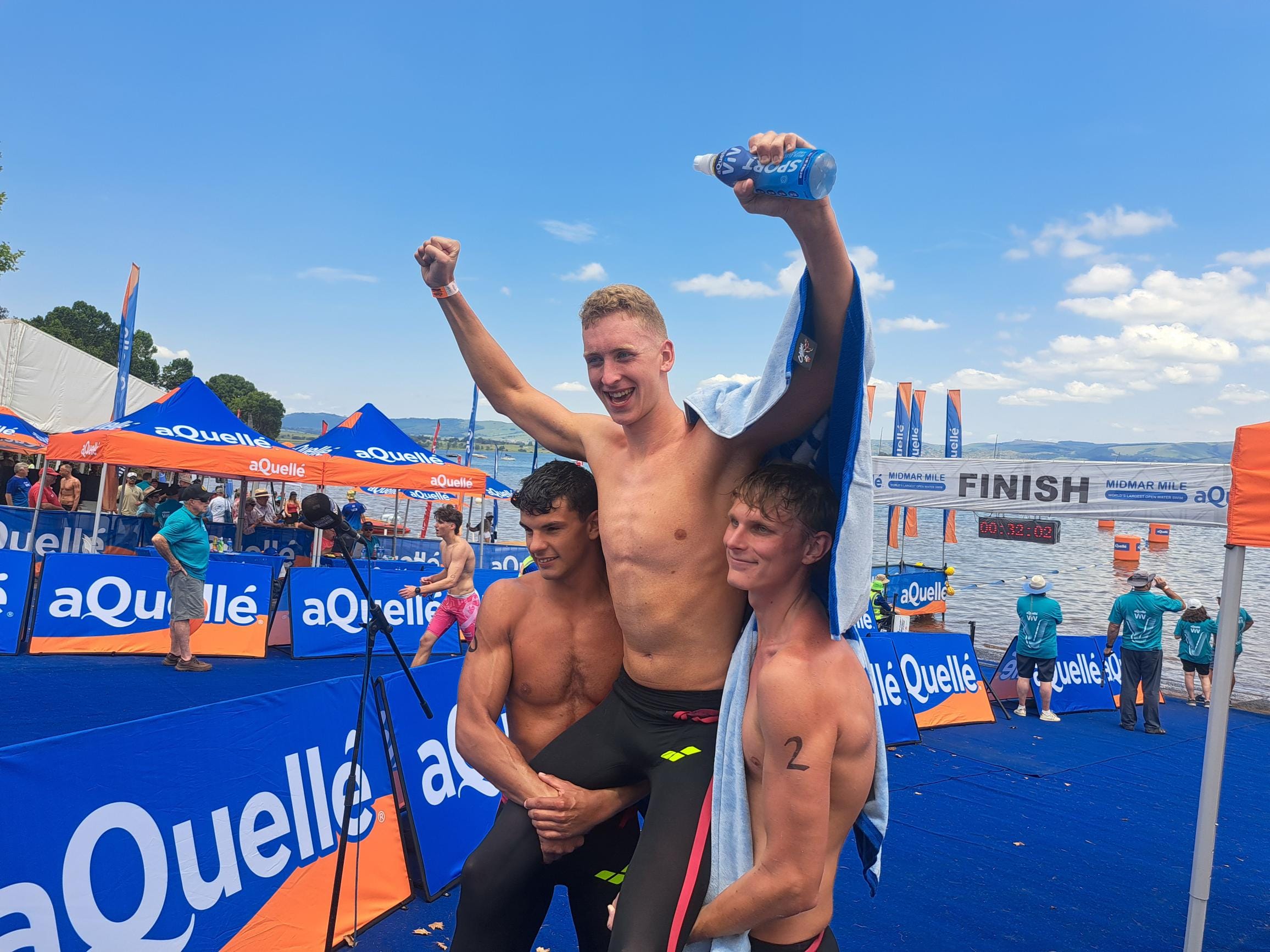
Matthew Caldwell and Callan Lötter claimed their maiden aQuellé Midmar Mile titles in 2026 through two contrasting but equally decisive performances, showcasing tactical intelligence, fearless execution and open-water mastery.

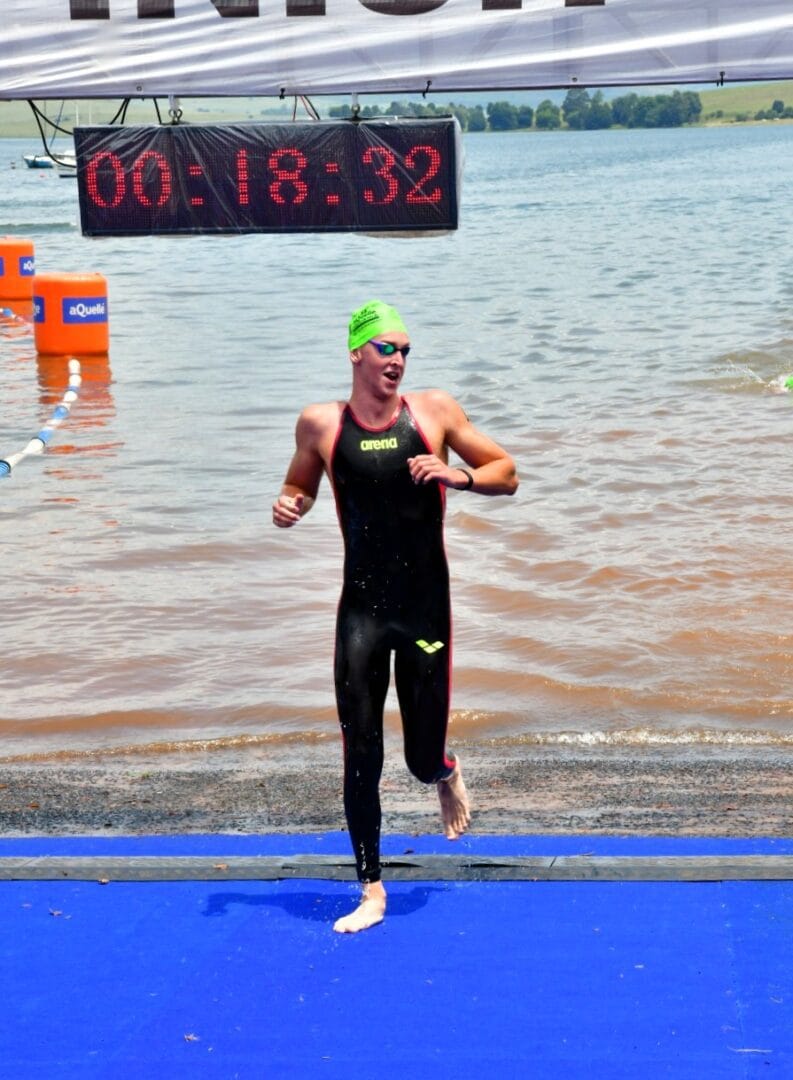
In the elite men’s contest, Caldwell didn’t just swim the mile, he drew his own map across it. While the front pack surged ahead like a tightly packed shoal, the Johannesburg swimmer peeled off to the right, choosing solitude over the slipstream. It looked risky, even reckless. In reality, it was calculated calm.

Caldwell had boldly predicted before the start that the podium would feature himself, Henré Louw and French Olympian Damien Joly. True to script, the trio, joined early by Connor Albertyn, took control. But as confusion crept into Joly’s navigation around the hotspot markers, Caldwell stayed committed to his wide, lonely arc.

Matthew Caldwell wins 2026 Midmar Mile Photo: Midmar Mile

“I just needed to be as wide as possible, not close to anyone. I just didn’t want to be in sight. I wanted to be like an invisible person swimming there,” Caldwell said. “So the plan was just swim my own race in clean water.”

That invisible line carried him home first in 18:32, with Louw second in 18:42 and Albertyn third in 18:44. Joly faded to fourth in 18:51.

“It’s lovely. I’ve been wanting this for a few years now,” Caldwell added. “Henré, myself and Connor on the podium, that’s perfect, that’s how it should be with South Africa on top.”

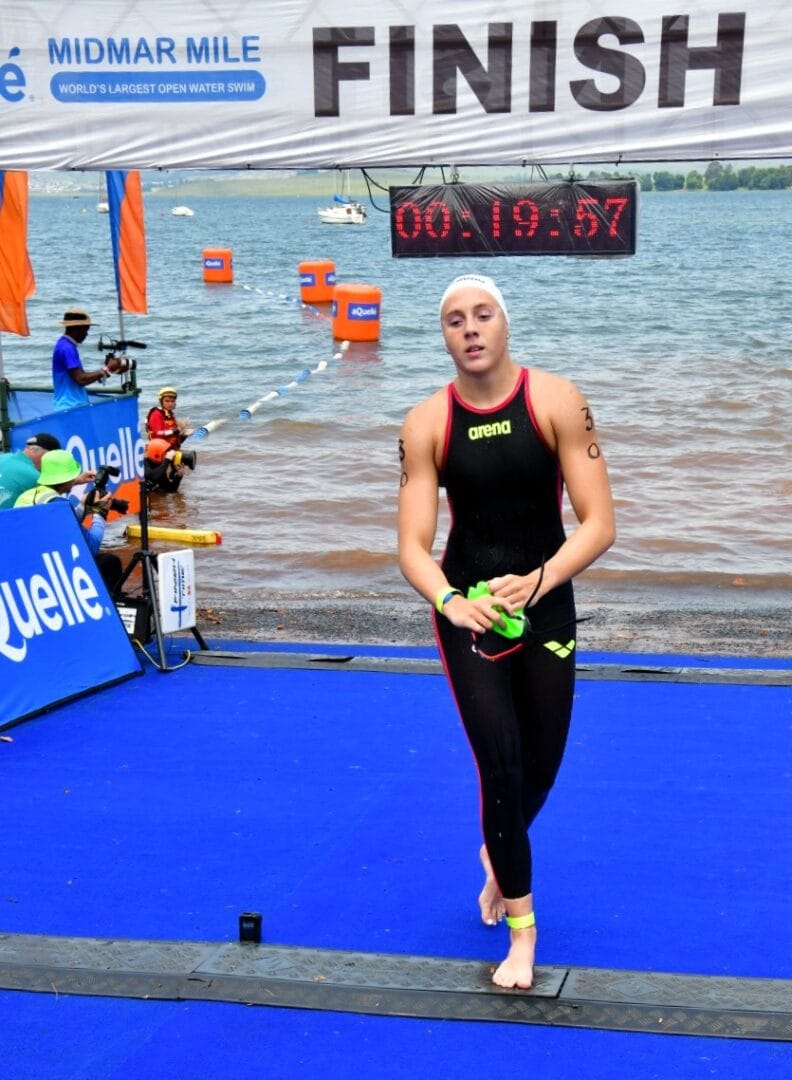
If Caldwell’s race was about subtlety, Lötter’s was pure authority. Battling rough conditions, the 19-year-old attacked early in the elite women’s race, stretching the field like elastic snapping under pressure. By 400m she was clear; by halfway she led by 12 seconds; by the final marker the gap had ballooned to 19.

She touched the finish in 19:51, while the duel behind her simmered. Former champion Stephanie Houtman claimed second in 20:02, with Carli Antonopoulos third in 20:07. The trio was more than a minute ahead of the rest.

“My plan was to go out comfortable and see where the rest of the people were,” Lötter explained. “And then my plan was only to start building from 400m onwards.”

“It feels really good. It just shows that my training has been working and I’m really happy with how I performed today,” she added, crediting her coach. “Troy has helped me a lot and given me the confidence and made me enjoy the sport again.”

Callan Lotter wins Photo: Midmar Mile

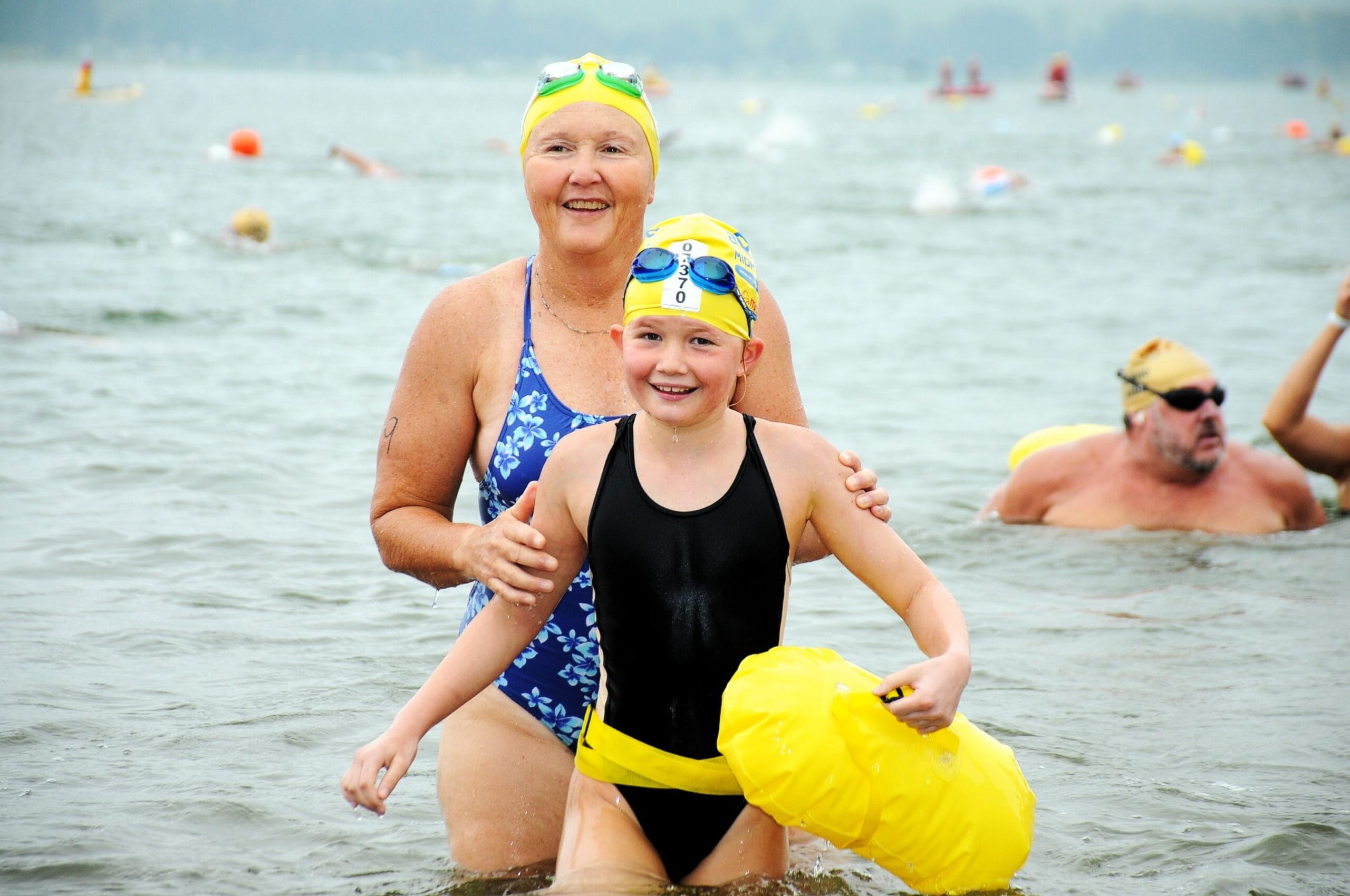
Beyond the elite battles, Midmar’s deeper currents told stories of endurance and legacy. Reino von Wielligh and Gary Albertyn completed the formidable challenge of swimming 32 miles over four days, each marking their 30th Midmar Mile with age-group victories from Von Wielligh in 20:58 (31–40) and Albertyn in 21:18 (51–60).

“It’s something I wanted to do because of my age, 32, 32 miles, raise R32,000,” said Von Wielligh. “I think it was very symbolic.”

The finish line also welcomed legends: seven-time champion and record holder Chad Ho, and 1997 winner Robyn Bradley (now Minogue), who returned after 30 years abroad to finish fourth in her age group.

“It’s a phenomenal swim,” Bradley said. “Just the organisation and how it’s put together. It’s just incredible.”

At Midmar, some swimmers win by disappearing, others by breaking away, but all leave ripples that last long after the water settles.

Top 10 Results

Elite Women

  1. Callan Lötter – 19:51
  2. Stephanie Houtman – 20:02
  3. Carli Antonopoulos – 20:07
  4. Kirsty Andraos – 21:12
  5. Kiara Banks – 21:14
  6. Sasha-Lee Hemmens – 21:15
  7. Zuria Venter – 21:15
  8. Samantha Randle – 21:42
  9. Megan Shepherd – 21:47
  10. Leah Markgraaff – 21:51

Elite Men

  1. Matthew Caldwell – 18:32
  2. Henré Louw – 18:42
  3. Connor Albertyn – 18:44
  4. Damien Joly – 18:51
  5. Sven van der Linde – 19:27
  6. Wian Bartleman – 19:42
  7. Carter Markgraaff – 19:45
  8. James Kewley – 19:47
  9. Luan Terblanche – 19:52
  10. Shane van der Linde – 19:56

For full results, visit www.finishtime.co.za.

Quix Quicke and George Watson chase historic 50th Midmar Mile swims

The aQuellé Midmar Mile will celebrate two extraordinary feats of endurance in 2026 when Jill “Quix” Quicke and George Watson line up for their 50th swim at the world’s largest open-water event.

Quicke’s association with the iconic KwaZulu-Natal race stretches back to 1975, when she became one of the first women to compete officially. Just nine years old at the time, the Pietermaritzburg swimmer was already part of a changing chapter in Midmar Mile history.

“My parents said they thought I was good enough to swim the Midmar Mile. My dad took me up to the dam, as my mom was too nervous, in case I never came out the other side,” Quicke recalled.
“The entire girls’ race was about 150 people. We all started together and you had as long as you liked to get across. I think I took 47 minutes.”

Growing up in Pietermaritzburg meant Midmar became a constant on her sporting calendar. She swam every year from primary school through to matric, achieving a best finish of 14th in a competitive field with a time of 21 minutes.

Although university commitments and provincial indoor hockey caused her to miss a handful of editions, Quicke returned to the dam with renewed resolve, often pushing through significant physical setbacks.

“Since completing my degree, I have done the swim consistently just to keep my total ticking over,” she said.
“In 2016 and 2017 I did the 8 Mile Challenge for the Save the Rhino fund. I swam one year after being in hospital the day before with a kidney stone and one year where I was on crutches following a big knee operation.”

In recent seasons, the Midmar Mile has become a family affair.

“In 2019, I swam with my nine-year-old niece, Derryn Millward, for her first time. Since 2019 my niece, my sister, Mary Millward and I have swum together most years, and we are going to try and keep together for the big one this year.”

Now based in Johannesburg, Quicke says the significance of reaching 50 swims has taken time to register.

“I am finding it hard to believe it is my 50th swim as I don’t feel that old, but I am aware that nowadays I have to put in a bit of training to ensure that I can get across,” she said.
“I think other people are more impressed with the milestone than I am, but it is a good feeling to think about the achievement.”

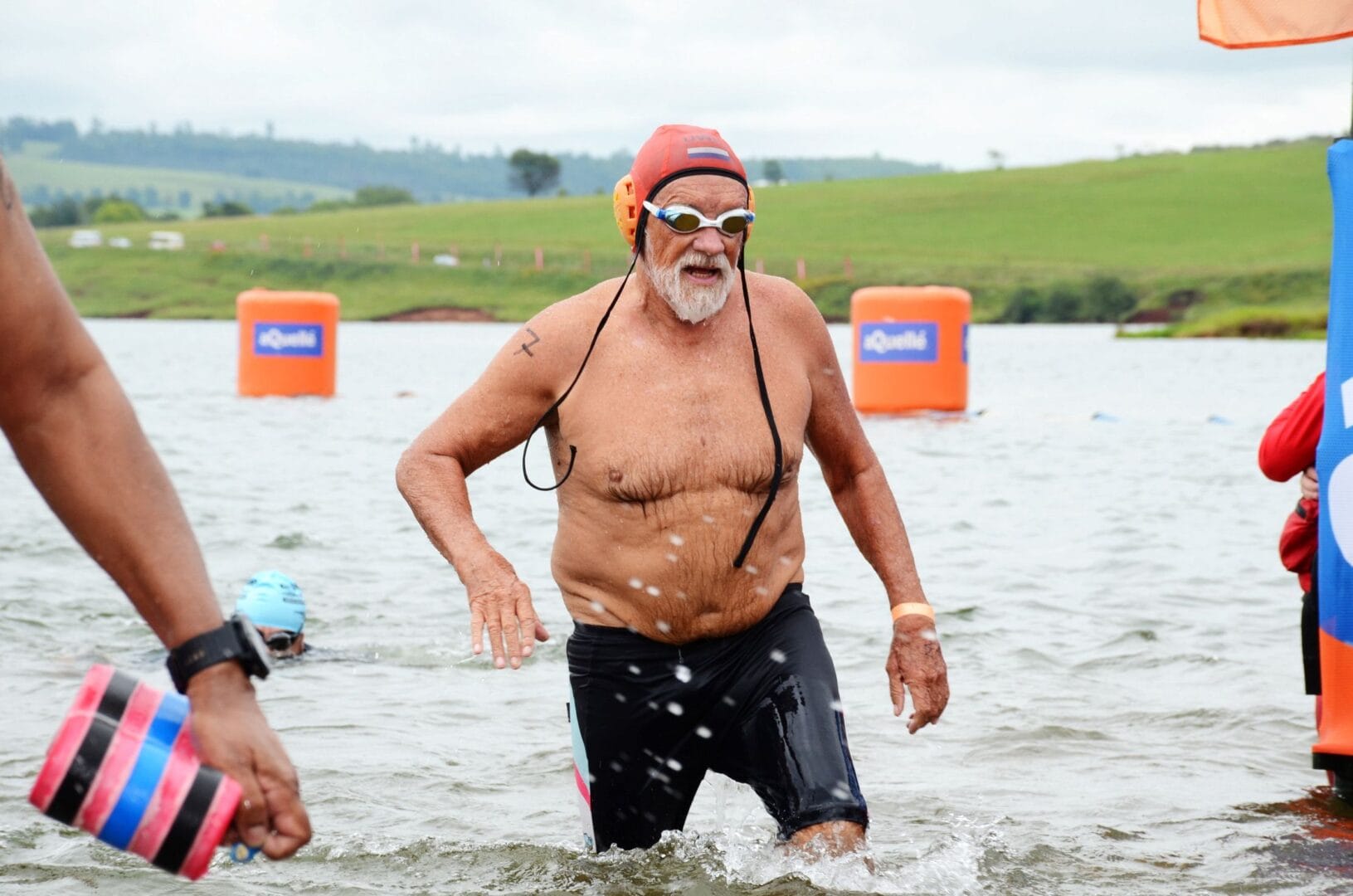
Watson’s Midmar Mile journey began in 1976, a year he describes as pivotal.

George Watson Photo Credit: Action Photo

“A special year for three reasons,” he said. “Firstly, it’s the year I got married, started a new job in finance and swam my first Midmar.”

Now 77, Watson says consistency rather than times was always the objective.

“My goal was not to miss Midmar for as long as I was able.”

Despite that mindset, he recalls one standout performance.

“The year I did my best time, I started late and still managed a 22-minute swim. It was somewhere around 1982/3.”

He has also experienced the race in extreme conditions.

“There was a huge storm in 1978 and waves of at least 2ft. A water polo friend gave up after swallowing half the dam,” Watson recalled.

For Watson, Midmar remains as much about community as competition.

“I made a lot of friends through swimming and water polo, and Midmar was the one place I was sure to connect with them.”

As he approaches his 50th swim, he has no plans to stop.

“I have no particular goal but will swim for as long as I can manage.”

The 2026 aQuellé Midmar Mile takes place from 5 to 8 February. While online entries have closed, late entries will be accepted at Midmar Dam on race days, subject to availability.