

By Adnaan Mohamed
When the fish horn sounds over Newlands on 11 April 2026, thousands will surge forward at the Totalsports Two Oceans Marathon, chasing a medal, a personal best, a promise made to themselves in the dark of an April morning.
But for three Blue Number Club runners in that sea of bodies, this isn’t about one more finish.
It’s about a lifetime of them.
The Man Who Made the Ultra a Ritual
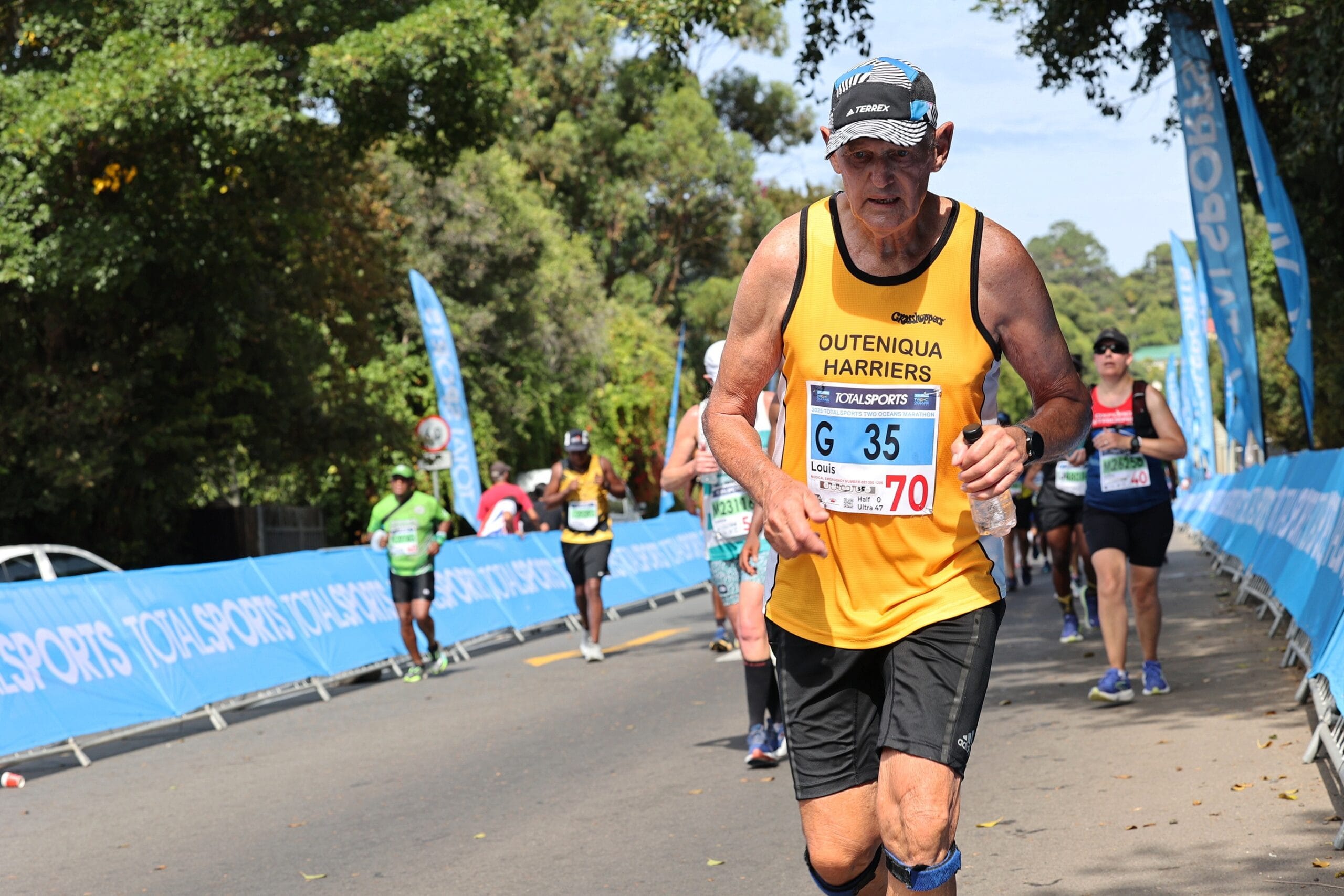
At 75, Louis Massyn doesn’t talk about legacy much. He talks about rhythm. About showing up. About forward motion.
In 2026, he will aim for his 48th Two Oceans Ultra finish. That’s more than any runner in the race’s history. That number doesn’t shout. It hums. It carries the quiet authority of someone who has outlasted trends, injuries, weather systems and entire generations of runners.
Massyn’s résumé includes 50 finishes at the Comrades Marathon, but at Two Oceans, he feels at home. The route that sweeping arc past Muizenberg, over Chapman’s Peak, up Constantia Nekthat has become more like a companion.
“Every year the body asks tougher questions,” he says. “But the heart always knows the answer.”
If you’ve ever stood on a start line wondering whether you still belong, you understand that sentence. The longer you run, the less it’s about proving yourself, and the more it’s about honouring the relationship you’ve built with the road.
Massyn doesn’t defy age. He negotiates with it. He trains smart, listens hard, and respects recovery. Longevity, he proves, isn’t luck. It’s discipline stacked over decades.
The Women who redefined the distance
If Massyn’s 47 is a monument, the shared 32 of Sharon Bosch and Lucille Damon is a revolution written in miles.
Both will line up in 2026 chasing their 33rd Two Oceans Ultra finish. It’s the most by any women in the event’s history.
They came through eras when women’s ultra fields were thinner, support structures smaller, and recognition slower to arrive. They stayed anyway.
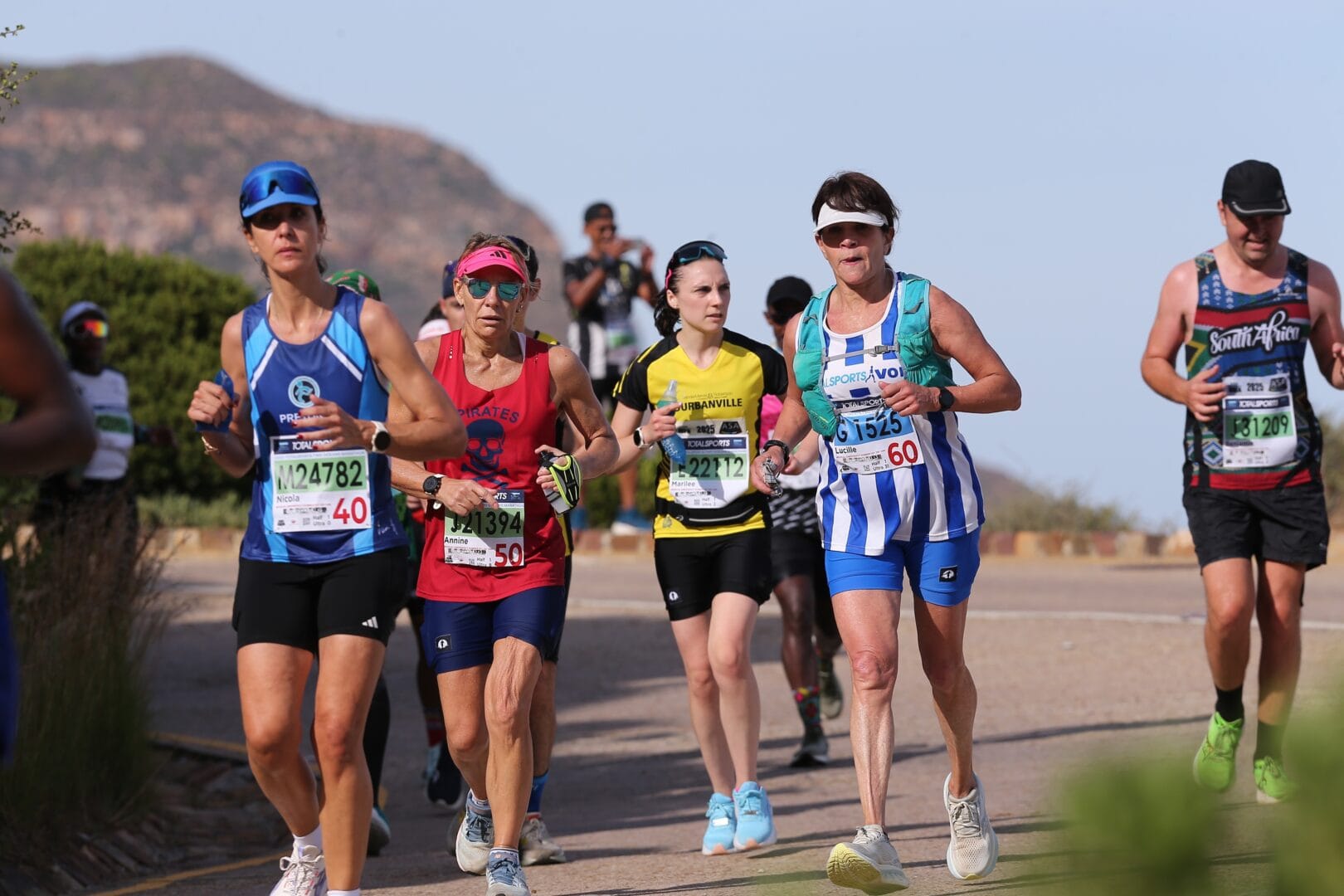
Damon, 66, who will be running in the colours of Totalsports VOB Running Club in 2026, describes the race as “a moving meditation.”
Some years the legs turn over effortlessly, like you’ve found the perfect cadence. Other years it’s attritional – a long negotiation with fatigue. But she keeps returning because the Ultra offers something rare: clarity.
“Some years you fly, some years you grind, but every finish line feels like a victory earned honestly.”
There’s no pretending over 56 kilometres. No shortcuts. The race pares you back to essentials, breath, stride, resolve.
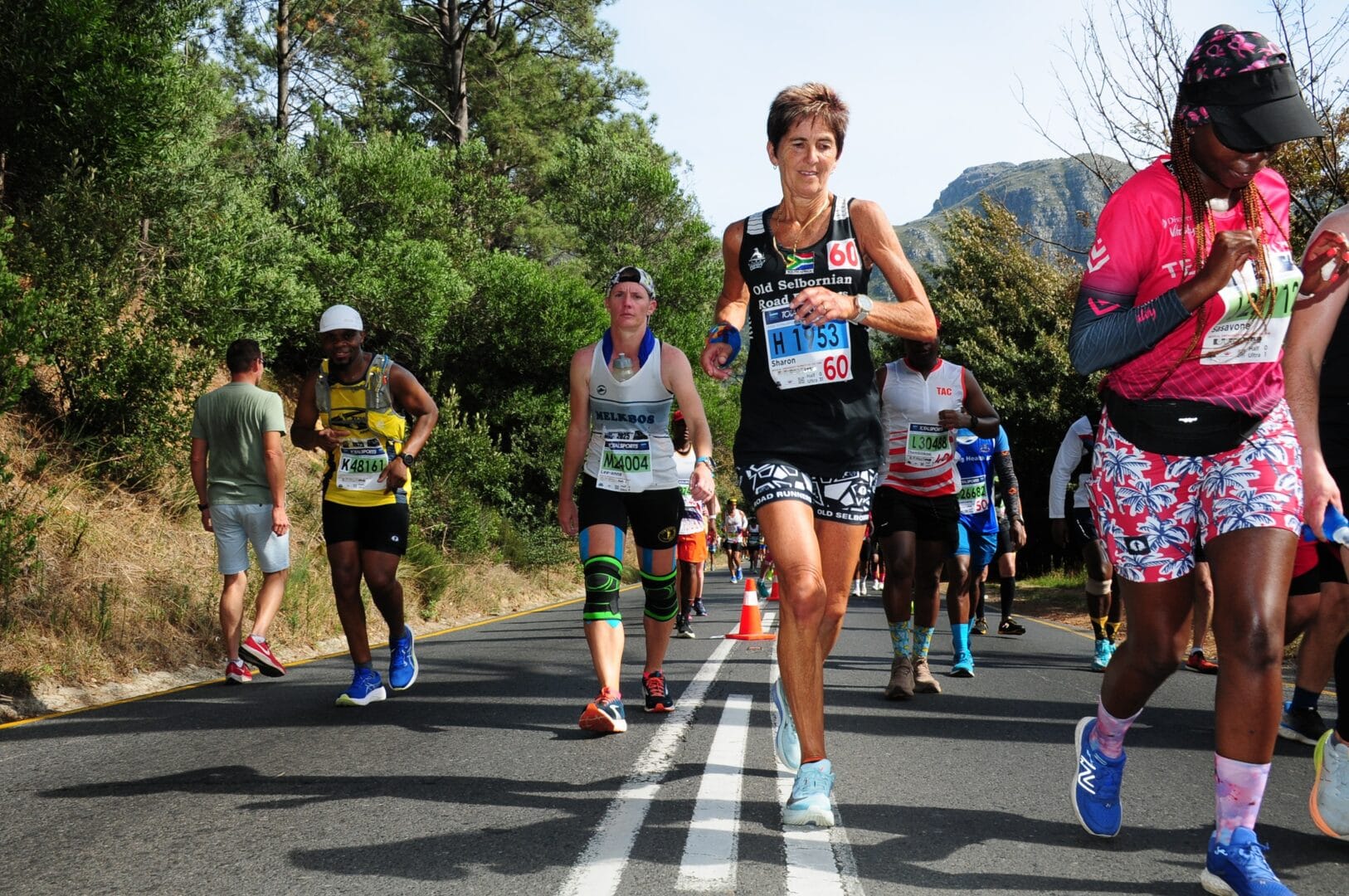
Bosch, 63, sees it similarly. Two Oceans, she says, is a privilege. Not because it’s easy, but because it’s hard. Because every year you must earn your place on that start line again.
“TTOM strips you down to who you really are,” said Bosch. “It’s never been about numbers, but standing on the start line still feels like a privilege.”
In a sport increasingly obsessed with splits, carbon plates and data dashboards, Bosch and Damon represent something more elemental: durability. Not the flash of one extraordinary run, but the steadiness of three decades of them.
Why Longevity Matters
In ultra distance running terms these three are case studies in sustainable excellence.
They remind us that endurance isn’t built in a single training block. It’s layered. It’s patient. It’s forged in unremarkable Tuesday runs and winter mornings when no one is watching.
Sports science will tell you that aerobic capacity peaks and declines. That recovery slows. That muscle mass shifts. And yet, here they are.
Still training.
Still adapting.
Still competing.
What sets them apart isn’t superhuman physiology. It’s commitment to the process: consistency over intensity, community over ego, gratitude over entitlement.
Race organisers have introduced enhanced runner perks for 2026, exclusive event shirts, limited-edition socks, expanded Blue Number Club rewards, and comprehensive recovery zones supported by Cipla from Expo to finish line. The infrastructure evolves. The sport modernises.
But the heart of the Ultra? That remains unchanged.
It beats in runners like these.
The Courage to Return
The most remarkable statistic isn’t 48. Or 33.
It’s the number of times they chose to come back.
They’ve all had years when the training felt heavier. When niggles lingered. When motivation flickered. But they returned, not because it was easy, but because it mattered.
In endurance sport, we talk about breakthrough performances. But perhaps the truest measure of a runner is repetition and the willingness to continue after the applause fades.
As the 2026 Ultra unfolds along the Cape Peninsula, thousands will discover something about themselves between sunrise and the final stretch.
Massyn, Bosch and Damon already know what’s waiting there.
Not glory.
Not validation.
Just the simple, profound satisfaction of another honest run.
And sometimes, that’s more than enough.
