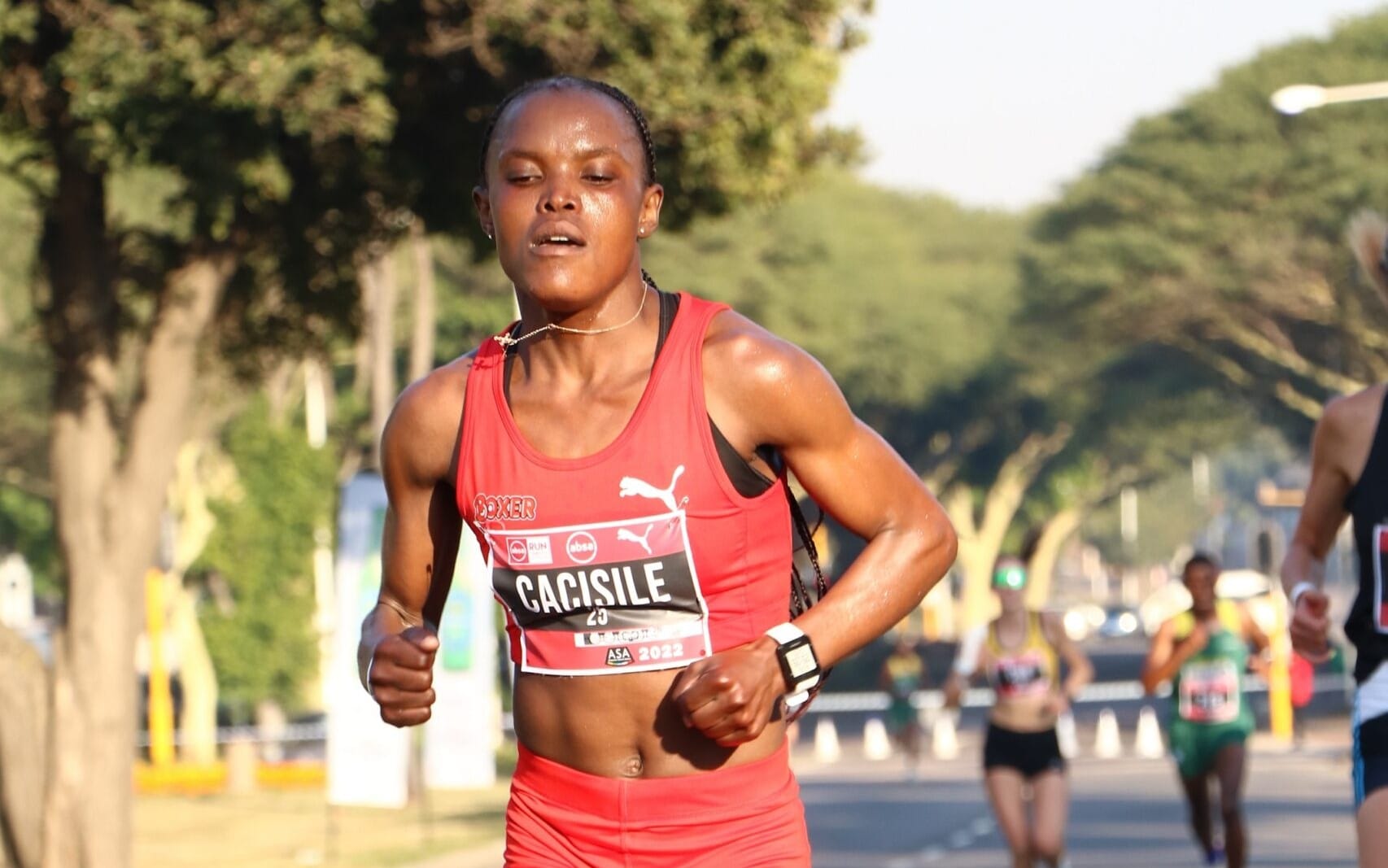
Sosibo has enjoyed a sizzling 2026 campaign, lowering her 10km personal best to 32:16 at the SPAR Women’s Grand Prix Durban leg in June and dipping under 32:45 three times this season.
Then came Durban.
She clocked 32:36 to finish sixth in a quality international field at the Absa RUN YOUR CITY DURBAN 10K, a performance that gave her belief and plenty of bite.
“Durban was amazing for me this year. I ran a PB at SPAR and got a top-six finish at the Absa RUN YOUR CITY DURBAN 10K, which gave me a big confidence boost,” said the KwaZulu-Natal-born runner, now based in Soweto.
Her legs have been talking loudly ever since.
On Sunday, she ran 34:01 for third at the Totalsports Women’s Race Joburg, less than 24 hours after winning the senior women’s 10km title at the Central Gauteng Cross Country Championships.
That is some serious mileage in the bank.
Sosibo knows what it feels like to mix it with the best. At the 2023 World Road Running Championships in Riga, Latvia, she finished 10th in the half marathon in a personal best 1:09:31.
Now, under the watchful eye of legendary coach Michael ‘Sponge’ Seme, who has also guided four-time Olympian Stephen Mokoka, she believes the old magic is returning.
“Things have been going well for me this year. I feel like the Cacisile who was competing back in 2023. I’m coming back slowly but surely.”
Tshwane, however, is ready to collect its toll.
The hilly, high-altitude route can chew up ambitious runners like a hungry school of piranhas. Sosibo knows a personal best may be asking for too much.
“Tshwane is a tougher course with hills at altitude, so I’m not expecting a PB. My target is to race smart and run with the lead pack for as long as possible.”
Michael Meyer, Managing Director of Stillwater Sports, believes her Durban performance has changed the conversation.
“Cacisile’s 2026 season has been hugely encouraging, and her sixth-place finish in Durban showed that she can compete with a strong international field,” Meyer said. “We’re looking forward to seeing her build on that performance in Tshwane.”
The race is sold out, with the gun going at 08:00 from Stanza Bopape Street in Arcadia.
For Sosibo, the mission is clear: climb with courage, conserve the fuel and unleash the finishing kick when the road finally points home.
Her comeback may be labelled “slowly but surely”.
On Sunday, she will be hoping it looks anything but slow.
With two kilometres remaining, George Kusche glanced at the race clock for the first time all day.
The display showed roughly 5:08.
His body felt like a battered vehicle limping home after a cross-country expedition. His left calf had been threatening mutiny for more than 30 kilometres. Every stride sent warning signals through weary muscles. The road tilted and twisted ahead like a mischievous serpent refusing to surrender its final secrets.
Yet something curious happened.
The mathematics suddenly made sense.
“I remember thinking, if I run 10 minutes in these last two kilometres, I’m still going to run 5:18.”
For most runners, that would be astonishing pace after nearly 86 kilometres.
For Kusche, it was a moment of realisation.
History was waiting at the finish line.
The remarkable part is that he still wasn’t thinking about winning.
“I thought to myself, I can’t think about anything else now. I need to focus on putting my foot in front of the other and running as fast as I can.”
That fear may have been his greatest ally.
Because while many runners arrive at Comrades armed with bravado and bold predictions, Kusche approached the race like a scientist approaching an unsolved equation.
Carefully.
Methodically.
Relentlessly.
And in doing so, he produced one of the greatest performances the race has ever witnessed.
THE UNDERDOG WHO WAS NEVER CHASING A TROPHY
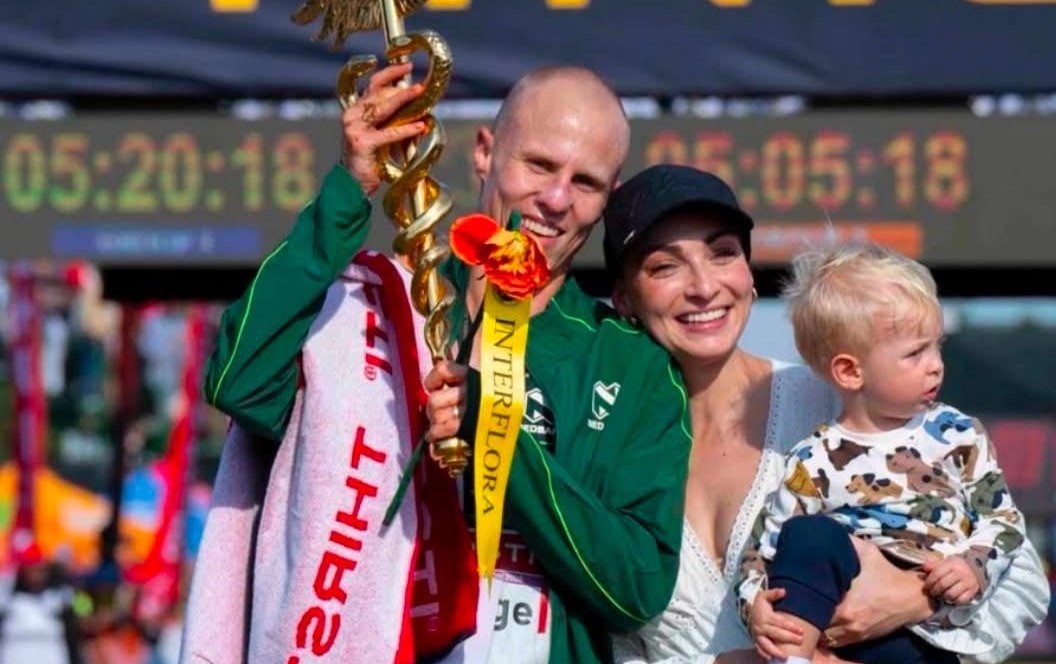
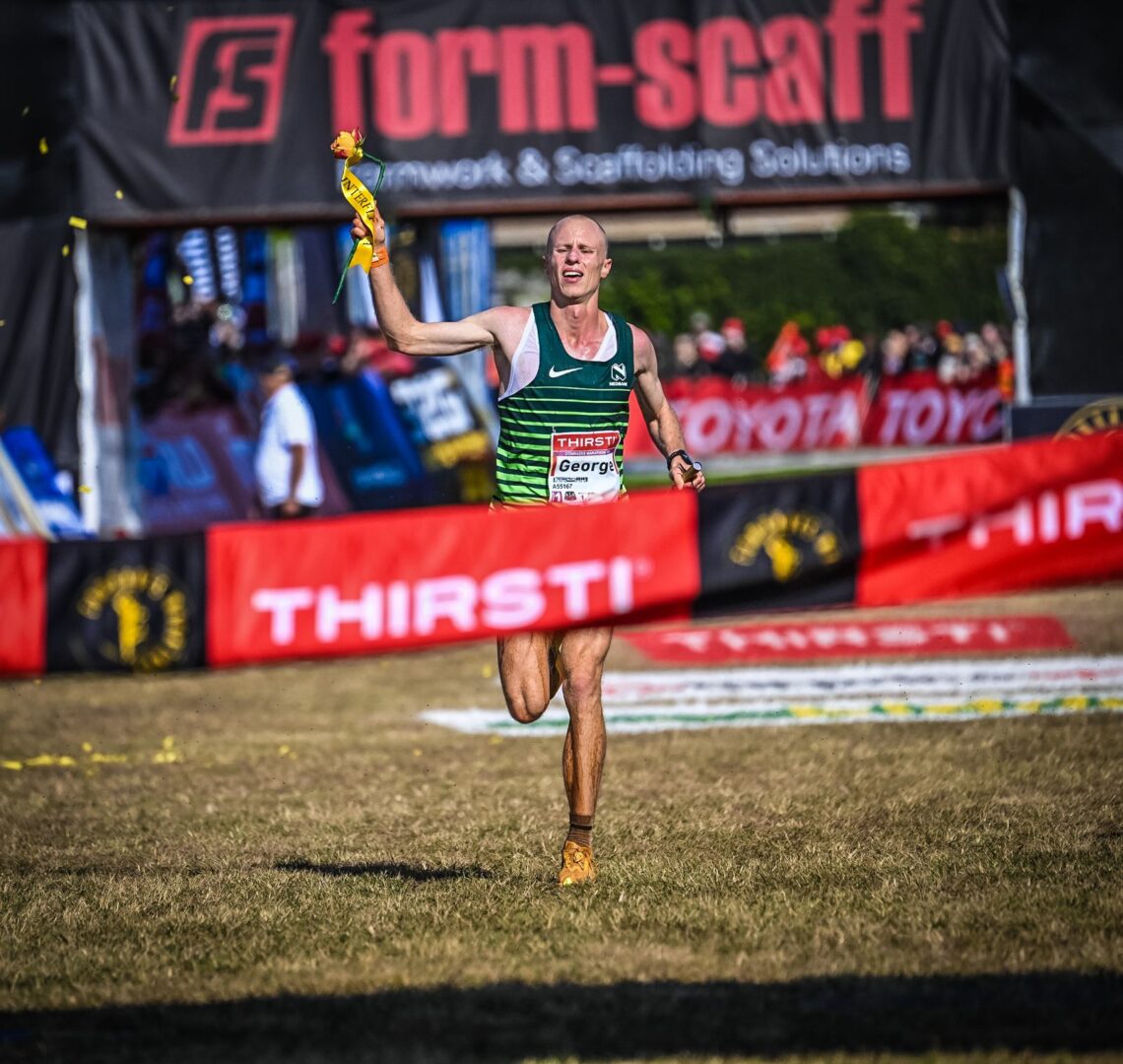
When Kusche crossed the finish line at Hollywoodbets Scottsville Racecourse in Pietermaritzburg, the clock stopped at 5:15:56.
The time demolished Russian Leonid Shvetsov’s 18-year-old Up Run record of 5:24:49 by almost nine minutes.
It also delivered the fastest average pace ever recorded in the history of the Comrades Marathon.
Yet the journey began not with victory but with disappointment disguised as success.
A year earlier, the former NCAA athlete had finished 12th in his Comrades debut.
Many runners would have celebrated.
Kusche analysed.
“On the day I knew that was the absolute best I could have done,” he said.
“But I know I made a lot of mistakes preparing for that Comrades because it was my first one. I was naive about what it takes to run Comrades.”
The race became a classroom.
The student paid attention.
PROJECT 2026
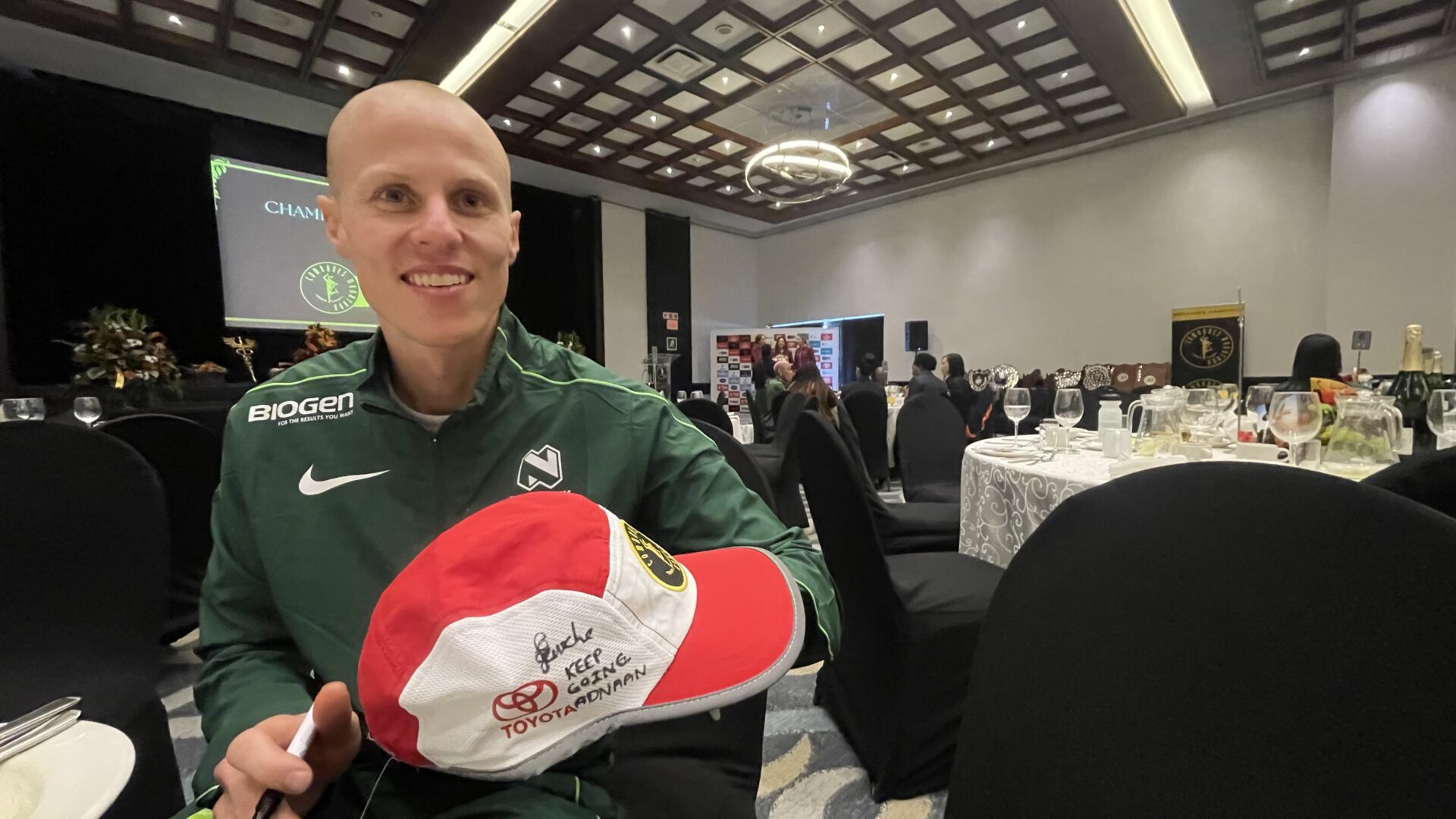
George Kusche at the 2026 Comrades Winners Breakfast Photo: Adnaan Mohamed
Most athletes emerging from a strong debut create a target.
Kusche created a process.
“It was Project 2026, but not to win.”
That statement sounds almost absurd after what followed.
“It was Project 2026 to focus on the process as much as I can and make sure that on June 14, 2026, I show up as the absolute best version that I could be.”
“If that means a win, then I’m happy.”
The distinction matters.
The goal was not a trophy.
The goal was optimisation.
Every kilometre became a data point.
Every session became an experiment.
Every mistake became valuable information.
THE SCIENTIST IN THE RUNNING SHOES
Away from racing, Kusche works full-time as a Data Scientist at Pepkor Lifestyle.
The numbers are woven into his DNA.
Born in Malalane in Mpumalanga, educated at Laerskool Malelane and Affies in Pretoria, he earned a Master’s degree in Statistics and passed eight Actuarial Society of South Africa examinations on his first attempt.
He coaches himself.
That revelation surprised Fordyce.
In an era overflowing with coaches, consultants and performance gurus, Kusche remains his own architect.
“I coach myself.”
His approach combines science and instinct.
“I accumulated a lot of volume, but that came over a period of a year.”
“It’s a gradual increase in both volume and intensity and elevation gain.”
“I meticulously tracked various metrics over time and ensured that they increased and peaked at the right time.“
The scientist measured everything.
The athlete listened to his body.
The combination proved potent.
THE HILL THAT BUILT A CHAMPION
Every Tuesday, a hill in Pretoria became his laboratory.
He repeatedly climbed and descended Platheus Hill.
No dramatic sprinting.
No social media heroics.
No chest-thumping workouts.
“I simply jogged up and jogged down.”
“And I just let the elevation gain do the damage it had to do.”
Slowly, the hill surrendered.
“Without increasing my effort, I could see my pace increasing and my heart rate decreasing.”
Like water carving a canyon, the work accumulated quietly until the results became impossible to ignore.
THE OVERTRAINING MYTH
As race day approached, whispers began circulating.
Some observers believed Kusche was training too much.
Even Fordyce and former champion Nick Bester had concerns.
“We said George is terribly overtrained.”
Kusche knew the rumours.
“I know about the overtraining allegations.”
His answer reflected the analytical mindset that defines him.
“You can’t look at one number and say someone’s overtraining.”
“My workouts kept improving.”
His peak week reached an eye-watering 259 kilometres.
Yet he remembers feeling restrained.
“I felt like I could have done 300.”
“I felt guilty not running more.”
The engine was humming.
The data agreed.
THE SURGES THAT BROKE THE RACE
The winning move arrived long before he took the lead.
Running within a pack, Kusche sensed comfort spreading among his rivals.
Comfort is dangerous in championship racing.
So he attacked it.
“I didn’t want the pack to be comfortable.”
Climbing Inchanga, he repeatedly surged.
Not wildly.
Not recklessly.
Simply enough to raise the temperature.
“I felt really strong.”
“I just decided to go in front of the pack and gradually increase the pace.”
The surges acted like tiny cracks in a dam wall.
Invisible at first.
Devastating later.
“After about four of those surges, I decided it’s now time to go for gold.”
The race had changed.
The field simply had not realised it yet.
FEAR ON POLLY SHORTTS
For television viewers, Kusche looked magnificent.
Fordyce remembers watching him move through Harrison Flats and immediately predicting victory.
“George is going to win.”
The reality unfolding inside Kusche’s body was far less glamorous.
“My left calf was cramping.”
“My legs were sore.”
“I kind of felt tired.”
Then came Polly Shortts.
The notorious climb often acts like a final judge standing between contenders and champions.
Fortunately, Kusche had studied every metre.
“I knew exactly how long that hill would be.“
That knowledge became a psychological weapon.
“I knew it’s two kilometres.”
“I knew that if I could get to the top in the lead and feeling strong and maintain my pace, then the odds are good of winning.”
What happened next was pure courage.
“I didn’t feel good.”
“But I went up that hill giving it everything I had.”