Adidas celebrates running community and club support in SCTM ambition

By Adnaan Mohamed

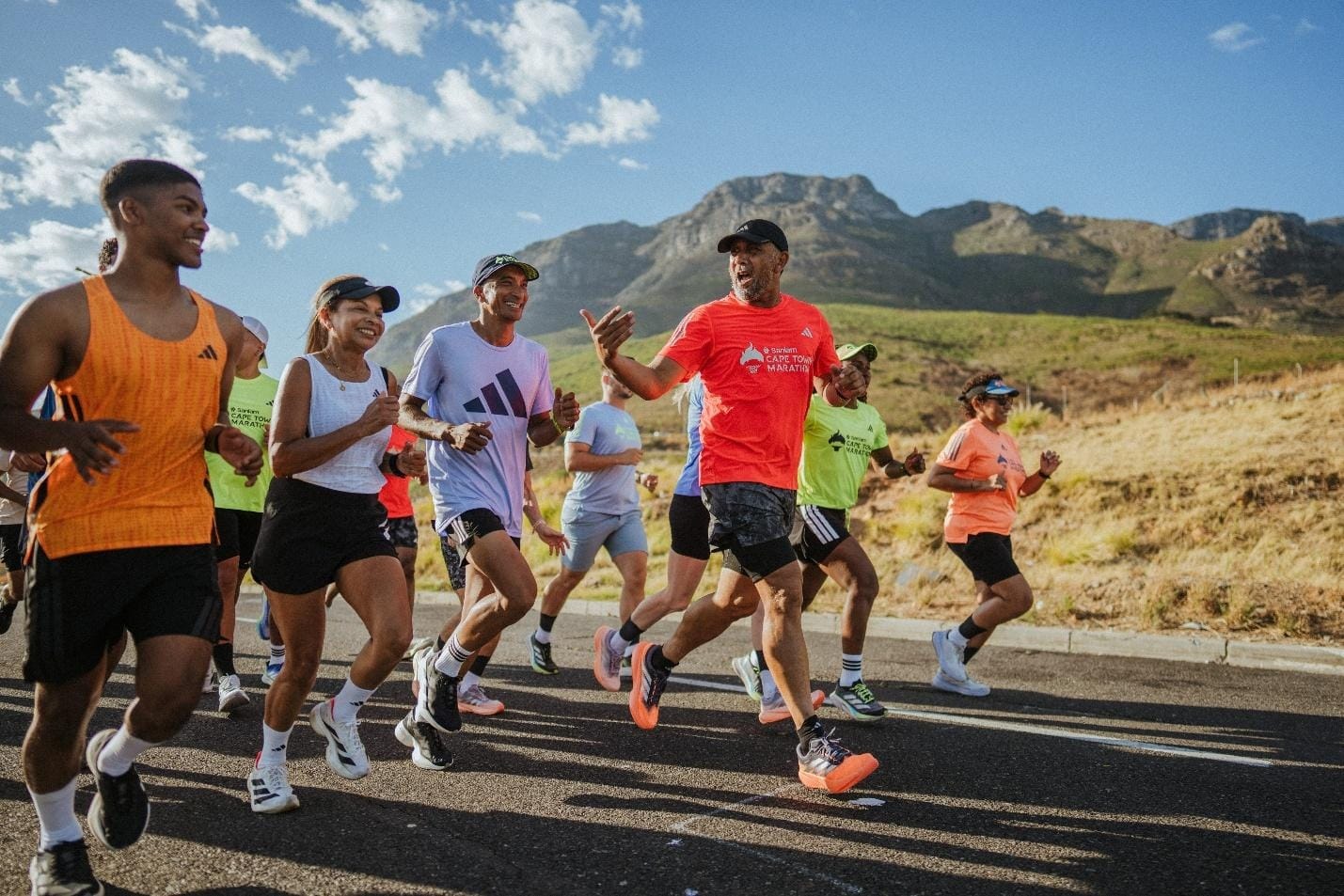
The pulse of the Mother City’s running scene beats strongest far from the elite start line, in the clubs and communities that shape every stride taken across its roads. With the Sanlam Cape Town Marathon (SCTM) pursuing Abbott World Marathon Major status, adidas has placed the spotlight on the network of runners who have turned the sport into a city-wide movement.

From the Sea Point promenade to the streets of Khayelitsha and the shaded routes of Constantia, running has grown into a shared culture. Clubs such as Running Late Club, adidas Runners Cape Town, VOB Running Club and Khayelitsha Athletics Club have become central to that rise, offering structure, support and a sense of belonging.

adidas Runners Cape Town captain Drew Ngcaba said the impact of community extended beyond performance.

“adidas Runners saved my life. When I was recovering from knee surgery, I couldn’t run, I couldn’t train and I was in a dark place. But the community kept me going. Serving the community kept me going. That’s what it means to me,” said Ngcaba.

He added that the growth of the sport in Cape Town has been rapid.

“Running in the last few years has become a must-do. Races sell out within hours. It’s not just about elites anymore; brands like adidas create spaces where everyone can experience running. It elevates the whole city.”

At VOB Running Club, captain Elydia de Monk (pictured below) has witnessed the marathon’s evolution over more than a decade.
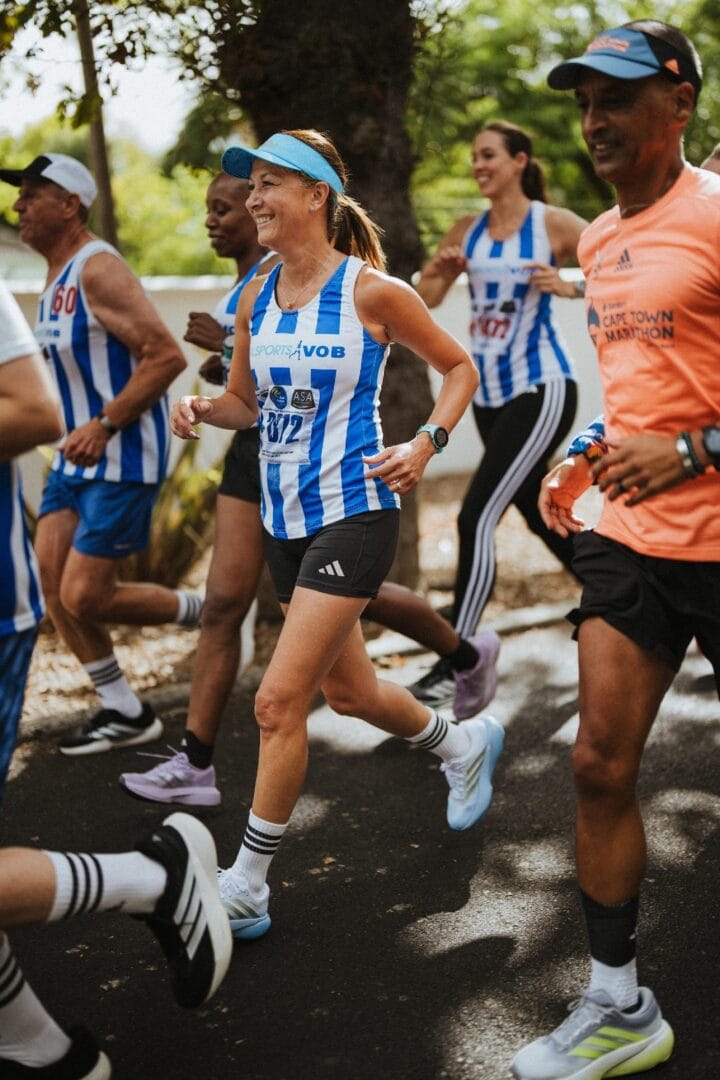
“Years ago, it was just another marathon. Now it’s exhilarating, there’s so much excitement. You see international runners and familiar faces on the route and it’s grown into something incredibly special for our city,” she said.

De Monk said the club’s focus remained on participation and milestones.

“My highlight is helping members run their first marathon, their first half and their first ultra. Crossing the finish line with them, that’s special. It’s about being part of someone’s first.”

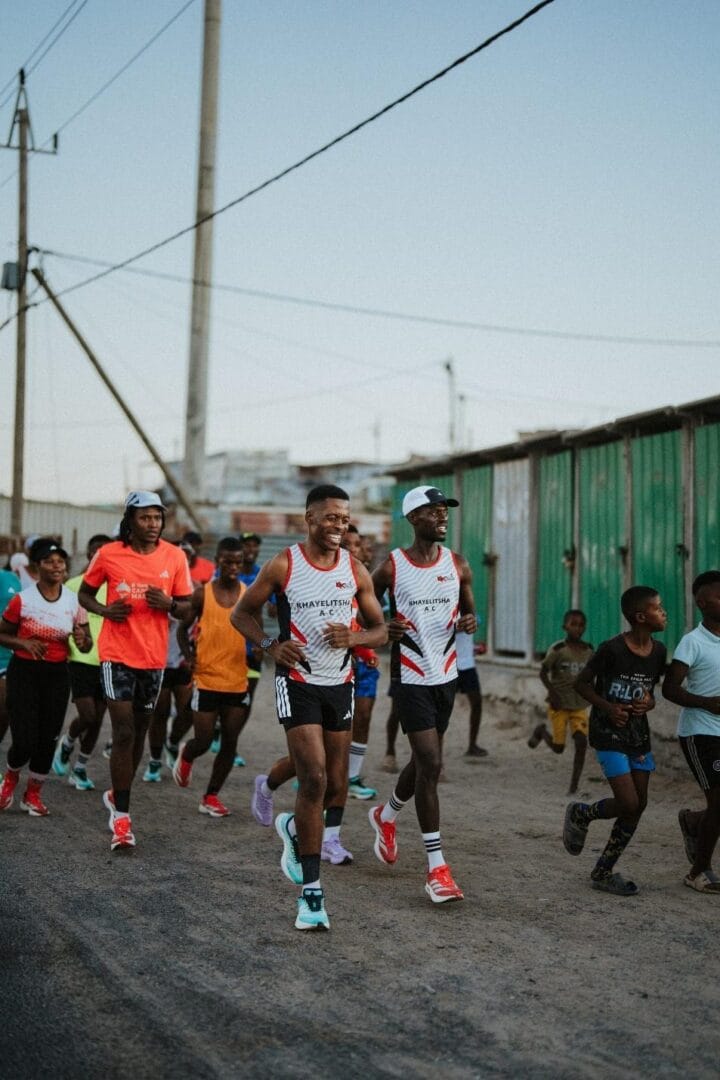
In Khayelitsha, running has become a platform for identity and opportunity. Khayelitsha Athletics Club captain Siphiwo Melani (pictured below) said the sport offered more than physical benefits.

“When you’re outside, you think running is just waking up and running. Then you discover the community behind it, the organisation and structure. It gave me purpose and a sense of belonging,” said Melani.
He recalled a defining moment during the marathon.

“There was a young girl on the side of the road cheering. She didn’t know me, she just saw the Khayelitsha vest. That’s when I realised this is bigger than me. Khayelitsha is not a jungle. There are good things happening here. When thousands of people come to run here, it makes me proud. We are rewriting the story.”

Collaboration among clubs has also increased, with groups training together and supporting each other’s events as participation numbers continue to climb.

As Cape Town strengthens its bid for global marathon recognition, it is these communities that remain the foundation, carrying the city’s ambitions one step at a time.
Shortest Comrades Up Run could boost Gerda Steyn’s R2m bid

By Adnaan Mohamed

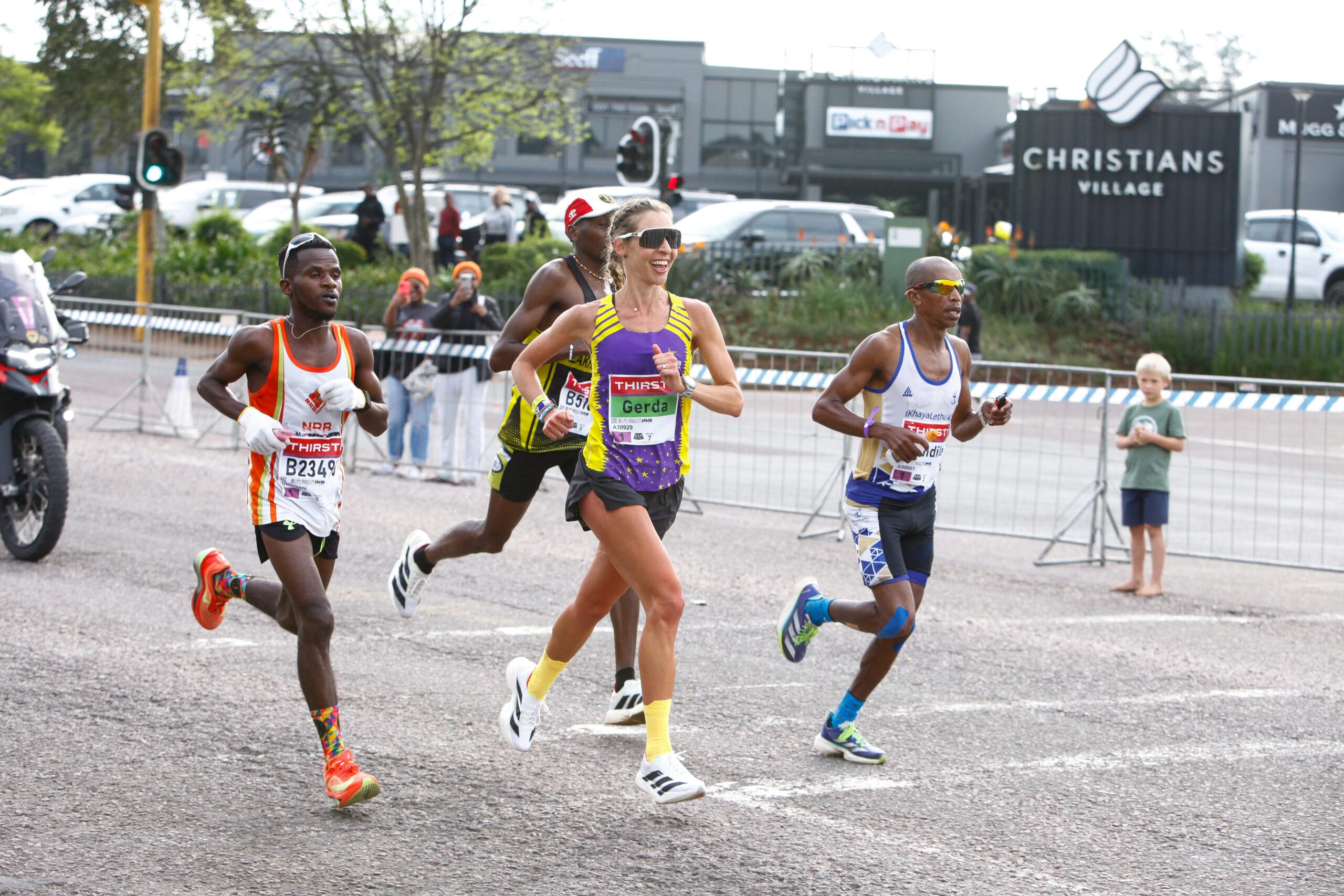
The 2026 Comrades Marathon will be run over the shortest Up Run distance in recent history, a development that could significantly favour multiple champion Gerda Steyn as she targets both victory and a lucrative payday.

Race organisers have confirmed that the 99th edition, scheduled for Sunday, 14 June, will cover 85.777km from Durban to Pietermaritzburg. The distance is 133 metres shorter than the 2024 Up Run and nearly a kilometre shorter than the 2019 route.

In an event where pacing and energy management are decisive, even marginal reductions in distance can influence outcomes at the elite level. For Steyn, who has dominated the women’s race in recent years, the shorter course presents an opportunity to push the pace from early on while still maintaining control in the closing stages.

The adjusted route comes amid ongoing infrastructure developments along the traditional course. Comrades Marathon Race Director Sue Forge said organisers had worked closely with authorities to finalise a safer and more efficient layout.

“The ongoing roadworks have had a significant impact on the route and our planning. However, thanks to the outstanding collaboration and support of the municipalities, the Road Traffic Inspectorate, Durban Metro Police and Msunduzi Traffic Police, we have been able to finalise a route that not only provides a slightly shorter distance for runners, but also improves the management of road closures, traffic flow, infrastructure removal and post-race clean-up,” Forge said.

While the start in Durban and finish at Scottsville Racecourse remain unchanged from 2024, several key adjustments have reduced the overall distance.

“We have changed the set-up of the finish at Scottsville and shortened the finish straight, while out on the route, the biggest change is that from 45th Cutting to Cowies Hill, where runners will move in a contra-flow direction. This means they will run on the other side of the road to previous years, against the normal traffic direction, which will also reduce the gradient of that section slightly,” Forge explained.

“Meanwhile, we have retained the Umlaas Road cut-through, working closely with SANRAL and the appointed contractors to remove a 12-metre section of the new roadside barriers and surface the area, enabling runners to cross directly. This adjustment will once again save runners approximately 870 metres,” she added.

The official route measurement was completed on 25 and 26 April under the supervision of World Athletics-accredited measurer Mike Rooke, using a calibrated bicycle to ensure accuracy.

Historically, comparisons with earlier races remain difficult. Before 1969, distances were recorded in miles and often estimated, with the Up Run generally listed at around 54 miles, or approximately 86.886km.

Despite that uncertainty, the 2026 race is widely regarded as the shortest modern Up Run, a factor that could have implications for record attempts.

Steyn already holds the women’s Up Run best time after clocking 5:49:46 in 2024, becoming the first woman to break six hours on the route. With performance incentives linked to both time and pace, she stands to earn a substantial bonus if she improves on that mark.

“With the shortest route on record for the Up Run being run this year, coupled with lucrative cash incentives for runners to chase the best time and best pace records, we may see those records fall again in 2026,” said Forge.

The men’s Up Run record of 5:24:49, set by Leonid Shvetsov in 2008, has also come under increasing pressure in recent years.

All indications point to a faster race in 2026, with the revised route likely to encourage aggressive strategies from the leading contenders. For Steyn, the combination of form, experience and course conditions could place her firmly on track for another dominant performance.

adidas launches Supernova Rise 3 in new Glow Blue colourway

By Adnaan Mohamed

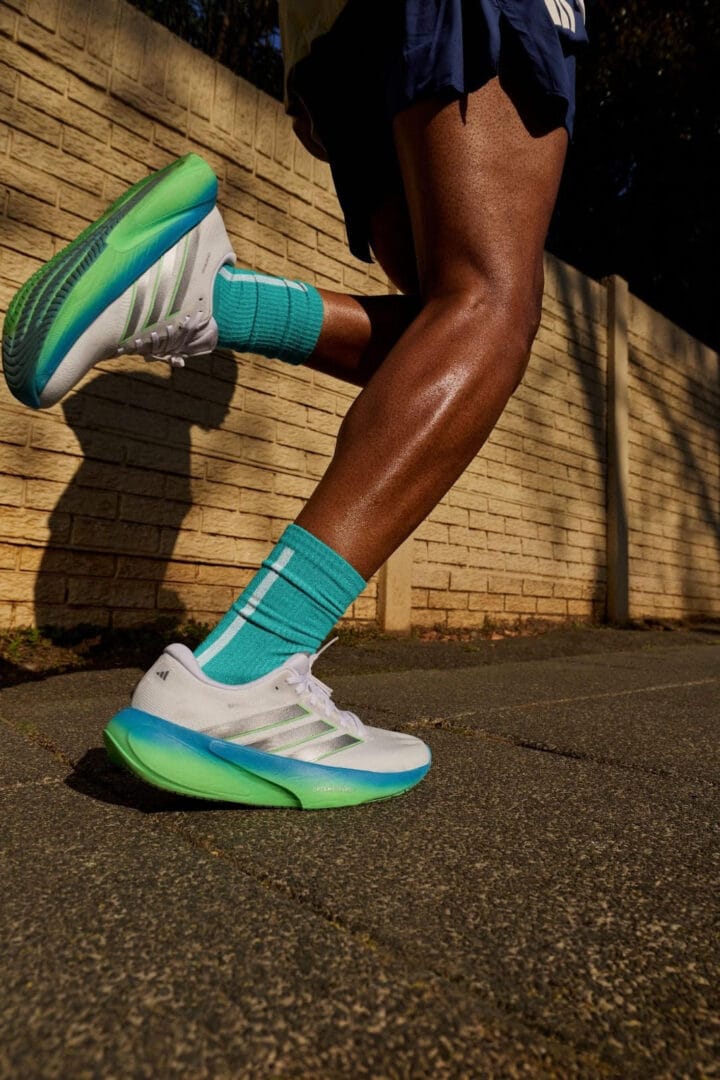
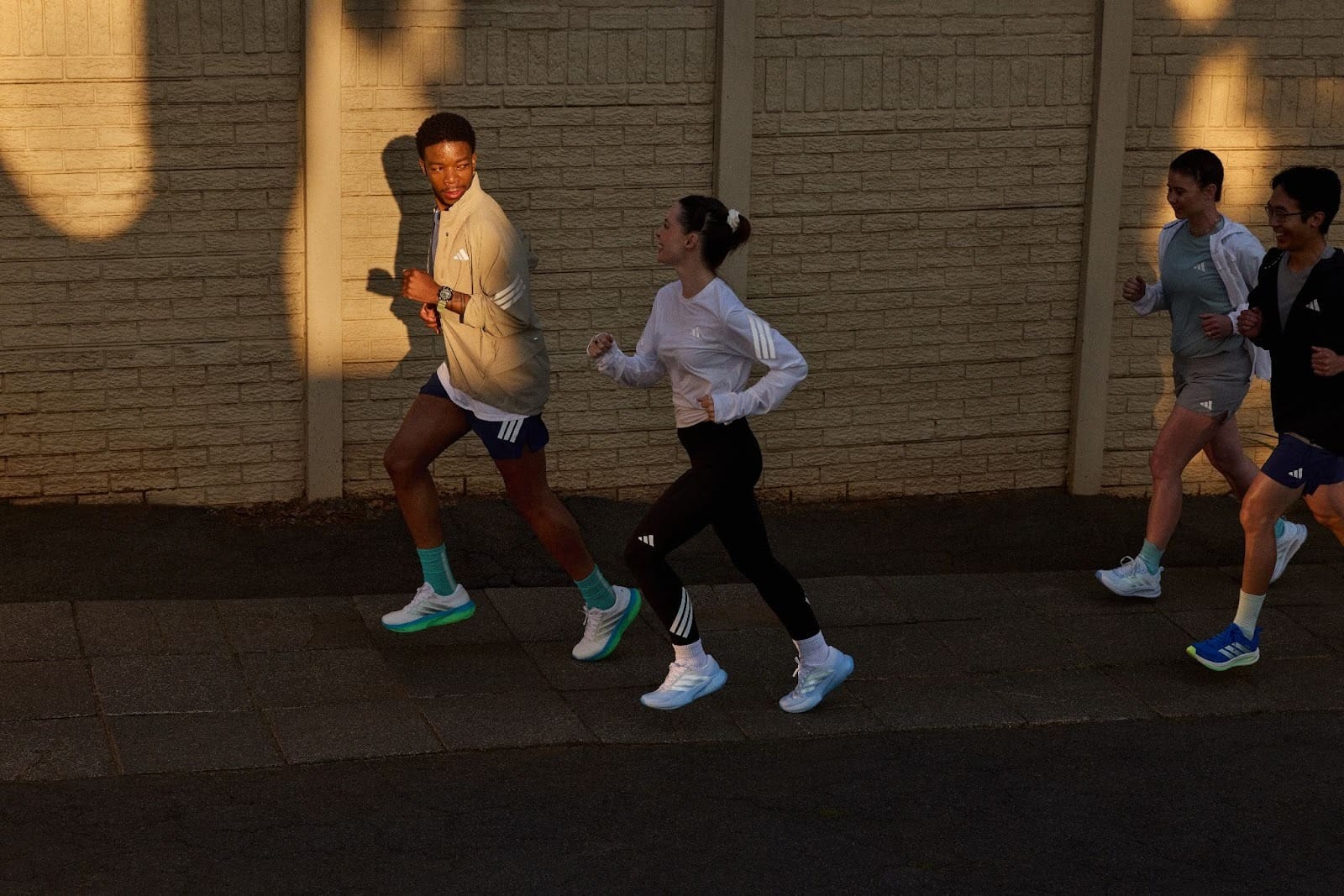
Runners chasing smooth kilometres have a fresh companion on the road as adidas unveils the Supernova Rise 3 in a striking Glow Blue colourway.

The latest update expands the brand’s comfort-focused Supernova franchise, a range designed for everyday runners who log steady miles through training blocks, recovery jogs and early morning pavement sessions.

First launched in December 2025, the Supernova Rise 3 builds on the blueprint of its award-winning predecessor with a series of design refinements aimed at delivering a softer and more natural stride.

The shoe has also received the Seal of Acceptance from the American Podiatric Medical Association, recognition that highlights its support for healthy foot function during regular running.

At the heart of the update sits a reworked full-length Dreamstrike+ midsole, the cushioning engine designed to absorb impact like a sponge soaking up rain on a winter training run. The updated foam formula brings a lighter and softer ride, with adidas reporting five percent less weight, 20 percent softer cushioning and 16 percent more foam underfoot.

That combination aims to help runners maintain rhythm across long training runs where tired legs often search for smooth momentum.

Above the midsole sits a newly engineered Primeweave upper, a woven structure designed to wrap around the foot with a secure yet flexible fit. The material adapts to movement in a way that mirrors the natural flex of a runner’s stride, offering support without restricting motion.

Beneath the shoe, the Lightraxion outsole introduces rod-like sculpting inspired by the anatomy of the foot. The pattern works to guide transitions from heel strike to toe-off, creating a rolling sensation similar to a runner flowing down a gentle downhill stretch.

The Supernova Rise 3 also includes several elements developed specifically around women’s biomechanics.

These features include a shoe last shaped to match the average structure of women’s feet, along with a central landing platform designed to promote stability during impact. Designers also incorporated an improved heel bevel built around insights into women’s landing angles.

Additional support arrives through a sock liner that places thicker foam beneath the arch, offering targeted cushioning during long runs.

Together these refinements shape a shoe that aims to keep runners moving smoothly through daily training mileage, where comfort often determines whether the final kilometres feel like a grind or a glide.

The Supernova Rise 3 in Glow Blue retails for R2 999 and is available in stores and online through adidas retail channels.