




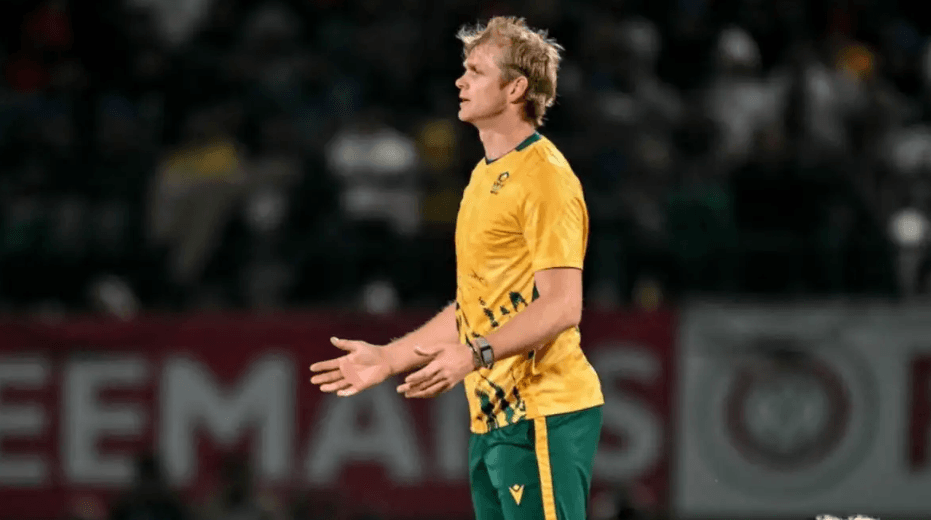
By Adnaan Mohamed
At the ICC Men’s T20 World Cup, co-hosted by India and Sri Lanka, the Proteas arrive at Saturday’s showdown against New Zealand still catching their breath after a double Super Over escape against Afghanistan.
It was chaos dressed as control. It was a match South Africa should have closed, but instead allowed to smoulder before stamping it out with singed fingers.
Now comes a sterner examination in the form of a Black Caps side clinical in temperament and tactically astute. And hovering above it all are two men in contrasting spotlights: Kagiso Rabada and Rachin Ravindra.
In the Spotlight: Rabada’s Redemption, Ravindra’s Reinvention
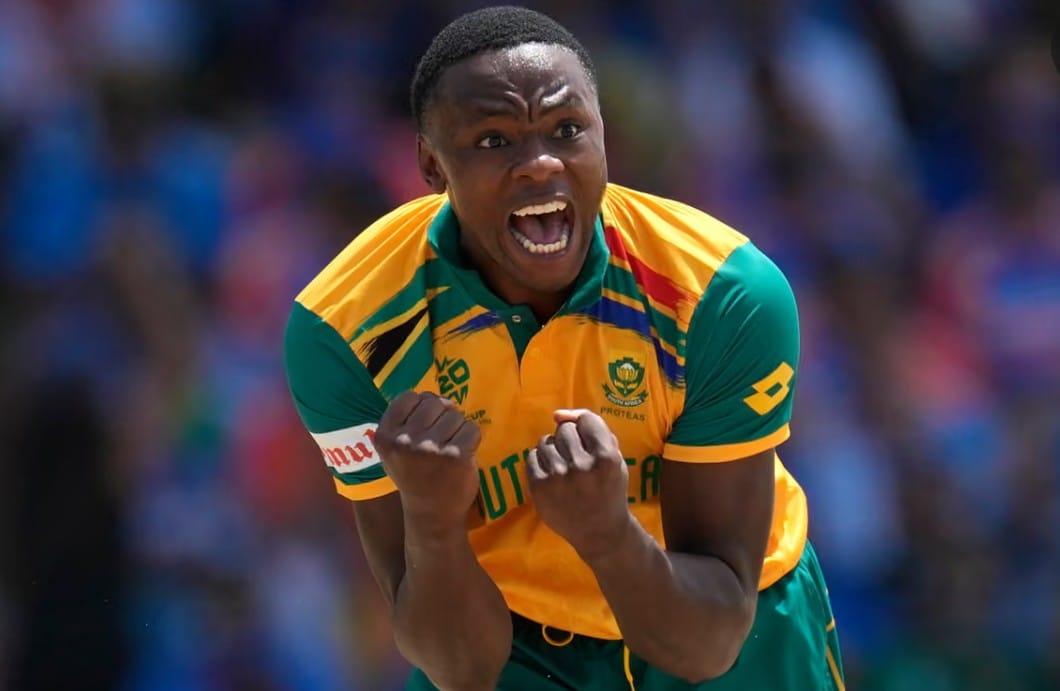
Rabada remains one of South Africa’s premier fast-bowlers with thunderbolt pace, big-match pedigree, and the ability to bend a contest to his will. Yet numbers whisper unease.
Since 2025, he averages 34.55 in T20Is with an economy of 9.82. Injury breaks and workload management have limited him to nine games in that stretch, but rhythm in T20 cricket is like swing under lights it vanishes quickly.
Against Afghanistan, two no-balls in the final over cracked open the door to disaster. That chaotic 20th over nearly cost the Proteas the match. But dropping Rabada now would be reactive rather than rational. Strike bowlers are not porcelain; they are forged in pressure. Back him, simplify his brief, and trust the muscle memory.
If Rabada channels control instead of emotion, he becomes South Africa’s edge against New Zealand’s deep batting line-up.
Across the aisle stands Ravindra with potential personified.
His international T20 numbers are modest: strike rate 135.19, average 19.09, three half-centuries in 40 innings. Yet statistics sometimes trail evolution. Recent cameos against India revealed a more assertive No. 3, one capable of manipulating spin and accelerating against pace.
Against South Africa, Ravindra’s left-handedness could become tactical gold. If he and New Zealand’s cluster of left-handers target Keshav Maharaj early, the middle overs could tilt black.
Saturday clash will be more about trajectory.
South Africa: The Four Pillars So Far
1. Ryan Rickelton – Composed at the crease, assertive in tempo. He has been South Africa’s glue at the top, blending patience with acceleration. His reading of spin on tricky surfaces has stood out.
2. Quinton de Kock – Two runs shy of 3000 T20I runs, he remains the Proteas’ ignition switch. When he fires in the powerplay, South Africa dictate terms.
3. Keshav Maharaj – On surfaces offering grip, Shamsi has threaded spells like a seamstress in a storm — calm, clever, disruptive. His middle-overs control has repeatedly applied brakes to opposition surges
4. Lungi Ngidi – Man of the Match in both matches, been the Proteas paceman has been South Africa’s most effective bowler with 7 wickets in two matches
Rabada may command headlines, but these four have quietly shaped South Africa’s campaign.
New Zealand: The Black Caps’ Key Cogs
1. Devon Conway – He absorbs pressure and resets innings without fuss. His ability to bat deep gives New Zealand structural integrity.
2. Glenn Phillips – The detonator. Few in world cricket clear ropes with such ease in the death overs. If Phillips is set at 15 balls to go, the scoreboard can warp quickly.
3. Mitchell Santner – Captain and control merchant. Just 30 runs short of 1000 T20I runs, Santner’s value lies in balance with is left-arm spin strangulation and ice-cool leadership.
Ravindra may be the wildcard, but these three are the pillars.
Selection Chess: Bosch or Balance
South Africa’s selection dilemma mirrors tactical nuance.
They replaced seam-bowling allrounder Corbin Bosch with left-arm spinner George Linde against Afghanistan. But playing two left-arm finger spinners, Linde and Maharaj, against a New Zealand top eight potentially stacked with four left-handers may feel like feeding symmetry to the opposition.
Bosch’s return would restore seam variety and late-order hitting. On the red-soil surface used in the Afghanistan thriller, flat but honest, seamers who vary pace could prosper under lights.
New Zealand is unlikely to tinker unless the pitch wears dramatically, in which case Ish Sodhi becomes a spin option.
Conditions & Tactical Undercurrents
The same red-soil strip that produced the Super Over epic will host this clash. Expect pace early, grip later, and dew as a complicating actor in the second innings.
Toss may matter more under lights. Discipline will matter most.
As Aiden Markram admitted, 22 extras across two matches is a bleeding wound. In T20 cricket, 11 free runs per game is not generosity, it’s negligence.
History vs Momentum
South Africa have won all four of their previous T20 World Cup meetings with New Zealand. Yet in this decade, the Black Caps have taken the last three bilateral T20I encounters.
The past whispers. The present shouts louder.
What Decides Saturday?
- Powerplay Duel: Boult versus De Kock. Swing versus swagger.
- Spin Manipulation: Can Ravindra counter Maharaj?
- Death Discipline: Rabada under pressure, Phillips in pursuit.
This rivalry, sharpened by rugby fields and cricket squares alike, rarely disappoints.
New Zealand are methodical surgeons. South Africa are emotional sculptors. One chisels; the other carves.
If the Proteas learned from Ahmedabad’s firestorm, they will arrive tempered. If not, the Black Caps will not require a second invitation.