Record prize money, history on the line at 99th Comrades Marathon

By Adnaan Mohamed

The 99th edition of the Comrades Marathon has all the ingredients of a classic.

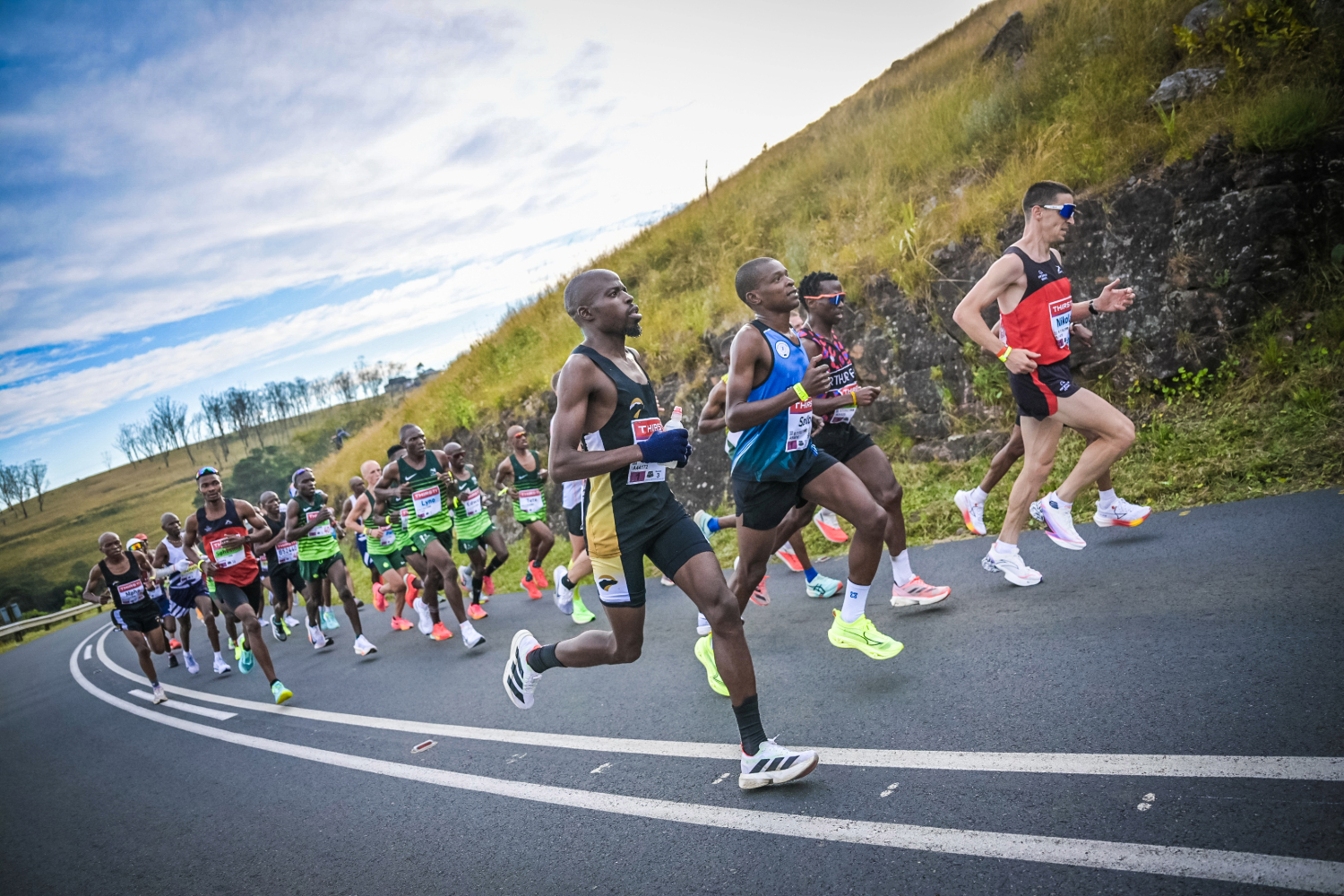
Defending champions Tete Dijana and Gerda Steyn return to lead a star-studded elite field on Sunday as 21,677 runners tackle the 85.777km Up Run from Durban City Hall to Hollywoodbets Scottsville Racecourse in Pietermaritzburg.

With nearly all of last year’s top-10 finishers back on the start line and a record prize purse on offer, the race is poised to deliver another compelling chapter in the history of South Africa’s most iconic ultra-marathon.

The only absentee among the top 20 men and women from the 2025 race is women’s runner-up Alexandra Morozova, leaving an elite field packed with proven performers and ambitious challengers.

Race director Sue Forge expects another fiercely contested battle.

“All the signs are that this should be another thrilling race, not just in terms of proven gold medallists, but also with the addition of a number of very fast marathoners and ultra-marathoners from both South Africa and abroad, including world-class 100km competitors. We’re looking forward to seeing who claims the podium spots and a share of the biggest prize purse in the history of the Comrades Marathon.”

The elite athletes will compete for a share of R8.21 million, including incentives and bonuses, with both the men’s and women’s winners earning R925,000.

“We have made sure that the top contenders in the 2026 edition of the Comrades Marathon have 8.2 million reasons to give everything they have on the route from Durban to Pietermaritzburg,” Forge said.

“This race has always produced world-class performances, and this considerable prize purse reflects the status of both the race and the elite field we have running this year.”

Dijana targets rare company
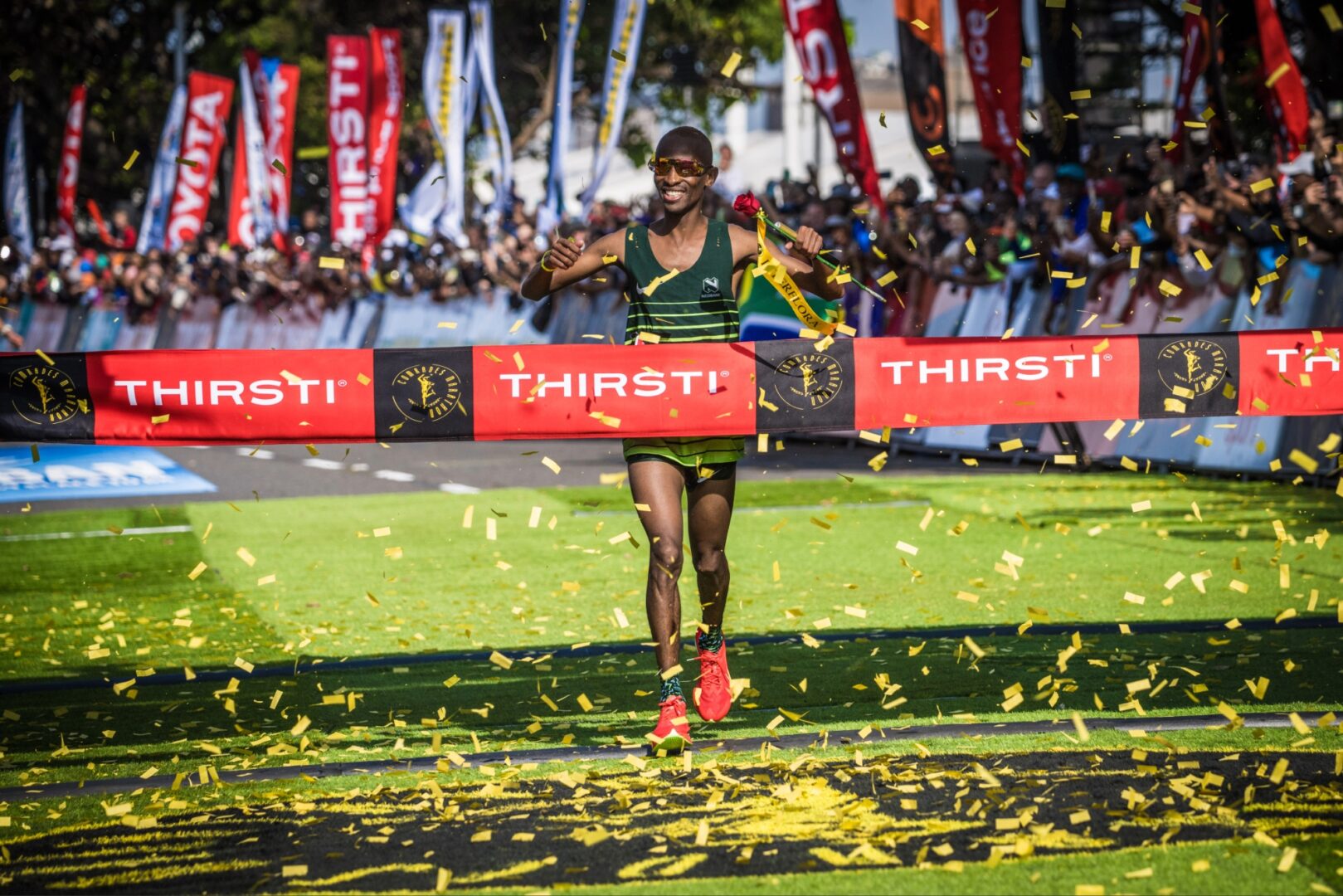
Tete Dijana Photo: Tobias Ginsberg/CMA

Dijana arrives as the man to beat.

The three-time champion claimed victories in 2022, 2023 and 2025, yet has never won an Up Run. A victory on Sunday would not only complete that collection, it would move him level with four-time winner Alan Robb and into a tie for third on the all-time men’s winners list.

Standing in his way is Dutch rival Piet Wiersma, winner of the most recent Up Run in 2024 and runner-up to Dijana in both 2023 and 2025.

Their rivalry has become one of the defining storylines of modern Comrades racing and could once again shape the outcome.

Three-time champion Bongmusa Mthembu also has history within reach. The veteran owns 11 gold medals and sits level with Bruce Fordyce on that list. Another gold medal would move him alongside Alan Robb with a record 12.

The men’s field is strengthened further by former winners Edward Mothibi and David Gatebe, while Nikolai Volkov, Joseph Manyedi, Alex Milne, Gordon Lesetedi and Vasilii Korytkin all return after gold-medal performances in 2025.

Several newcomers add intrigue.

South African hopeful George Kusche has attracted considerable support after finishing 12th last year, while Onalenna Khonkhobe’s impressive performances over the past 12 months have elevated him into podium discussions.

Internationally, much attention will focus on World 100km champion Aleksandr Sorokin, American record-holder Charles Lawrence and French 100km specialist Guillaume Ruel.

Steyn eyes fifth crown
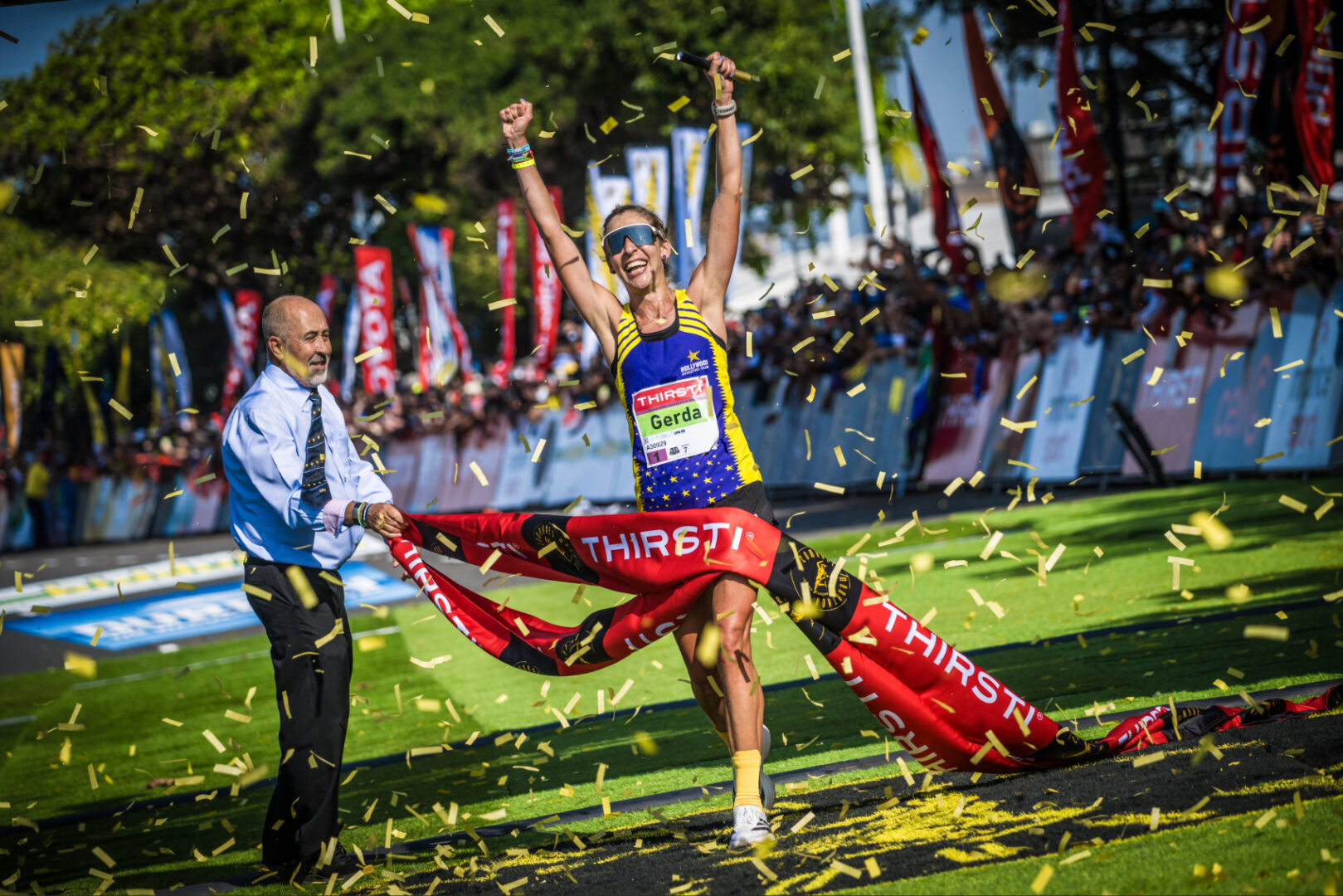
Gerda Steyn Photo: Tobias Ginsberg/CMA

If Dijana is chasing history, Steyn is pursuing legacy.

The South African star has dominated women’s ultra-distance running in recent years and arrives full of confidence after securing a seventh consecutive Totalsports Two Oceans Marathon title.

Having won Comrades in 2019, 2023, 2024 and 2025, Steyn stands one victory away from becoming only the second woman in history to reach five wins.

Only eight-time champion Elena Nurgalieva has won more.

Yet the women’s race appears deeper than ever.

Kenyan Shelmith Muriuki impressed with third place on debut last year and is widely viewed as a serious contender. Irvette van Zyl enters the race after breaking the Loskop 50km course record, while Dominika Stelmach, Carla Molinaro, Caitriona Jennings, Courtney Olsen, Jenet Mbhele and Melissah Gibson all return after earning gold medals in 2025.

Adele Broodryk’s return adds further quality after she missed last year’s race, while Galaletsang Mekgoe and Jenna Challenor will be eager to force their way back into the gold-medal positions.

Zimbabwean debutant Nobukhosi Tshuma is another athlete generating interest after finishing third at this year’s Two Oceans Marathon.

Strongest field in years

The elite men’s field consists of 97 athletes, while 34 women have earned elite status.

Together they form one of the strongest line-ups assembled for the race in recent years.

For Dijana and Steyn, Sunday offers an opportunity to strengthen already impressive legacies. For the chasing pack, it presents a chance to alter the narrative.

By late afternoon in Pietermaritzburg, the 99th Comrades Marathon will have produced new heroes, fresh storylines and perhaps another piece of history on South Africa’s most famous road.

Most Memorable Comrades

Most Memorable Comrades

The 2019 Comrades Marathon will be remembered for many reasons, but the two standout performances of the year were undoubtedly those of men’s winner Edward Mothibi and women’s winner Gerda Steyn. – BY SEAN FALCONER

Winning the Comrades Marathon is considered the pinnacle of achievement in South African road running, and adding that title to your name opens the door to fame, media attention, sponsorships, endorsements and more. However, the way that Edward Mothibi and Gerda Steyn won the Comrades titles in 2019 went a step further, and their performances in the Up Run from Durban to Pietermaritzburg will long live in the memory.

After an eventful men’s race that featured several changes of the lead and then an exciting breakaway group of five contenders, it eventually came down to Mothibi, who finished fourth last year in his debut Comrades, going head-to-head with three-time winner and double defending champ Bongmusa Mthembu as they hit the final ‘Big Five’ climb on Polly Shortts. With most people following the race expecting Mthembu to once again use his strength on the hills to pull clear, it looked like things would go according to script as he opened a small gap on the challenger, but instead it was Mothibi who threw in a surge of his own and made the decisive move on the notoriously steep hill.

The old adage once again proved true, that the first runner to crest the top of Polly’s with 8km to go will go on to win the race. By the top, Mothibi had pulled 20 seconds clear of Mthembu, and he then powered his way to the finish at the Scottsville Race Track in Pietermaritzburg to claim the win in 5:31:33. Mthembu finished 25 seconds adrift in 5:31:58, with World 100km record holder Nao Kazami of Japan taking third in 5:39:16 in his debut Comrades.

After the race, Mothibi said that he had dug deep into his reserves of strength to overcome Mthembu up Polly’s, but that he had actually surprised himself by winning: “I didn’t plan to win; I just wanted a gold medal! I gave it all. I just pushed harder.” For his part, a gracious Mthembu conceded that the better man on the day won, and he added, “I could see Edward had a plan… everything I did he could respond to.”

Other notable finishers in the men’s race included Justin Chesire coming home sixth to become the first Kenyan to win a Comrades gold medal, and Zimbabwean Marko Mambo finishing eighth and first veteran. Also, in a heartbreaking finale, Nkosikhona Mhlakwana made a late surge to overtake Gordon Lesetedi and Siya Mqambeli to go into ninth position with just a hundred metres to go, only to stumble and falter, then watch helplessly as the last gold medal eluded him. Further back in the field, 1995 winner Shaun Meiklejohn finished his 30th Comrades in 6:56:16, while the two leading Comrades medallists of all time, Barry Holland and Louis Massyn, achieved their 47th consecutive medals in 10:29:42 and 11:51:52 respectively.

Majestic Gerda
The early leader in the women’s race was 2017 Down Run winner Ann Ashworth, who was on pace to run a 6:03 and smash Elena Nurgalieva’s Up Run record of 6:09:24, but it was Gerda Steyn who took control of the race just before the 30km mark, then flew up Botha’s Hill and further extending her lead to just under two minutes over Ashworth by the halfway mark in Drummond. For the rest of the race she serenely extended her lead, never looking troubled, and reached the finish in an incredible 5:58:53, smiling, waving and even doing a jig on the line.

Steyn had won the Two Oceans Marathon for a second time just seven weeks before the Comrades, where she missed Frith van der Merwe’s course record by just 53 seconds after deciding not to push too hard and thus save her legs for the Comrades. It didn’t look like the 56km Cape ultra had any adverse effect on her Comrades performance, however, as she became the first woman ever to complete the Up Run in less than six hours. Reminiscent of Van der Merwe’s incredible winning run in 1991, when she finished 15th overall in the Comrades field, Steyn came home 17th overall, winning by a margin of nearly 19 minutes over second-placed Alexandra Morozova of Russia (6:17:40), who was also second in 2017 and third last year. Third place went to debutant Caitriona Jennings of Ireland in 6:24:12, with Ashworth taking fourth in 6:27:15.

Steyn’s performance earned her a cool R1.2 million in prize money – R500,000 for first place, and incentives of R500,000 for a new course record and R200,000 as first South African finisher. Her winning time is the fourth-fastest ever run by a woman in the Comrades (although the three faster times were all on the Down Run), and she is just the fourth woman ever to win the Two Oceans and Comrades in the same year, after Van der Merwe (1989), Elena Nurgalieva (2004 and 2012) and Caroline Wöstmann (2015). After the race, Steyn said, “It is a dream come true! Many years of hard work came together today. It’s a real blessing… it’s the biggest achievement I can ask for.”